
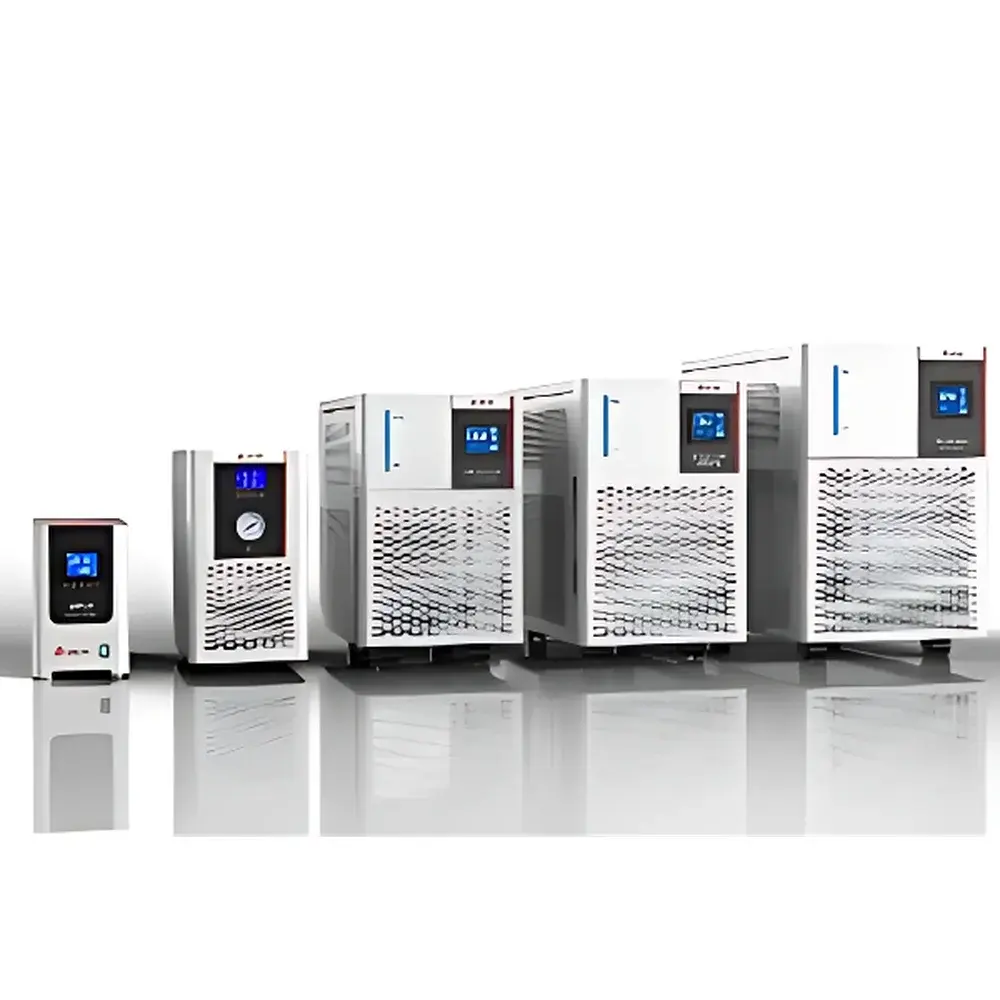
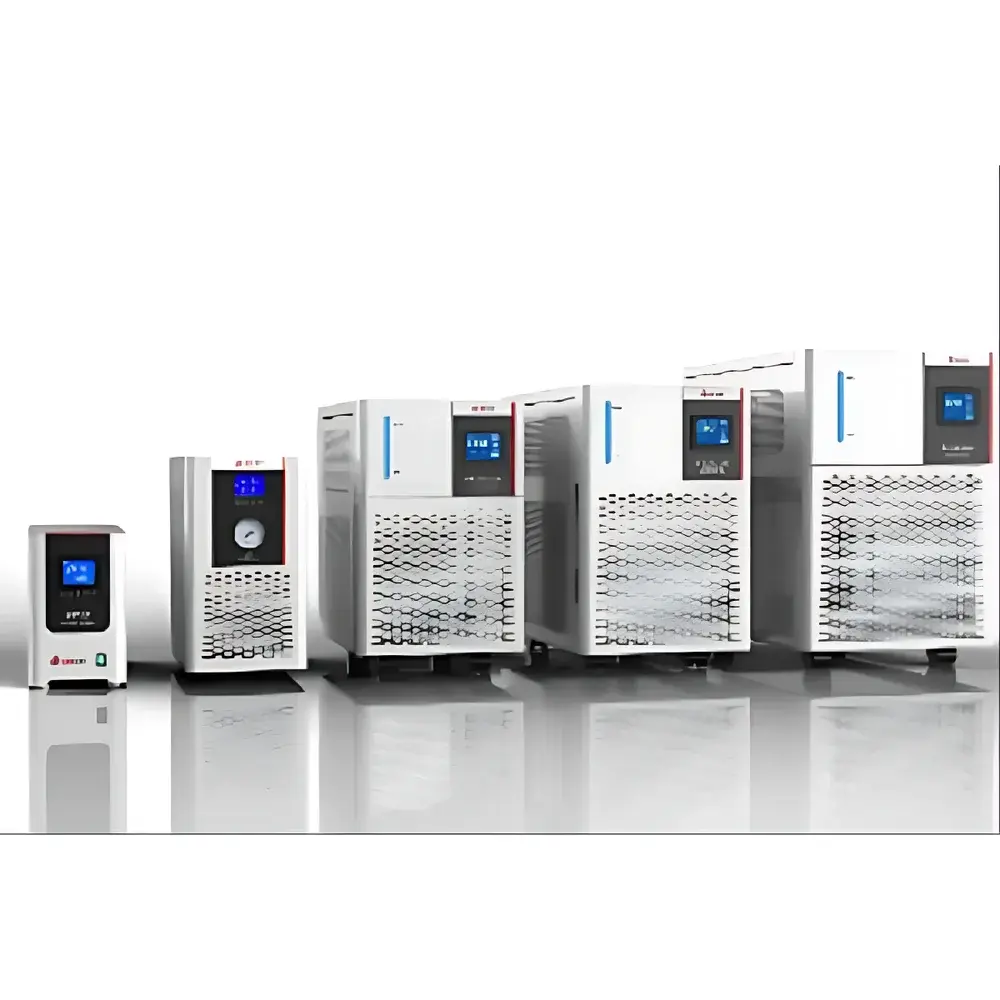
LabTech SH150-3000 Recirculating Chiller
| Brand | LabTech |
|---|---|
| Origin | Beijing, China |
| Model | SH150-3000 |
| Cooling Capacity | 3.0 kW @ 20°C |
| Temperature Range | –10°C to +40°C |
| Temperature Stability | ±0.1°C |
| Refrigerant | R-134a (ODP = 0) |
| Flow Rate | Adjustable up to 30 L/min |
| Pressure Display Resolution | 0.01 bar |
| Touchscreen Interface | 7-inch capacitive LCD with real-time data logging |
| Remote Monitoring | Ethernet & Wi-Fi enabled, compatible with LabTech CloudConnect™ mobile app |
| Safety Alarms | High/Low temperature, low flow, low level, high return temperature, pressure deviation |
| Compliance | CE, RoHS, ISO 9001 certified |
Overview
The LabTech SH150-3000 Recirculating Chiller is an engineered thermal management solution designed for continuous, stable cooling of analytical instruments—including ICP-MS, HPLC columns, laser sources, X-ray generators, and vacuum pumps—under demanding laboratory conditions. It operates on a closed-loop refrigeration cycle utilizing hot-gas bypass modulation in conjunction with adaptive PID control algorithms to maintain setpoint accuracy within ±0.1°C across variable thermal loads. Its core heat exchange architecture employs microchannel parallel-flow technology, which significantly increases surface-area-to-volume ratio and reduces refrigerant charge by over 40% compared to conventional fin-tube designs. This design not only enhances thermodynamic efficiency but also aligns with global environmental mandates by eliminating ozone-depleting substances—R-134a refrigerant has zero ozone depletion potential (ODP = 0) and complies with EU F-Gas Regulation (EU No. 517/2014).
Key Features
- Microchannel parallel-flow condenser and evaporator for improved heat transfer coefficient and reduced refrigerant volume
- 7-inch industrial-grade capacitive touchscreen HMI with intuitive navigation, multilingual UI support (English, German, French, Chinese), and real-time visualization of inlet/outlet temperature, flow rate, system pressure, and compressor status
- Dual-sensor flow monitoring with differential pressure transducers and turbine-based volumetric measurement—enabling dynamic compensation for viscosity changes and tubing resistance
- Hot-gas bypass valve integrated with digital PID controller for rapid load response and minimal overshoot during transient thermal events
- Redundant safety architecture: independent temperature sensors at inlet, outlet, and reservoir; float switch and conductive level detection; programmable alarm thresholds with latching logic and audible/visual alerts
- Modular pump assembly with ceramic shaft and graphite bearings for extended service life under continuous operation (>20,000 hours MTBF)
Sample Compatibility & Compliance
The SH150-3000 is compatible with deionized water, 30–50% ethylene glycol/water mixtures, and other non-corrosive heat transfer fluids meeting ASTM D1384 specifications. Its stainless-steel reservoir (304 grade), EPDM-sealed fluid path, and corrosion-resistant copper-nickel tubing ensure long-term compatibility with aggressive solvents used in LC-MS or plasma instrumentation. The unit conforms to IEC 61000-6-2 (immunity) and IEC 61000-6-4 (emissions), carries CE marking per Machinery Directive 2006/42/EC and Low Voltage Directive 2014/35/EU, and meets RoHS 2011/65/EU substance restrictions. Documentation packages include full Declaration of Conformity, Factory Calibration Certificates (traceable to NIST standards), and optional IQ/OQ protocols aligned with FDA 21 CFR Part 11 and EU GMP Annex 15 requirements.
Software & Data Management
Embedded firmware supports Modbus TCP and ASCII serial protocols for integration into centralized lab infrastructure (e.g., LabVantage, Thermo Fisher SampleManager). Local data logging records temperature, flow, pressure, and alarm events at user-defined intervals (1 sec to 60 min) onto internal 4 GB eMMC storage with automatic rollover. Remote access is enabled via LabTech CloudConnect™—a secure TLS 1.2–encrypted platform offering role-based web dashboard viewing, push notifications for critical alarms, historical trend analysis, and exportable CSV reports compliant with ALCOA+ principles (Attributable, Legible, Contemporaneous, Original, Accurate, Complete, Consistent, Enduring, Available). Audit trails are retained for ≥18 months and support electronic signature workflows.
Applications
- Cooling of high-power ICP-MS torch interfaces and interface cones requiring stable sub-ambient temperatures
- Thermal regulation of preparative HPLC and SFC systems where column oven stability directly impacts retention time reproducibility (RSD < 0.15%)
- Heat dissipation for pulsed Nd:YAG lasers and diode-pumped solid-state (DPSS) sources in spectroscopy and imaging platforms
- Support of cryo-SEM sample stages and vacuum chamber cold traps operating between –5°C and +25°C
- Continuous cooling of electrophoresis power supplies and DNA sequencers subject to cyclic thermal loading
FAQ
What is the maximum allowable working pressure of the SH150-3000 fluid circuit?
The system is rated for continuous operation at 3.5 bar (50 psi) maximum working pressure, with burst pressure exceeding 10 bar per ASME B31.9 design criteria.
Can the chiller operate unattended for 72-hour validation runs?
Yes—equipped with non-volatile memory, battery-backed real-time clock, and dual-level fluid level redundancy, it supports fully autonomous operation with alarm escalation to email/SMS via optional gateway module.
Is the temperature sensor calibration traceable to national standards?
All factory-installed PT100 sensors are calibrated against a Fluke 724 temperature calibrator referenced to NIST-traceable standards; calibration certificates are provided with each unit.
Does the unit support external temperature feedback from the instrument being cooled?
Yes—the analog input port accepts 0–10 V or 4–20 mA signals from external process sensors, enabling cascade control mode where chiller output responds to instrument jacket temperature rather than internal bath setpoint.
What maintenance intervals are recommended for optimal performance?
Filter cartridge replacement every 6 months; refrigerant charge verification and leak check annually; full system performance validation (cooling capacity, temp stability, flow accuracy) biannually per ISO/IEC 17025 guidelines.
Related Products



