
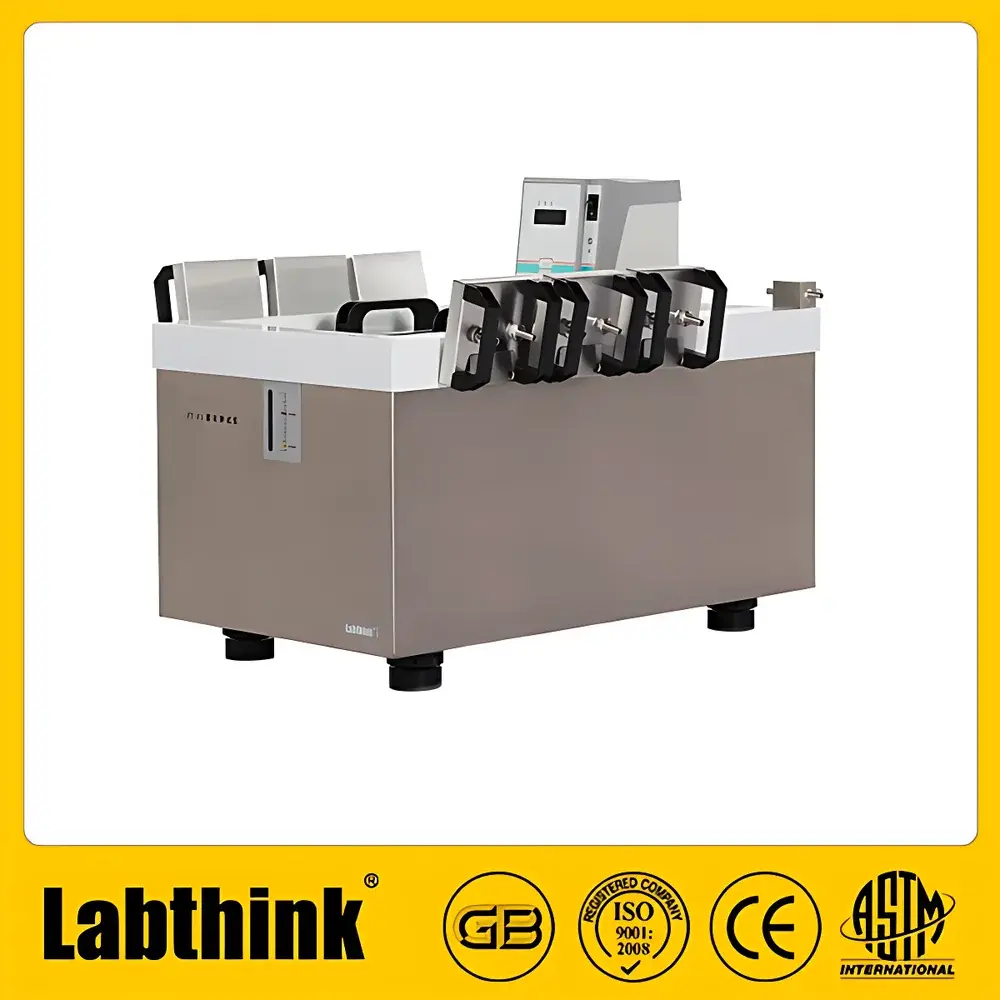
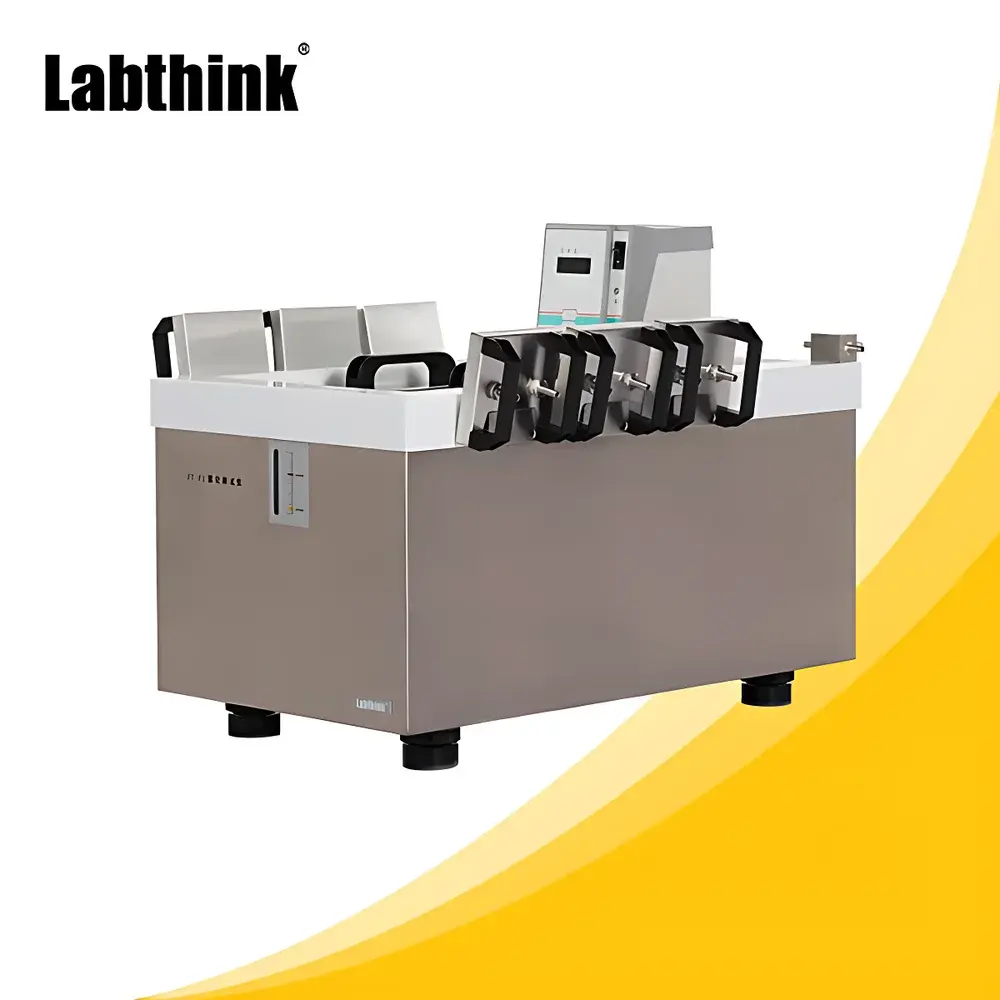
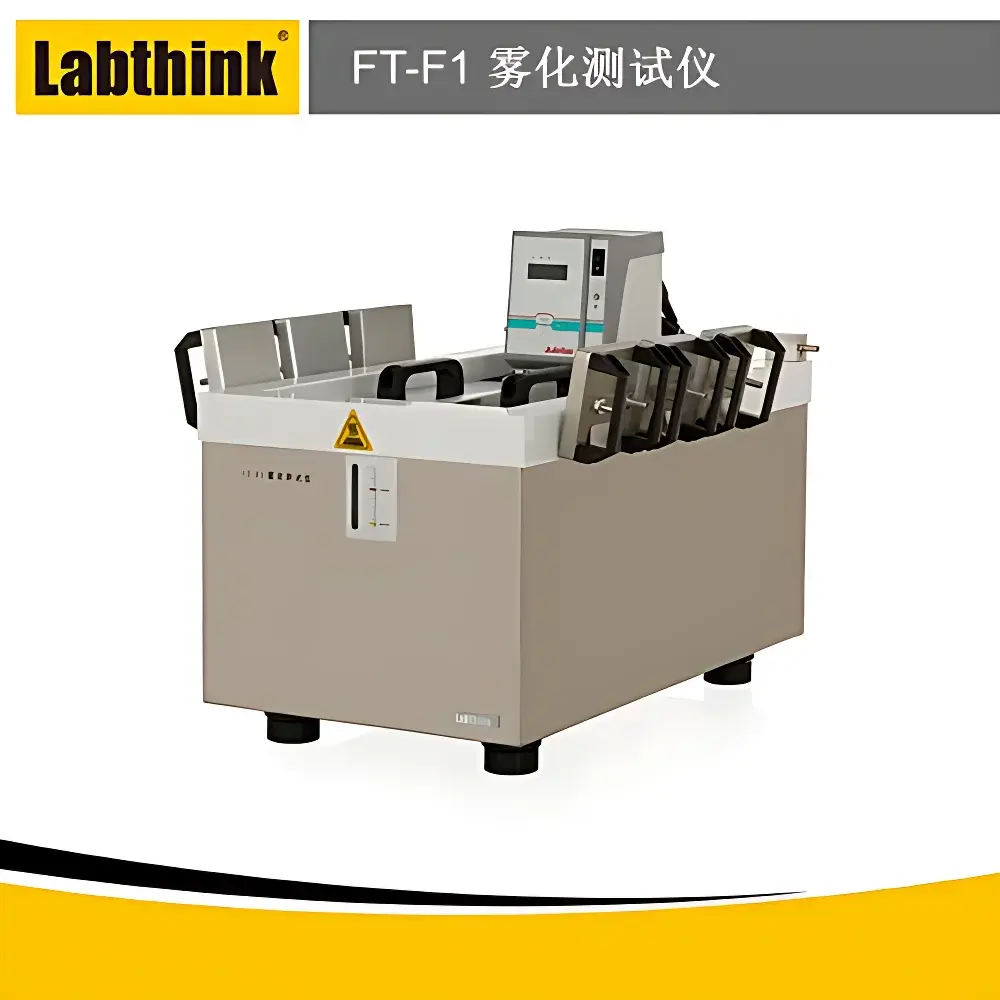
Labthink FT-F1 Automotive Interior Fogging Tester
| Brand | Labthink |
|---|---|
| Model | FT-F1 Fogging Tester |
| Origin | Shandong, China |
| Manufacturer Type | Direct Manufacturer |
| Country of Origin | China |
| High-Temperature Bath Range | Ambient to 150 °C (up to 280 °C optional) |
| High-Temperature Stability | ±0.1 °C at 150 °C |
| Low-Temperature Bath Range | 0–100 °C |
| Low-Temperature Stability | ±0.1 °C |
Overview
The Labthink FT-F1 Automotive Interior Fogging Tester is a precision-engineered instrument designed for quantitative evaluation of volatile condensable substances emitted from non-metallic interior materials under elevated temperature conditions. It operates on the principle of thermal desorption followed by controlled condensation—materials are heated in sealed glass cups (fogging chambers), releasing volatile organic compounds (VOCs) and semi-volatile organic compounds (SVOCs); these vapors migrate and condense onto a chilled surface (either optical-grade glass or aluminum foil) maintained at a precisely regulated low temperature. The degree of fogging is quantified via standardized photometric or gravimetric methods, directly correlating to material compatibility with automotive cabin environments where optical clarity, odor control, and long-term component integrity are critical. This system complies with internationally recognized test protocols for automotive OEMs and Tier-1 suppliers, supporting regulatory conformance, material screening, and R&D validation workflows.
Key Features
- Independent dual-zone temperature control: high-temperature bath (ambient to 150 °C, extendable to 280 °C as optional upgrade) and low-temperature bath (0–100 °C), each stabilized to ±0.1 °C at setpoint—ensuring reproducible thermal gradients essential for inter-laboratory comparability.
- Six parallel test positions: enables simultaneous execution of up to six specimen tests plus blank controls per cycle, significantly improving throughput without compromising measurement consistency.
- Modular optical measurement architecture: standard integrated glossmeter (60° geometry per ISO 2813) for direct fogging value (F-value) calculation; optional haze meter (per ASTM D1003 and ISO 14782) available for alternative optical characterization.
- Gravimetric capability: includes calibrated aluminum foil substrates and dedicated foil handling tools; compatible with external analytical balances (0.01 mg resolution recommended) for mass-based fogging quantification per ISO 6452 Annex A.
- Robust mechanical design: stainless-steel baths, fluororubber sealing components, and thermally insulated chamber housing minimize ambient interference and ensure long-term operational stability.
- Dual power compatibility: supports both 220 VAC/50 Hz and 120 VAC/60 Hz input configurations for global deployment without hardware modification.
Sample Compatibility & Compliance
The FT-F1 accommodates a broad spectrum of automotive interior substrates, including but not limited to polyurethane foams, PVC and TPE trim components, synthetic and natural leathers, needle-punched nonwovens, adhesive films, and textile laminates. Its test methodology satisfies all major OEM and international standards, including ISO 6452:2007, DIN 75201:1992, SAE J1756:1994, QB/T 2728:2005, BS EN 14288:2004, VW PV 3920 and PV 3015, Nissan ES-X83231, Mitsubishi NES M0161:2006-1, GM 9305P:1992, and Toyota TSM 0503G. Each test configuration (gloss, haze, or weight) is fully traceable to reference materials and documented calibration procedures aligned with ISO/IEC 17025 requirements. The system supports GLP-compliant data recording when integrated with validated laboratory information management systems (LIMS).
Software & Data Management
While the FT-F1 operates as a hardware-controlled benchtop instrument without embedded software, its modular architecture facilitates seamless integration into regulated digital workflows. All temperature parameters, test duration, and environmental logs can be recorded externally using compliant data acquisition platforms. When paired with certified glossmeters or analytical balances, raw output files (CSV, XML) support automated import into statistical process control (SPC) tools and audit-ready reporting systems. Full compliance with FDA 21 CFR Part 11 is achievable through third-party electronic signature and audit trail modules—provided the host LIMS or QA platform meets predicate rule requirements for electronic records and signatures.
Applications
- Pre-release qualification of interior trim materials against OEM fogging specifications.
- Root-cause analysis of haze formation on instrument panels, HUD displays, and rearview mirror surfaces.
- Comparative assessment of plasticizers, flame retardants, and coating additives for volatility mitigation.
- Validation of low-emission material substitutions during lightweighting initiatives.
- Support for IATF 16949 clause 8.3.4.2 (design and development controls) and clause 8.5.1.5 (process validation) in automotive supply chains.
- Research into thermal aging effects on polymer matrix degradation and VOC evolution kinetics.
FAQ
What standards does the FT-F1 support for fogging testing?
It fully implements ISO 6452, DIN 75201, SAE J1756, QB/T 2728, BS EN 14288, VW PV 3920, PV 3015, Nissan ES-X83231, Mitsubishi NES M0161, GM 9305P, and Toyota TSM 0503G.
Is the instrument supplied with calibration certificates?
Yes—each unit ships with factory calibration reports for temperature baths and included glossmeter, traceable to NIST or CNAS-accredited laboratories.
Can the FT-F1 be used for aerospace interior testing?
Yes—its operating range and measurement principles align with ASTM D5116 and SAE ARP4755 for aircraft cabin material outgassing assessments.
What consumables require periodic replacement?
Fluoroelastomer sealing rings, aluminum foil substrates, and optical-grade glass plates must be replaced after defined usage cycles to maintain measurement fidelity.
Is remote monitoring or automation possible?
Temperature setpoints and dwell times can be logged via external DAQ systems; full automation requires integration with programmable logic controllers (PLCs) or custom SCADA interfaces.




