
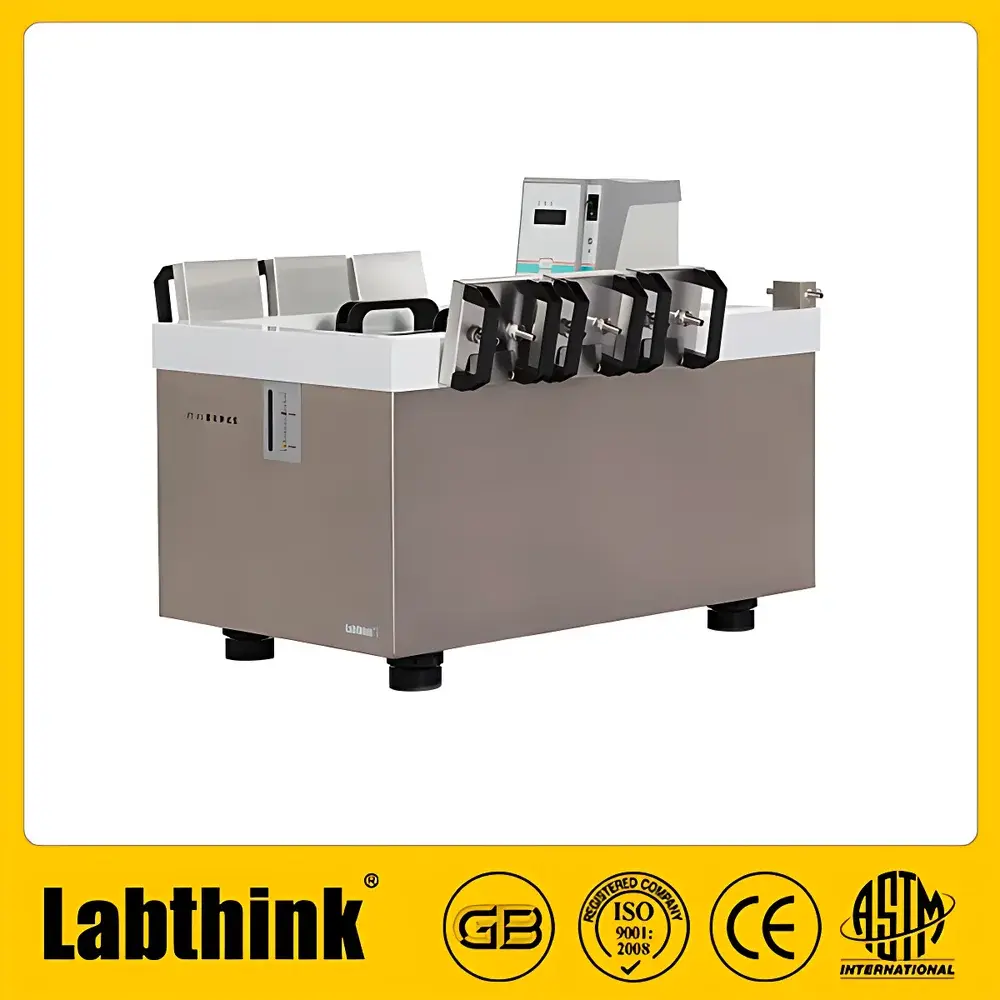
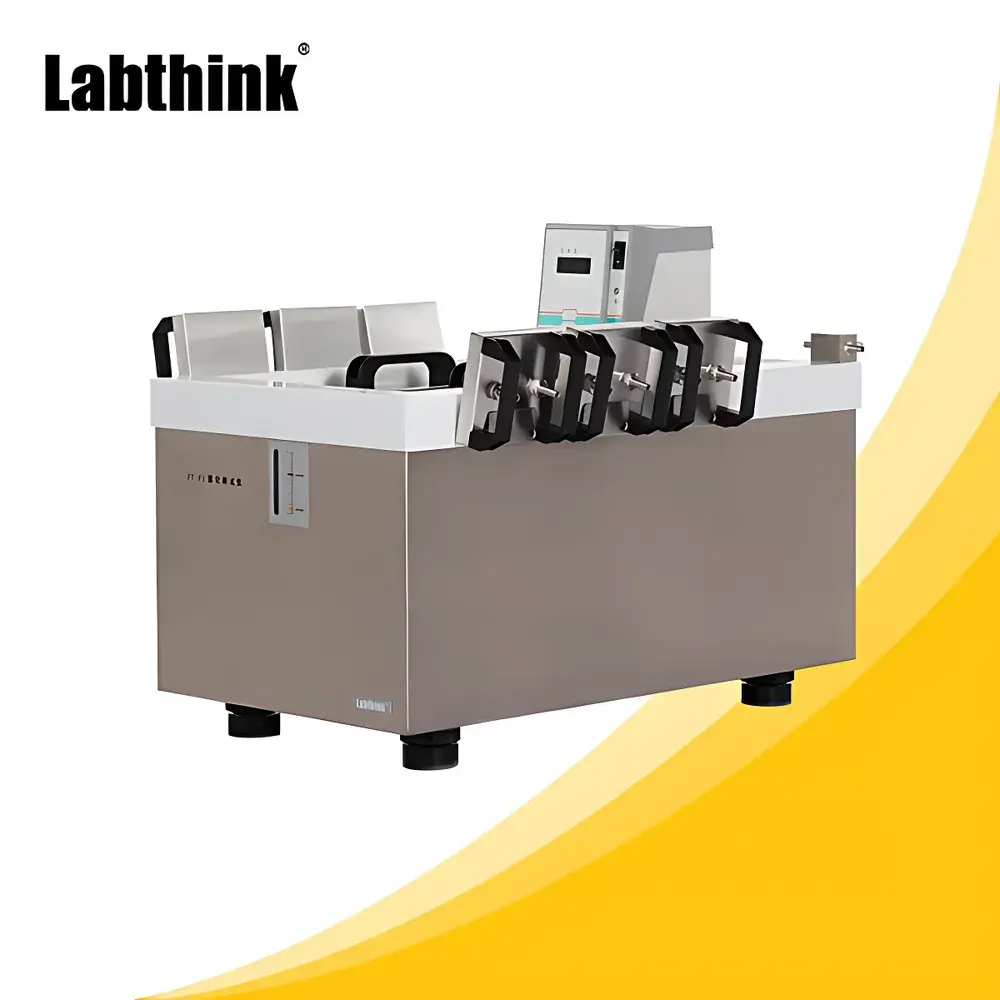
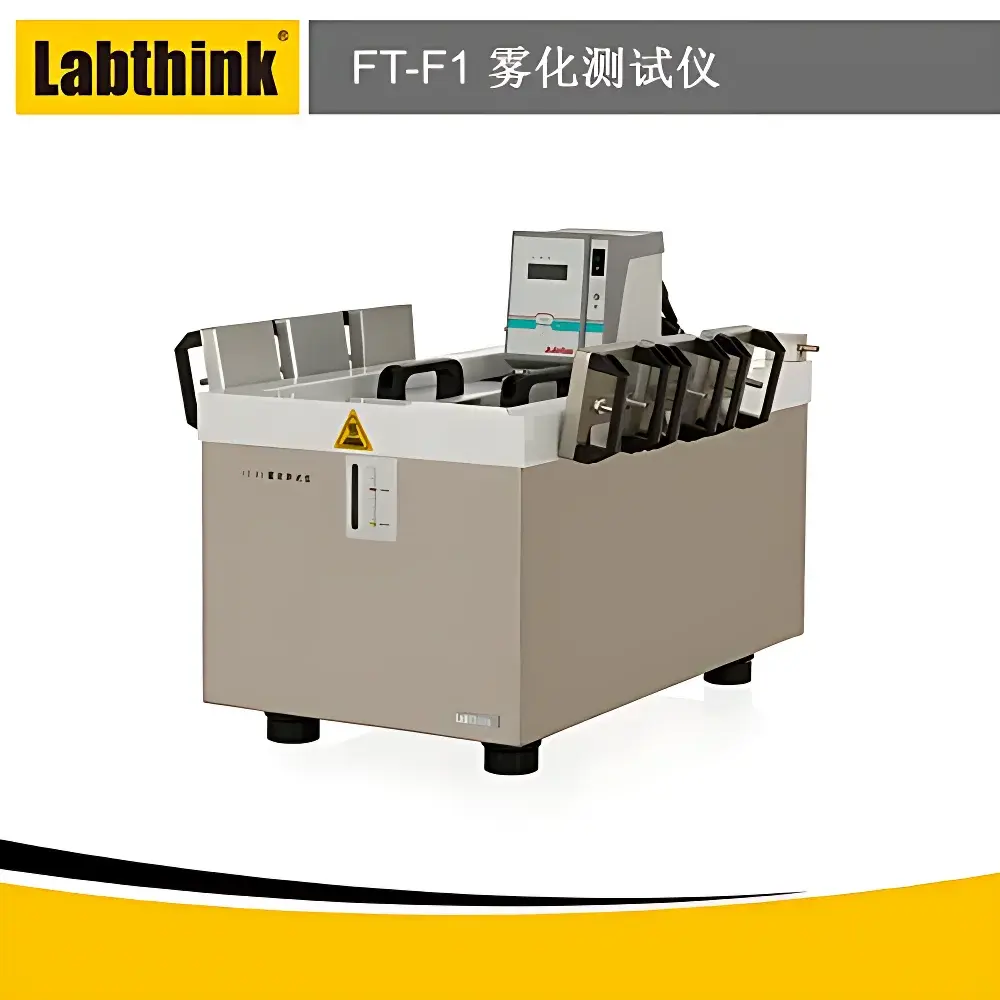
Labthink FT-F1 Automotive Interior Material Fogging Tester
| Brand | Labthink |
|---|---|
| Model | FT-F1 |
| Origin | Shandong, China |
| Manufacturer | Jinan Labthink Electromechanical Technology Co., Ltd. |
| High-Temperature Bath Range | Ambient to 150 °C (up to 280 °C optional) |
| High-Temperature Stability | ±0.1 °C at 150 °C |
| Low-Temperature Bath Range | 0–100 °C |
| Low-Temperature Stability | ±0.1 °C |
Overview
The Labthink FT-F1 Automotive Interior Material Fogging Tester is a precision-engineered instrument designed to quantify volatile condensable emissions from interior materials under controlled thermal stress—critical for evaluating fogging behavior in automotive, aerospace, and rail cabin components. Based on the principle of thermal desorption and cold-surface condensation, the FT-F1 replicates real-world high-temperature exposure conditions experienced by trim materials (e.g., polyurethane foams, PVC, leather, adhesives, nonwovens, and TPEs) during vehicle operation. Volatiles released from heated specimens condense onto temperature-stabilized optical substrates (glass or aluminum foil), enabling quantitative assessment via photometric or gravimetric analysis. This method directly supports regulatory compliance and material qualification workflows aligned with OEM specifications and international standard test protocols.
Key Features
- Six independent test stations enable parallel execution of sample and blank runs—enhancing throughput and statistical robustness per ASTM E2913 and ISO/IEC 17025-compliant validation protocols.
- Dual-zone thermostatic control system: high-temperature bath (ambient to 150 °C, optionally up to 280 °C) and low-temperature bath (0–100 °C), both maintaining ±0.1 °C stability at setpoint—ensuring reproducible thermal gradients essential for inter-laboratory comparability.
- Modular substrate interface supporting three standardized measurement modes: gloss reduction (ASTM D523-compliant, included), haze increase (ISO 14782, optional), and condensate mass gain (gravimetric, requires external microbalance with 0.01 mg resolution, optional).
- Robust mechanical architecture with fluororubber-sealed reaction chambers, calibrated glass plates (square and circular), precision-machined aluminum foil holders, and traceable reference standards (DIDP and DOP available per regional regulatory requirements).
- Comprehensive thermal fluid management system including DIN-certified heat transfer oil and integrated thermal insulation—minimizing ambient drift and ensuring long-term calibration integrity.
Sample Compatibility & Compliance
The FT-F1 accommodates a broad spectrum of interior material forms—including molded plastic parts, laminated composites, coated leathers, textile weaves, hot-melt adhesives, and elastomeric seals—without requiring pre-conditioning beyond standard laboratory acclimatization (ISO 291). It is validated for use in accordance with 12 globally recognized fogging standards, including ISO 6452, DIN 75201 (Types A and B), SAE J1756, QB/T 2728, BS EN 14288, Volkswagen PV 3920 and PV 3015, Nissan ES-X83231, Mitsubishi NES M0161, Ford D45 1727, General Motors GM 9305P, and Toyota TSM 0503G. Instrument design supports GLP/GMP-aligned documentation practices, with full traceability of temperature profiles, operator IDs, and substrate calibration history—facilitating FDA 21 CFR Part 11 readiness when integrated with compliant LIMS or ELN platforms.
Software & Data Management
The FT-F1 operates as a standalone hardware platform; data acquisition and reporting are performed using Labthink’s certified FogTest Suite v3.x—a Windows-based application compliant with ISO/IEC 17025 Annex A.5 requirements for software validation. The suite provides automated calculation of fogging values (FV), haze change (ΔH%), gloss loss (ΔG%), and condensate mass (mg), with built-in uncertainty propagation per GUM (JCGM 100:2008). All raw thermal logs, optical readings, and metadata are stored in encrypted SQLite databases with audit trail functionality, supporting revision-controlled report generation in PDF/A-1b format. Export modules include CSV, XML, and ASTM E1461-compliant structured data files for integration into enterprise quality systems.
Applications
- Pre-release evaluation of trim material formulations against OEM fogging thresholds (e.g., ≤2% gloss loss for dashboard components per BMW GS 97036).
- Root-cause analysis of haze formation on HUD combiners and instrument cluster lenses.
- Comparative screening of alternative plasticizers, flame retardants, or coating resins for reduced volatile organic compound (VOC) emission profiles.
- Validation of cleaning or surface treatment efficacy in removing residual processing aids that contribute to post-assembly fogging.
- Supporting IATF 16949 clause 8.3.4.2 (design verification) and 8.5.1.5 (process validation) through repeatable, documented thermal challenge testing.
FAQ
What standards does the FT-F1 support out-of-the-box?
The instrument is fully configured to execute ISO 6452, DIN 75201 Type A/B, SAE J1756, QB/T 2728, and PV 3920 without hardware modification.
Is gravimetric measurement included in the base configuration?
Yes—the weight method is supported via aluminum foil substrates; however, a certified microbalance (0.01 mg resolution) must be sourced separately.
Can the FT-F1 operate at 250 °C?
The standard high-temperature bath reaches 150 °C; operation up to 280 °C requires the optional extended-range heating module and compatible thermal fluid.
How is temperature uniformity verified across the six test positions?
Each station includes individual PT100 sensor feedback loops; calibration certificates include multi-point mapping reports per ISO/IEC 17025 section 6.4.10.
Does the system comply with FDA 21 CFR Part 11?
Hardware and firmware meet technical prerequisites; full Part 11 compliance requires implementation of validated electronic signatures and audit trail controls within the FogTest Suite environment.





