
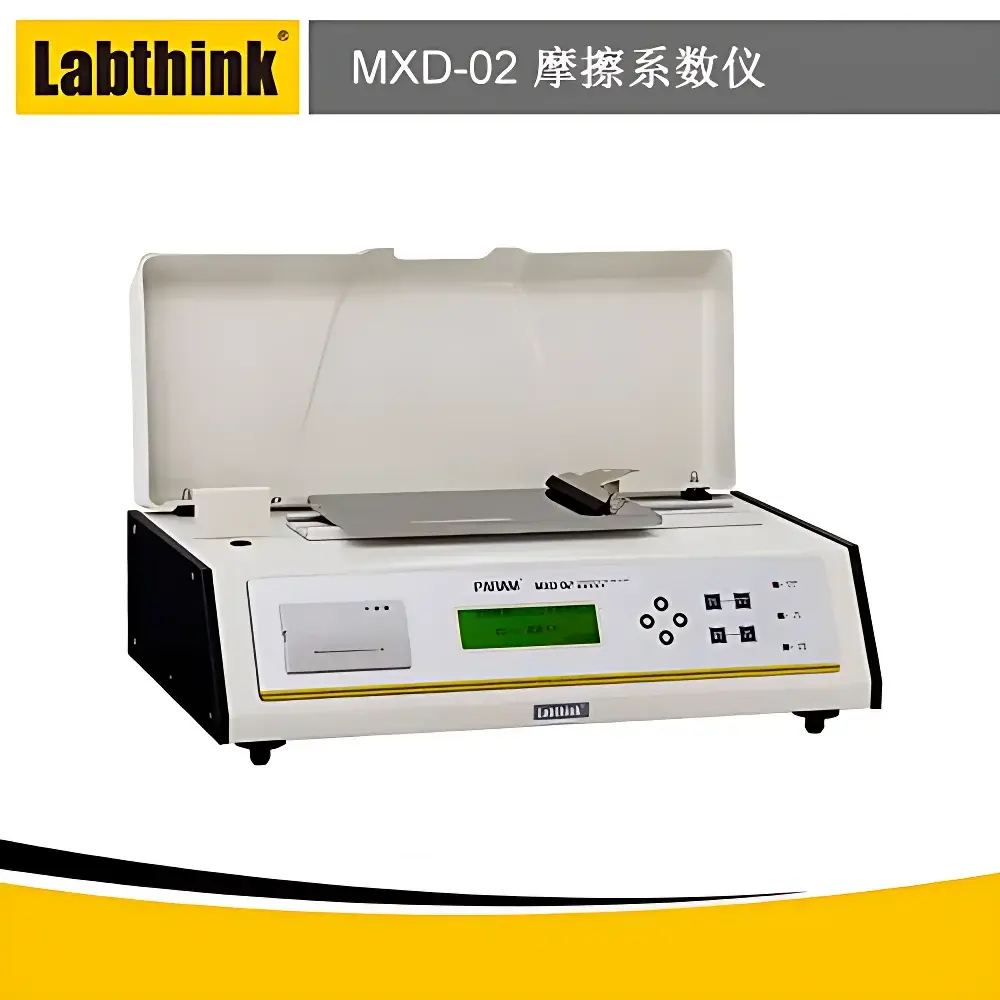
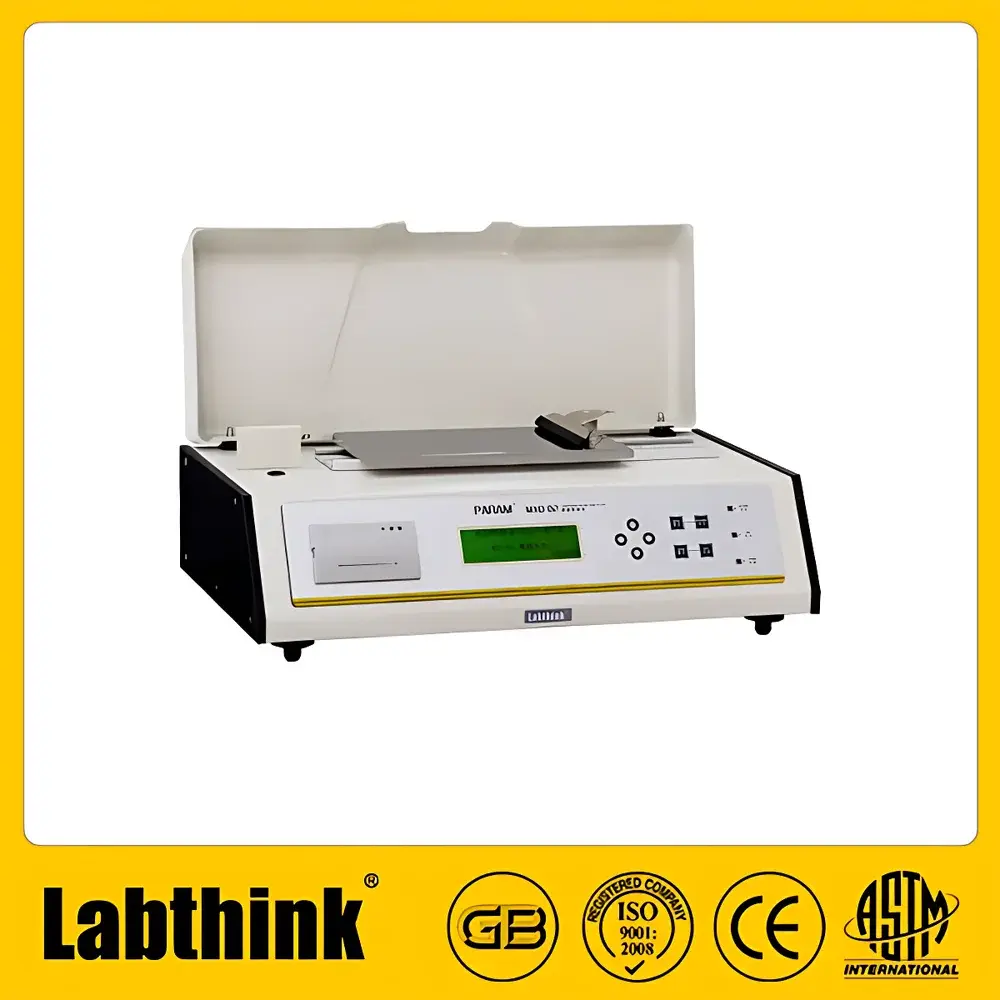
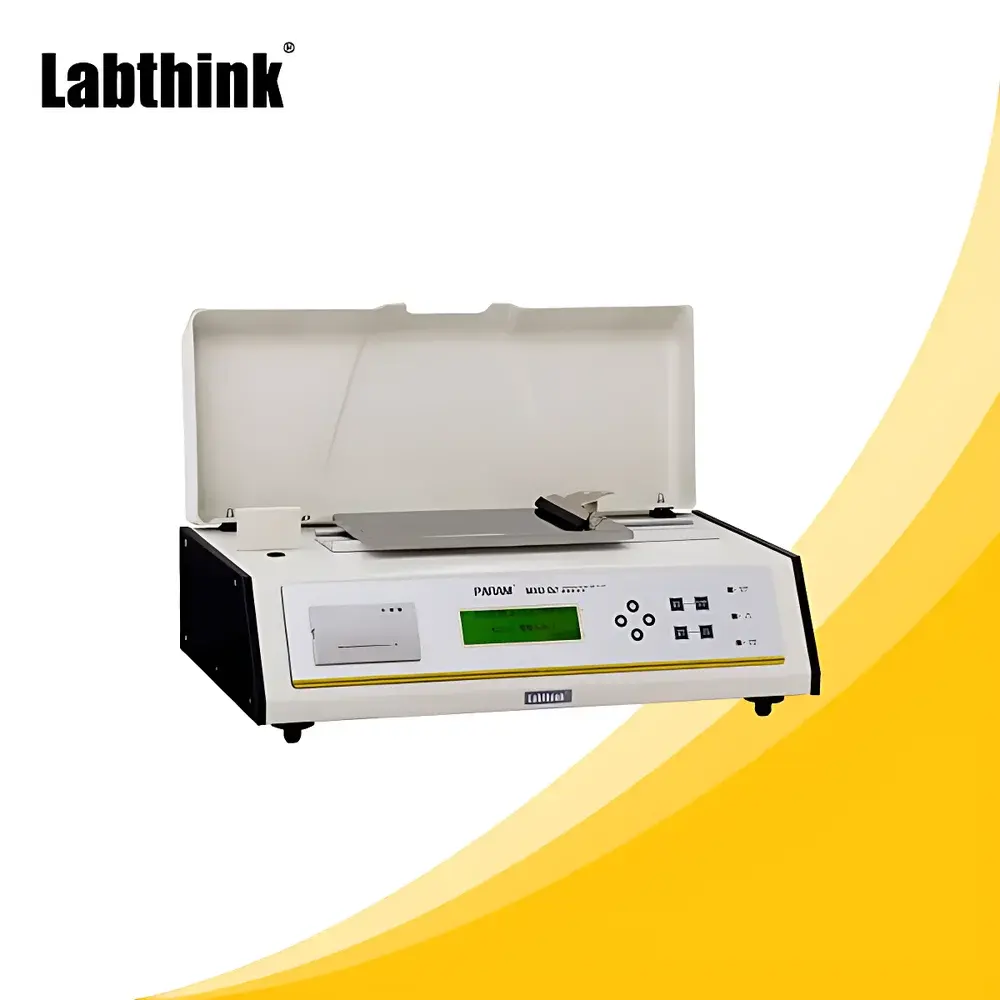
Labthink MXD-02 Medical PVC Catheter Coefficient of Friction Tester with Simulated Body-Temperature Environment
| Brand | Labthink |
|---|---|
| Model | MXD-02 |
| Application | Static & Kinetic COF Measurement for Urological Catheters, Guidewires, and Medical Tubing under Physiological Hydration Conditions |
| Temperature Control | 37 °C ± 0.5 °C (Water-Bath Immersion) |
| Load Range | 0–5 N |
| Accuracy Class | 0.5 |
| Slider Mass | 200 g (standard, silicone-coated) |
| Travel Distance | 70 mm / 150 mm |
| Test Speeds | 100 mm/min, 150 mm/min (adjustable) |
| Ambient Requirements | 23 ± 2 °C, 20–70 % RH |
| Compliance | Designed for ASTM F2624-22, ISO 8536-3, USP <1031>, and GLP-aligned validation protocols |
Overview
The Labthink MXD-02 Medical PVC Catheter Coefficient of Friction Tester is a purpose-engineered instrument for quantifying static and kinetic coefficients of friction (COF) between biomedical polymer surfaces—particularly PVC, silicone, and hydrophilic-coated catheters—and compliant counterfaces under physiologically relevant conditions. Unlike generic COF testers, the MXD-02 integrates a dedicated catheter testing module featuring a thermostatically controlled water bath, enabling standardized immersion testing at 37 °C to replicate in vivo thermal and hydration environments. The system operates on the principle of horizontal sliding resistance measurement: a silicone-coated 200 g slider is placed atop the submerged catheter segment, and relative motion is induced between the specimen and slider via precision linear actuation. Force transduction and displacement tracking yield time-resolved frictional force profiles, from which peak (static) and plateau (kinetic) COF values are computed per ISO 8536-3 Annex B and ASTM F2624-22 Section 7. This methodology directly correlates with clinical metrics such as insertion force, mucosal trauma risk, and patient-reported discomfort during urethral instrumentation.
Key Features
- Integrated 37 °C water-bath module with PID-controlled heating and real-time temperature monitoring (±0.5 °C stability), conforming to physiological simulation requirements in medical device evaluation.
- Dual-travel configuration (70 mm and 150 mm) accommodates both short-segment catheter sections and extended tubing lengths without repositioning.
- High-fidelity load cell (0–5 N, 0.5-class accuracy) calibrated traceably to NIST standards, ensuring reproducible force resolution down to 0.025 N.
- Standardized silicone-coated slider (200 g) compliant with ASTM F2624-22; optional sliders (100 g, 500 g) available for protocol-specific validation or comparative studies.
- Adjustable test velocity (100 mm/min and 150 mm/min default; extended range 10–300 mm/min upon request) enables rate-dependent COF profiling per ISO 8536-3 Clause 6.4.
- Modular clamping fixture system secures catheters of diameters 1–12 Fr without kinking or axial tension, preserving native surface topography and coating integrity.
Sample Compatibility & Compliance
The MXD-02 is validated for testing single-lumen and multi-lumen urological catheters (PVC, silicone, latex, hydrophilic polymer-coated), guidewires (polymer-jacketed, nitinol-core), endotracheal tubes, nasogastric tubes, drainage sets, and disposable medical gloves. All test configurations comply with the mechanical interface definitions specified in ASTM F2624-22 “Standard Test Method for Measuring the Coefficient of Friction of Urological Catheters” and align with the surface interaction assessment framework of ISO 8536-3 “Infusion equipment — Part 3: Infusion sets for single use, sterile”. The system supports full audit trails, electronic signatures, and metadata logging required for FDA 21 CFR Part 11 compliance when paired with Labthink’s certified LBT-DataManager software (v4.2+). Environmental conditioning (23 ± 2 °C, 20–70 % RH) meets ISO 291 preconditioning guidelines for polymeric medical materials.
Software & Data Management
Data acquisition and analysis are performed using Labthink’s LBT-DataManager v4.2—a GxP-ready platform supporting automated COF calculation, curve overlay, statistical reporting (mean, SD, CV%), and export to CSV, PDF, or XML formats. Each test record includes timestamped environmental logs (bath temperature, ambient T/RH), operator ID, calibration certificate references, and raw force/displacement datasets. Audit trail functionality captures all user actions—including parameter edits, result deletions, and report generation—with immutable timestamps and digital signatures. The software is preconfigured for IQ/OQ documentation packages and integrates seamlessly with enterprise LIMS systems via HL7 or RESTful API. All firmware and software updates undergo rigorous regression testing per IEC 62304 Class B software lifecycle requirements.
Applications
- Preclinical validation of hydrophilic coating durability on PVC catheters after repeated hydration/dehydration cycles.
- Comparative friction profiling of novel antimicrobial polymer blends versus legacy materials under simulated urinary tract conditions.
- Batch release testing for COF consistency across manufacturing lots, supporting ISO 13485 clause 7.5.10 (production process validation).
- Root cause analysis of high-insertion-force complaints by correlating surface roughness (AFM), contact angle (goniometry), and dynamic COF trends.
- Regulatory submission support for 510(k) or CE Mark technical files, including test method validation reports per ISO 10993-18 and ISO 17025-accredited laboratory data.
FAQ
What physiological relevance does the 37 °C water bath provide?
It replicates core body temperature to ensure hydrated polymer surfaces exhibit realistic swelling, plasticization, and interfacial energy states—critical for predicting in vivo lubricity behavior.
Can the system test coated guidewires with sub-millimeter diameters?
Yes—the low-profile clamping fixture and 1 Fr minimum diameter compatibility enable stable mounting of fine-diameter wires without slippage or bending artifacts.
Is calibration traceable to international standards?
All load cells are factory-calibrated against NIST-traceable deadweight standards; annual recalibration certificates include uncertainty budgets per ISO/IEC 17025.
How is compliance with FDA 21 CFR Part 11 ensured?
Through role-based access control, electronic signature workflows, immutable audit trails, and data encryption at rest and in transit—validated per Labthink’s Part 11 Conformance Statement (Ref: LBT-CFR11-2024-08).
Does the instrument support custom test protocols beyond ASTM F2624-22?
Yes—user-defined test sequences (e.g., multi-cycle friction wear, temperature ramping, variable speed profiles) can be programmed via the LBT-DataManager scripting interface.



