
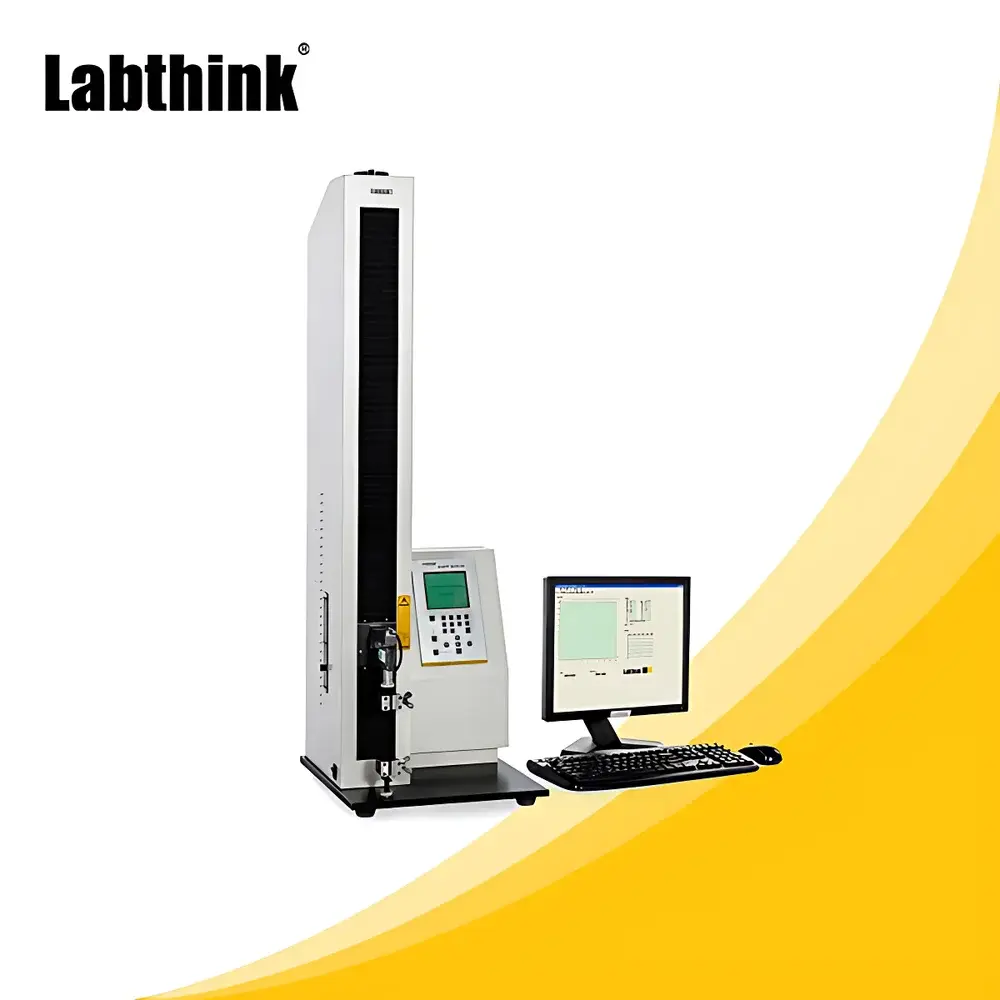
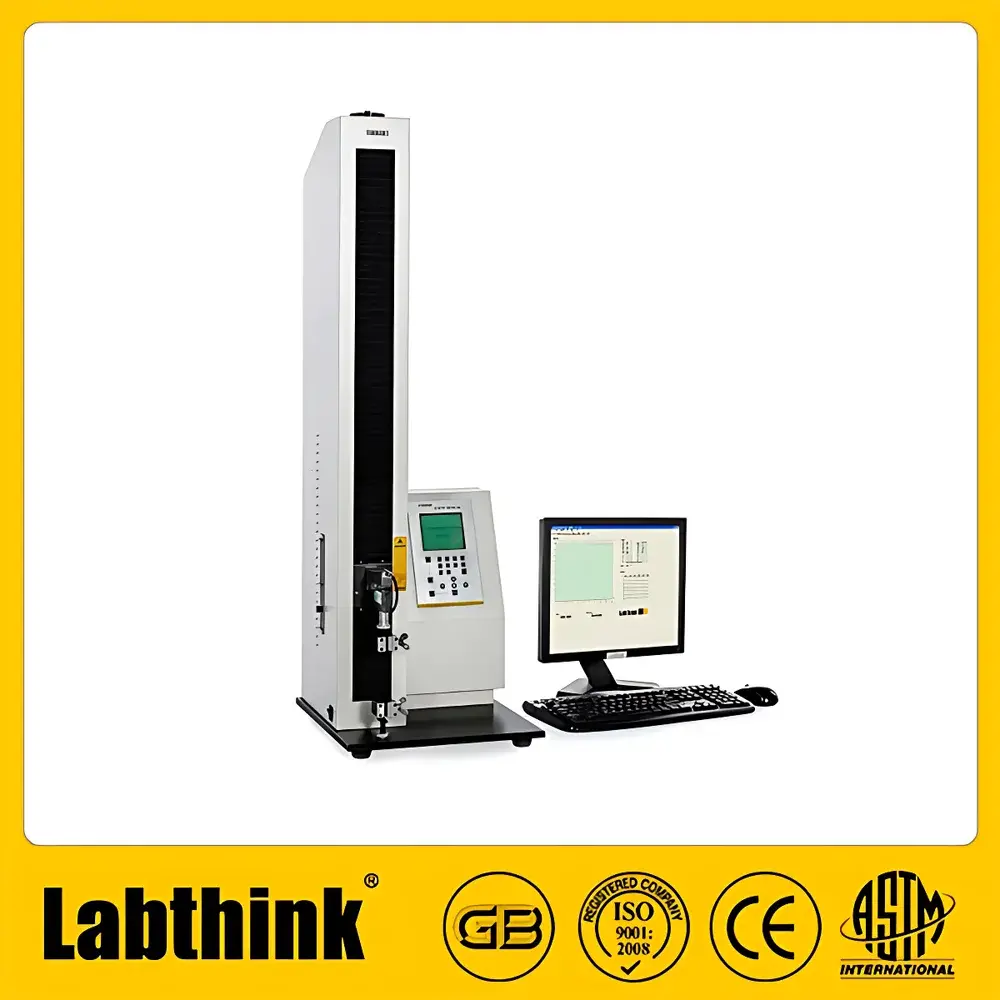
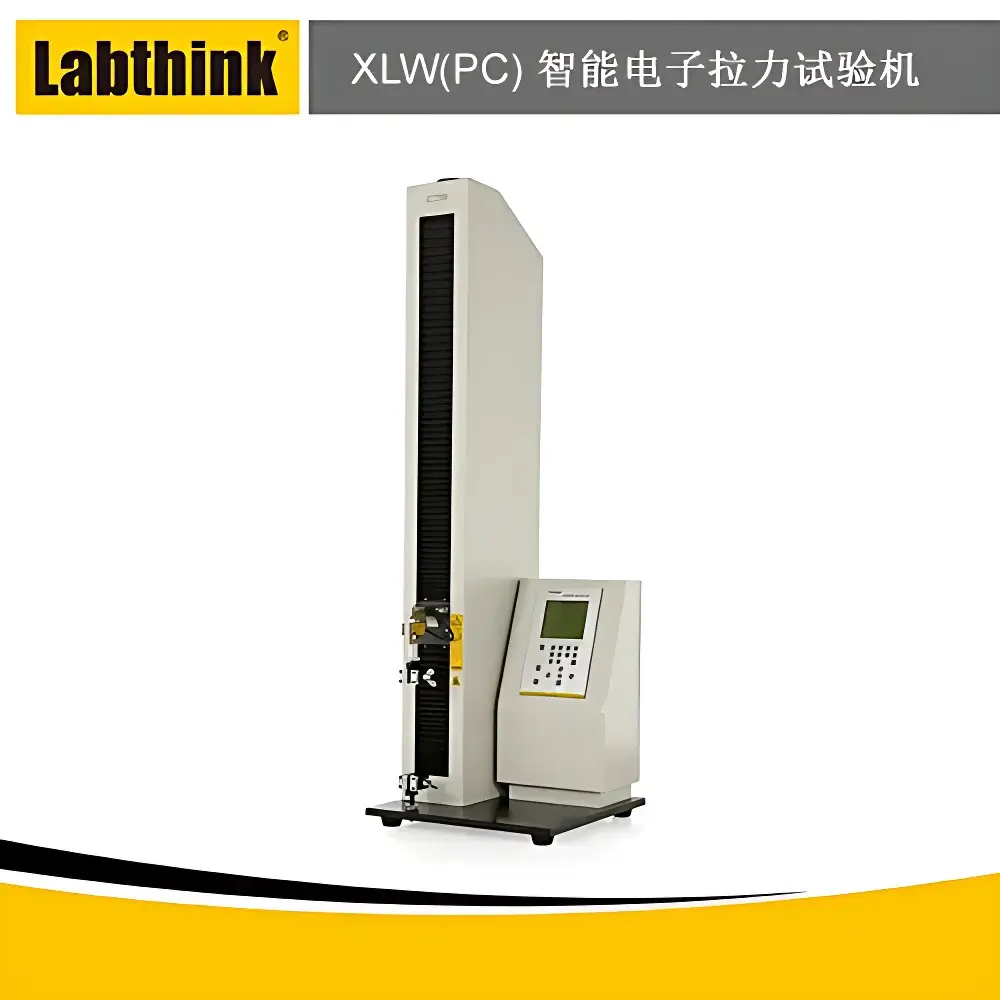
Labthink XLW(PC) Pharmaceutical Butyl Rubber Stopper Piercing Tester
| Brand | Labthink |
|---|---|
| Model | XLW(PC) |
| Type | Electronic Tensile Testing Machine |
| Max Test Load | 0.5 kN |
| Force Accuracy Class | 0.5 |
| Travel Distance | 1000 mm |
| Standard Clamp Width | 30 mm |
| Optional Clamp Width | 50 mm |
| Test Speeds | 50, 100, 150, 200, 250, 300, 500 mm/min |
| Compliance | ASTM E4, ASTM D882, ASTM F88, ASTM F904, ISO 37, GB/T 17200, GB 13022, GB/T 2792, GB/T 7122 |
Overview
The Labthink XLW(PC) Pharmaceutical Butyl Rubber Stopper Piercing Tester is a precision-engineered electromechanical testing system designed specifically for the quantitative evaluation of mechanical integrity and functional performance of pharmaceutical elastomeric closures—primarily butyl rubber stoppers used in vials, syringes, and infusion containers. Operating on the fundamental principle of controlled uniaxial force application under defined displacement conditions, the instrument measures piercing force (the peak load required to penetrate the stopper with a standardized stainless-steel needle), resealability, seal retention after puncture, hang strength, and ring-opening force for infusion bag pull-tabs. Its architecture integrates high-resolution load cell sensing, programmable crosshead motion control, and real-time data acquisition to deliver repeatable, traceable results aligned with global regulatory expectations for container closure integrity (CCI) assessment.
Key Features
- Microprocessor-controlled operation with large LCD display showing real-time force–displacement curves, numerical results, and test status
- Dual-range load capacity (50 N and 500 N) selectable via software—optimized for both low-force seal integrity tests and higher-load structural evaluations
- Extended 1000 mm vertical travel range enables full-stroke testing of oversized or multi-layered packaging configurations
- Seven preprogrammed test modes: tensile, peel, tear, heat seal strength, puncture, ring opening, and hanging force—each configurable with independent speed, distance, and trigger thresholds
- Seven discrete test speeds (50–500 mm/min) compliant with pharmacopoeial and standard method requirements (e.g., USP <381>, ISO 8536-2)
- Standard 30 mm jaw width with optional 50 mm configuration for broader specimen compatibility
- Integrated overload protection, end-of-travel limit switches, automatic return-to-start positioning, and power-loss memory retention
- Comprehensive data management suite supporting statistical analysis of grouped specimens, curve superposition, modulus calculation, and strain-at-break derivation
Sample Compatibility & Compliance
The XLW(PC) accommodates a wide range of pharmaceutical primary packaging components, including halobutyl and chlorobutyl rubber stoppers (Type I–III per USP <381>), silicone-coated closures, laminated seals, and infusion bag pull-tab assemblies. It supports standardized test geometries defined in ASTM F88 (seal strength), ASTM F904 (peel adhesion), ISO 37 (rubber tensile properties), and GB/T 2792 (peel resistance of pressure-sensitive tapes). All force measurements are traceable to national metrological standards, and the 0.5-class accuracy meets ISO/IEC 17025 calibration requirements for accredited laboratories. The system’s mechanical design and firmware logic comply with GLP documentation practices, enabling audit-ready records—including operator ID, timestamp, environmental conditions (if interfaced with external sensors), and raw force–displacement datasets.
Software & Data Management
The proprietary Labthink testing software provides a validated, menu-driven interface compatible with Windows-based laboratory PCs. It supports full 21 CFR Part 11 compliance through user-level access controls, electronic signatures, and immutable audit trails for all parameter changes, test executions, and report generations. Raw data is stored in encrypted binary format with CSV export capability for third-party statistical analysis. The software enables batch processing of up to 99 specimens per test sequence, automatic calculation of mean, SD, CV%, and pass/fail flagging against user-defined specification limits. Historical test archives are searchable by date, operator, material lot, or test type—facilitating trend analysis across production campaigns or supplier qualification studies.
Applications
- Quantification of needle penetration force for sterility maintenance validation per ISO 8536-2 and EP 3.2.9
- Evaluation of post-puncture resealability and leakage resistance under simulated clinical handling
- Measurement of hang strength for IV bags to ensure mechanical stability during administration
- Determination of pull-ring opening force to verify ergonomic usability and child-resistant compliance
- Assessment of heat seal strength between foil-laminated stopper wads and aluminum caps
- Tensile property characterization (tensile strength, elongation at break, Young’s modulus) of rubber formulations per ASTM D412 and GB/T 528
- Comparative testing of aging effects (e.g., steam sterilization, dry heat, gamma irradiation) on stopper mechanical resilience
FAQ
What regulatory standards does the XLW(PC) support for pharmaceutical stopper testing?
It fully supports USP <381>, ISO 8536-2, EP 3.2.9, ASTM F88, ASTM F904, ISO 37, and corresponding Chinese pharmacopoeial and GB/T standards.
Can the system be integrated into an existing LIMS or MES environment?
Yes—via TCP/IP or RS232 communication protocols, with customizable data output formats (XML, CSV) and optional OPC UA server integration.
Is the force sensor calibrated and traceable to international standards?
All load cells are factory-calibrated against NIST-traceable reference standards, with optional annual recalibration services and certificate issuance.
Does the software meet FDA 21 CFR Part 11 requirements?
Yes—the software includes role-based authentication, electronic signatures, audit trail logging, and data integrity safeguards as required for regulated environments.
What accessories are essential for routine stopper piercing tests?
Standard configuration includes universal pneumatic grips, stainless-steel piercing needles (0.8 mm and 1.2 mm diameter per ISO 8536-2), and alignment fixtures; optional items include temperature-controlled chambers and humidity enclosures for environmental testing.



