
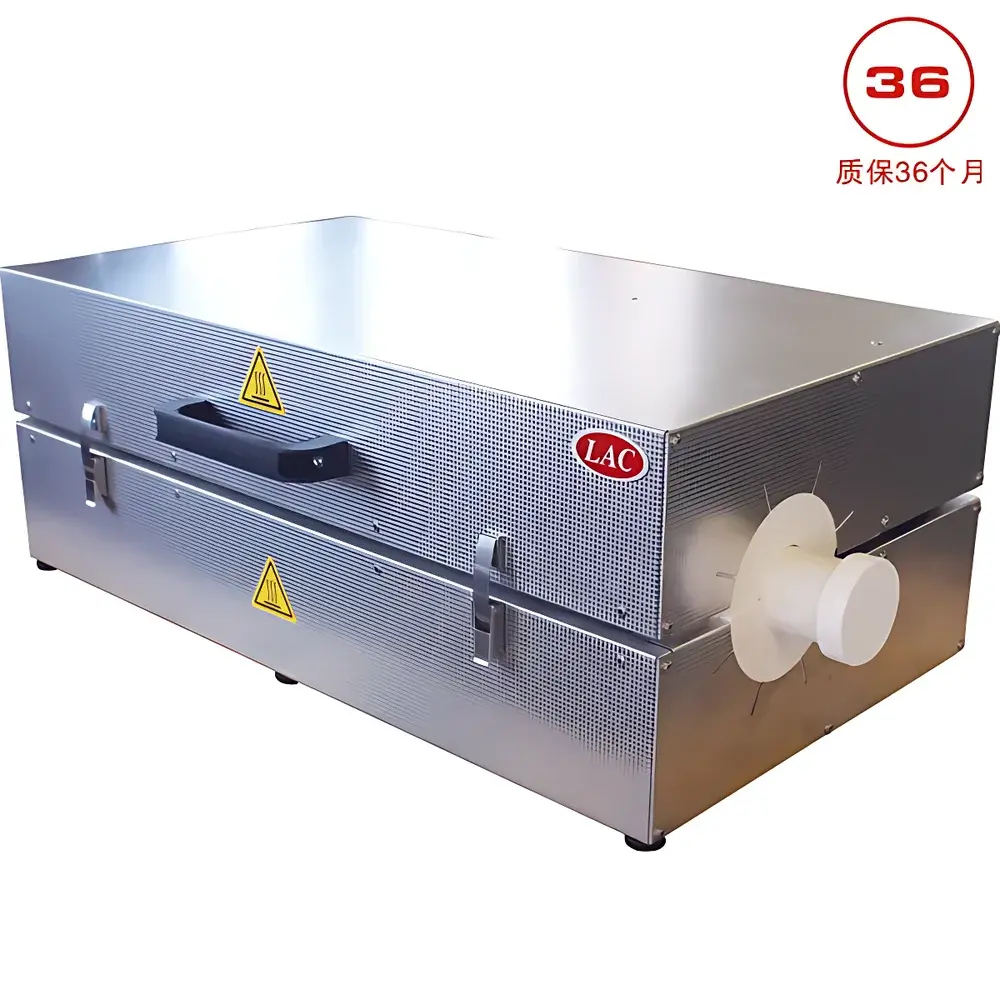
LAC LT Series Horizontal Tube Furnace (1300 °C)
| Brand | LAC |
|---|---|
| Origin | Czech Republic |
| Model | LT50/300/13 |
| Max Temperature | 1300 °C |
| Temperature Control Accuracy | ±5 °C |
| Max Power | 3.2 kW |
| Heating Time to Max Temp | 105 min |
| Heating Method | Resistance Wire Heating |
| Internal Tube Diameter | 50 mm |
| Configuration | Horizontal, Dual-Flanged Ceramic Tube with B-Type Thermocouple |
| Standard Controller | HT40AL (2 Ramp + 2 Soak Programs) |
| Optional Controllers | HT200 (30 programs × 25 steps, USB/LAN), HT205 (30 × 15 steps, LAN only) |
| Atmosphere Options | Inert or Reducing Gas via Sealed Flanges with Flowmeter & Pressure Gauge |
| Safety | Mechanical Limit Switch on Hinged Top Cover, Isolated Electrical Cabinet, Solid-State Relay |
Overview
The LAC LT Series horizontal tube furnace is a precision-engineered thermal processing system designed for controlled high-temperature experimentation under inert, reducing, or vacuum atmospheres. Operating on the principle of resistive heating via high-purity Kanthal A1 resistance wire wound around a high-alumina ceramic tube, the furnace delivers stable and uniform axial temperature profiles up to 1300 °C. Its defining architecture features a horizontally oriented, double-flanged alumina (Al₂O₃) tube—rated for continuous service at 1300 °C—which enables hermetic sealing using metal flanges and high-temperature gaskets. This configuration supports reproducible thermal treatments where atmosphere integrity, sample accessibility during operation, and minimal thermal mass loss are critical—such as sintering of functional ceramics, annealing of thin-film substrates, catalyst activation, and solid-state reaction kinetics studies.
Key Features
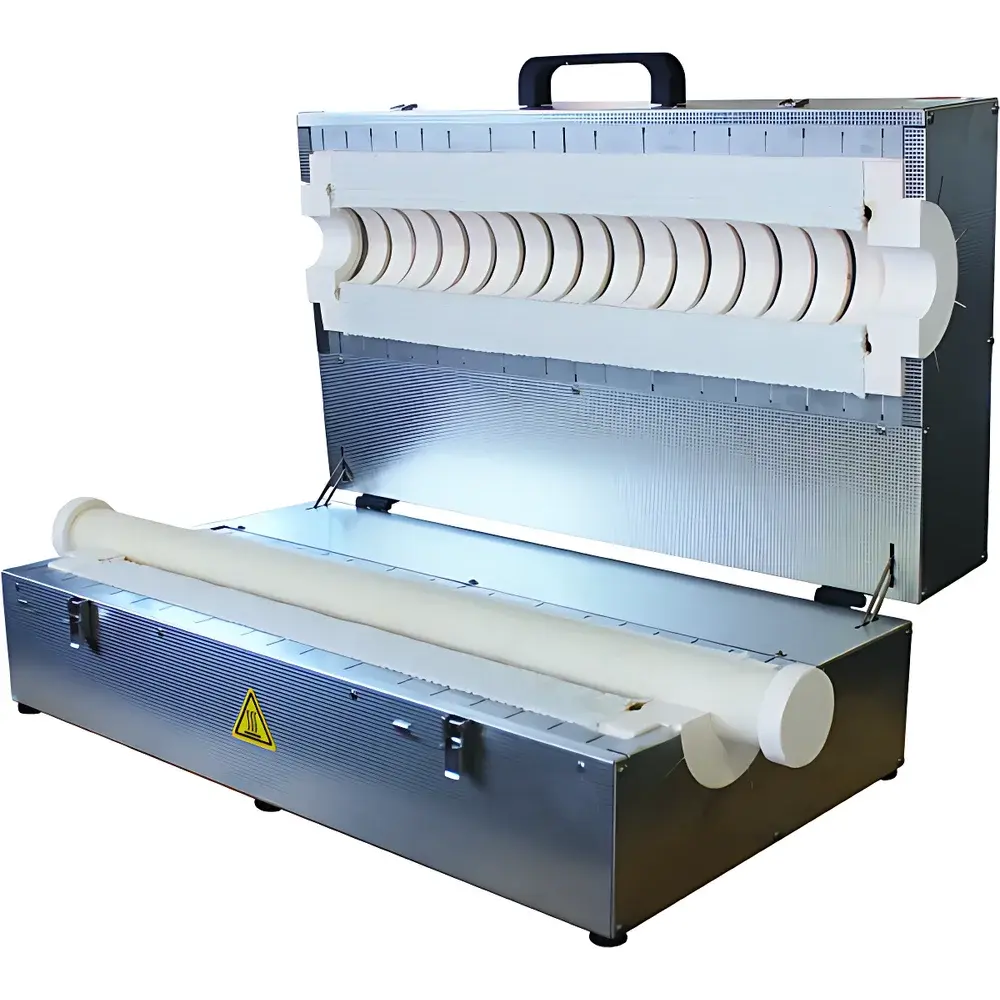
- Horizontally mounted high-purity alumina tube (50 mm inner diameter, 300 mm heated length) with dual stainless-steel flanges for gas-tight or vacuum-compatible operation
- Robust heating system utilizing premium-grade Kanthal A1 resistance wire, thermally insulated with multilayer ceramic fiber modules for energy efficiency and thermal stability
- Dedicated electrical cabinet housing all power electronics—including solid-state relay, fused mains input, and isolated control circuitry—to ensure electromagnetic compatibility and operator safety
- Hinged top-access design with mechanical limit switch interlock, preventing heater activation when the upper section is open
- Integrated Type B (Platinum/Rhodium) thermocouple positioned in direct contact with the tube wall for accurate and traceable temperature feedback
- Standard HT40AL digital controller offering two independent ramp-and-soak programs; fully field-upgradable to HT200 or HT205 controllers for advanced thermal profiling
Sample Compatibility & Compliance
The LT50/300/13 accommodates cylindrical samples up to 45 mm in diameter and 250 mm in length, enabling direct insertion and real-time manipulation without breaking atmosphere integrity. The sealed tube environment complies with standard laboratory protocols for oxygen-sensitive processes (e.g., Ni-based alloy annealing, Li-ion cathode precursor calcination). All electrical components conform to IEC 61000-6-2 (immunity) and IEC 61000-6-4 (emission) standards. The furnace’s mechanical design follows EN 61000-1-2 for functional safety, and its temperature calibration traceability aligns with ISO/IEC 17025 requirements when used with certified reference thermocouples. Optional atmosphere accessories—including calibrated mass flow controllers, pressure relief valves, and gas purging manifolds—support compliance with ASTM E29-23 (standard practice for using significant digits) and ISO 8573-1 (compressed air purity classes) when integrated into GMP-relevant workflows.
Software & Data Management
The HT200 and HT205 controllers support full programmability (30 multi-step profiles, up to 25 segments per program) with time-temperature logging at user-defined intervals (1–60 s resolution). Both units feature native RS232 and EIA-485 serial interfaces plus optional Ethernet (HT200) or LAN-only (HT205) connectivity. When paired with the HTMonit software suite, users gain real-time remote monitoring, automated data export to CSV/Excel, audit-trail generation (including operator ID, timestamp, setpoint changes, and deviation alerts), and electronic signature capability—meeting FDA 21 CFR Part 11 requirements for regulated environments. Calibration data, firmware version logs, and thermal cycle histories are stored internally with battery-backed memory retention exceeding 10 years.
Applications
- Controlled-atmosphere sintering of oxide and non-oxide ceramics (e.g., Al₂O₃, SiC, ZrO₂)
- Thermal decomposition and calcination of metal-organic precursors for battery cathode materials
- Reductive annealing of metal oxides (e.g., CuO → Cu, NiO → Ni) under H₂/N₂ mixtures
- Graphitization and carbonization of polymer-derived ceramics and carbon fibers
- High-temperature aging tests of electronic packaging materials and dielectric coatings
- Calibration verification of thermocouples and infrared pyrometers up to 1300 °C
FAQ
What atmosphere gases are compatible with the LT series tube furnace?
Nitrogen, argon, hydrogen (≤5% in N₂), forming gas (5% H₂/95% N₂), and vacuum (down to 10⁻² mbar with optional pump interface) are routinely supported. Full compatibility requires proper gas train integration, including back-pressure regulation and leak-tested flange seals.
Can the furnace be operated vertically?
No—the LT50/300/13 is engineered exclusively for horizontal orientation to maintain thermal uniformity and mechanical stability of the ceramic tube. Vertical conversion is not offered by LAC and voids warranty and safety certification.
Is third-party calibration documentation available?
Yes—upon request, LAC provides factory calibration certificates traceable to CMI (Czech Metrology Institute) for the embedded Type B thermocouple and controller input channel, compliant with ISO/IEC 17025 Annex A.3.
What maintenance is required for long-term reliability?
Annual inspection of ceramic tube integrity, resistance wire tension, and thermocouple junction condition is recommended. Cleaning of fiber insulation surfaces with dry air and verification of flange gasket elasticity should occur before each high-temperature campaign.
Does the furnace support ramp-hold-cool cycles with automatic cooling gas injection?
Not natively—the standard configuration does not include active cooling or gas quenching. However, external mass flow controllers can be integrated via the optional atmosphere port to introduce controlled N₂ purge during cooldown phases, provided process validation confirms thermal shock limits are respected.



