
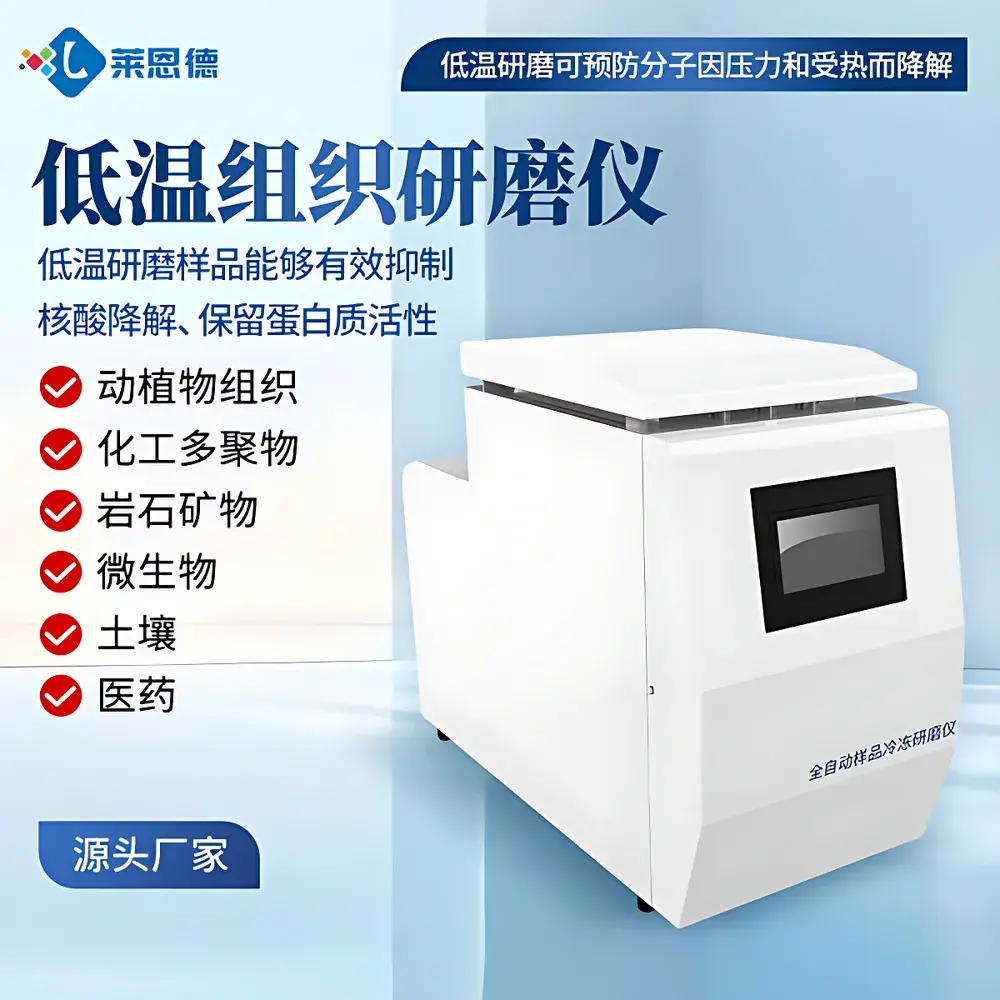
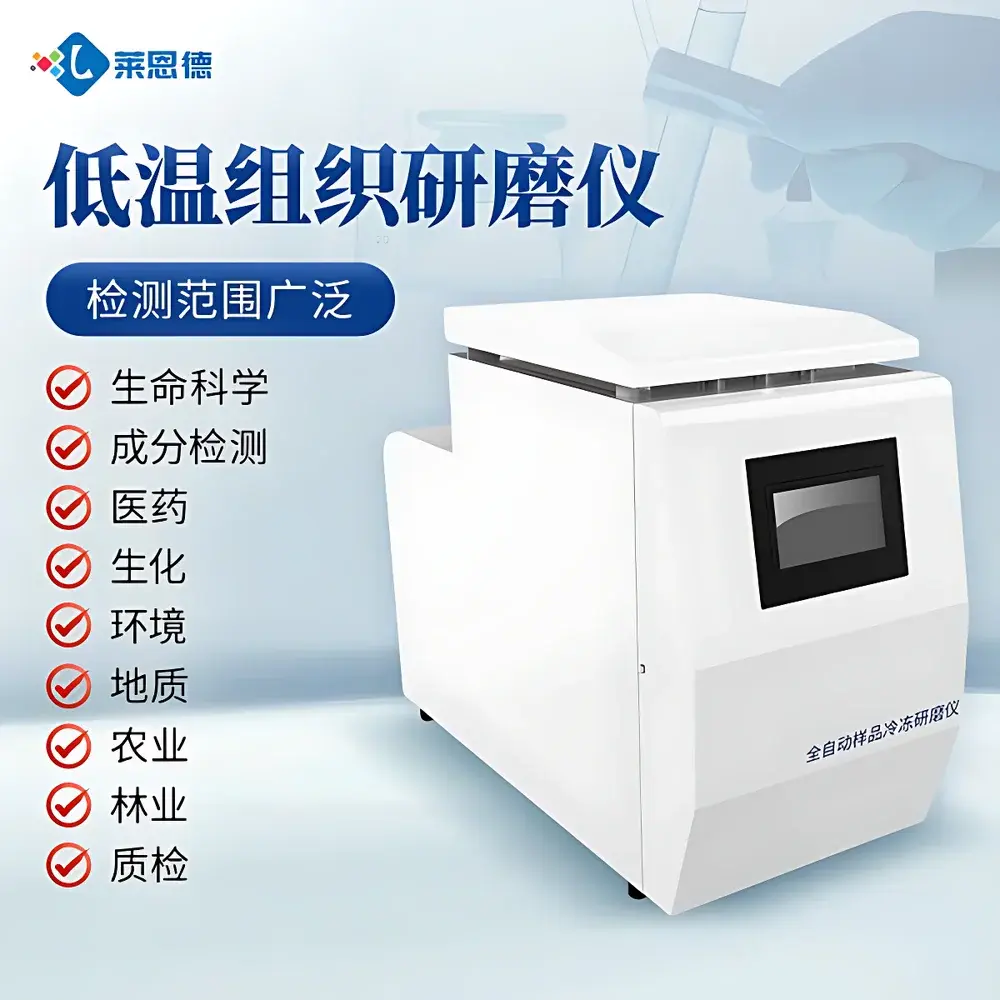
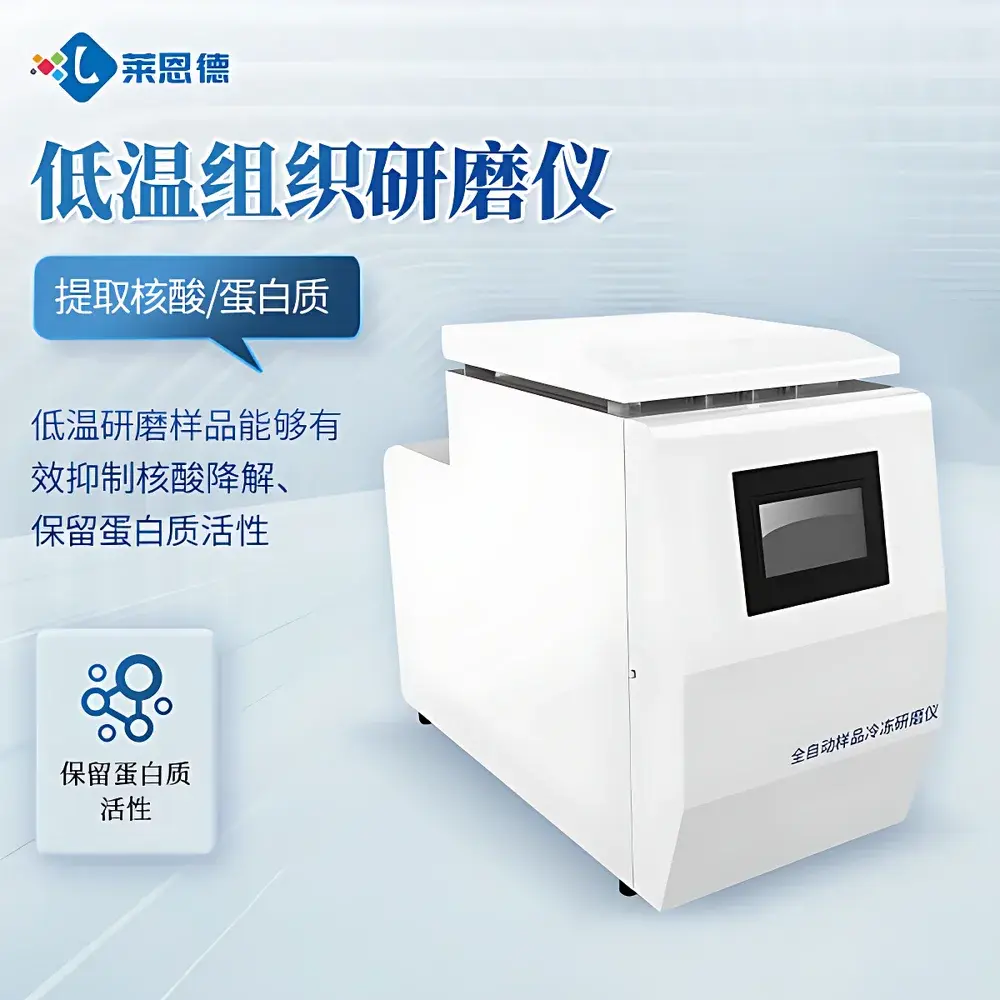
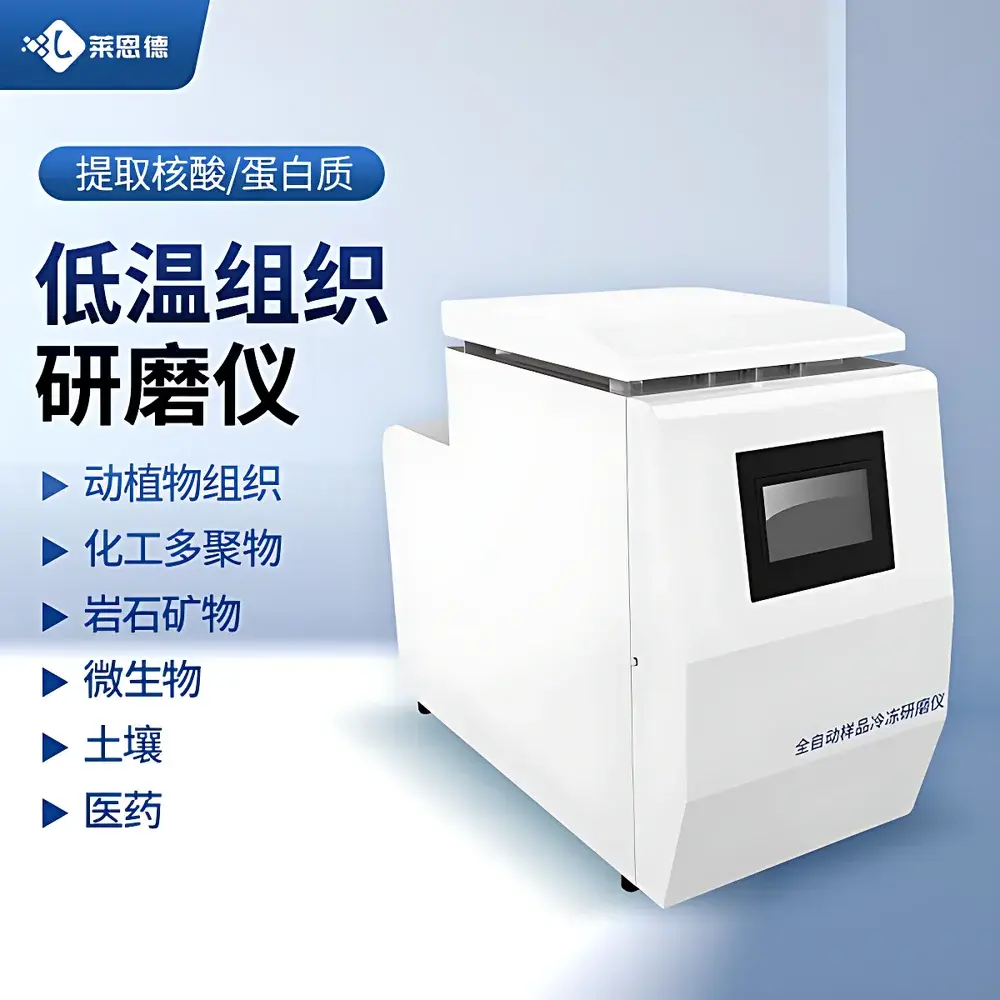
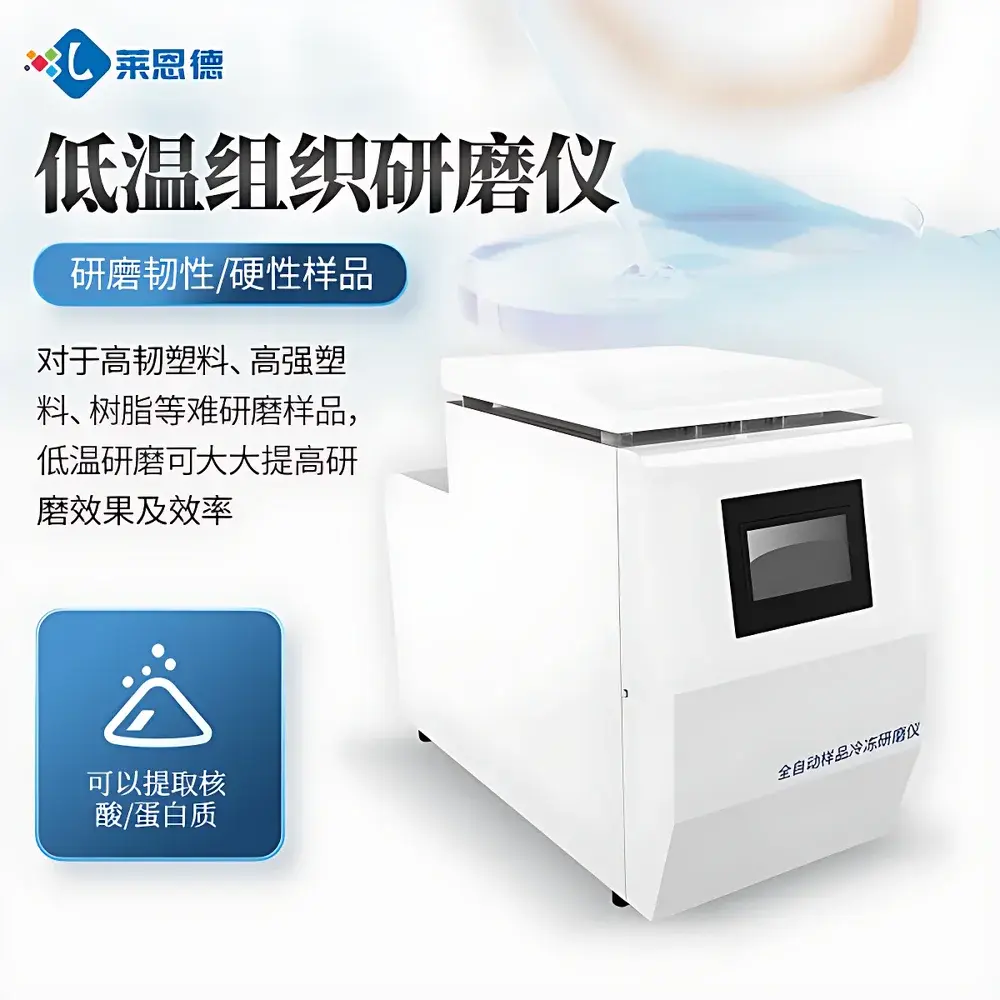
LANENDE LD-DY24 Cryogenic Tissue Grinder
| Brand | LANENDE Intelligent Technology |
|---|---|
| Origin | Shandong, China |
| Manufacturer Type | Direct Manufacturer |
| Country of Origin | China |
| Model | LD-DY24 |
| Price | USD 5,000 (FOB) |
Overview
The LANENDE LD-DY24 Cryogenic Tissue Grinder is a high-performance, benchtop cryo-milling system engineered for reproducible, low-temperature mechanical disruption of biological and non-biological samples. It operates on the principle of cryogenic impact grinding—where samples pre-chilled with liquid nitrogen (−196 °C) are subjected to rapid, high-frequency oscillation within stainless-steel grinding jars containing hardened steel or tungsten carbide beads. This process embrittles resilient matrices—including fibrous tissues, elastomeric polymers, and mineral-rich specimens—enabling uniform particle size reduction without thermal degradation. Designed for laboratories requiring strict molecular integrity preservation, the LD-DY24 supports downstream applications in nucleic acid isolation, proteomics, metabolite profiling, and elemental analysis where sample integrity directly impacts assay validity.
Key Features
- Cryo-compatible dual-chamber design: Integrated liquid nitrogen inlet port and insulated grinding chamber maintain sub-zero temperatures throughout operation, minimizing thermal transients during sample loading and milling.
- Programmable oscillation control: Adjustable frequency range (3–7 Hz) and time duration (0.1–99.9 min) enable method optimization for diverse sample classes—from mouse liver to basalt rock or polyethylene terephthalate (PET).
- Robust mechanical architecture: Heavy-duty eccentric drive mechanism with reinforced aluminum alloy frame ensures long-term stability under repeated cryogenic thermal cycling.
- Interlocked safety system: Automatic power cutoff upon lid opening and real-time temperature monitoring via embedded thermocouple prevent operator exposure and equipment overcooling.
- Modular jar configuration: Compatible with 2–50 mL stainless-steel, ceramic, or cryo-resistant polymer grinding vessels; optional bead sets (2–8 mm diameter) support scalable throughput from single biopsies to bulk environmental composites.
Sample Compatibility & Compliance
The LD-DY24 accommodates heterogeneous sample types across regulated and research settings: mammalian and plant tissues (e.g., brain, root nodules), microbial pellets (Gram-positive bacteria, yeast), soil aggregates, geological powders (quartz, clay), pharmaceutical excipients, and synthetic polymers. Its cryogenic workflow aligns with ISO 17025 requirements for method validation in accredited testing labs and supports GLP-compliant sample preparation per OECD Test Guidelines 407 and 422. For clinical or diagnostic use, the system’s closed-vessel operation minimizes cross-contamination risk and satisfies basic biosafety Level 2 (BSL-2) containment expectations when used with appropriate PPE and LN₂ handling protocols.
Software & Data Management
While the LD-DY24 operates via intuitive front-panel controls (no embedded software), its parameter settings—frequency, duration, and cycle count—are manually logged and traceable per batch. Users may integrate it into LIMS or ELN workflows by recording operational metadata (e.g., LN₂ volume consumed, ambient lab temperature, jar lot number) alongside analytical results. The device meets foundational data integrity criteria under FDA 21 CFR Part 11 when paired with controlled documentation practices, including handwritten or electronic batch records signed by authorized personnel. Firmware updates are not applicable; hardware calibration certificates (vibration amplitude verification, timer accuracy ±0.1 s) are provided at factory shipment and recommended annually.
Applications
- Nucleic acid extraction: Prevents RNase-mediated RNA fragmentation and preserves DNA methylation patterns in epigenetic studies.
- Proteomic sample prep: Maintains native conformation of membrane proteins and phosphoproteins during lysis, improving LC-MS/MS identification rates.
- Pharmaceutical QA/QC: Enables homogenization of tablet coatings and sustained-release matrices for content uniformity testing per USP <905>.
- Environmental forensics: Achieves representative subsampling of heterogeneous sediments and biofilms without preferential volatilization of PAHs or PCB congeners.
- Materials science: Facilitates dispersion of nanocomposite precursors (e.g., graphene oxide in epoxy resins) prior to rheological or thermal characterization.
FAQ
What types of cryogenic coolants are compatible with the LD-DY24?
Liquid nitrogen is the standard and only validated coolant. Dry ice/acetone slurry is not recommended due to inconsistent thermal conductivity and potential condensation-induced jar fracture.
Can the LD-DY24 be used for high-throughput screening?
Yes—when configured with 24-position rack adapters and standardized 2 mL tubes, it supports parallel processing of up to 24 samples per run with identical parameters, meeting requirements for assay development in drug discovery pipelines.
Is maintenance required between runs?
No routine maintenance is needed; however, grinding jars and beads must be cleaned with ethanol or isopropanol after each use and inspected for microfractures before reuse—especially following extended cryo-cycling.
Does the system comply with CE or UL certification standards?
The LD-DY24 carries CCC (China Compulsory Certification) and conforms to IEC 61000-6-3 (EMC) and IEC 61000-6-2 (immunity); CE marking is available upon request for EU export with additional technical documentation.
How does the LD-DY24 compare to bead-beating homogenizers operating at ambient temperature?
Unlike room-temperature bead mills, the LD-DY24 suppresses enzymatic activity, reduces oxidative damage, and prevents polymer chain scission—critical for preserving labile analytes such as cytokines, neurotransmitters, and unstable drug metabolites.



