
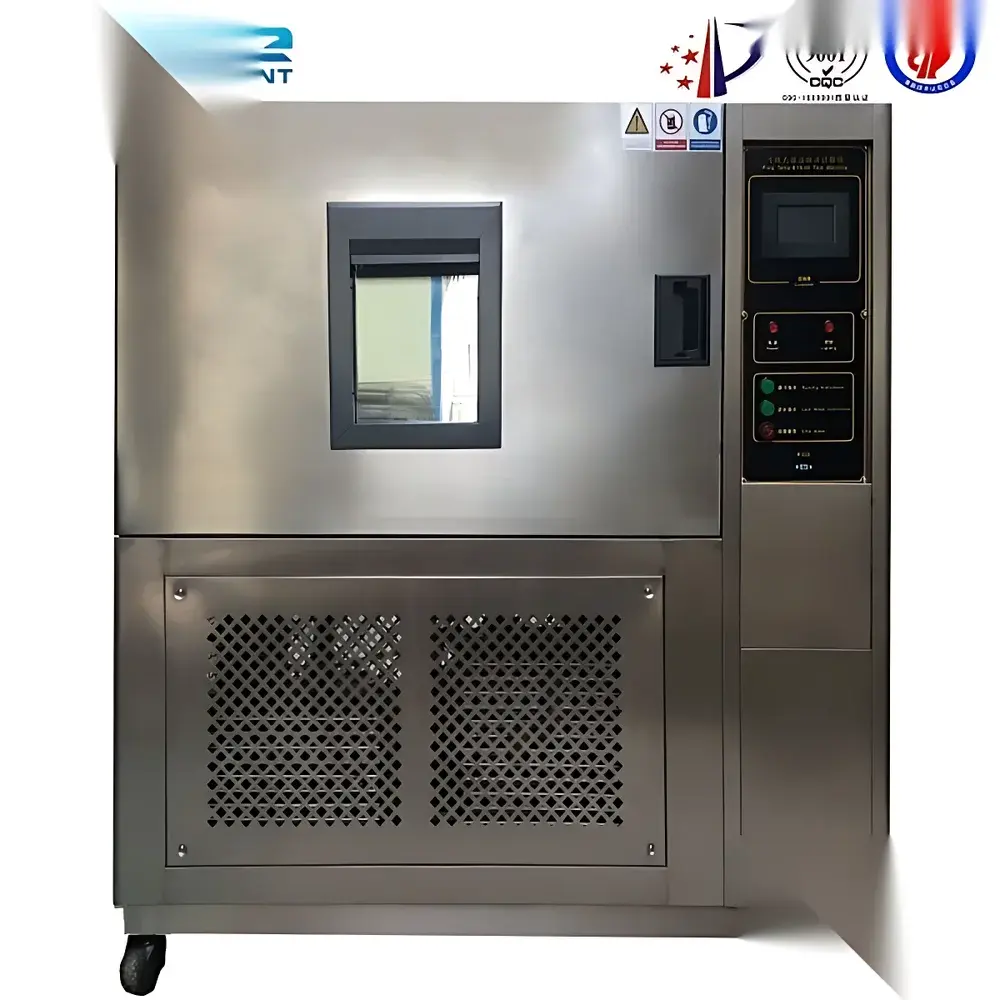
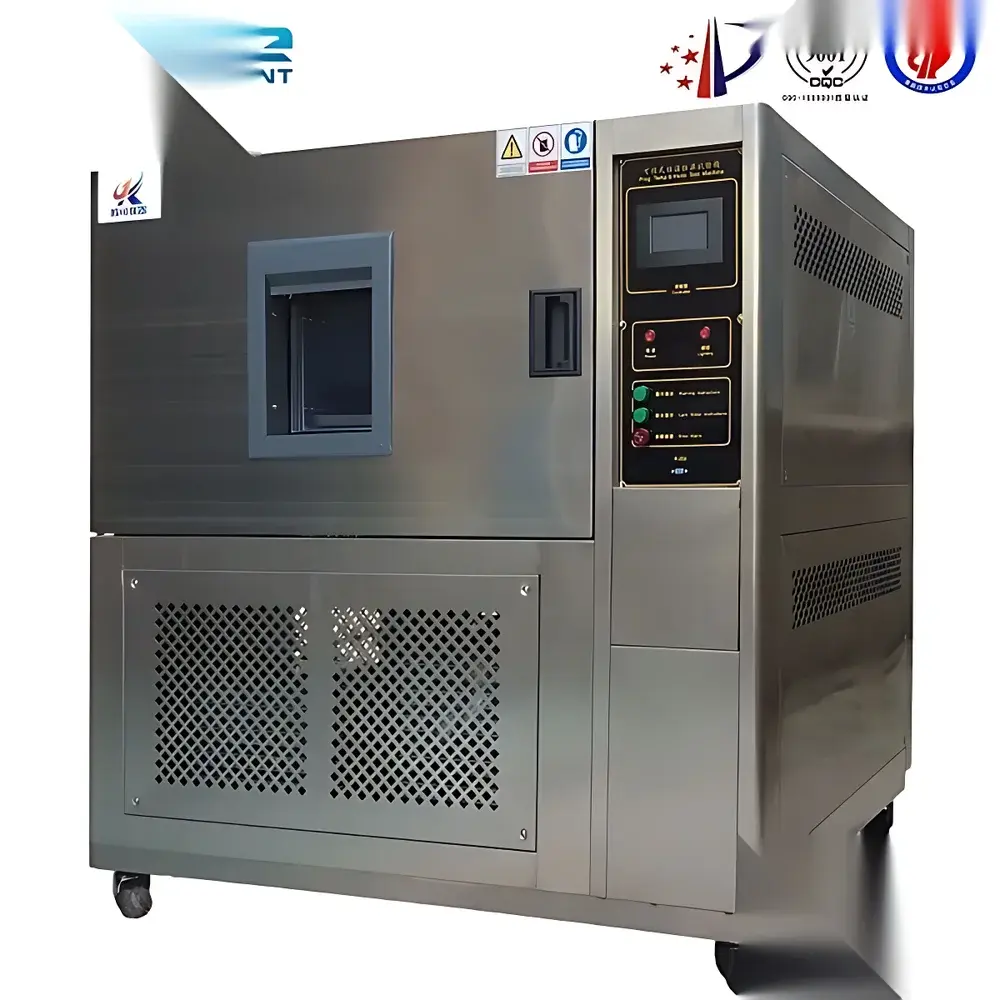
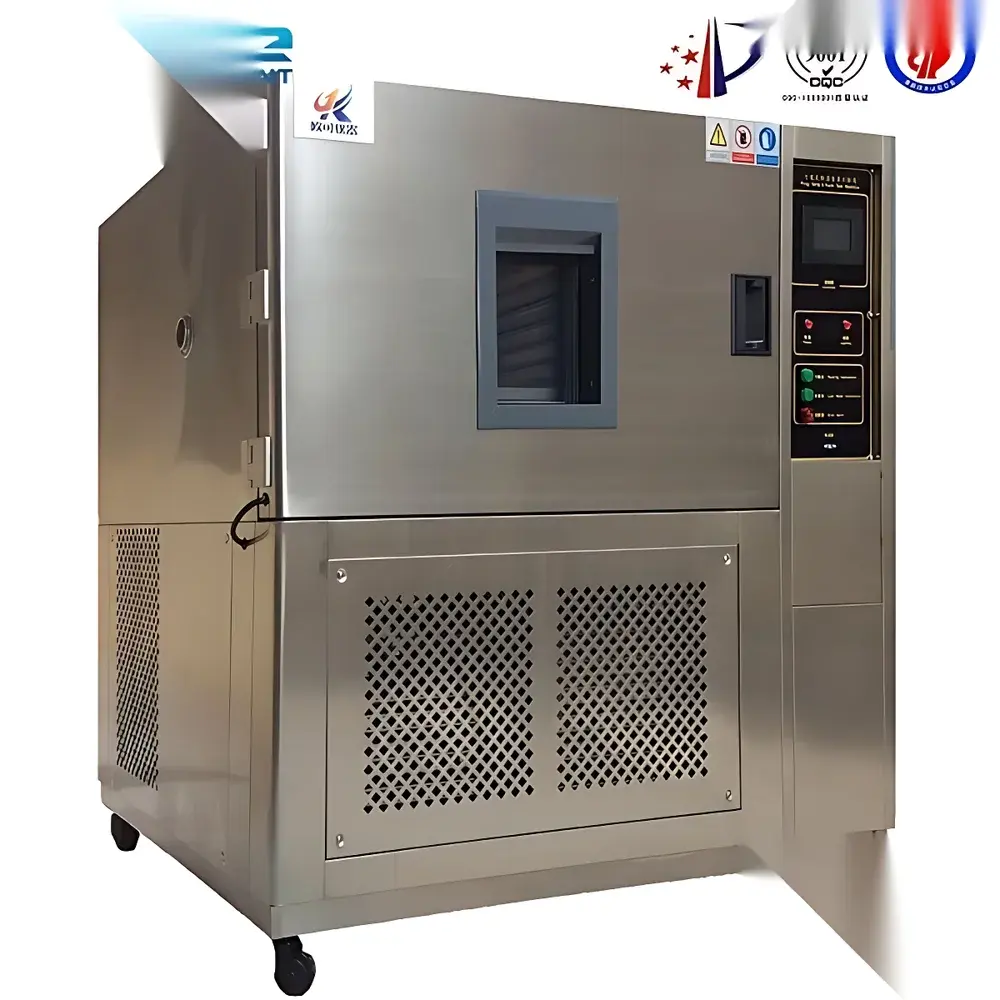
Large Temperature and Humidity Controlled Environmental Test Chamber
| Brand | OEM / Custom-Built |
|---|---|
| Origin | Imported |
| Manufacturer Type | Authorized Distributor |
| Price | USD 2,650 (FOB) |
| Compliance | GB/T 2423.1–2023, GB/T 2423.2–2023, IEC 60068-2-1, IEC 60068-2-2, GJB 1032A–2019, MIL-STD-2164A |
Overview
The Large Temperature and Humidity Controlled Environmental Test Chamber is an industrial-grade climatic simulation system engineered for precise, long-duration exposure testing under dynamically controlled thermal and hygrothermal conditions. Based on the principle of balanced heating, cooling, humidification, and dehumidification (BTHC—Balanced Temperature & Humidity Control), the chamber maintains setpoint stability via PID-controlled SSR-driven heating elements and a dual-stage refrigeration circuit utilizing R404A refrigerant. Its architecture supports programmable ramp-and-soak profiles across wide operational ranges, enabling accelerated stress screening (ESS), environmental qualification, and reliability validation per military, aerospace, automotive, and electronics industry standards.
Key Features
- Robust structural design with seamless stainless-steel inner chamber (SUS304), insulated double-wall construction, and fully welded joints to minimize thermal bridging and moisture leakage.
- Advanced BTHC control logic ensures dynamic equilibrium between heat/humidity input and system losses—enabling stable operation at ±0.5°C temperature tolerance and ±2% RH (relative humidity) tolerance (at 25°C/60% RH, no-load condition).
- Integrated safety architecture includes dry-run protection for steam humidifier, independent over-temperature cutoff (mechanical backup), low-water-level detection, compressor overload/overheat/overcurrent monitoring, high-pressure refrigerant cutout, molded-case circuit breaker, and earth-leakage circuit interrupter (ELCI).
- High-efficiency refrigeration system featuring hermetic Tecumseh or Copeland compressors (optional), capillary tube expansion technology (not thermostatic expansion valve), and optimized airflow distribution for uniform chamber-wide temperature/humidity distribution (±2.0°C max deviation, ±5% RH max deviation, per IEC 60068-3-5).
- Intuitive 7-inch color touchscreen controller with multi-language UI (English, German, Japanese, Chinese), built-in data logging (10,000-point capacity), USB export, and real-time graphing of T/RH profiles.
- Energy-optimized configuration: automatic tap-water filtration and auto-refill system eliminates need for deionized water; power consumption reduced by ≥30% vs. conventional designs through intelligent load-matching and duty-cycle modulation.
Sample Compatibility & Compliance
This chamber accommodates large-volume test specimens—including automotive ECUs, avionics enclosures, battery modules, and industrial control cabinets—within customizable internal dimensions (standard configurations range from 1 m³ to 10 m³; external footprint adjustable per client specification). All units undergo third-party metrological calibration prior to shipment, traceable to NIST or CNAS-accredited laboratories. The system complies with mandatory requirements for environmental stress screening (ESS) per GJB 1032A–2019 and MIL-STD-2164A, as well as climatic testing protocols defined in GB/T 2423.1 (cold), GB/T 2423.2 (dry heat), IEC 60068-2-1 (cold), and IEC 60068-2-2 (dry heat). Optional audit-ready firmware supports 21 CFR Part 11-compliant electronic signatures and ALCOA+ data integrity frameworks when integrated with validated LIMS environments.
Software & Data Management
- Firmware supports up to 99 programmable test cycles, each with 99 segments (ramp, soak, dwell), and user-defined alarm thresholds for temperature, humidity, and runtime anomalies.
- Onboard memory retains full cycle history including timestamps, setpoints, actual readings, alarm events, and controller status logs—exportable via USB in CSV or PDF format.
- Optional Ethernet/WiFi module enables remote monitoring, centralized fleet management, and integration with SCADA or MES platforms using Modbus TCP or OPC UA protocols.
- Software architecture permits full localization: language packs available for English, German, French, Japanese, Korean, and Simplified Chinese—configured during commissioning without firmware reflash.
- All calibration parameters, sensor offsets, and PID tuning coefficients are password-protected and logged with operator ID and timestamp to support GLP/GMP audit trails.
Applications
This environmental test chamber serves critical functions across multiple regulated sectors: (1) Defense & Aerospace—qualification of guidance systems, radar housings, and communication terminals under rapid thermal transients; (2) Automotive—validation of ADAS sensors, infotainment modules, and EV battery management systems per ISO 16750-4 and AEC-Q200; (3) Electronics Manufacturing—stress screening of PCBAs, connectors, and optoelectronic assemblies per JESD22-A104 and JEDEC J-STD-020; (4) Medical Device Development—environmental aging studies compliant with ISO 14971 risk management and IEC 60601-1 collateral standard requirements; (5) Academic & Government Research—controlled climate exposure for material degradation studies, polymer stability analysis, and packaging permeability evaluation.
FAQ
What is the typical temperature and humidity operating range?
Standard configuration: −70°C to +150°C; 20% to 98% RH (non-condensing). Extended low-temperature options down to −80°C are available upon request.
How is temperature uniformity verified and maintained?
Uniformity is validated per IEC 60068-3-5 using 9-sensor mapping; achieved via axial fan-assisted air circulation, ducted inlet/outlet design, and PID-tuned heater/refrigerant balance.
Does the system support automated calibration verification?
Yes—integrated self-diagnostic routines monitor sensor drift and trigger alerts; optional NIST-traceable reference probes enable periodic in-situ verification without chamber shutdown.
Can the chamber be integrated into an existing lab automation network?
Yes—Modbus RTU (RS485) and Modbus TCP (Ethernet) interfaces are standard; OPC UA gateway and custom API development services are available for enterprise-level integration.
What maintenance intervals are recommended for long-term reliability?
Compressor oil and refrigerant checks every 24 months; humidifier tank cleaning weekly; air filter replacement quarterly; full preventive maintenance (including sensor recalibration) annually per ISO/IEC 17025 guidelines.



