
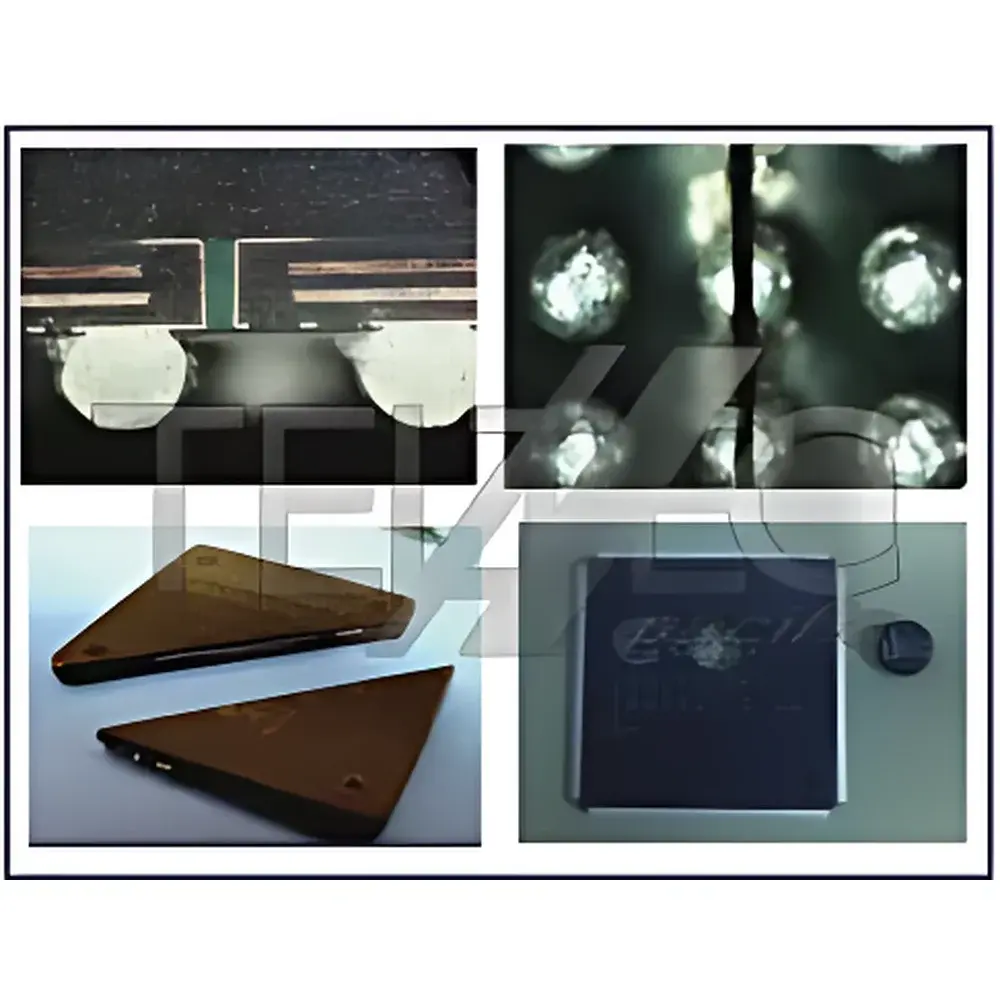
Laser Decapsulator LDC-1000 by TELTEC
| Brand | TELTEC / Teltec Semiconductor Pacific Limited |
|---|---|
| Origin | USA |
| Manufacturer Type | Authorized Distributor |
| Import Status | Imported |
| Model | Laser Decap |
| Pricing | Available Upon Request |
Overview
The TELTEC Laser Decapsulator LDC-1000 is a precision-engineered laser-based decapsulation system designed specifically for failure analysis (FA) and microstructural inspection of modern semiconductor packages. Unlike conventional wet chemical decapsulation—particularly ineffective for copper-wire-bonded devices due to aggressive acid resistance and risk of intermetallic corrosion—the LDC-1000 employs pulsed near-infrared (NIR) laser ablation to selectively remove mold compound without thermal damage to underlying die, bond wires, or redistribution layers. Its non-contact, dry-process architecture eliminates acid handling, fume extraction, and post-decap neutralization steps, enabling rapid, repeatable exposure of internal package features for SEM, X-ray, or optical microscopy. The system operates under controlled inert atmosphere options (N₂ purge) to prevent oxidation of exposed copper structures, ensuring analytical integrity during critical FA workflows.
Key Features
- Pulsed fiber laser source (1064 nm wavelength) with adjustable pulse width (5–100 ns) and energy density control (0.1–5 J/cm²), optimized for selective polymer ablation while preserving metal and silicon interfaces
- High-resolution galvanometric scanning optics with 1 µm positional repeatability and programmable beam spot size (25–100 µm)
- Integrated real-time coaxial imaging (10×–100× zoom) with auto-focus and contrast-enhanced live view for precise feature registration and process monitoring
- Computer-controlled 3-axis motion platform (X/Y/Z) with sub-micron step resolution, supporting complex contour decapping—including trenching, windowing, and partial lid removal
- Automated recipe management: store and recall decap parameters (laser power, scan speed, layer depth, dwell time) per package type (QFN, BGA, WLCSP, Fan-Out, etc.)
- Compact benchtop footprint (760 × 610 × 580 mm) with Class 1 laser safety enclosure compliant with IEC 60825-1:2014 and ANSI Z136.1-2022
- Minimal consumables: no acids, no etchants, no abrasive media—only standard industrial-grade nitrogen for optional purge and routine optics cleaning supplies
Sample Compatibility & Compliance
The LDC-1000 accommodates packages up to 50 mm × 50 mm × 5 mm in dimension, including leadframe-based (SOIC, QFP), laminate-substrate (BGA, CSP), and advanced heterogeneous integration platforms (2.5D/3D ICs, SiP). It is validated for decapsulation of Cu-wire-bonded devices with epoxy molding compounds (EMC), silicone gel, and molded underfill materials. Process consistency meets IPC-J-STD-033 and JEDEC JESD22-A108 requirements for non-destructive sample preparation. All operational logs—including laser parameters, stage coordinates, timestamped images, and user ID—are recorded with audit-trail capability compliant with ISO/IEC 17025:2017 laboratory quality management systems and FDA 21 CFR Part 11 electronic record integrity standards.
Software & Data Management
Controlled via TELTEC’s DecapStudio™ v4.2 software suite (Windows 10/11 64-bit), the system supports intuitive graphical programming: users import CAD layout files (Gerber, ODB++), overlay optical images, define decap zones using polygonal or raster tools, and simulate ablation depth profiles prior to execution. Software enforces role-based access control (RBAC), automatic backup to network drives or NAS, and export of metadata-rich reports (PDF + CSV + TIFF stack). Raw image sequences and parameter logs are structured according to ASTM E2912-21 “Standard Guide for Digital Image Data Exchange in Failure Analysis” to ensure interoperability with FA lab information management systems (LIMS).
Applications
- Failure root cause analysis of open/short circuits, wire bond lift-off, and delamination in Cu-wire-bonded ICs
- Verification of die attach integrity and voiding in high-power modules
- Post-reliability-test package inspection (e.g., after temperature cycling, HAST, or UHAST)
- Reverse engineering support for IP verification and competitive benchmarking
- Qualification of new EMC formulations and encapsulation processes in R&D environments
- Preparation of cross-section samples for FIB-SEM tomography without mechanical polishing artifacts
FAQ
Does the LDC-1000 require hazardous chemical handling or ventilation infrastructure?
No. As a fully dry, laser-only process, it eliminates all liquid acids (e.g., fuming nitric, sulfuric, or chromic acid mixtures) and associated scrubbers, fume hoods, or waste neutralization systems.
Can it decapsulate packages with gold or aluminum wire bonds as well as copper?
Yes. While optimized for Cu-wire challenges, its parameter flexibility supports safe ablation over Au and Al bonds when configured with appropriate pulse energy and scan velocity settings.
Is remote operation or integration with automated FA workflows supported?
Yes. Ethernet/IP and RS-232 interfaces enable integration with robotic sample handlers and centralized FA workflow orchestration platforms via Modbus TCP or custom API scripting.
What maintenance is required beyond routine optics cleaning?
Annual laser source calibration and galvo mirror alignment verification—performed by TELTEC-certified field service engineers—are recommended to maintain positional accuracy and ablation uniformity.
Does TELTEC provide application support for developing decap recipes for novel package types?
Yes. Customers receive complimentary initial method development support, including on-site or virtual FA engineer consultation and access to TELTEC’s global package library (500+ validated decap protocols).
Related Products






