
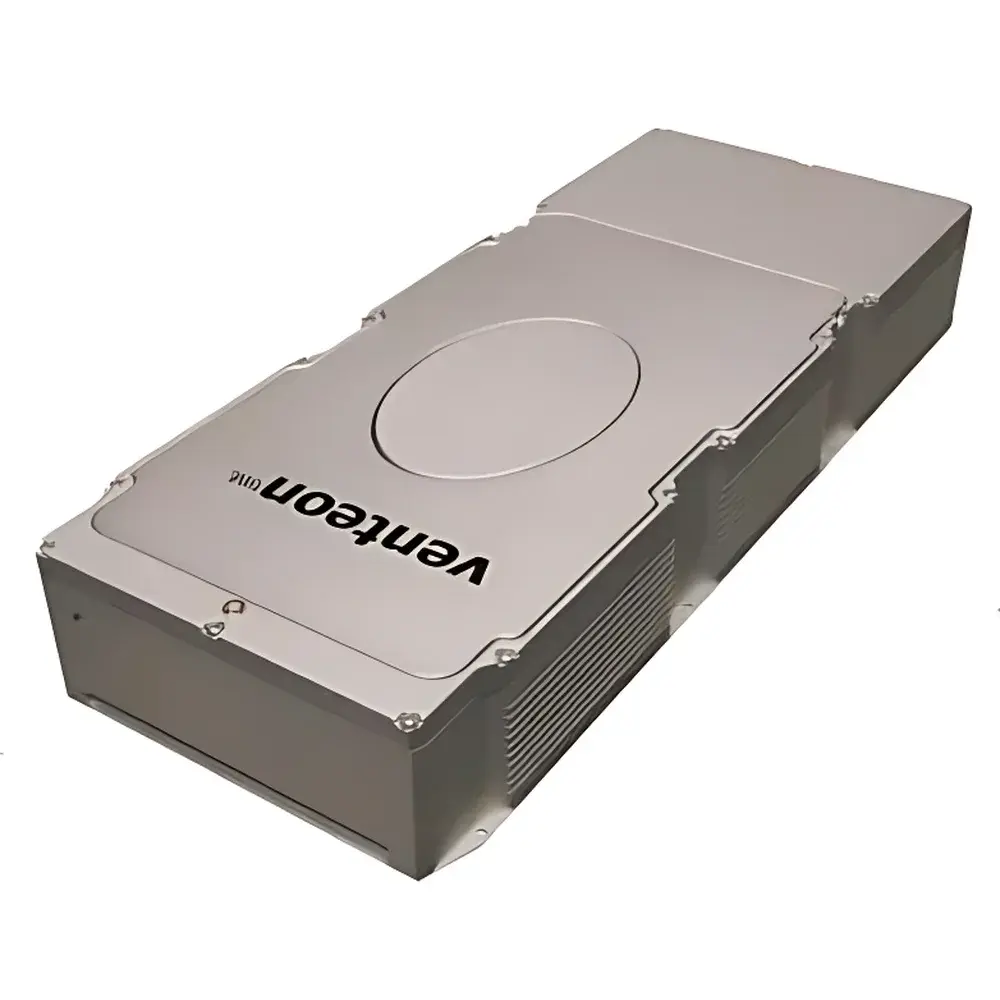
Laser Quantum VETEON Series Ultra-Short-Pulse Femtosecond Oscillators
| Brand | Laser Quantum |
|---|---|
| Origin | United Kingdom |
| Manufacturer Type | Authorized Distributor |
| Product Category | Imported Instrument |
| Model Series | VETEON |
| Core Technology | Diode-Pumped Solid-State (DPSS) Femtosecond Oscillator |
| Key Configuration | Integrated Pump Laser, Monolithic Cavity Design, CEP-Stabilizable Architecture |
| Output Wavelength | 800 ± 20 nm |
| Average Power Range | 220–600 mW |
| Pulse Duration (measured) | <5.5–8 fs |
| Spectral Bandwidth (FWHM) | 100–400 nm |
| Repetition Rate | 80 MHz |
| RMS Intensity Noise | <0.08–0.2% |
| Beam Quality (M²) | <1.2 |
| Long-Term Energy Stability (24 h) | <1% |
| Cooling | Conductive/Water-Cooled Baseplate |
Overview
The Laser Quantum VETEON Series represents a family of turnkey, diode-pumped solid-state (DPSS) femtosecond oscillators engineered for ultrafast science laboratories requiring high stability, low noise, and seamless integration into advanced optical systems. Based on Kerr-lens mode-locked (KLM) Ti:sapphire cavity architecture, each VETEON model delivers sub-8-fs pulses directly from the oscillator without external compression—leveraging broad gain bandwidth and monolithic mechanical design to minimize environmental sensitivity. The series is differentiated by pump source integration, spectral coverage, and phase stabilization readiness: VETEON One provides compact entry-level performance; VETEON Power integrates the ultra-low-noise Finesse Pure 6 pump laser for high-repetition-rate amplifier seeding; VETEON CEP5 and VETEON Ultra are fully configured or field-upgradable carrier-envelope phase (CEP)-stable platforms, enabled by intrinsic octave-spanning spectra (>400 nm FWHM at −10 dBc) and proprietary CEPLoQ™ pump technology that eliminates acousto-optic modulator (AOM)-based feedback loops.
Key Features
- Monolithic cavity construction with direct mounting to rigid, thermally stable baseplate—reducing alignment drift and enhancing long-term reproducibility
- Integrated diode-pumped solid-state pump lasers: Opus 4 (VETEON One) and Finesse Pure 6 (all other models), delivering <0.08% RMS intensity noise and water-cooled thermal management
- Self-starting KLM operation with no manual realignment required after warm-up; minimal optical adjustment points for rapid deployment
- Octave-spanning spectral output (600–1200 nm, >400 nm FWHM @ −10 dBc) enabling direct f-to-2f interferometry without nonlinear spectral broadening stages
- CEP-stabilization-ready architecture: VETEON Ultra includes pre-aligned f-to-2f interferometer and CEPLoQ™-enabled Finesse Pure 6 pump; CEP lock can be activated via optional electronic module
- Compact footprint (250 × 630 mm for VETEON One); all models feature standardized beam height (100 mm), polarization-maintaining output, and TTL-synchronized repetition rate monitoring
Sample Compatibility & Compliance
The VETEON Series is designed for use in ISO/IEC 17025-accredited ultrafast laboratories and complies with IEC 60825-1:2014 Class 4 laser safety requirements. Its stable, low-noise pulse train meets timing jitter specifications essential for pump-probe experiments (sub-10 fs RMS timing jitter referenced to RF sync), and its amplitude stability (<1% over 24 h) satisfies GLP-compliant data acquisition protocols in time-resolved spectroscopy. All units ship with full CE marking, RoHS compliance documentation, and factory calibration reports traceable to NPL (National Physical Laboratory, UK). No user-serviceable optics are required; maintenance intervals exceed 20,000 operating hours under standard lab conditions.
Software & Data Management
Laser Quantum provides the VETEON Control Suite—a Windows-based application supporting real-time monitoring of pump current, cavity temperature, output power, and repetition rate. The suite logs timestamped performance metrics (intensity noise, RMS power deviation) compliant with FDA 21 CFR Part 11 audit-trail requirements when deployed in regulated environments. USB 2.0 and Ethernet interfaces enable remote operation and integration into LabVIEW, MATLAB, or Python-controlled experimental sequences. Optional OEM SDK supports custom GUI development and synchronization with delay stages, CCD detectors, or lock-in amplifiers via programmable TTL triggers and analog voltage outputs.
Applications
- Pump–probe spectroscopy: Sub-7-fs pulses resolve coherent vibrational dynamics and electron–phonon coupling in condensed-phase materials
- Time-resolved photoemission (TR-ARPES): High average power (>600 mW in VETEON Power) enables efficient HHG seeding in gas-phase EUV sources
- Two-photon and three-photon microscopy: Near-transform-limited pulses maximize peak intensity while minimizing photodamage in live-tissue imaging
- Nonlinear frequency conversion: Octave-spanning spectra support broadband OPA pumping, mid-IR DFG, and attosecond pulse generation via high-harmonic synthesis
- Carrier-envelope phase-sensitive metrology: CEP-stable variants serve as master oscillators in optical frequency combs aligned to primary cesium standards
FAQ
Can the VETEON One be upgraded to CEP stability?
Yes—VETEON One supports field retrofit with the VETEON CEP Upgrade Kit, which includes the f-to-2f interferometer, CEPLoQ™ pump controller, and firmware update.
What cooling infrastructure is required for VETEON Power?
A recirculating chiller maintaining 18–22°C at 0.5 L/min flow rate is recommended; integrated water blocks eliminate need for external chillers in most lab environments.
Is the output polarization linear and fixed?
Yes—output is linearly polarized with extinction ratio >100:1, oriented horizontally at 100 mm height, and remains invariant across all operating conditions.
Does the system include beam diagnostics?
Each unit ships with calibrated photodiode power monitor and optional autocorrelator (Femtochrome FR-103XL) for pulse duration verification; spectral interferometry capability is available via add-on OCT spectrometer interface.
How is long-term cavity alignment maintained?
The monolithic baseplate design and kinematic mirror mounts suppress thermal drift; typical cavity re-optimization interval exceeds 6 months under continuous operation in temperature-stabilized labs (±0.5°C).



