
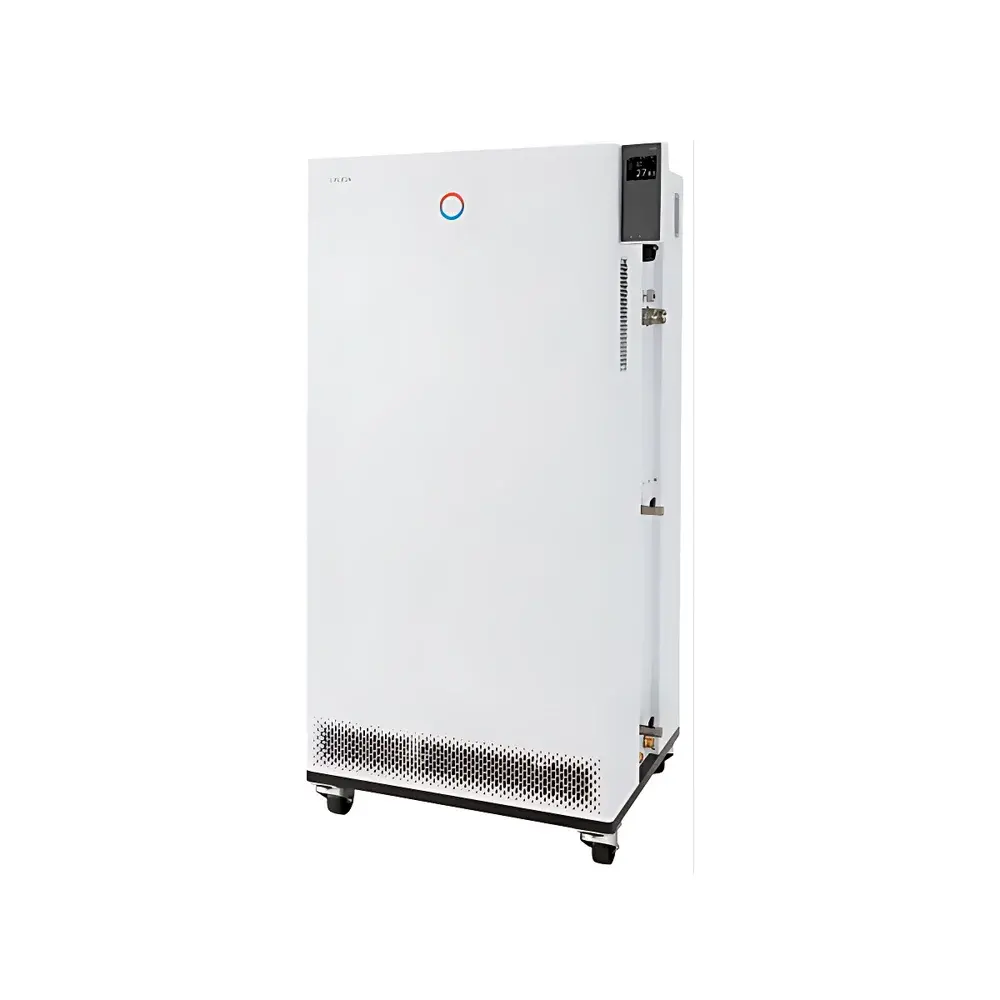
LAUDA Integral XT IN 1590 XTW Integrated High-Low Temperature Circulating Chiller
| Brand | LAUDA |
|---|---|
| Origin | Germany |
| Model | IN 1590 XTW |
| Cooling Method | Water-Cooled |
| Temperature Range | −90 °C to 220 °C |
| Refrigeration Capacity | 18.5 kW |
| Temperature Stability | ±0.05 °C |
| Circulation Pump Pressure | 3.1 bar |
| Circulation Flow Rate | 65 L/min |
| Bath Volume | 30.6 L |
| Operating Mode | Continuous |
Overview
The LAUDA Integral XT IN 1590 XTW is a high-performance, integrated high-low temperature circulating chiller engineered for dynamic thermal control in demanding laboratory and industrial process applications. Based on LAUDA’s proprietary cold-oil-layer flow sealing principle, this system enables stable operation across an exceptionally wide temperature span—from cryogenic −90 °C to high-temperature 220 °C—using a single heat transfer fluid without phase change or degradation. Unlike conventional chillers limited by refrigerant boiling points or heater material constraints, the Integral XT employs a dual-stage refrigeration cascade (R-449A / R-508B) coupled with an 8-level magnetically coupled variopump, ensuring precise, vibration-free fluid delivery under variable backpressure conditions. Its architecture supports continuous-duty operation with full electronic PID control, adaptive parameter tuning, and PowerAdapt technology that dynamically allocates available electrical power between heating and cooling circuits—maximizing thermal response speed while maintaining energy efficiency.
Key Features
- Integrated water-cooled cascade refrigeration system with dual refrigerants (R-449A primary stage, R-508B secondary stage) compliant with EU F-Gas Regulation (EU No. 517/2014)
- 8-stage magnetically coupled Variopump delivering up to 3.1 bar pressure and 65 L/min flow—engineered for high-pressure-drop external loops including jacketed reactors, calorimeters, and spectroscopy cells
- Intelligent cold-oil-layer sealing system minimizing internal volume (≤8 L minimum fill) while incorporating a large expansion reservoir to accommodate thermal expansion over the full −90–220 °C range
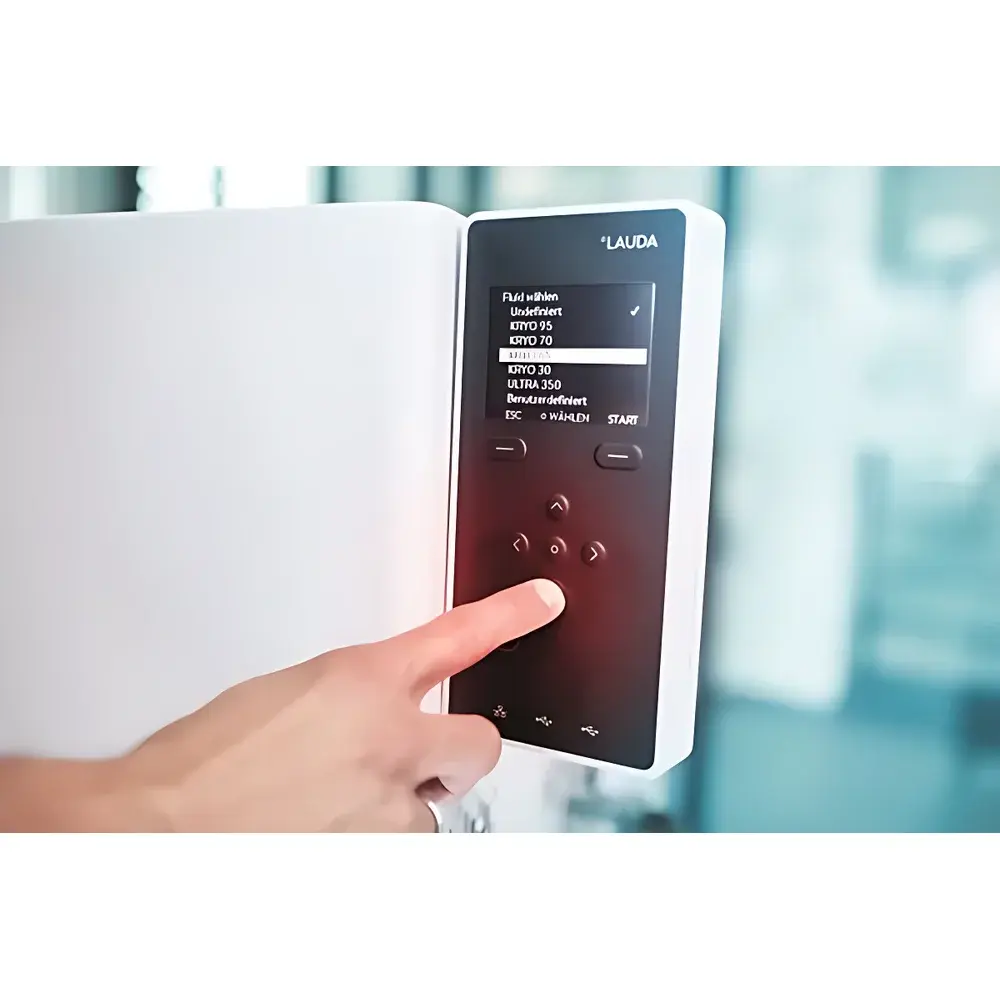
- Full-color TFT display with real-time dual-channel temperature visualization, graphical trend logging, and multi-language interface (English, German, French, Spanish, Italian, Russian)
- Embedded web server enabling secure, browser-based remote monitoring and control via LAN/Wi-Fi from PCs, tablets, or smartphones—fully compatible with modern IT infrastructure
- Comprehensive digital control suite: adaptive PID auto-tuning, programmable 150-segment temperature/time profiles (up to 5 independent programs), SmartCool compressor duty-cycle optimization, and configurable overtemperature protection with audible alarm
- Dual Pt100 input capability (integrated + optional external probe) supporting differential or cascade control strategies; floating fault contact output for integration into plant-wide SCADA systems
- Standard USB 2.0 and Ethernet (10/100 Mbps) interfaces; expandable with optional RS-232/485, Profibus-DP, EtherCAT, analog I/O, or dry-contact modules
Sample Compatibility & Compliance
The Integral XT IN 1590 XTW is designed for use with thermally stable heat transfer media—including silicone oils, glycol/water mixtures, and specialized low-temperature fluids—under strict adherence to ISO 8573-1 (compressed air quality), IEC 61000-6-2/6-4 (EMC immunity/emission), and UL/CSA 61010-1 safety standards. Its sealed magnetic drive pump eliminates mechanical shaft seals, preventing fluid leakage and contamination—critical for GMP/GLP-compliant environments. The system supports audit-ready operation with encrypted data logging, user-access levels, and time-stamped event records aligned with FDA 21 CFR Part 11 requirements when deployed with LAUDA’s optional software validation package. All refrigerants meet current global environmental mandates: R-449A (GWP = 1397) and R-508B (GWP = 13,400) are certified alternatives to high-GWP legacy refrigerants per ASHRAE Standard 34 and EN 378.
Software & Data Management
The built-in embedded Linux-based controller hosts a secure HTTPS web interface with TLS 1.2 encryption, session timeout, and role-based authentication (admin/operator/user). Logged temperature, pressure, flow, and power consumption data are stored locally on a non-volatile SD card (≥1 GB) with CSV export capability via USB or network download. Optional LAUDA LabSoft software provides advanced analysis tools—including derivative-based ramp rate evaluation, deviation mapping against setpoints, and automated report generation compliant with ISO/IEC 17025 documentation standards. Remote firmware updates are digitally signed and verified to ensure integrity. Audit trails record all parameter changes, login attempts, and alarm events with ISO 8601 timestamps—enabling traceability for regulatory inspections.
Applications
This chiller serves as a core thermal management platform for applications requiring rapid, stable, and reproducible temperature control: reaction calorimetry (RC1, ChemiSens), high-throughput screening in pharmaceutical development, polymerization kinetics studies, materials testing (DMA, DSC sample prep), semiconductor wafer processing, and aerospace component thermal cycling. Its ability to maintain ±0.05 °C stability at extreme temperatures makes it suitable for calibration laboratories adhering to ISO/IEC 17025, reference standard traceability workflows, and ASTM E2847 (thermal stability of heat transfer fluids) testing protocols. The water-cooled design ensures consistent performance regardless of ambient fluctuations—ideal for cleanrooms and controlled-environment facilities.
FAQ
What is the minimum and maximum recommended heat transfer fluid volume?
Minimum fill volume is 8 L; maximum operational fill is 28.6 L. The internal bath volume is 30.6 L, accommodating thermal expansion across the full temperature range.
Does the system support external temperature feedback for closed-loop control?
Yes—via integrated Pt100 input and optional second Pt100 interface module, enabling external sensor-based control of jacketed vessels or process lines.
Is the Integral XT compatible with building management systems (BMS)?
Standard Ethernet interface supports Modbus TCP protocol; optional RS-485 or BACnet/IP modules enable direct integration into facility-wide automation networks.
How is refrigerant charge managed during maintenance or service?
Refrigerant circuits are hermetically sealed and require certified technicians for recovery, evacuation, and recharge per EN 378-2 and EPA Section 608 guidelines.
Can the unit operate continuously at −90 °C?
Yes—designed for uninterrupted operation across the entire specified temperature range, with SmartCool logic optimizing compressor staging to prevent icing and extend service life.



