
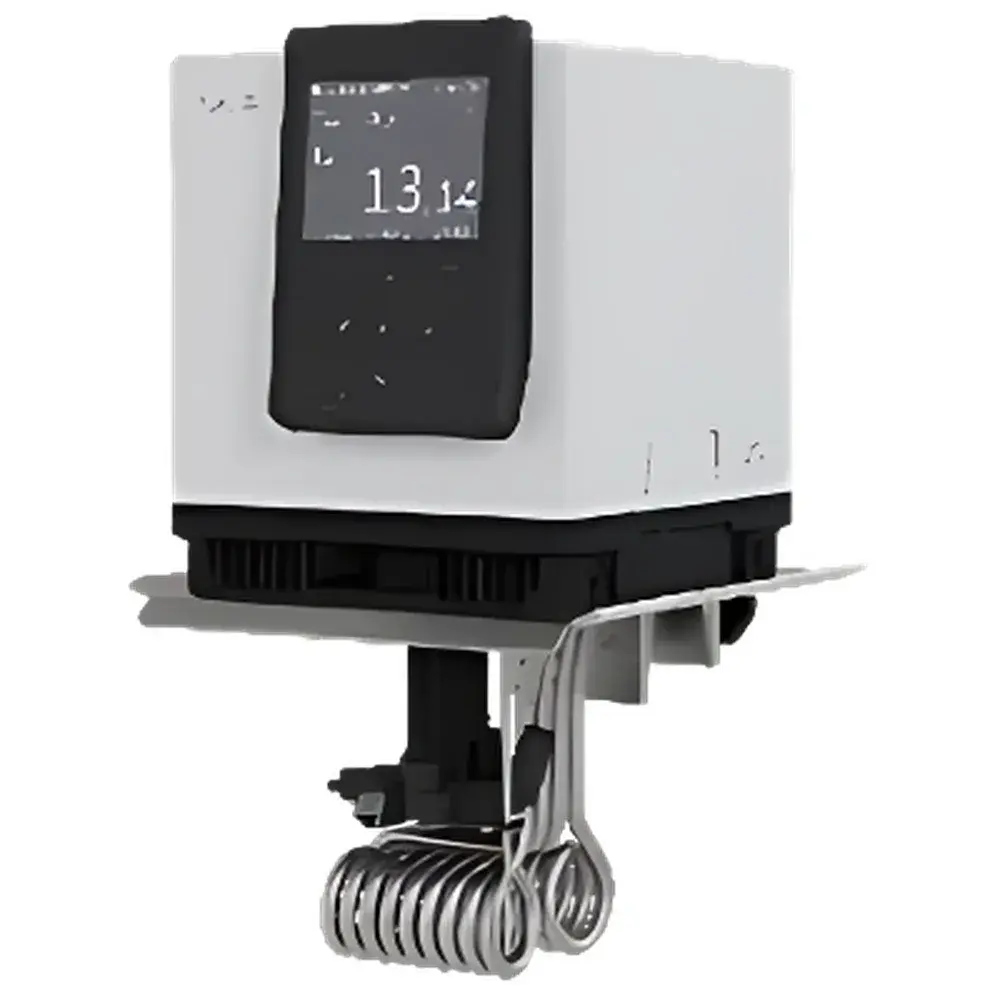
LAUDA Universa Pro Immersion Circulator
| Brand | LAUDA |
|---|---|
| Origin | Germany |
| Model | Universa Pro Immersion Circulator |
| Temperature Range | 30 °C to 200 °C |
| Temperature Stability | ±0.01 °C |
| Heating Power | 2.5 kW |
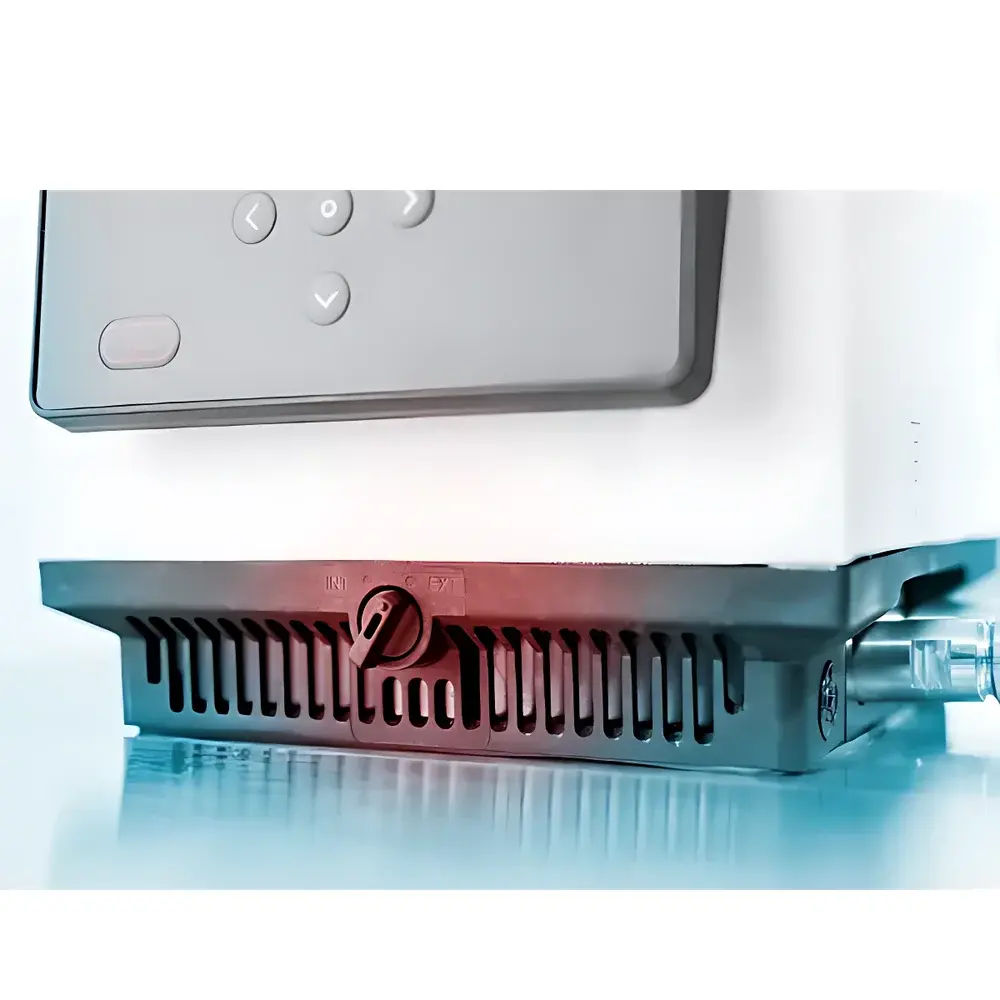
| Circulation Mode | Internal & External |
| Control Type | Heating-Only |
| Compliance | CE, KNR TL certified |
| Connectivity | Ethernet, USB, LAUDA Command app support, LAUDA.LIVE cloud integration |
| Refrigeration | Not applicable (heating-only variant) |
| Energy Efficiency | Variable-frequency electronic control, eco-friendly design |
Overview
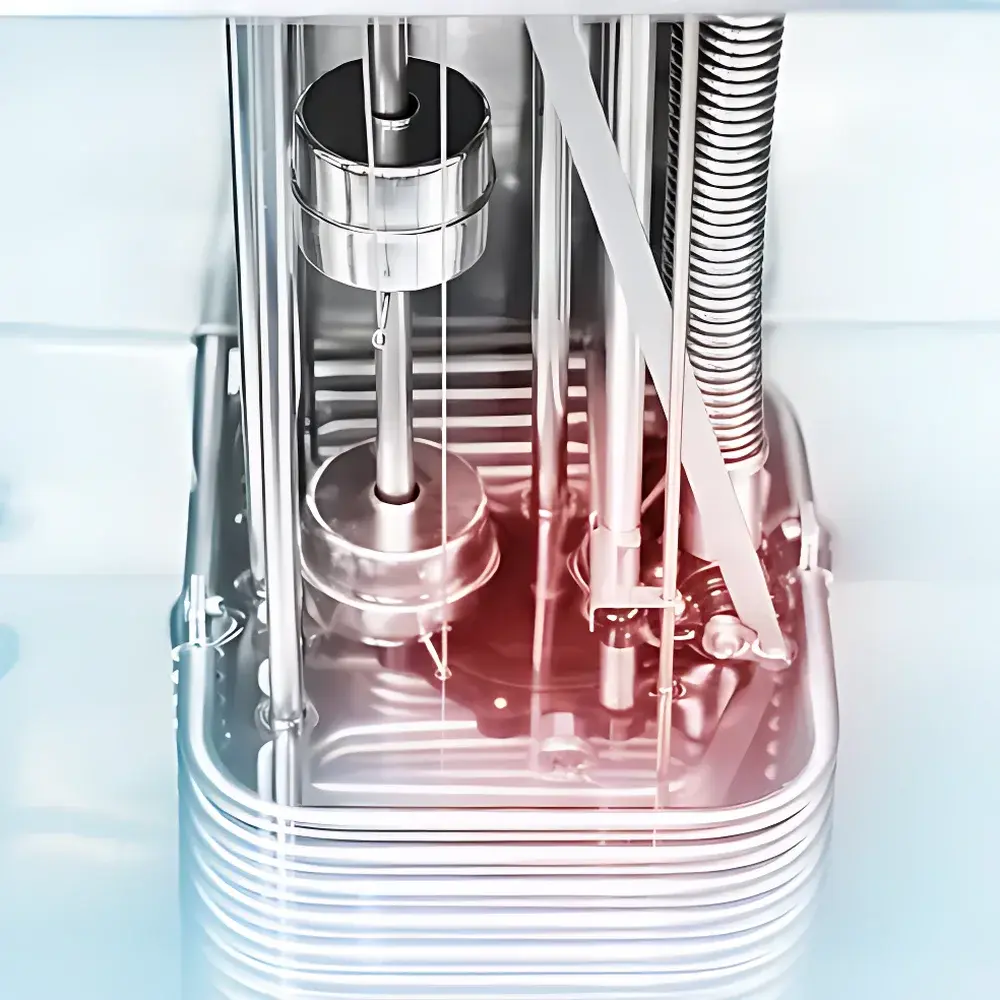
The LAUDA Universa Pro Immersion Circulator is a precision-engineered heating circulator designed for demanding laboratory and pilot-scale applications requiring stable, uniform, and reproducible temperature control in open or closed-loop liquid baths. Operating on the principle of forced convection via an integrated high-efficiency pump, the Universa Pro delivers consistent thermal energy transfer through precise PID-controlled resistive heating and optimized fluid dynamics. Unlike basic water baths, this immersion circulator enables both internal bath temperature regulation and external temperature control of connected equipment—such as reactors, jacketed vessels, or analytical instruments—via its dual-circuit capability. Its operational range spans from 30 °C to 200 °C, making it suitable for silicone oil, glycol-water mixtures, and other thermally stable heat-transfer fluids. The ±0.01 °C temperature stability—achieved through Pt100 sensor feedback, adaptive algorithm tuning, and low-drift electronics—ensures compliance with stringent method requirements in pharmaceutical development (e.g., ICH Q5C), material stability testing (ASTM E1545), and polymer characterization protocols.
Key Features
- Precision heating-only operation with 2.5 kW power output and dynamic response time < 15 minutes (from ambient to 150 °C in standard 20 L bath)
- Dual circulation mode: supports internal recirculation within the bath and external flow to auxiliary systems via quick-connect fittings
- Digital control architecture with built-in Ethernet and USB interfaces for seamless integration into lab networks
- Remote operation and real-time monitoring via LAUDA Command mobile/web application and LAUDA.LIVE cloud platform
- CE-marked and KNR TL-certified; fully compliant with EN 61000-6-2 (EMC) and EN 61000-6-4 (emission) standards
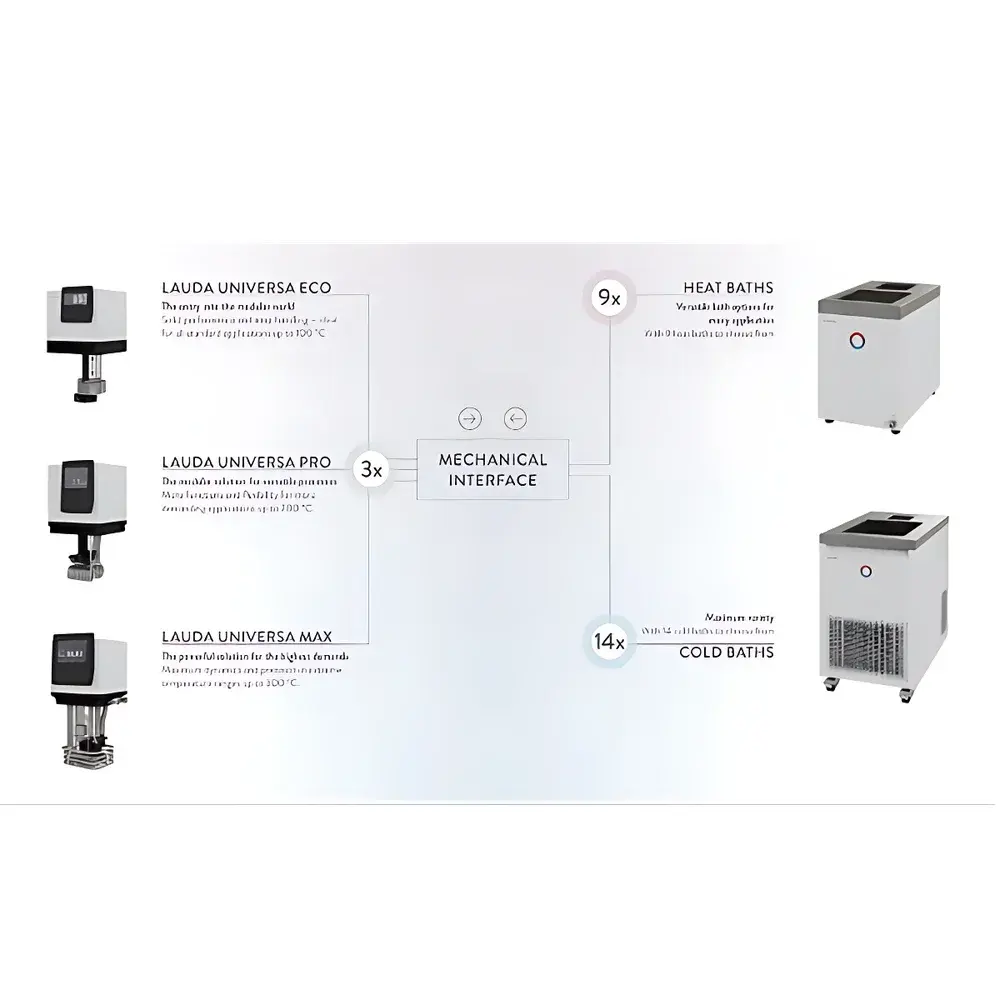
- Modular expansion support: over ten plug-and-play interface options—including analog I/O, 0–10 V control signals, and digital bus protocols—for Industry 4.0 readiness
- Eco-conscious engineering: variable-frequency pump drive minimizes energy consumption during low-flow conditions; no synthetic refrigerants required
Sample Compatibility & Compliance
The Universa Pro is compatible with a broad spectrum of bath media—including deionized water, ethylene glycol/water blends, silicone oils (up to 200 °C), and mineral oils—enabling use across chemical synthesis, biopharmaceutical QC, and materials testing workflows. Its open-bath design accommodates standard laboratory glassware (e.g., round-bottom flasks, jacketed reactors, and sample holders) and integrates seamlessly with LAUDA’s accessory ecosystem: calibrated cylindrical reference inserts for sensor validation, insulated bath covers with integrated Pt100 ports, modular rail-mounted tube racks, and quick-disconnect couplings rated for continuous operation at 200 °C. From a regulatory perspective, the device supports GLP/GMP-aligned workflows through audit-trail-capable logging (via LAUDA.LIVE), user-access controls, and encrypted data transmission—meeting foundational expectations of FDA 21 CFR Part 11 for electronic records where locally deployed software modules are implemented.
Software & Data Management
LAUDA Command serves as the unified interface for configuration, calibration, and operational supervision—accessible from Windows, macOS, iOS, and Android platforms. All setpoints, actual values, pump speed, and error logs are timestamped and exportable in CSV format. When connected to LAUDA.LIVE, the system provides secure TLS 1.2–encrypted telemetry, predictive maintenance alerts based on thermal cycle analytics, and role-based access control (RBAC) for multi-user laboratories. Historical performance data—including temperature deviation histograms and cumulative uptime metrics—can be retrieved programmatically via RESTful API for inclusion in LIMS or ELN environments. Firmware updates are delivered over-the-air with cryptographic signature verification to ensure integrity and traceability.
Applications
- Thermal stability studies of APIs and excipients per ICH Q1A(R2)
- Viscosity measurement support for rotational rheometers requiring precise bath temperature conditioning
- Calibration of temperature-sensitive sensors (e.g., thermistors, RTDs) using traceable reference inserts
- Controlled heating of reaction mixtures in catalytic hydrogenation or esterification processes
- Pre-conditioning of samples prior to DSC, TGA, or DMA analysis
- Temperature equilibration of optical cells in UV-Vis or FTIR spectroscopy setups
- Long-term incubation of microbiological cultures under non-sterile, controlled thermal conditions
FAQ
Is the Universa Pro capable of refrigeration?
No—the Universa Pro model is a heating-only circulator. For combined heating/cooling functionality, consider the Universa MAX series with integrated compressor-based cooling.
What bath volume is recommended for optimal temperature stability?
For specified ±0.01 °C stability, a minimum working volume of 15 L is recommended when using silicone oil; larger volumes (≥25 L) improve thermal inertia and reduce sensitivity to ambient fluctuations.
Can the device be integrated into a SCADA or MES system?
Yes—via optional Modbus TCP or Profibus DP modules, or through LAUDA.LIVE’s MQTT-compatible data stream for enterprise-level process visibility.
Does LAUDA provide IQ/OQ documentation for GMP environments?
Yes—validated installation and operational qualification templates, along with calibration certificates traceable to DKD/DAkkS-accredited standards, are available upon request.
How is safety ensured during unattended operation?
The unit includes hardware-based overtemperature cutoff (independent of controller), dry-run protection, ground-fault circuit interruption (GFCI), and configurable alarm thresholds with email/SMS notification via LAUDA.LIVE.



