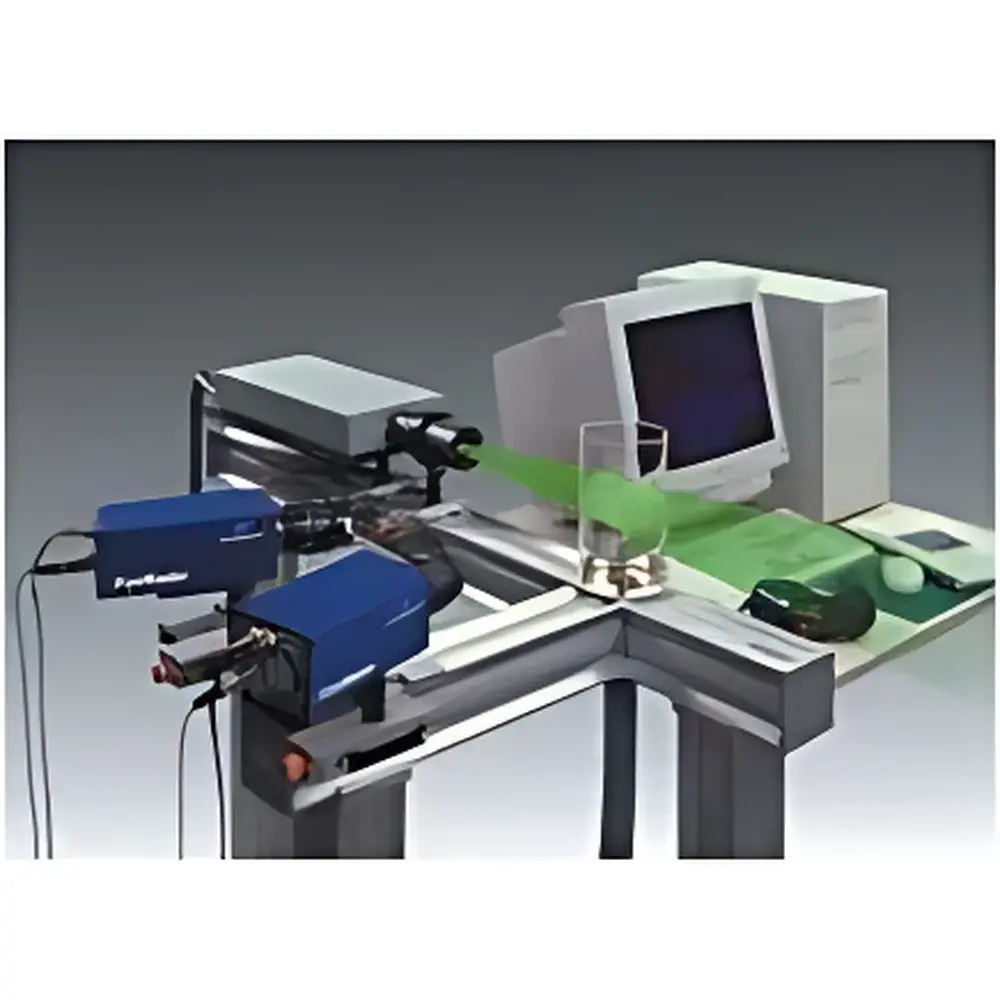
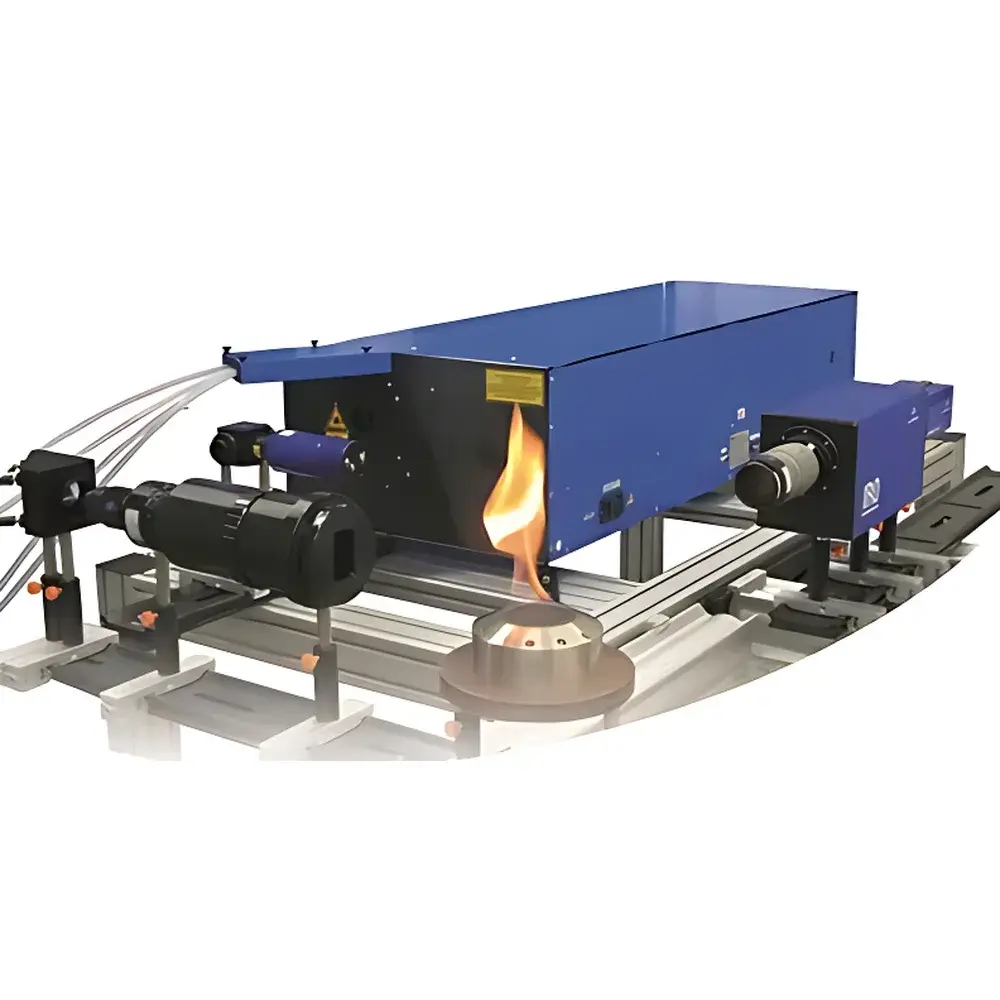
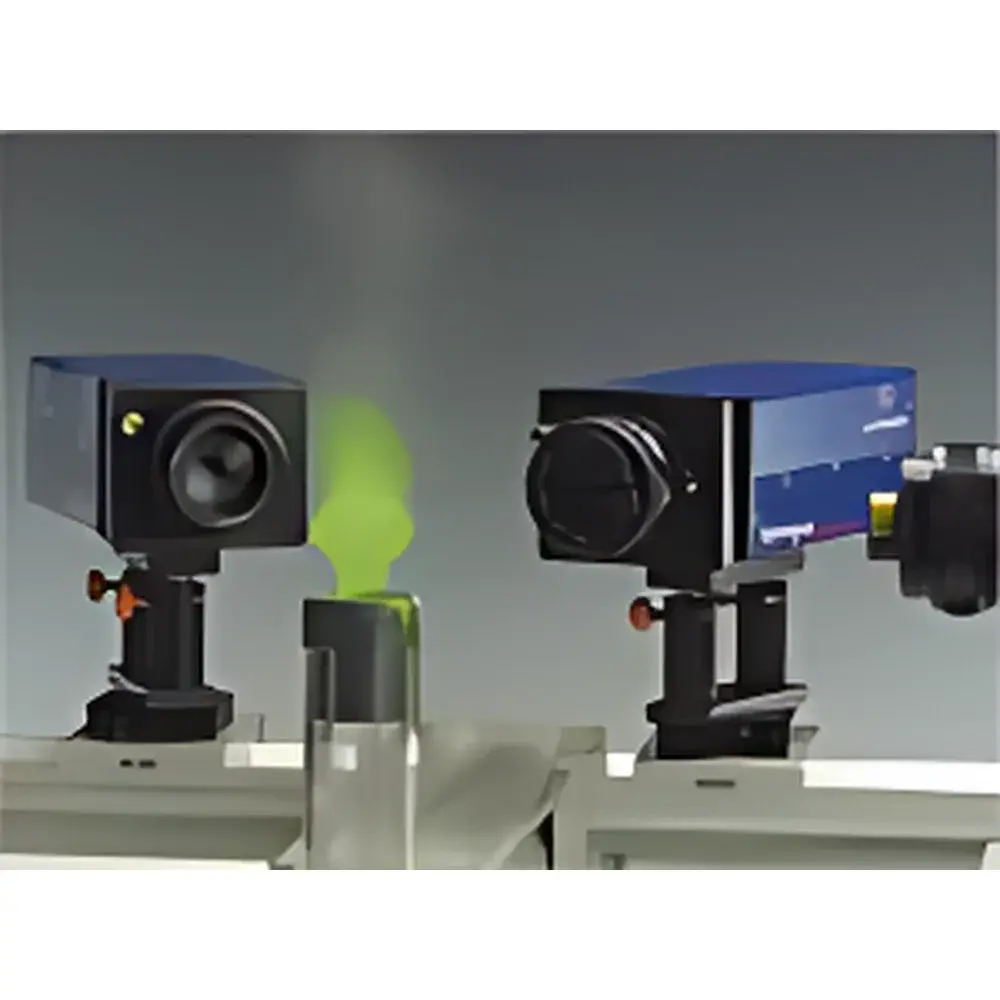
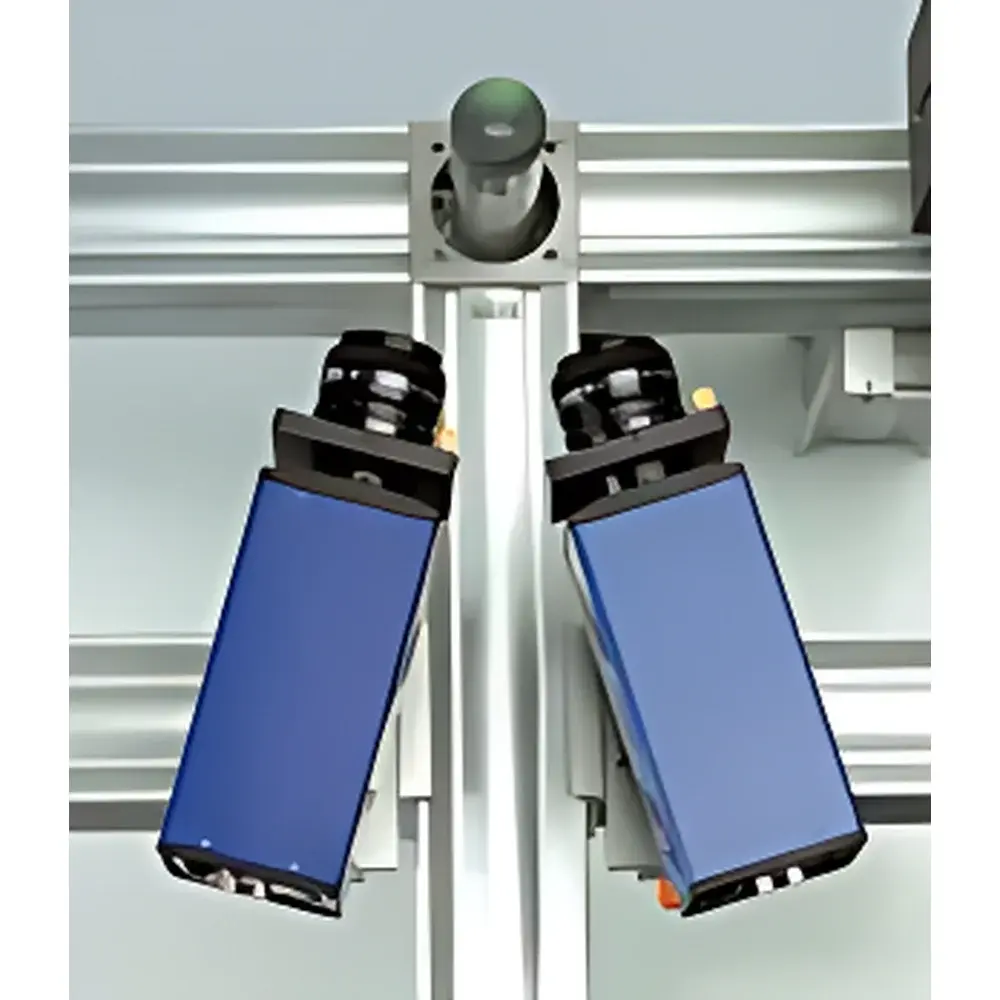
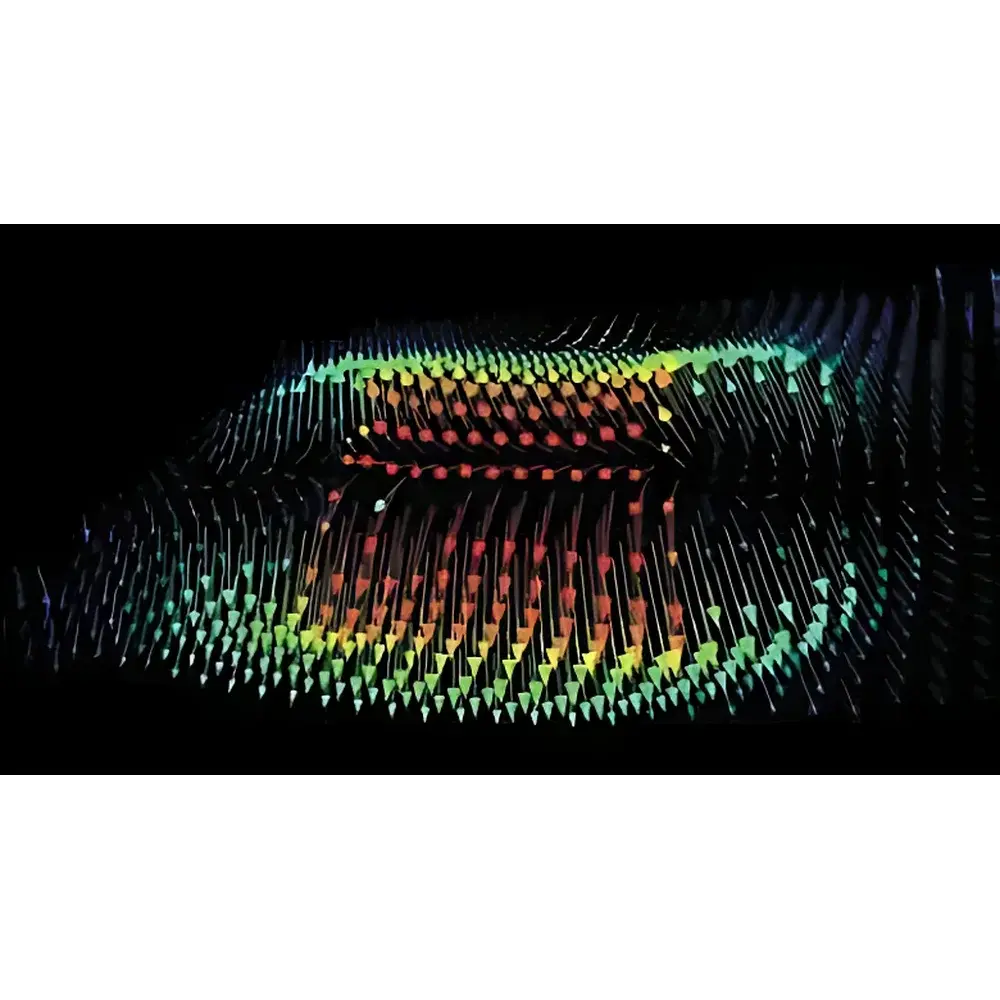
LaVision FlowMaster® 3D Stereoscopic Particle Image Velocimetry System
| Brand | LaVision GmbH |
|---|---|
| Origin | Germany |
| Model | FlowMaster® 3D |
| Measurement Dimensionality | 2D & 3D planar vector fields |
| Frame Rate | >100 Hz |
| Velocity Range | 0–3,000 m/s |
| Accuracy | ±1% of measured velocity |
| Measurement Field Size | 1 m × 1 m |
| Optical Configuration | Dual-camera stereoscopic imaging with Scheimpflug-aligned lenses |
| Calibration | Self-calibration enabled (target-free, off-field, distortion-corrected) |
| Software Platform | DaVis® v10+ |
Overview
The LaVision FlowMaster® 3D is a high-precision stereoscopic particle image velocimetry (PIV) system engineered for quantitative, non-intrusive measurement of instantaneous three-component velocity vectors within planar cross-sections of fluid flows. Unlike conventional 2D PIV systems that resolve only in-plane displacement components (u, v), the FlowMaster® 3D leverages dual-camera stereoscopy—rooted in the geometric principles of human binocular vision—to reconstruct full 3D displacement fields (u, v, w) across a single illuminated laser sheet. This capability is achieved through simultaneous acquisition of particle-seeded flow images from two spatially separated viewpoints, followed by triangulation-based volumetric reconstruction of particle positions and their temporal evolution between consecutive laser pulses. The system operates on time-resolved PIV principles, delivering phase-locked, high-speed velocity field snapshots at frame rates exceeding 100 Hz—enabling resolution of transient phenomena such as vortex shedding, turbulent boundary layer development, and combustion-induced flow instabilities.
Key Features
- Dual-camera stereoscopic architecture with motorized Scheimpflug lens alignment—ensuring simultaneous, diffraction-limited focus across the entire 1 m × 1 m measurement plane without mechanical repositioning.
- Patented self-calibration algorithm embedded in DaVis® software, eliminating dependence on physical calibration targets placed within the flow domain; enables accurate mapping of camera projection models, sheet thickness, and volumetric distortion corrections directly from particle image displacement fields.
- Target-free calibration workflow: calibration target placement outside the measurement volume or even offline—critical for applications where intrusive calibration hardware is prohibited (e.g., biomedical microfluidics, internal combustion engine cylinders, or sealed bioreactors).
- Automated optical distortion correction using pixel-level offset vector mapping, compensating for lens aberrations, misalignment-induced shear, and non-ideal Scheimpflug conditions.
- Integrated remote-controlled lens positioning: real-time adjustment of Scheimpflug angle, aperture, and focal distance via software interface—minimizing setup time and enhancing repeatability across experimental campaigns.
- Robust synchronization architecture supporting multi-pulse laser triggering, high-speed CMOS camera gating, and external event logging (e.g., pressure transducer signals, valve actuation, or ignition events) under deterministic timing control.
Sample Compatibility & Compliance
The FlowMaster® 3D is compatible with standard PIV seeding media—including polyamide, hollow glass, or titanium dioxide particles (0.5–10 µm diameter)—and supports both water-based and gaseous test environments (air, helium, combustion exhaust). Its optical design accommodates refractive index mismatches common in multiphase or optically heterogeneous flows (e.g., blood analogs, polymer melts, or spray-laden air). The system complies with ISO/IEC 17025 requirements for measurement traceability when used with NIST-traceable calibration artifacts and validated uncertainty quantification protocols. All DaVis® processing modules support audit-ready data provenance tracking per FDA 21 CFR Part 11 guidelines, including electronic signatures, version-controlled analysis pipelines, and immutable raw-data archiving—making it suitable for GLP/GMP-regulated research in pharmaceutical fluid dynamics and medical device validation.
Software & Data Management
Acquisition, preprocessing, and post-processing are unified within LaVision’s DaVis® v10+ platform—a modular, scriptable environment built on MATLAB Runtime and optimized for parallel GPU-accelerated cross-correlation (FFT-based and iterative multigrid solvers). The software includes native support for uncertainty estimation (via RMS error propagation and synthetic image validation), dynamic range optimization, sub-pixel interpolation refinement, and vector validation (median filtering, universal outlier detection, and continuity-based masking). Export formats include HDF5 (with metadata-rich attributes), ASCII-compatible CSV, Tecplot PLT, and ParaView-compatible VTK—ensuring seamless integration into CFD verification workflows (e.g., comparison against OpenFOAM or ANSYS Fluent results). All calibration parameters, image preprocessing steps, and processing settings are stored as XML-based experiment descriptors—enabling full reproducibility and automated batch reprocessing across datasets.
Applications
- Aerodynamics: Boundary layer transition studies, wake characterization behind bluff bodies, and active flow control evaluation in wind tunnel environments.
- Combustion science: Time-resolved flame-vortex interaction mapping, swirl-stabilized burner flow fields, and exhaust gas recirculation (EGR) mixing analysis.
- Biofluid mechanics: Hemodynamic assessment in anatomically realistic vascular phantoms, intraventricular flow patterns, and microchannel perfusion dynamics under pulsatile flow conditions.
- Energy systems: Turbomachinery inlet distortion mapping, heat exchanger channel flow uniformity, and molten salt flow behavior in concentrated solar power receivers.
- Industrial process engineering: Mixing efficiency quantification in stirred tanks, pneumatic conveying particle dispersion, and additive manufacturing powder bed gas flow visualization.
FAQ
Does the FlowMaster® 3D require physical calibration targets inside the flow field?
No. Its self-calibration technology reconstructs the camera geometry and optical model directly from particle image displacements—eliminating the need for in-situ target placement.
Can the system measure velocities in opaque or highly scattering media?
It requires optical access through two non-collinear viewports; performance degrades significantly in media with strong Mie scattering or absorption unless combined with tomographic PIV extensions (e.g., Tomo-PIV add-on).
Is DaVis® software compliant with regulatory data integrity standards?
Yes. Full 21 CFR Part 11 compliance is implemented via role-based access control, electronic signatures, audit trails, and cryptographic hash verification of raw datasets.
What is the minimum resolvable velocity magnitude?
Resolution depends on seeding density, interframe time, and interrogation window size—not a fixed value—but typical detectable magnitudes start at ~0.1 mm/s under optimized low-speed water tunnel conditions.
Can the system be integrated with existing laser sources and cameras?
Yes. DaVis® supports third-party high-speed cameras (Phantom, PCO, Basler) and Nd:YAG lasers (Newport, Quantel, Litron) via GenICam, TTL, and custom SDK interfaces.