
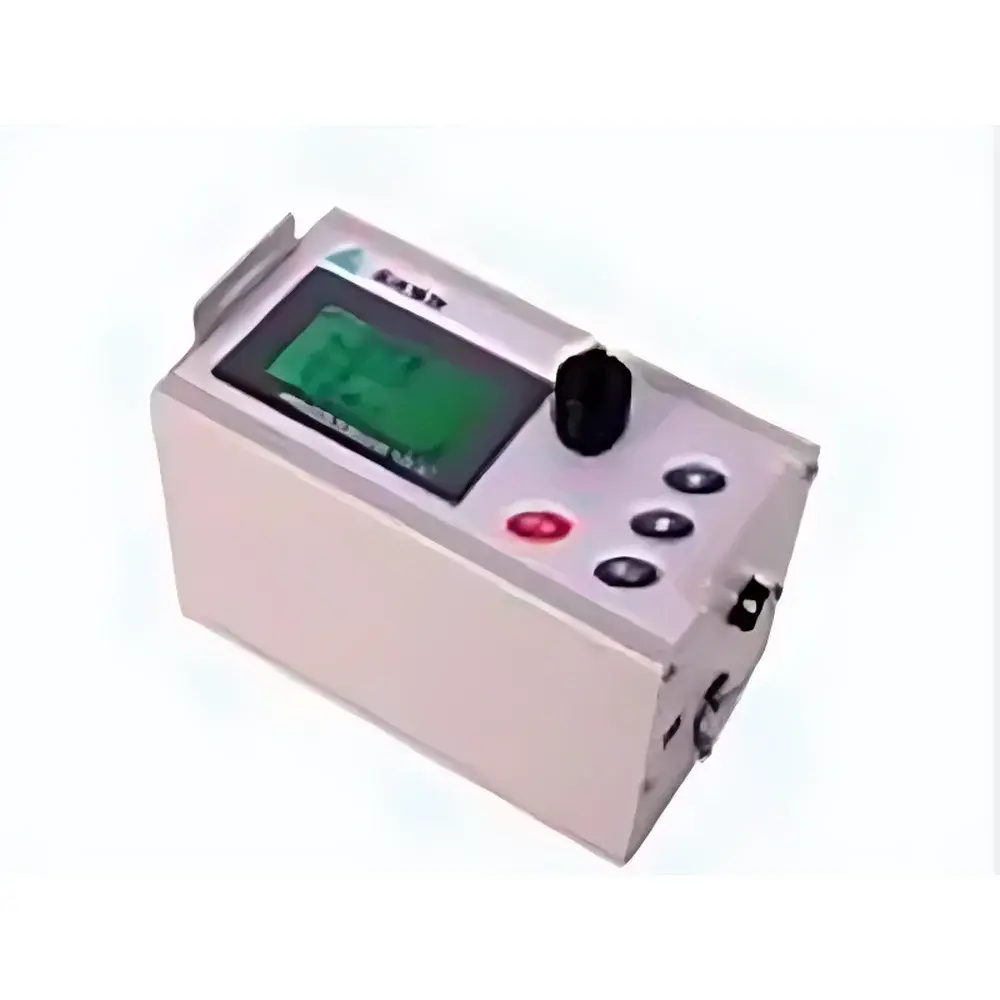
LD-5C Multi-Function Microcomputer Laser Dust Monitor
| Origin | Beijing, China |
|---|---|
| Manufacturer Type | Authorized Distributor |
| Origin Category | Domestic (China) |
| Model | LD-5C |
| Price | ¥27,800 |
| Sampling Method | Real-time Laser Scattering with Optional Filter-Based Gravimetric Validation |
| Particle Size Selectivity | PM₁₀ / PM₅ / PM₂.₅ via Interchangeable Impactors |
| Concentration Range | LD-5C(L): 0.01–100 mg/m³ |
| LD-5C(H) | 0.001–10 mg/m³ |
| Detection Limit | LD-5C(L): 0.1 mg/m³ |
| LD-5C(H) | 0.001 mg/m³ |
| Display | Backlit LCD with Chinese Character Menu |
| Data Storage | 99 Cyclic Records |
| Sampling Duration | Configurable from 0.1 min to user-defined intervals (1–9999 s) |
| Communication Interfaces | RS232 Serial Port, Thermal Printer Output, 0–1 V Analog Output, Digital TTL-Level Output |
| Power Supply | Rechargeable Ni-MH Battery (8 h continuous operation), AC/DC Adapter Included |
Overview
The LD-5C Multi-Function Microcomputer Laser Dust Monitor is a field-deployable, real-time aerosol mass concentration analyzer engineered for regulatory-grade environmental and occupational health monitoring. It operates on the principle of laser light scattering (nephelometry), where airborne particles passing through a focused diode laser beam generate scattered light proportional to their surface area and refractive index. The instrument applies empirically validated Mie scattering calibration curves—traceable to NIST-traceable PSL and ISO 12103-1 A1 test dusts—to convert raw optical signals into mass concentration values in mg/m³. Unlike passive gravimetric samplers, the LD-5C delivers immediate quantitative feedback without laboratory analysis delay, making it suitable for time-critical applications including indoor air quality (IAQ) audits, industrial hygiene compliance checks, HVAC duct sampling, and ambient particulate matter surveillance. Its dual-range optical detection system (LD-5C(L) and LD-5C(H)) ensures measurement integrity across both high-concentration workplace environments (e.g., cement plants, foundries) and low-level ambient settings (e.g., urban background stations, cleanrooms).
Key Features
- Laser-based real-time mass concentration measurement with simultaneous support for PM10, PM5, and PM2.5 size-selective monitoring via interchangeable impactor heads—each conforming to ISO 7708:1995 and EN 481:1993 aerodynamic cut-point specifications.
- Integrated 40 mm filter cassette holder enabling concurrent gravimetric validation per ISO 7708 and EPA Method IO-2, facilitating method correlation and QA/QC traceability.
- Dual-sensitivity optical detection architecture: High-sensitivity mode (0.001 mg/m³ LOD) for ambient or cleanroom use; Standard mode (0.1 mg/m³ LOD) optimized for industrial hygiene surveys.
- Programmable sampling protocols—including TWA (Time-Weighted Average) and STEL (Short-Term Exposure Limit) calculation modes aligned with OSHA 29 CFR 1910.1200 and ACGIH TLV® guidelines—as well as general environmental and timed-sampling configurations.
- Robust internal pump system with ≥15 L/min flow rate and pressure-compensated control, capable of sustaining stable aspiration through extended sampling lines (up to 3 m) required for centralized HVAC exhaust port measurements.
- Onboard data management with cyclic storage of up to 99 measurement records, each timestamped and tagged with operational parameters (cut-point, range mode, duration, battery level).
Sample Compatibility & Compliance
The LD-5C is validated for use with ambient air, indoor air, and workplace atmospheres containing non-volatile, non-hygroscopic particulates such as mineral dusts, metal fumes, carbon black, and combustion aerosols. It is not intended for volatile organic compounds (VOCs), oil mists, or highly hygroscopic salts without prior conditioning. Regulatory alignment includes conformance with Chinese national standards GB/T 20964–2007 (Workplace Air – Determination of Inhalable Particulate Matter) and HJ 618–2011 (Ambient Air – Determination of PM10 and PM2.5). While not certified to EU CE or US EPA equivalency, its design incorporates functional elements compatible with ISO/IEC 17025-accredited laboratories performing method validation under GLP conditions.
Software & Data Management
Data export is supported via RS232 serial interface for integration with Windows-based desktop software (supplied), enabling batch download, statistical summary (mean, max, min, SD), exposure profile plotting, and PDF report generation. Analog (0–1 V) and digital (TTL-level) outputs allow connection to SCADA systems, building management platforms (BMS), or third-party DAQ hardware. All stored records include metadata such as sampling start/stop time, selected particle fraction, sensitivity mode, and battery status—supporting audit-ready documentation for internal EHS reviews or external regulatory inspections.
Applications
- Ongoing occupational exposure assessment in mining, construction, metallurgy, and pharmaceutical manufacturing facilities.
- Indoor air quality verification in schools, hospitals, offices, and public transportation hubs per WHO Air Quality Guidelines.
- Real-time PM monitoring at HVAC exhaust points during commissioning or routine maintenance of central air handling units.
- Field screening for environmental baseline studies, community air monitoring networks, and post-remediation verification in brownfield sites.
- Method comparison and calibration verification against reference beta attenuation (TEOM) or gravimetric samplers in QA/QC workflows.
FAQ
Does the LD-5C provide NIOSH or ISO-certified calibration certificates?
No. Calibration is performed using factory-established aerosol standards; users are responsible for periodic field verification with traceable reference materials per their internal QA program.
Can the LD-5C be used outdoors in rain or high humidity?
It is rated for indoor and sheltered outdoor use only (IP22 enclosure rating); prolonged exposure to precipitation or >85% RH may affect optical path stability and filter integrity.
Is firmware upgrade supported via USB or only RS232?
Firmware updates require the proprietary RS232 communication protocol and dedicated configuration utility provided by the distributor.
What maintenance intervals are recommended for the optical chamber and pump?
Optical window cleaning every 50 hours of operation; pump filter replacement every 200 hours; annual full-system verification recommended for compliance-critical deployments.
Does the instrument meet FDA 21 CFR Part 11 requirements for electronic records?
No. It lacks electronic signature capability, audit trail logging, and role-based access control required for Part 11 compliance; data must be manually transcribed or exported for regulated GxP environments.







