
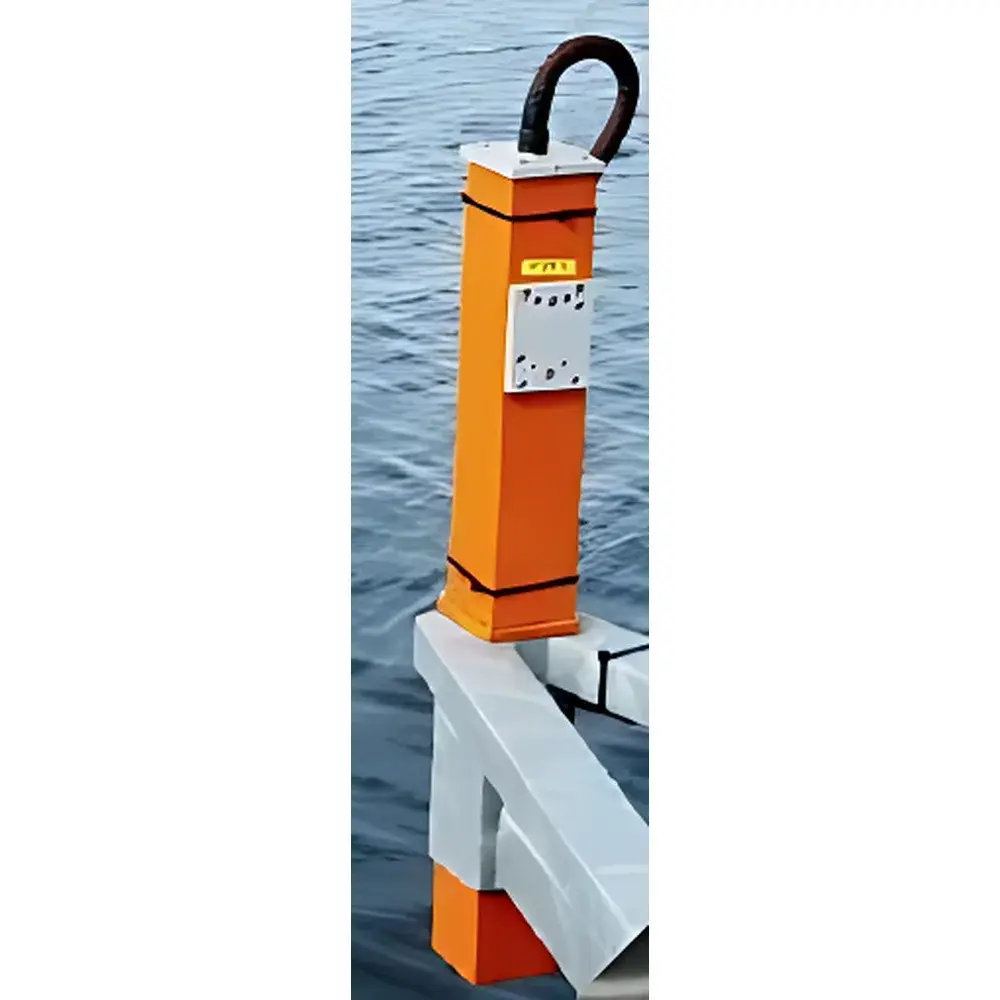
LDI ROW Remote Optical Oil Spill Monitor
| Brand | LDI |
|---|---|
| Origin | Europe |
| Model | ROW |
| Detection Principle | UV-Induced Fluorescence (UVIF) |
| Operating Environment | -40 °C to +60 °C |
| Housing Material | Anodized Aluminum & 316 Stainless Steel |
| Power Options | AC Mains / Solar-Powered with Wireless Telemetry |
| Minimum Detectable Oil Film Thickness | 1 µm |
| Maximum Detection Depth in Water Column | 10 m |
| Oil Types Detected | Crude Oil, Fuel Oil, Diesel, Marine Lubricants, Hydraulic Oil, Turbine Oil, Mineral Oil, Vegetable Oil, Heating Oil, Engine Oil |
Overview
The LDI ROW Remote Optical Oil Spill Monitor is an industrial-grade, fixed-mount environmental sensing system engineered for continuous, real-time detection of hydrocarbon films on water surfaces and oil contamination on land-based infrastructure. It operates on the physical principle of ultraviolet-induced fluorescence (UVIF): a narrow-band UV light source (typically centered at 365 nm) illuminates the target area; hydrocarbon molecules—particularly aromatic compounds abundant in crude oil, diesel, lubricants, and refined fuels—absorb this energy and re-emit visible-wavelength fluorescence (typically 400–600 nm). The ROW’s high-sensitivity photodetector array captures spectral intensity and spatial distribution of this fluorescence signal, enabling quantitative estimation of oil film thickness and qualitative classification of hydrocarbon type based on emission profile characteristics. Designed for unattended operation in marine, port, offshore platform, and coastal industrial settings, the ROW delivers robust performance under extreme ambient conditions without requiring immersion, sampling, or chemical reagents.
Key Features
- True non-contact optical detection—no physical contact with water or oil required, eliminating sensor fouling and maintenance downtime
- Wide operational temperature range: certified for continuous operation from –40 °C to +60 °C, validated per IEC 60068-2 environmental testing standards
- Corrosion-resistant enclosure fabricated from anodized aluminum and marine-grade 316 stainless steel, compliant with ISO 12944 C5-M corrosion category requirements
- Dual power architecture: supports standard 24 V DC or 110/230 V AC input; optional integrated solar panel + LiFePO₄ battery + LoRaWAN/NB-IoT telemetry for remote, grid-independent deployment
- Real-time alarm outputs via relay contacts and Modbus RTU/TCP protocols, configurable for threshold-based event triggering aligned with ISO 14001 environmental management system requirements
- Optical path optimized for low solar interference—integrated spectral filtering and pulsed UV illumination suppress background daylight noise, ensuring reliable daytime operation
Sample Compatibility & Compliance
The ROW monitor detects free-phase hydrocarbons exhibiting native fluorescence, including but not limited to: crude oil, bunker fuel (IFO 180/380), marine diesel (DMA/DMB), hydraulic oils (ISO VG 32–68), turbine oils, mineral insulating oils, vegetable-based biolubricants, and heating oils (EN 590, EN 14214). It does not detect non-fluorescent substances such as methanol, ethanol, glycol, or highly refined paraffinic base oils lacking aromatic content. The system meets electromagnetic compatibility requirements per EN 61000-6-2 (immunity) and EN 61000-6-4 (emissions), and its mechanical design conforms to IP66 ingress protection rating. While not intrinsically safe, it may be deployed in Zone 2 hazardous areas when installed per IEC 60079-14 guidelines and paired with appropriate barrier systems.
Software & Data Management
The ROW integrates with LDI’s OILVIEW™ Edge software suite, supporting local configuration via Ethernet or Bluetooth, and remote firmware updates over secure TLS 1.2 connections. All measurement data—including raw fluorescence intensity, estimated film thickness (µm), timestamp, GPS coordinates (when equipped with optional GNSS module), and diagnostic status—are logged with ISO/IEC 17025-compliant audit trails. Data export formats include CSV, JSON, and OPC UA, facilitating integration into SCADA, EMS (Environmental Monitoring Systems), and enterprise asset management platforms. For regulated environments, the software optionally supports 21 CFR Part 11-compliant electronic signatures, user role-based access control, and immutable data archiving aligned with GLP and GMP documentation practices.
Applications
- Port authority oil spill early warning networks along breakwaters, jetties, and berths
- Offshore platform perimeter monitoring for accidental discharge detection
- Marine terminal pipeline leak surveillance at loading/unloading arms and containment bunds
- Coastal wastewater outfall compliance verification for hydrocarbon carryover
- Industrial site stormwater runoff monitoring at refineries, depots, and manufacturing facilities
- Environmental remediation project progress tracking via long-term fluorescence trend analysis
FAQ
What types of oil cannot be detected by the ROW system?
Non-aromatic or highly saturated hydrocarbons—including white spirit, some synthetic ester-based lubricants, and fully hydrogenated vegetable oils—exhibit negligible native fluorescence and fall below the instrument’s detection threshold.
Can the ROW distinguish between different oil types?
Yes—via multi-channel spectral analysis of fluorescence emission profiles, the system classifies oils into broad categories (e.g., crude vs. refined fuel vs. lubricant) with >85% confidence under controlled calibration conditions.
Is calibration required, and how often?
Factory calibration is performed using traceable NIST-traceable mineral oil standards. Field verification is recommended annually or after exposure to severe mechanical shock or prolonged UV degradation; no user-performed recalibration is necessary.
Does the ROW require line-of-sight to the monitored surface?
Yes—optical path must remain unobstructed; fog, heavy rain, snow accumulation on the lens, or floating debris will attenuate signal integrity and trigger diagnostic alerts.
How is data transmitted from remote or offshore installations?
Via optional embedded cellular (LTE-M/NB-IoT) or satellite (Iridium Short Burst Data) modems, with configurable transmission intervals (1 min to 24 h) and local edge buffering up to 30 days.
Related Products







