
LED Lamp Tube Environmental Test Chamber – Temperature and Humidity Controlled Chamber
| Brand | OEM |
|---|---|
| Origin | Imported |
| Manufacturer Type | Authorized Distributor |
| Price | USD 3,100 (FOB) |
| Temperature Range | −70 °C to +150 °C |
| Humidity Range | 20–98% RH |
| Control Accuracy | ±0.5 °C / ±2.5% RH |
| Uniformity | ±1.5 °C / ±3% RH |
| Ramp Rate (Typical) | 1–3 °C/min (air average, unloaded, 25 °C ambient) |
| Compliance | GB/T 5170.2–1996, GB/T 5170.5–1996, GB 2423.1–1989, GB 2423.2–1989, GB 2423.22–1987, GB 10589–1989, GB 10592–1989, GB 11158–1989 |
Overview
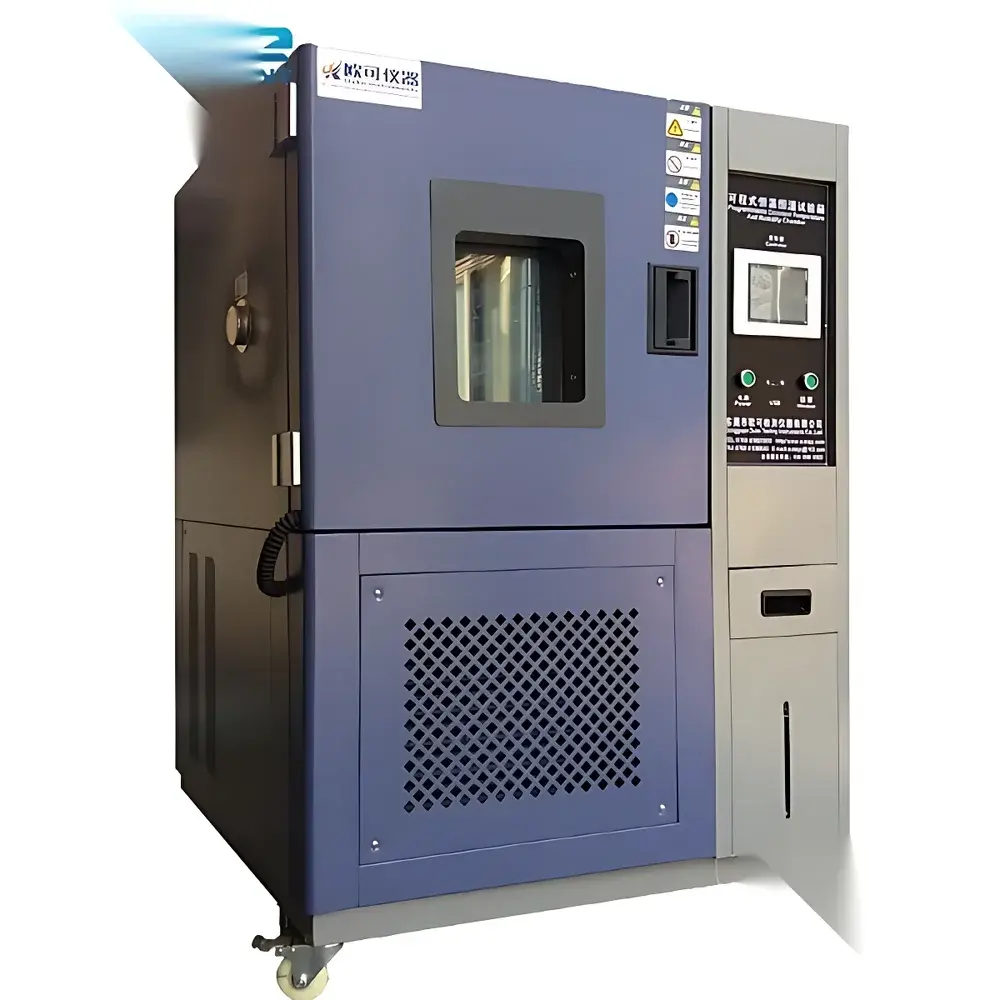
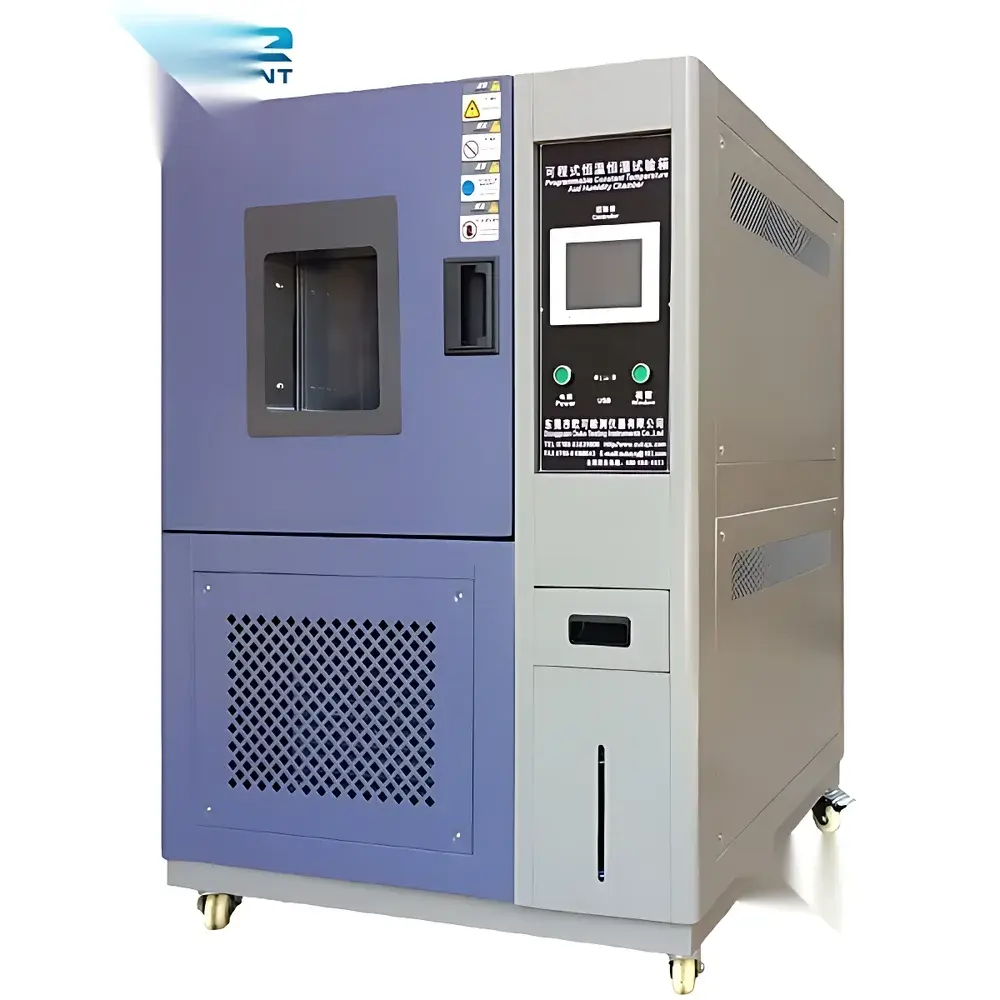
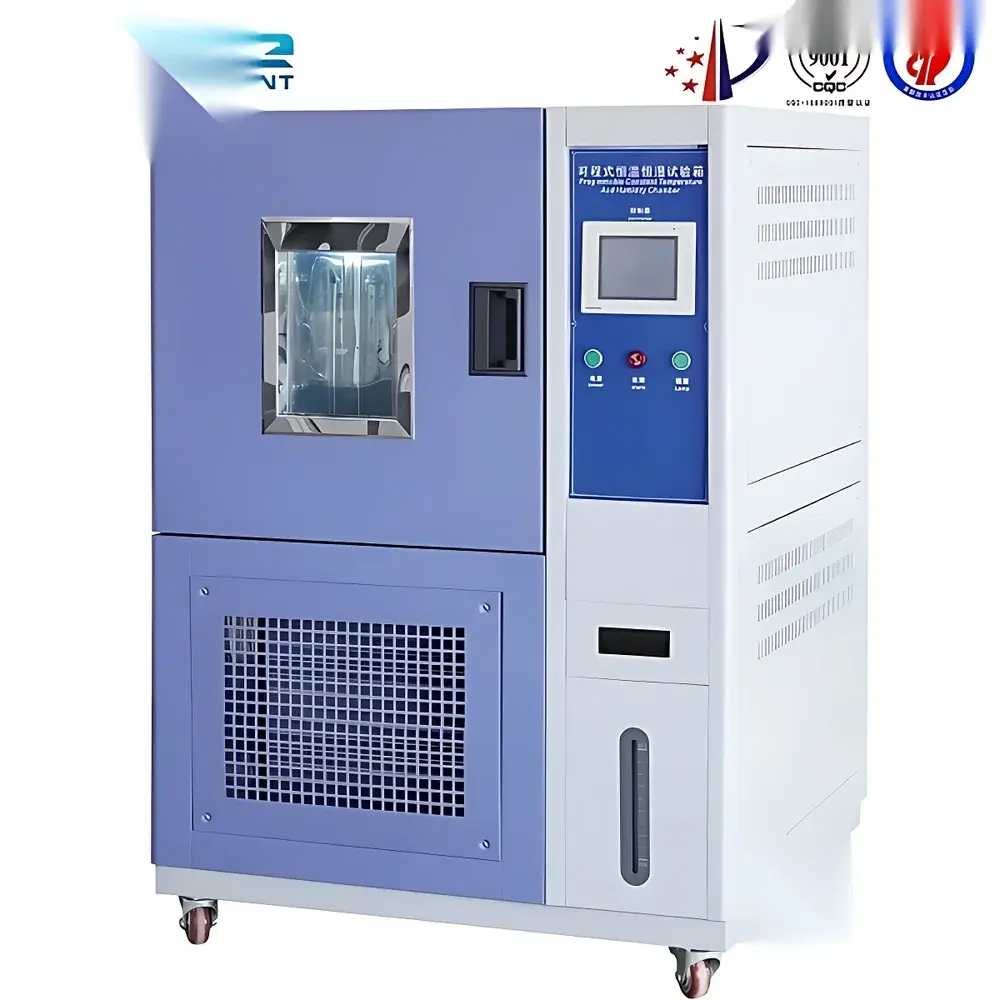
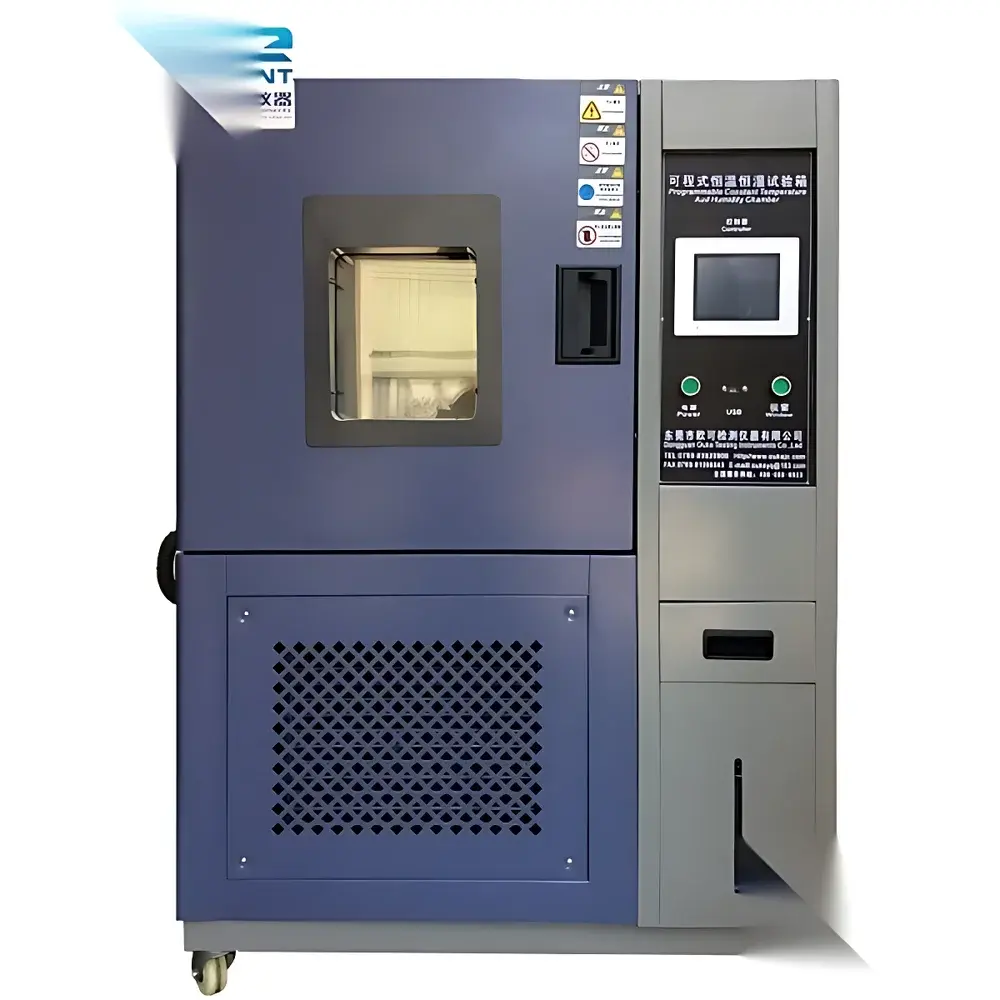
The LED Lamp Tube Environmental Test Chamber is a precision-engineered temperature and humidity controlled chamber designed specifically for accelerated reliability testing of solid-state lighting components—particularly linear LED tubes—under rigorously defined climatic stress conditions. Based on the principle of forced-air convection with dual independent control loops for thermal and hygrothermal regulation, the chamber maintains stable, repeatable environmental profiles across wide operational ranges. Its architecture integrates a balanced temperature-humidity control (BTHC) system using PID-controlled SSR power modulation, ensuring dynamic equilibrium between heating/cooling capacity and latent/sensible load. This enables long-duration stability essential for compliance-driven validation per IEC 60068-2 series, JEDEC JESD22-A104 (temperature cycling), and IES LM-80 photometric lifetime extrapolation protocols.
Key Features
- Robust stainless-steel inner chamber with seamless welding and anti-condensation insulation, optimized for low outgassing and minimal moisture retention during high-humidity operation.
- Advanced touch-screen controller with multi-segment programmable profiles (up to 99 cycles, 999 steps), real-time trend logging, and USB data export—certified compliant with IEC 61000-4 EMC standards.
- Balanced Thermal-Humidity Control (BTHC) architecture employing PID-regulated SSRs for heating, refrigerant expansion via capillary tube system (not thermostatic expansion valve), and ultrasonic humidification with deionized water feed—eliminating mineral deposits and ensuring traceable RH reproducibility.
- High-efficiency air circulation design with axial fan and adjustable baffle system, achieving ≤±1.5 °C temperature uniformity and ≤±3% RH uniformity across full working volume (per GB/T 5170.2 & GB/T 5170.5).
- Integrated cooling water interface (10–28 °C inlet, 0.1–0.3 MPa pressure) supporting sustained low-temperature operation down to −70 °C without compressor overload or freeze-up risk.
- Modular structural design allows factory customization of internal dimensions, door configuration (vertical/horizontal), and optional add-ons including UV-resistant viewing window, RS-485 Modbus RTU interface, and 21 CFR Part 11–compliant audit trail firmware.
Sample Compatibility & Compliance
This chamber accommodates standard T8/T5 LED lamp tubes (up to 1.5 m length) mounted on non-thermal-conductive fixtures within its test volume. It supports both static soak and dynamic cycling modes—including rapid temperature transition (RTT) per GB 2423.22 and step-stress humidity profiling per IEC 60068-2-30. All performance specifications—including temperature ramp rates, stability, and uniformity—are validated under no-load, 25 °C ±6 °C ambient conditions in accordance with GB/T 5170.2–1996 (thermal) and GB/T 5170.5–1996 (humid). The system meets fundamental requirements for GLP-compliant environmental qualification labs and supports documentation packages aligned with ISO/IEC 17025 accreditation scope for lighting product testing.
Software & Data Management
The embedded controller firmware includes built-in data logging at user-selectable intervals (1–600 seconds), with timestamped CSV output via USB mass storage. Optional PC-based software (Windows 10/11 compatible) provides remote monitoring, alarm event mapping, calibration certificate management, and automated report generation (PDF/Excel) compliant with FDA 21 CFR Part 11 electronic record requirements—including electronic signatures, audit trails, and role-based access control. Raw sensor data (PT100 temperature, capacitive RH) is stored with full metadata (operator ID, test ID, environmental setpoints, deviation alerts), enabling full traceability for internal QA audits or third-party certification submissions.
Applications
- Accelerated life testing of LED lamp tubes per IES LM-80 and TM-21 methodologies under combined thermal-hygric stress.
- Validation of encapsulant adhesion, phosphor degradation kinetics, and driver component reliability at extreme low-temperature startup (−40 °C to −70 °C).
- Compliance verification against national standards GB 2423.1 (cold), GB 2423.2 (dry heat), and GB 2423.22 (temperature change) for lighting product market access in China.
- Material compatibility screening of housing polymers (PC, PBT, ABS) and optical lenses under cyclic condensation/humidity exposure.
- Pre-shipment quality assurance for OEM lighting manufacturers requiring batch-level environmental stress screening prior to distribution.
FAQ
What is the difference between “air average ramp rate” and “product temperature transition rate”?
Air average ramp rate refers to the mean change in chamber air temperature over time, measured by reference sensors per GB/T 5170.2. It does not reflect actual device-under-test (DUT) thermal inertia; DUT temperature lag depends on mass, surface emissivity, mounting method, and thermal interface resistance.
Can this chamber perform dew point control or sub-zero humidity testing?
No. This model operates within 20–98% RH at temperatures ≥−10 °C. Sub-zero RH requires desiccant-based or chilled-mirror systems not integrated into this BTHC architecture.
Is the controller firmware validated for GxP environments?
The base controller supports audit trail export and password-protected parameter locking. Full 21 CFR Part 11 compliance requires optional firmware upgrade and documented IQ/OQ protocol execution per client SOP.
What maintenance is required for long-term RH accuracy?
Capacitive RH sensors require annual recalibration against NIST-traceable reference hygrometers; humidifier tanks must be drained and cleaned weekly when operating above 85% RH to prevent biofilm formation.
Does the chamber include a safety interlock for door opening during extreme temperature operation?
Yes. A dual-redundant mechanical and electronic door lock prevents opening below −20 °C or above +120 °C, with audible/visual alarms and automatic heater/shut-down activation upon unauthorized access attempt.



