
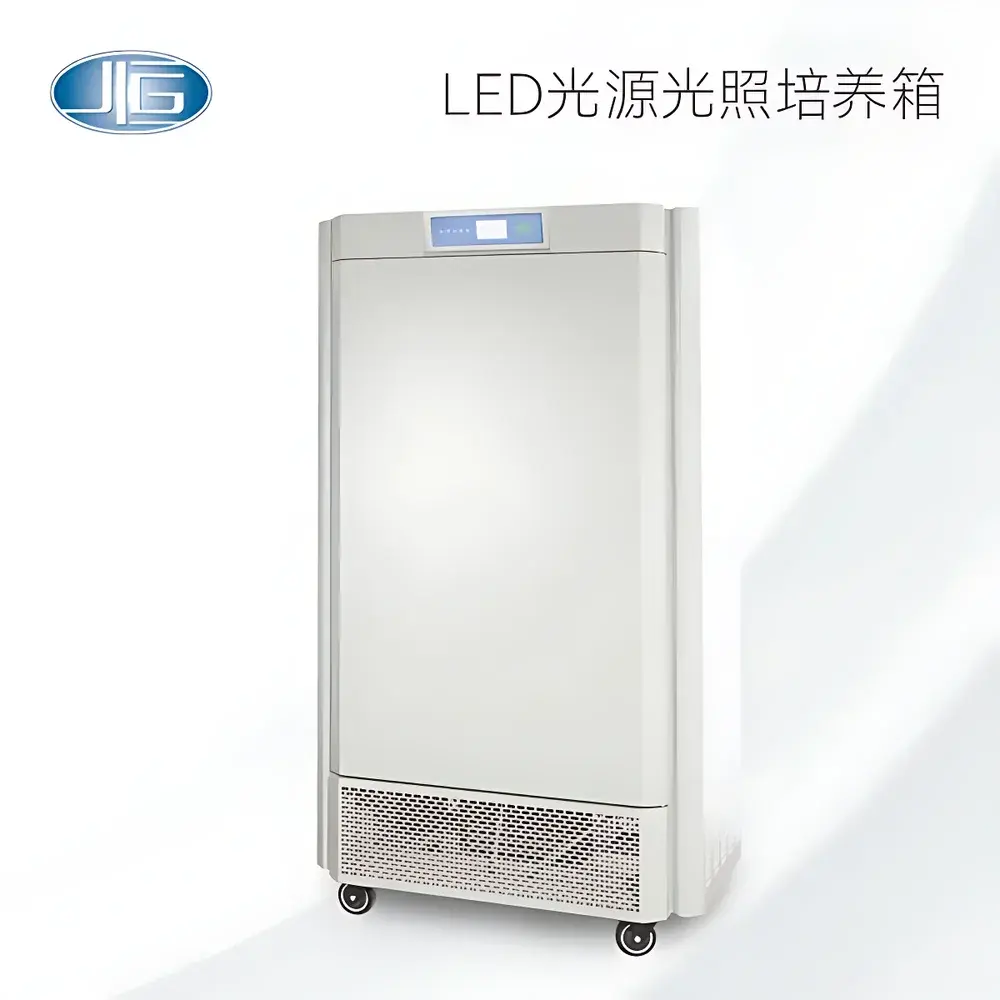
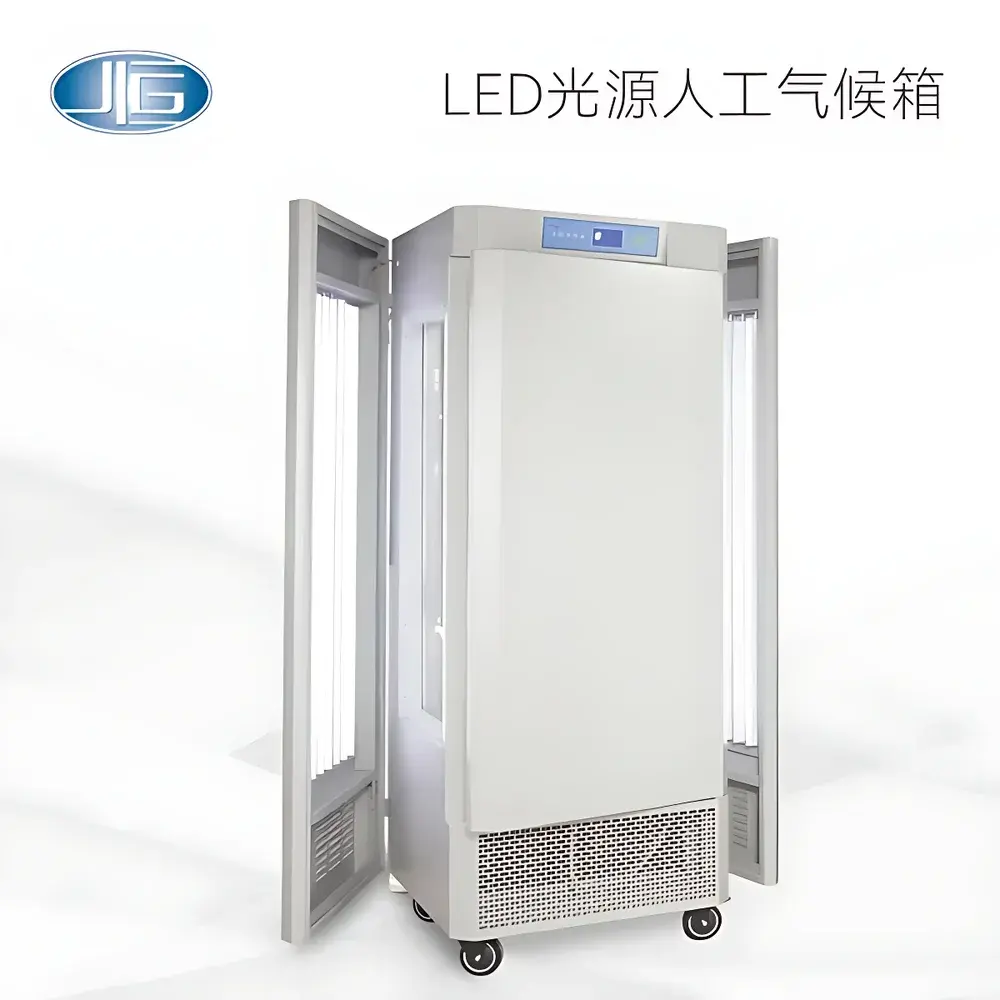
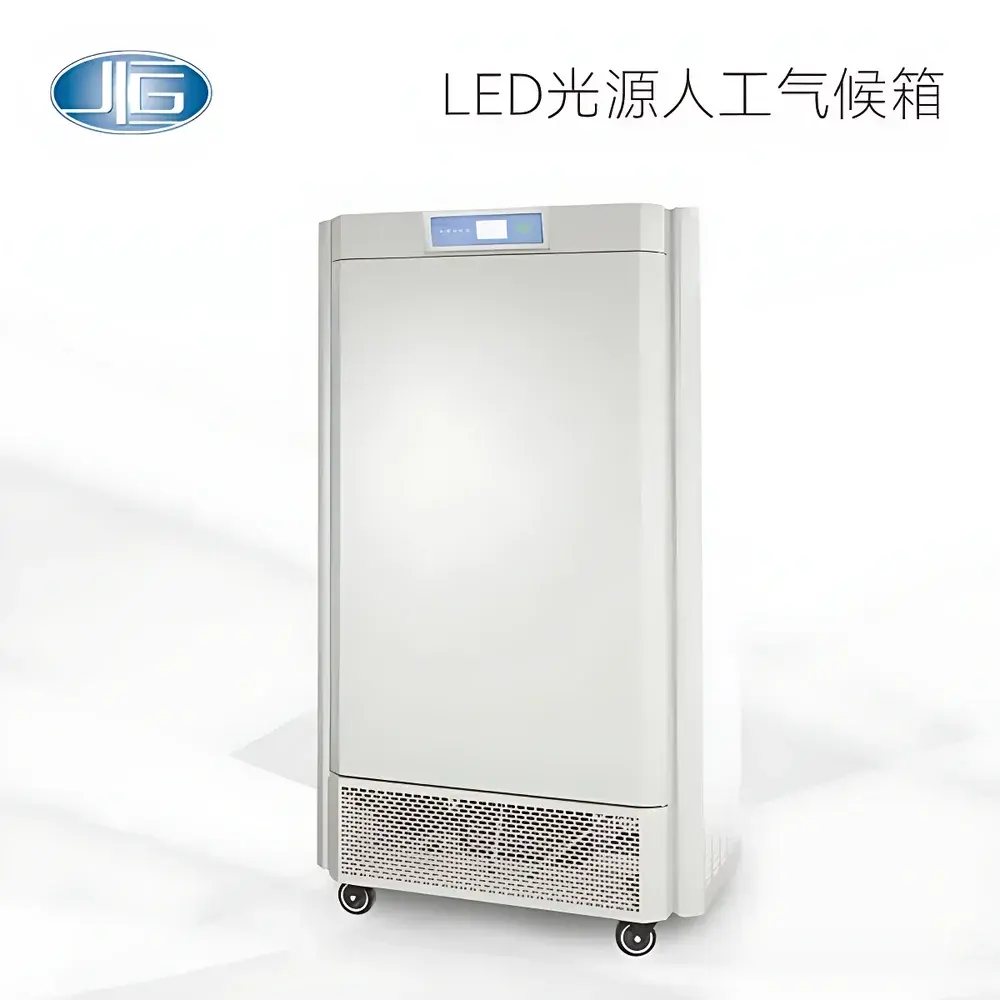
LED Light Source Artificial Climate Chamber — Intelligent Programmable Model MGC-250HP-2L Series by YIHENG
| Brand | YIHENG |
|---|---|
| Origin | Shanghai, China |
| Manufacturer Type | Direct Manufacturer |
| Regional Classification | Domestic (China) |
| Model | MGC-250HP-2L Series |
| Illumination Method | Three-Sided LED Illumination |
| Light Source Type | High-Efficiency White + Red/Blue Ratio-Tunable LED Array |
| Spectral Range | 400–700 nm (PAR-Optimized Visible Spectrum) |
| Temperature Control Range | 10–50°C (with illumination), 0–50°C (dark mode) |
| Temperature Uniformity | ±1°C |
| Illuminance Range | 0–18,000 lx (6-step adjustable, calibrated per IEC 60904-9) |
| Internal Dimensions (L×W×H) | 550×400×670 mm / 600×610×830 mm |
| External Dimensions (L×W×H) | 690×800×1410 mm / 760×815×1550 mm |
| Programmable Stages | Up to 30 Programs, Each with Duration 1–99 h 59 min |
| Optional CO₂ Control | 0–5000 ppm or 0–20% v/v (NDIR Sensor, Response Time <3 s) |
| Data Interface | RS485/USB with GLP-Compliant Software Suite (Optional Thermal Printer) |
Overview
The YIHENG MGC-250HP-2L Series Intelligent Programmable Artificial Climate Chamber is a precision-engineered plant growth chamber designed for reproducible, long-term physiological and phenotypic studies under tightly controlled environmental conditions. It operates on the principle of multi-parameter synergistic regulation—integrating thermally stable air circulation, spectrally optimized LED illumination, and programmable diurnal cycling—to emulate natural growth environments in laboratory settings. Unlike conventional fluorescent or halogen-based chambers, this system employs a PAR (Photosynthetically Active Radiation)-tuned LED array covering 400–700 nm, enabling precise control over photon flux density without radiant thermal load on samples. Its dual-compressor architecture ensures uninterrupted operation over extended durations (≥30 days), making it suitable for seed germination trials, photomorphogenesis assays, stress response profiling, and multi-generational plant breeding programs compliant with OECD TG 208 and ISO 11268-2 protocols.
Key Features
- Three-sided uniform LED illumination system delivering homogeneous irradiance distribution (CV ≤8% across working volume), minimizing edge effects and shadowing artifacts in plant canopy studies.
- Intelligent temperature management with dual independent compressors operating in alternating duty cycles—reducing mechanical fatigue and extending mean time between failures (MTBF) beyond 15,000 hours.
- Touchscreen interface with menu-driven navigation supporting simultaneous display of setpoints and real-time values for temperature, illuminance, elapsed time, and program stage.
- Corrosion-resistant mirror-finish stainless steel interior (AISI 304) with radius-rounded corners and tool-free removable shelves—facilitating rapid decontamination via autoclaving, ethanol wiping, or vaporized hydrogen peroxide (VHP) treatment.
- Low-velocity laminar airflow design (≤0.2 m/s at sample level) prevents mechanical stress on delicate seedlings and ensures consistent gas exchange without desiccation.
- Non-volatile memory retention: All user-defined programs and calibration offsets persist through power interruption and resume automatically upon restoration.
- Integrated safety architecture featuring independent high-limit temperature cutoff, real-time fault diagnostics, and visual/audible alarms for deviation thresholds exceeding ±1.5°C or ±500 lx.
Sample Compatibility & Compliance
The MGC-250HP-2L accommodates standard botanical containers including Petri dishes (up to 150 mm), Magenta boxes, growth pouches, hydroponic trays, and small potted specimens (max height 650 mm). Its internal geometry supports both vertical stacking and horizontal arrangement configurations. The chamber meets essential regulatory requirements for research-grade instrumentation: compliance with IEC 61000-6-3 (EMC emission limits), IEC 61000-6-2 (immunity), and GB/T 2423.1–2008 (environmental testing standards for low-temperature performance). When equipped with optional NDIR CO₂ sensing and GLP-compliant data logging software, the system satisfies audit readiness criteria for ISO/IEC 17025-accredited laboratories and supports 21 CFR Part 11 electronic record integrity through user authentication, audit trail generation, and digital signature capability.
Software & Data Management
The optional YIHENG ClimateLink™ software provides centralized configuration, remote monitoring, and traceable data acquisition. Through RS485 or USB connection, users can schedule multi-stage environmental profiles—including ramp-and-soak temperature transitions, dynamic light intensity modulation, and synchronized CO₂ dosing sequences. All logged parameters (temperature, illuminance, CO₂ concentration, runtime) are timestamped and stored in encrypted CSV or SQLite format. Graphical visualization tools enable overlay comparison of up to six experimental runs, while automated anomaly detection flags deviations exceeding user-defined statistical control limits (e.g., ±2σ from historical mean). Thermal printer integration produces hard-copy reports compliant with GMP Annex 11 documentation standards, including operator ID, instrument serial number, calibration certificate reference, and environmental validation summary.
Applications
- Controlled-environment phenotyping for crop improvement programs (e.g., drought tolerance screening under regulated VPD and light quality gradients).
- Photobiology studies investigating blue-light receptor signaling pathways using wavelength-specific LED activation.
- Microbial co-culture experiments requiring strict separation of light-dependent and dark-phase metabolic activity.
- Regulatory ecotoxicity testing per OECD Guideline 208 (Terrestrial Plant Test) and EPA OPPTS 850.4400 (Seed Germination/Root Elongation).
- Teaching laboratories conducting inquiry-based botany modules on photoperiodism, vernalization, and circadian entrainment.
- Biopharmaceutical upstream process development involving photoautotrophic algae or cyanobacteria cultivation.
FAQ
What spectral output does the LED system provide, and is it tunable?
The standard configuration delivers full-spectrum white light optimized for PAR (400–700 nm), with optional red/blue ratio adjustment available upon request. Spectral power distribution (SPD) data is supplied with each unit, traceable to NIM (National Institute of Metrology, China) calibration.
Can the chamber maintain humidity control?
Humidity regulation is not integrated into the base MGC-250HP-2L model; however, external humidification/dehumidification units may be interfaced via analog 0–10 V control signals when specified during ordering.
Is CO₂ control compatible with all illumination levels?
Yes—the NDIR sensor operates independently of light intensity and ambient temperature fluctuations, ensuring stable CO₂ feedback control across the full 0–18,000 lx range.
How is temperature uniformity validated inside the chamber?
YIHENG performs volumetric mapping per ISO 16730-1 using nine calibrated Pt100 probes during factory acceptance testing; a certificate of uniformity (±1.0°C max deviation) is included with shipment.
Does the system support IQ/OQ/PQ documentation packages?
Comprehensive qualification templates aligned with ASTM E2500 and EU GMP Annex 15 are available as an add-on service, including protocol drafting, execution support, and final report generation.




