
LEI-TECH LK-5GHD 5G Wireless Digital Microscopy Interactive Teaching System
| Brand | LEI-TECH |
|---|---|
| Origin | Tianjin, China |
| Manufacturer Type | OEM/ODM Manufacturer |
| Country of Origin | China |
| Model | LK-5GHD |
| Pricing | Upon Request |
Overview
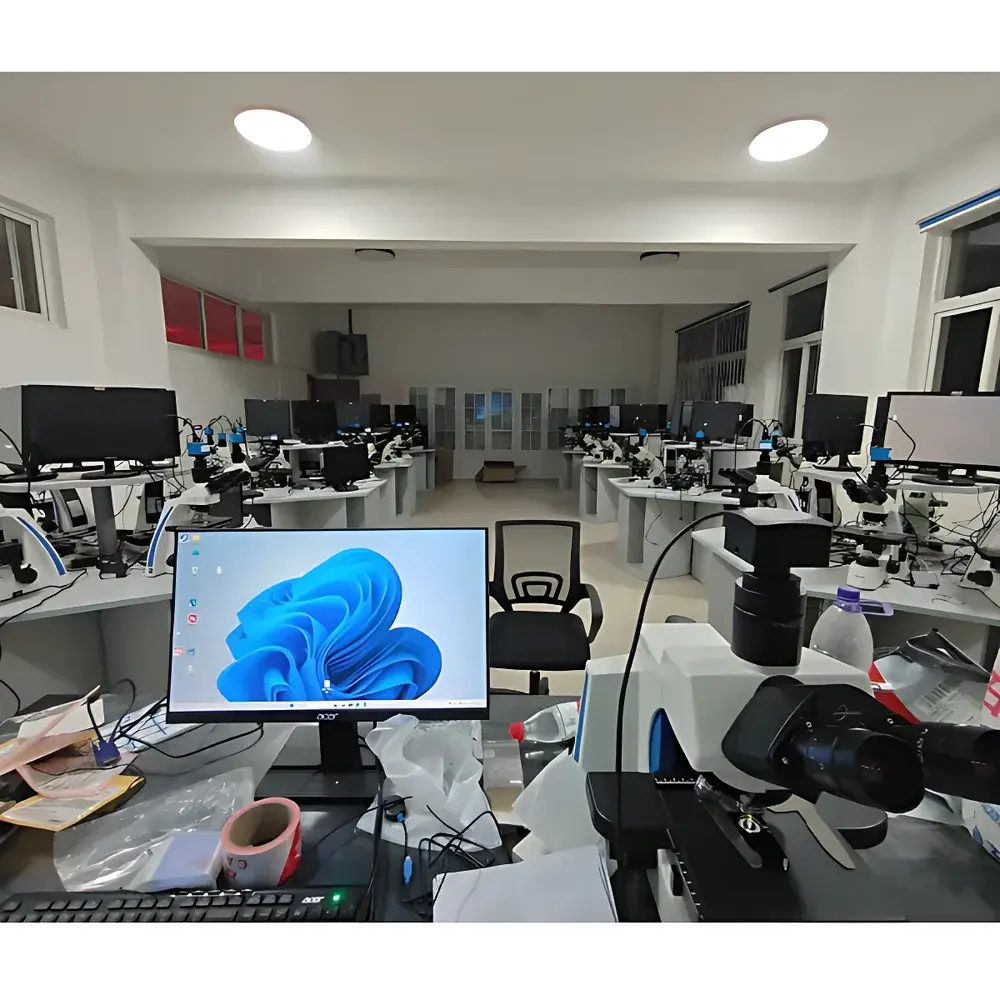
The LEI-TECH LK-5GHD 5G Wireless Digital Microscopy Interactive Teaching System is an integrated optical education platform engineered for modern STEM laboratories and higher-education classrooms. It combines high-fidelity optical microscopy with real-time wireless imaging, low-latency 5G Wi-Fi transmission, and cross-platform interactive software to enable synchronous, scalable, and pedagogically structured microscopic instruction. Unlike conventional wired microscope networks, the LK-5GHD eliminates Ethernet infrastructure dependency by establishing a dedicated, self-contained 5G Wi-Fi local area network (LAN) — operating in the 5 GHz ISM band — ensuring stable, interference-resistant video streaming at up to 1080p resolution with sub-100 ms end-to-end latency. The system adheres to IEEE 802.11ac/n standards and supports WPA3 encryption for secure classroom data handling. Its core optical architecture preserves native Köhler illumination pathways while integrating a Sony IMX-series CMOS sensor via beam-splitter optics (50:50 split ratio), enabling simultaneous ocular observation and digital capture without optical compromise.
Key Features
- Dedicated 5G Wi-Fi LAN: Self-hosted, isolated wireless network eliminating reliance on institutional IT infrastructure; supports up to 60 concurrent student endpoints with deterministic bandwidth allocation.
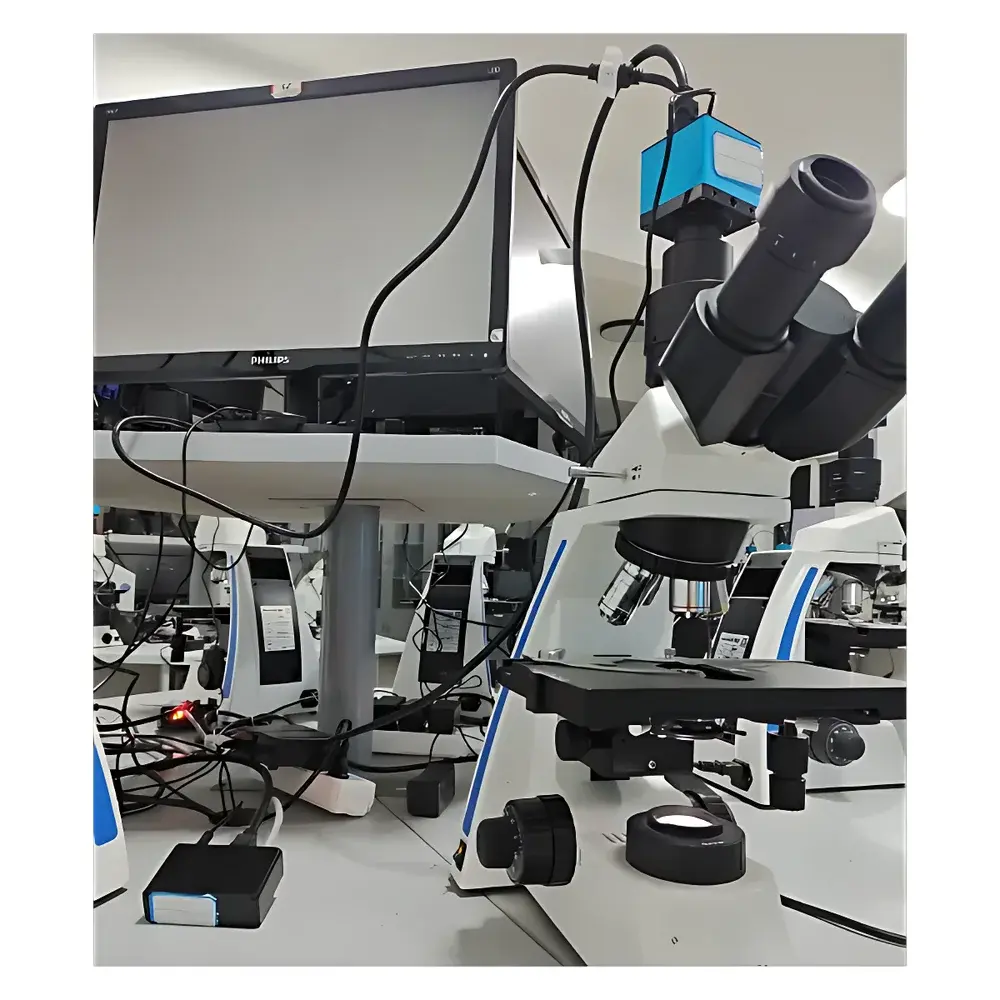
- Optical-Embedded Imaging Module: Non-invasive integration into standard upright or inverted microscopes; maintains original optical path integrity and magnification calibration; compatible with 4×–100× objective lenses.
- Cross-Platform Client Support: Native applications for Windows 10/11, macOS 12+, iOS 15+, and Android 11+; unified UI framework ensures consistent interaction logic across devices.
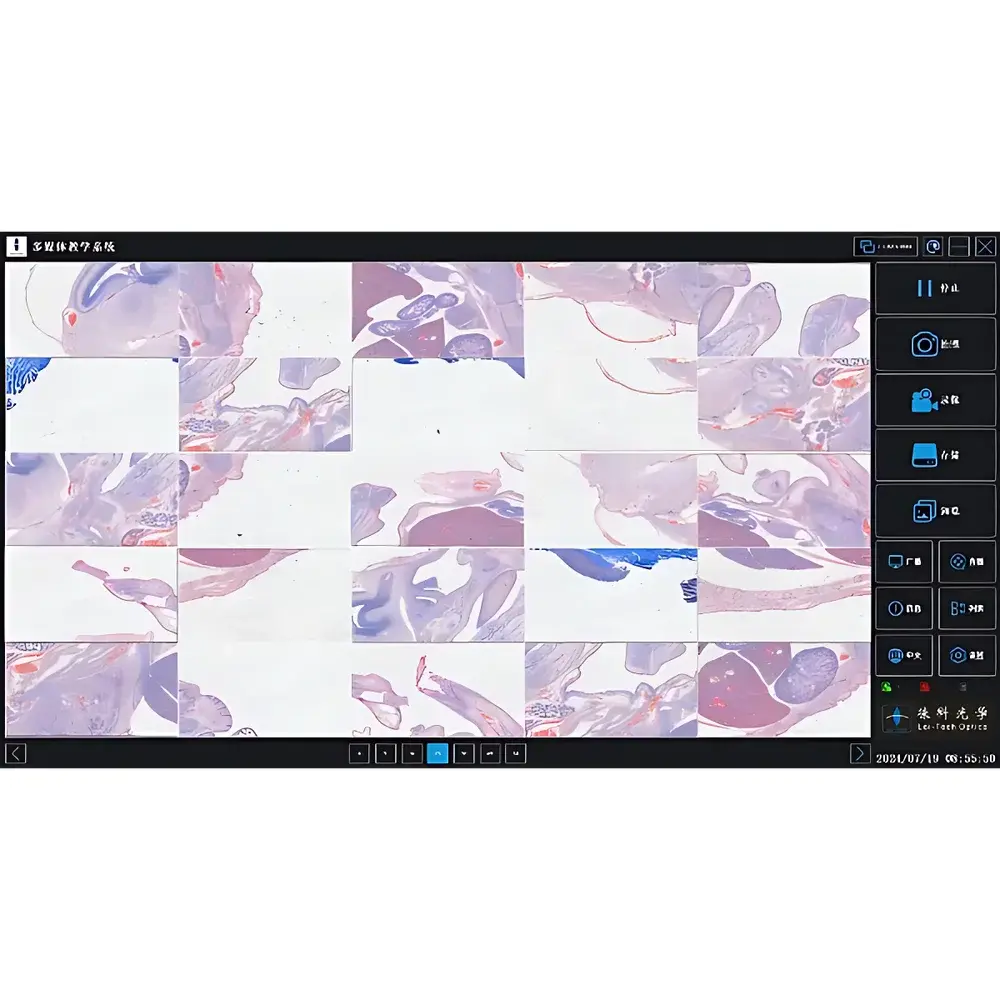
- Real-Time Multi-Screen Comparison: Instructor workstation supports up to four synchronized live feeds (teacher view + three student views) with adjustable layout modes (split-screen, picture-in-picture, side-by-side overlay).
- Energy-Efficient Student Terminals: Integrated auto-sleep mode triggered after 90 seconds of inactivity; physical screen-off switch reduces power draw by >75% during passive observation phases.
- USB 3.0 Local Storage Architecture: Encrypted, removable storage via industrial-grade USB 3.0 flash drives (up to 256 GB); metadata-tagged image/video export with timestamp, user ID, and session ID embedded in EXIF headers.
Sample Compatibility & Compliance
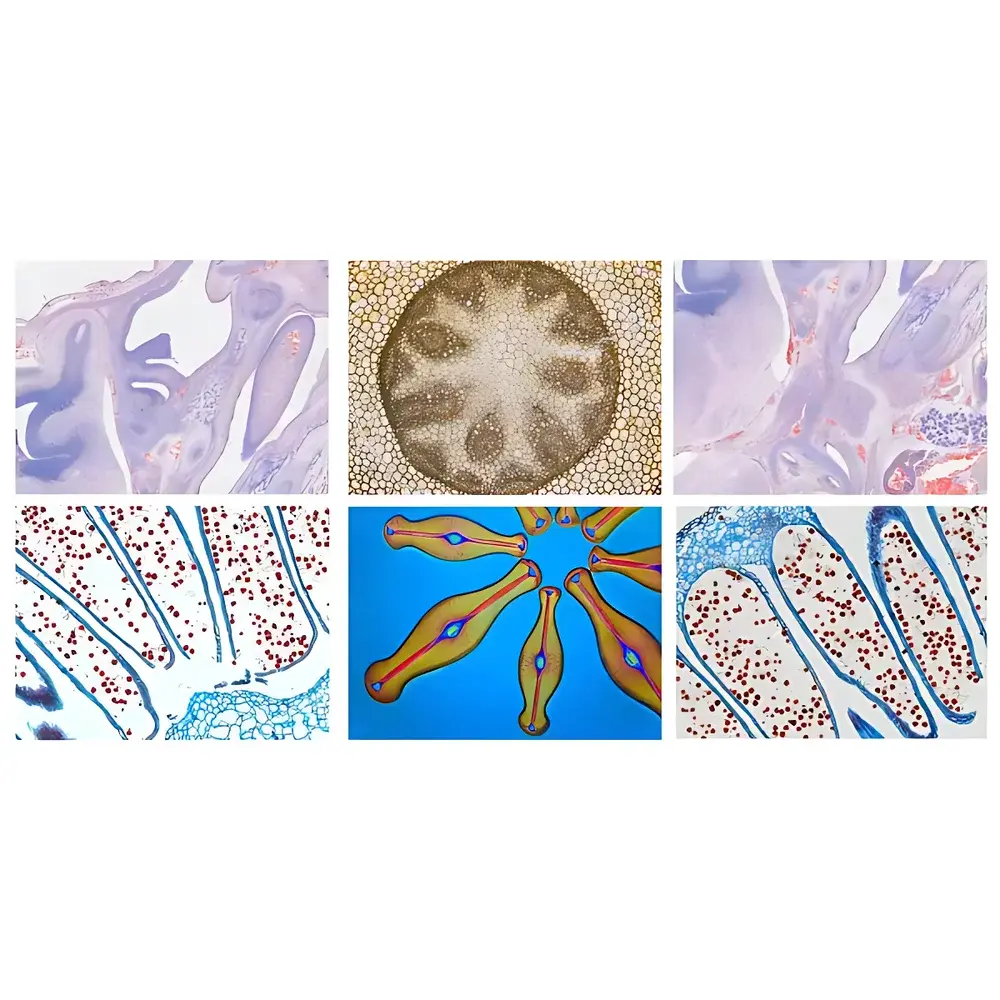
The LK-5GHD interfaces seamlessly with standard glass slide preparations, histological sections, metallurgical specimens, botanical mounts, and live-cell culture dishes (with appropriate stage adapters). It complies with ISO 10934-1:2003 (Microscopy — Nomenclature of components), IEC 61000-6-3:2018 (EMC emission limits), and RoHS Directive 2011/65/EU. All firmware and software modules are designed for GLP-aligned educational environments: audit trails log user login/logout, image capture events, annotation edits, and file exports; session records are retained for ≥180 days unless manually purged under institutional policy. While not FDA-regulated (as it performs no diagnostic interpretation), the system meets ASTM E2912-21 requirements for educational image acquisition systems used in accredited laboratory curricula.
Software & Data Management
The instructor-facing software suite runs on Windows-based control PCs and provides role-based access control (instructor/admin/student), session scheduling, and automated backup to network-attached storage (NAS) via SMB/CIFS. Annotation tools include calibrated measurement overlays (µm/pixel scaling enabled per objective), multi-color markup layers, and timestamped voice notes synced to video frames. Student clients support QR-code or SSID/password-less hotspot join protocols — eliminating credential management overhead. All captured media are stored in DICOM-compliant .dcm wrappers (optional) or standard .tiff/.mp4 containers with embedded EXIF metadata. Export workflows support batch anonymization (removal of user identifiers) for IRB-approved course repositories.
Applications
This system is deployed in undergraduate biology labs for comparative histology instruction, materials science courses for grain boundary analysis, forensic science programs for fiber/toolmark documentation, and K–12 advanced placement (AP) science classrooms requiring NGSS-aligned inquiry-based microscopy. Its low-barrier deployment enables rapid reconfiguration between fixed lab stations and mobile cart-based setups. Institutions report measurable improvements in student engagement metrics (via LMS-integrated analytics), reduction in equipment downtime (no cable wear/failure), and accelerated grading cycles due to standardized digital submission of annotated image reports.
FAQ
Does the LK-5GHD require integration with existing campus Wi-Fi?
No — it operates as an independent 5 GHz Wi-Fi access point with configurable SSID and channel selection to avoid RF congestion.
Can third-party microscopes be retrofitted with the imaging module?
Yes — mechanical adapters are available for Olympus BX/BH, Nikon Eclipse, Zeiss Axio, and Leica DM series; optical alignment verification is performed during installation.
Is student data privacy compliant with FERPA or GDPR?
All locally stored data remains on institution-controlled hardware; cloud upload is disabled by default and requires explicit administrative opt-in with TLS 1.3 encrypted transfer.
What is the warranty coverage and service response protocol?
Two-year comprehensive hardware and firmware warranty; remote diagnostics initiated within 15 minutes of ticket submission; on-site technician dispatch scheduled within 72 business hours for critical failures.
How is software updated and validated for academic use?
Firmware updates undergo internal regression testing against ISO/IEC 17025-aligned validation protocols; release notes document traceability to pedagogical feature requests from partner universities.





