
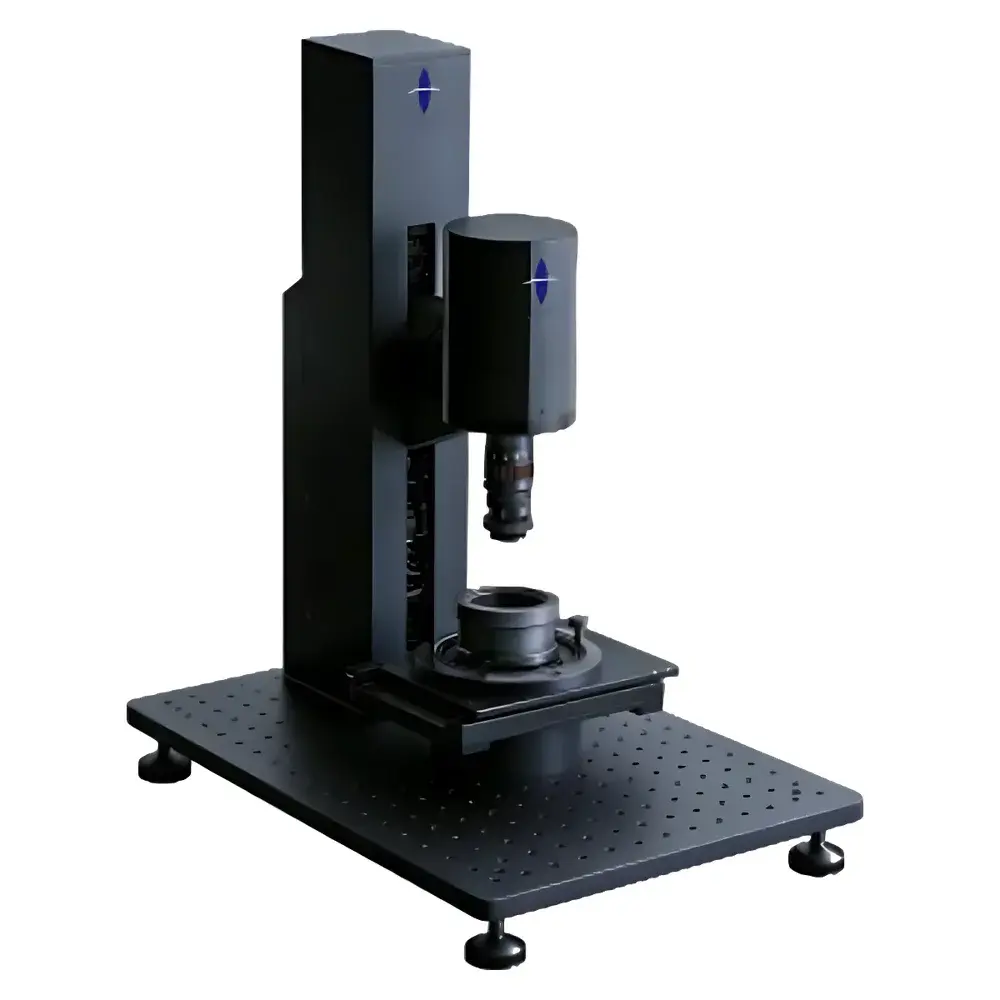
Lei-Tech LK-CJS1500 Research-Grade Extended Depth of Field (EDF) Digital Microscopy System
| Brand | Lei-Tech |
|---|---|
| Origin | Tianjin, China |
| Manufacturer Type | OEM/ODM Manufacturer |
| Model | LK-CJS1500 |
| Imaging Sensor | 60 fps @ 1920×1080 |
| Z-Axis Drive | Motorized, 200 mm travel |
| XY Stage Dimensions | 180 mm × 155 mm, 360° rotary (R = 95 mm), translation range: X = 75 mm, Y = 55 mm |
| Magnification Range | 57.4× to 4286.3× |
| Optical Resolution | 1 µm |
| Z-Axis Resolution | 0.1 mm |
| Working Distance | 86 mm |
| FOV Range | 2 mm to 45 mm |
| Illumination | Transmitted LED dark-field + reflected LED ring light |
| Objective Turret | 4-position |
| Objectives | Infinity-corrected long-working-distance achromatic metallurgical objectives (1×/0.03, 5×/0.15, 10×/0.30) |
| Built-in OS | Yes |
Overview
The Lei-Tech LK-CJS1500 Research-Grade Extended Depth of Field (EDF) Digital Microscopy System is an integrated optical metrology platform engineered for high-fidelity 2D/3D surface characterization in academic research labs, precision manufacturing QA/QC environments, and failure analysis facilities. It employs a hybrid optical-digital architecture combining infinity-corrected long-working-distance metallurgical optics with real-time focus-stacking algorithms and hardware-synchronized motorized Z-axis actuation (200 mm travel). Unlike conventional stereo or compound microscopes limited by shallow depth of field at high magnifications, the LK-CJS1500 achieves optically coherent volumetric imaging through synchronized multi-focus image acquisition and pixel-level fusion—enabling sharp visualization across complex topographies without mechanical refocusing. Its 1 µm optical resolution, 86 mm working distance, and modular objective turret support non-contact inspection of fragile, reflective, or high-aspect-ratio specimens—including MEMS devices, semiconductor wafers, watch gears, and biomedical scaffolds—while maintaining compliance with foundational optical metrology principles defined in ISO 10110 and ASTM E2821.
Key Features
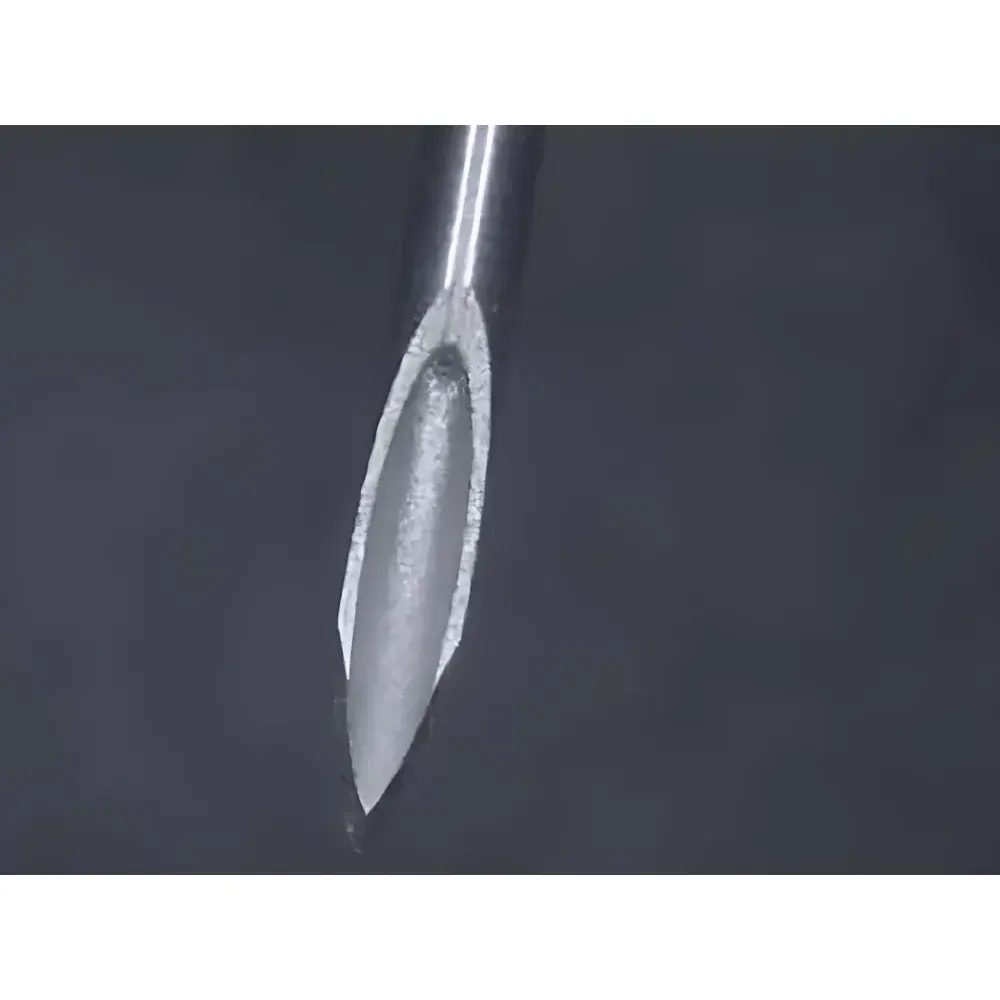
- Real-time Extended Depth of Field (EDF) imaging: Eliminates motion-induced blur and parallax artifacts via hardware-triggered focus stacking at 60 fps @ 1920×1080, preserving edge fidelity on highly reflective or textured surfaces.
- Wide dynamic range (WDR) illumination control: Dual-channel LED system (transmitted dark-field + reflected ring light) dynamically balances intensity gradients to suppress specular glare from polished metals or coated substrates.
- Motorized 3-axis precision stage: XYZ translation with 360° rotational capability (R = 95 mm), X/Y travel of 75 mm × 55 mm, and Z-axis resolution of 0.1 mm—calibrated for traceable dimensional metrology per ISO 17025-accredited workflows.
- Built-in embedded operating system: Standalone operation without external PC; all measurement, modeling, and reporting functions executed locally with deterministic latency.
- Tri-algorithmic processing engine: Simultaneous execution of EDF fusion, surface mesh reconstruction (STL export), and sub-pixel edge detection—optimized for GPU-accelerated throughput on embedded ARM-based architecture.
- Automated 2D metrology suite: Template-based pattern recognition, batch measurement scripting, and statistical process control (SPC) output compliant with MSA AIAG guidelines.
Sample Compatibility & Compliance
The LK-CJS1500 accommodates specimens ranging from 2 mm to 45 mm field-of-view—supporting wafer fragments, PCB assemblies, orthopedic implants, ceramic sintered parts, and biological tissue sections mounted on standard glass slides. Its long-working-distance objectives (WD = 10.8–12.2 mm) enable safe inspection of tall or recessed features without collision risk. The system meets electromagnetic compatibility (EMC) requirements per IEC 61326-1 and carries CE marking for laboratory instrumentation. While not FDA 510(k)-cleared, its measurement traceability framework—including factory calibration certificates with uncertainty budgets—supports GLP/GMP-aligned validation protocols. Data integrity adheres to ALCOA+ principles: all measurements include timestamped audit trails, user authentication logs, and immutable report generation (PDF/XLSX) with digital signature options.
Software & Data Management
The embedded firmware hosts a purpose-built imaging analytics suite supporting DICOM-compatible metadata tagging, multi-layer annotation (geometric, text, arrow), and hierarchical project archiving. All 3D point clouds are stored in native .PLY format with embedded coordinate system definitions (mm-scale units, right-handed orientation). Measurement data exports include full uncertainty propagation per GUM (JCGM 100:2008) conventions. For regulated environments, optional software modules provide 21 CFR Part 11-compliant electronic signatures, role-based access control (RBAC), and automated backup to network-attached storage (NAS) via SMB/CIFS. Raw image sequences are retained in lossless TIFF format with EXIF metadata (objective ID, exposure time, gain, Z-step interval), enabling retrospective reprocessing as algorithm updates are deployed.
Applications
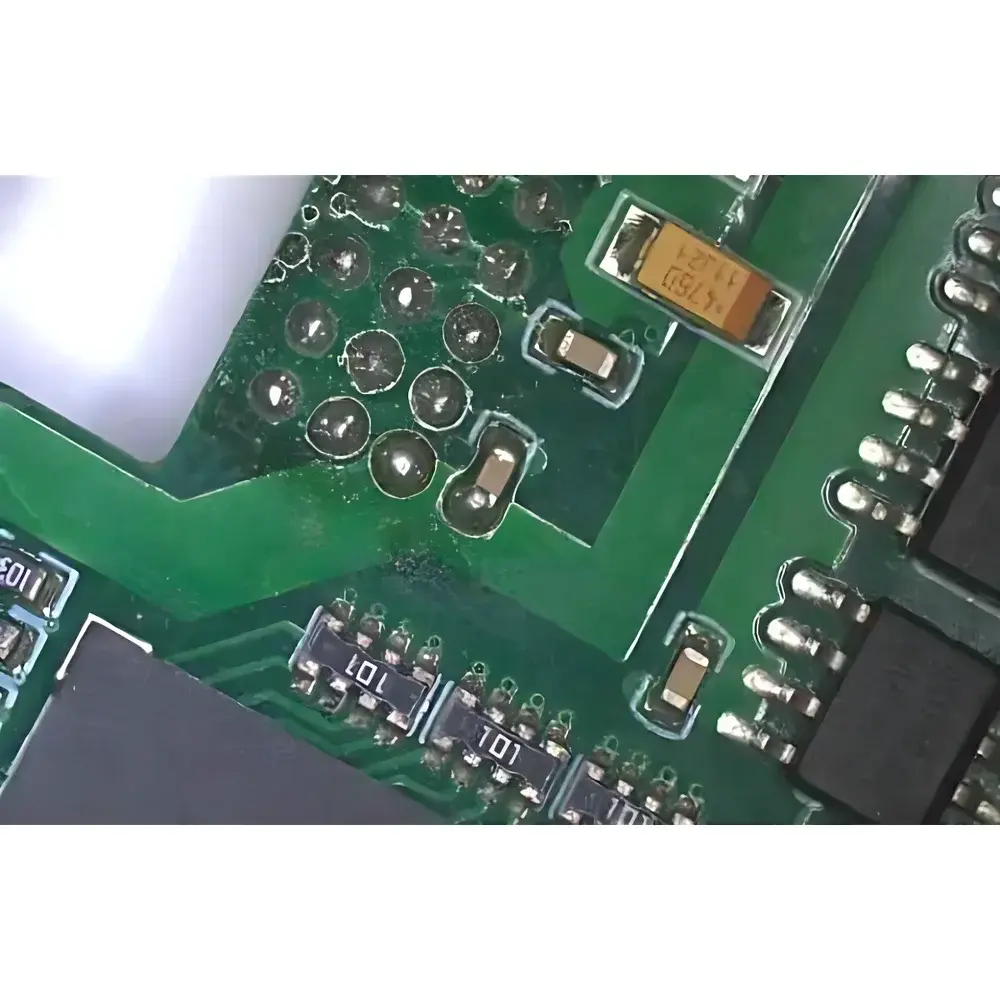
- Microelectronics: Quantitative height profiling of solder bumps, trench depth verification in Si etch processes, and interconnect step coverage analysis.
- Precision mechanics: Gear tooth geometry assessment (e.g., clock gear flank height = 5.661 mm), bearing raceway roughness mapping, and thread pitch deviation measurement.
- Materials science: Grain boundary delineation in polycrystalline alloys, porosity distribution analysis in additively manufactured Ti-6Al-4V, and coating thickness estimation on thermal barrier systems.
- Life sciences: Morphometric analysis of histological sections, scaffold pore interconnectivity quantification, and microfluidic channel cross-sectional profiling.
- Forensics & quality assurance: Toolmark comparison, counterfeit component identification via surface finish anomaly detection, and GD&T evaluation (flatness, parallelism, circularity) on machined aerospace components.
FAQ
Does the LK-CJS1500 support third-party software integration?
Yes—via TCP/IP API (RESTful endpoints) and USB CDC virtual COM port, enabling bidirectional communication with LabVIEW, MATLAB, or custom MES/SCADA platforms for automated report ingestion and SPC dashboarding.
What calibration standards are supplied with the system?
A NIST-traceable 100 µm line-pitch grating and certified step-height standard (5 µm, 20 µm, 100 µm steps) are included, with calibration procedures documented per ISO/IEC 17025 Annex A.3.
Can the system perform roughness parameter calculations (Ra, Rz, Rq)?
Yes—the 3D surface mesh module computes ISO 4287/4288 parameters directly from reconstructed topography; results are exportable in CSV with spatial sampling interval metadata.
Is remote diagnostics and firmware update supported?
Field-upgradable firmware is delivered via signed OTA packages; remote session initiation requires pre-authorized IP whitelisting and TLS 1.2 encryption, compliant with IEC 62443-3-3 SL2 requirements.
What is the warranty coverage and service response protocol?
Two-year comprehensive warranty includes on-site preventive maintenance, hardware replacement, and priority remote engineering support with guaranteed 2-hour initial response during business hours (GMT+8), backed by regional service centers across APAC, EMEA, and North America.



