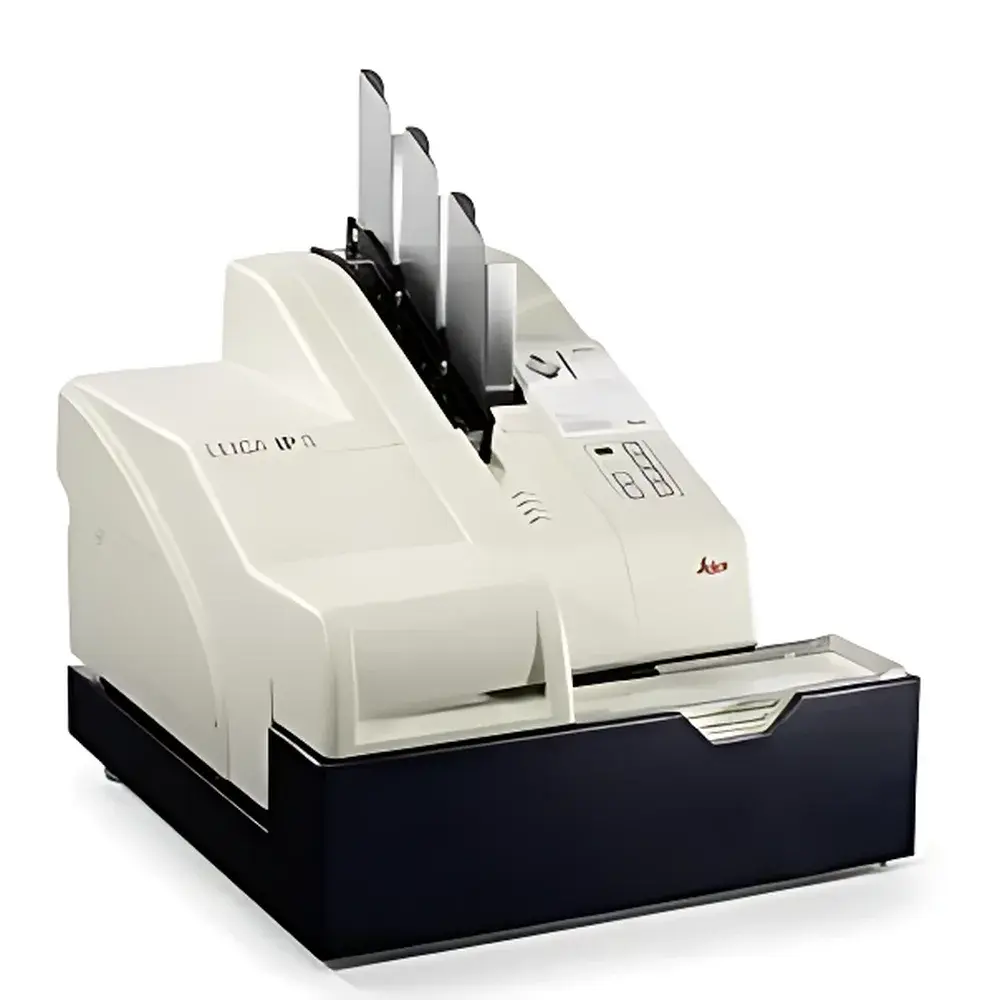
Leica IP S Slide Labeling System
| Origin | Germany |
|---|---|
| Manufacturer Type | Authorized Distributor |
| Origin Category | Imported |
| Model | IP S |
| Pricing | Available Upon Request |
Overview
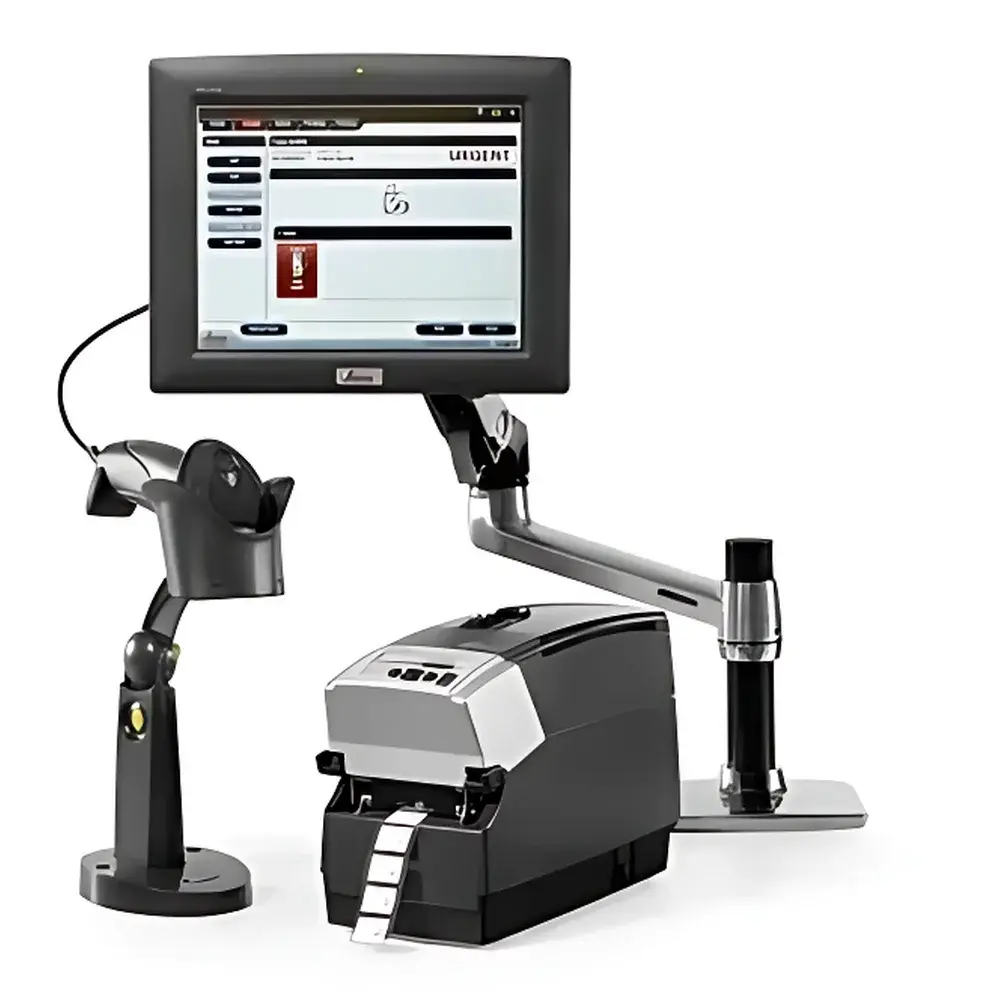
The Leica IP S Slide Labeling System is a high-precision, benchtop automated slide marking instrument engineered for histopathology and clinical laboratory environments. It employs proprietary piezoelectric inkjet printing technology to apply permanent, chemically resistant alphanumeric identifiers, 1D/2D barcodes (including Code 128 and Data Matrix), and custom graphics directly onto standard glass microscope slides (75 × 25 mm). The system operates on the principle of non-contact thermal-stable ink deposition—ensuring consistent label adhesion without substrate heating or mechanical pressure. Designed exclusively for integration within Leica Microsystems’ tissue processing and staining workflows, the IP S supports traceability from specimen receipt through diagnosis by embedding machine-readable identifiers that survive full histological processing—including xylene dewaxing, ethanol dehydration, hematoxylin-eosin staining, and immunohistochemical (IHC) antigen retrieval protocols. Its core function is to eliminate manual labeling errors, enforce specimen integrity, and enable unambiguous digital linkage between physical slides and electronic health records (EHR) or Laboratory Information Systems (LIS).
Key Features
- Ultra-fast labeling cycle: 4 seconds per slide when printing sequential serial numbers—optimized for high-throughput pathology labs handling >500 slides/day.
- Chemically inert ink formulation: Proprietary Leica-certified ink resists dissolution, smearing, or fading after exposure to xylene, alcohol, acid-based decalcifiers, and enzymatic antigen retrieval solutions—validated per ISO 15197 and CLSI EP23-A guidelines for reagent compatibility.
- Barcode-driven workflow automation: Supports GS1-compliant linear (Code 128) and matrix (Data Matrix ECC200) symbologies; enables bidirectional communication with LIS via ASTM E1384-compliant HL7 v2.x messaging.
- Batch processing capability: Up to 14 slides per minute with dual-line text printing (e.g., accession number + patient ID); single-slide mode delivers full-resolution labels in ≤10 seconds.
- Modular slide handling: Optional integrated slide loader accommodates pre-packaged slide cassettes (up to 100 slides); optional auto-unload collection module includes 10 stackable trays (11 slides/tray) with positional indexing to preserve sequence integrity.
- Regulatory-ready architecture: Complies with IEC 61010-1 safety standards; firmware supports audit trail generation, user access control (role-based login), and electronic signature capture per FDA 21 CFR Part 11 requirements.
Sample Compatibility & Compliance
The IP S accepts standard 1 mm-thick plain or frosted-end glass slides (75 × 25 mm), including Leica’s proprietary adhesive-coated and charged-surface variants. It is validated for use with paraffin-embedded tissue sections, cytology preparations, and frozen section slides. All printed identifiers maintain legibility and scannability after ≥60 minutes in 100% xylene, 3× 100% ethanol washes, and pH 6.0 citrate buffer retrieval at 95°C. The system meets CE marking requirements under Directive 2017/746 (IVDR) as an in vitro diagnostic ancillary device and conforms to ISO 13485:2016 quality management system standards for medical device manufacturers and distributors.
Software & Data Management
Controlled via Leica IP Software Suite (v3.2+), the IP S offers both standalone operation and networked deployment. The software provides template-driven label design (WYSIWYG editor), barcode validation (ISO/IEC 15415 grading), and real-time print queue monitoring. Integrated LIS connectivity supports automatic accession number pull from middleware (e.g., SunQuest, Cerner CoPath), eliminating manual data entry. All labeling events—including operator ID, timestamp, slide position, and verification scan log—are stored locally with encrypted SQLite database backup and exportable CSV/Excel reports. Audit trails are time-stamped, immutable, and retain metadata for ≥10 years per GLP/GMP retention policies.
Applications
- Histopathology laboratories requiring CAP/CLIA-mandated specimen identification and chain-of-custody documentation.
- Reference labs performing high-volume molecular testing where slide-level tracking correlates tissue morphology with NGS or FISH results.
- Biobanks implementing ISO 20387-compliant sample annotation for longitudinal cohort studies.
- Academic pathology departments validating digital pathology workflows requiring synchronized slide ID with whole-slide imaging (WSI) metadata.
- Contract research organizations (CROs) conducting GLP-compliant toxicological assessments requiring auditable slide traceability across multi-site studies.
FAQ
Does the IP S support DICOM-SR integration for digital pathology archives?
Yes—via optional DICOM Print SCU interface, enabling direct label metadata embedding into DICOM Structured Reports associated with WSI files.
Can third-party barcode scanners be used with the IP S-generated codes?
All printed barcodes comply with ISO/IEC 15416 (linear) and ISO/IEC 15415 (2D) verification standards and are fully interoperable with industry-standard handheld and fixed-mount scanners (e.g., Honeywell Xenon, Zebra DS4600).
Is ink replacement required between different slide batches?
No—the sealed ink cartridge (Leica part no. 14047002) supports continuous printing of ≥5,000 slides under typical lab conditions and requires no recalibration or maintenance between batches.
How is user authentication managed in multi-operator environments?
The system enforces Windows Active Directory synchronization or local credential management with password complexity enforcement, session timeout (configurable 1–30 min), and role-specific permissions (e.g., Operator, Supervisor, Administrator).