
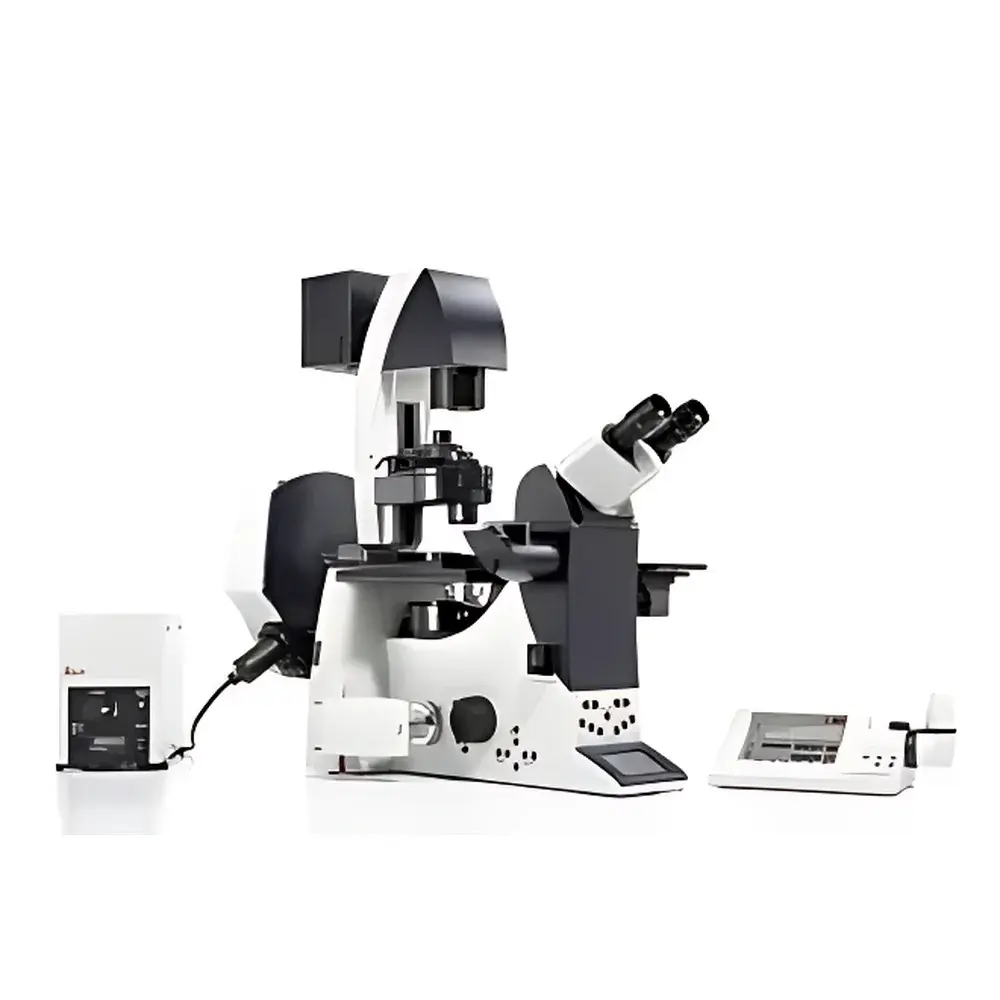
Leica SFL7000 LED Excitation Light Source with Integrated Software Control
| Brand | Leica |
|---|---|
| Origin | Germany |
| Manufacturer Type | Authorized Distributor |
| Origin Category | Imported |
| Model | Leica SFL7000 |
| Pricing | Upon Request |
Overview
The Leica SFL7000 is a high-performance, software-controlled LED excitation light source engineered for demanding fluorescence microscopy applications—particularly live-cell imaging, time-lapse studies, and multi-channel confocal or widefield acquisition. Unlike conventional arc-lamp or filtered halogen systems, the SFL7000 employs solid-state LED technology optimized for spectral purity, intensity stability, and microsecond-scale temporal precision. Its core architecture is built around digitally addressable LED modules, each independently controllable via Leica’s proprietary LAS X platform or third-party APIs (e.g., Micro-Manager, Python-based acquisition frameworks). The system operates on the principle of rapid, deterministic photon delivery: LEDs are driven by constant-current circuitry with TTL/CMOS-compatible triggering inputs, enabling sub-millisecond (<1 ms) rise/fall times and precise synchronization with camera exposure, stage movement, or galvo scanning units. This eliminates mechanical shutter latency and phototoxicity associated with prolonged illumination—critical for maintaining physiological relevance in dynamic cellular assays.
Key Features
- Sub-millisecond LED switching: <1 ms on/off response time across all integrated wavelengths, ensuring precise temporal control during high-speed acquisitions (≥100 fps).
- Software-defined excitation: Full integration with Leica LAS X software for intuitive wavelength selection, intensity ramping, pulse duration modulation, and multi-LED sequencing.
- Multi-wavelength flexibility: Supports up to six independently addressable LED channels (configurable at time of order; standard options include 395 nm, 445 nm, 470 nm, 505 nm, 555 nm, and 625 nm), enabling simultaneous or sequential excitation of multiple fluorophores without filter wheel rotation.
- Hardware synchronization: Dual BNC trigger inputs and outputs compliant with IEEE 1394 (FireWire) and USB 3.0 timing standards; compatible with external master clocks for lock-step coordination with sCMOS cameras, resonant scanners, or electrophysiology rigs.
- Thermal management system: Active cooling with closed-loop temperature monitoring maintains LED junction temperature within ±0.5 °C, ensuring intensity stability (<±1.5% drift over 8 h) and spectral consistency (peak wavelength shift <0.2 nm).
- Interoperability: Designed to coexist with legacy Leica illumination platforms—including the EL6000 metal-halide system—via shared mounting interfaces and unified LAS X control layer.
Sample Compatibility & Compliance
The SFL7000 is optimized for use with standard fluorescence microscopy configurations including upright, inverted, and light-sheet setups. It supports common fluorophore families (DAPI, FITC, TRITC, Cy5, mCherry, GFP variants) and is routinely deployed in primary neuronal cultures, organoid imaging, zebrafish embryogenesis, and intravital preparations. From a regulatory standpoint, the device conforms to IEC 61000-6-3 (EMC emission limits) and IEC 62471 (photobiological safety classification—Risk Group 1 for all configured wavelengths under typical usage conditions). When operated within Leica’s validated microscope systems (e.g., DMi8, STED 3X), the SFL7000 contributes to GLP-compliant workflows through audit-trail-enabled LAS X logging (supporting 21 CFR Part 11 electronic signatures when paired with appropriate server infrastructure).
Software & Data Management
Control is exclusively mediated through Leica LAS X v3.7+ software, which provides a dedicated Illumination Manager module. This interface enables real-time intensity calibration curves, spectral power distribution (SPD) visualization per channel, and automated exposure balancing across wavelengths. All illumination parameters—including LED duty cycle, pulse width, and inter-pulse delay—are stored as metadata within the .lif image file format, ensuring full traceability and reproducibility. For advanced users, a documented RESTful API and Python SDK allow programmatic control, facilitating integration into automated screening pipelines or custom analysis environments. Raw LED driver logs (timestamped at 10 µs resolution) can be exported for post-acquisition synchronization validation.
Applications
- High-speed calcium imaging using GCaMP6/7 reporters with frame-synchronized excitation.
- FRAP (Fluorescence Recovery After Photobleaching) experiments requiring millisecond-level illumination precision.
- Multi-color FRET (Förster Resonance Energy Transfer) with alternating excitation to minimize cross-talk.
- Light-sheet microscopy where uniform, low-heat illumination minimizes sample drift and thermal artifacts.
- Long-term timelapse of sensitive stem cell colonies, where reduced phototoxicity extends viability beyond 72 hours.
FAQ
Is the Leica SFL7000 compatible with non-Leica microscope systems?
Yes—via TTL triggering and analog intensity control (0–5 V), the SFL7000 integrates with Nikon, Olympus, and Zeiss platforms when used with third-party acquisition software supporting hardware-triggered illumination.
Can individual LED channels be calibrated for absolute irradiance?
Yes—each channel includes factory-measured irradiance values (mW/mm² at sample plane, specified for 1× magnification with standard tube lens) and supports user recalibration using NIST-traceable photodiode sensors.
Does the system support pulsed illumination modes?
Yes—pulse widths from 100 µs to continuous wave are programmable, with jitter <50 ns and repetition rates up to 10 kHz.
What maintenance is required?
None beyond periodic optical cleaning of the output coupler; LED lifetime exceeds 20,000 hours at nominal drive current, with no consumables or alignment procedures needed.
How is thermal stability verified during extended acquisitions?
Real-time junction temperature data is logged alongside image metadata; optional integration with Leica’s Environmental Monitoring Unit enables correlation with ambient humidity and chamber temperature.




