
Leica THUNDER Imager Microscopic Image Analysis System
| Brand | Leica |
|---|---|
| Origin | Germany |
| Model | THUNDER |
| Imaging Principle | Widefield Fluorescence with Real-Time Computational Clearing |
| Compliance | ISO/IEC 2382:2015 (Information Technology — Vocabulary), GLP/GMP-Ready Data Integrity Architecture |
| Software Platform | Leica Application Suite X (LAS X) v4.13+ |
| Data Handling | Native Support for TIFF, OME-TIFF, HDF5 |
| Regulatory Context | Designed for 21 CFR Part 11–compliant environments with optional audit trail and electronic signature modules |
Overview
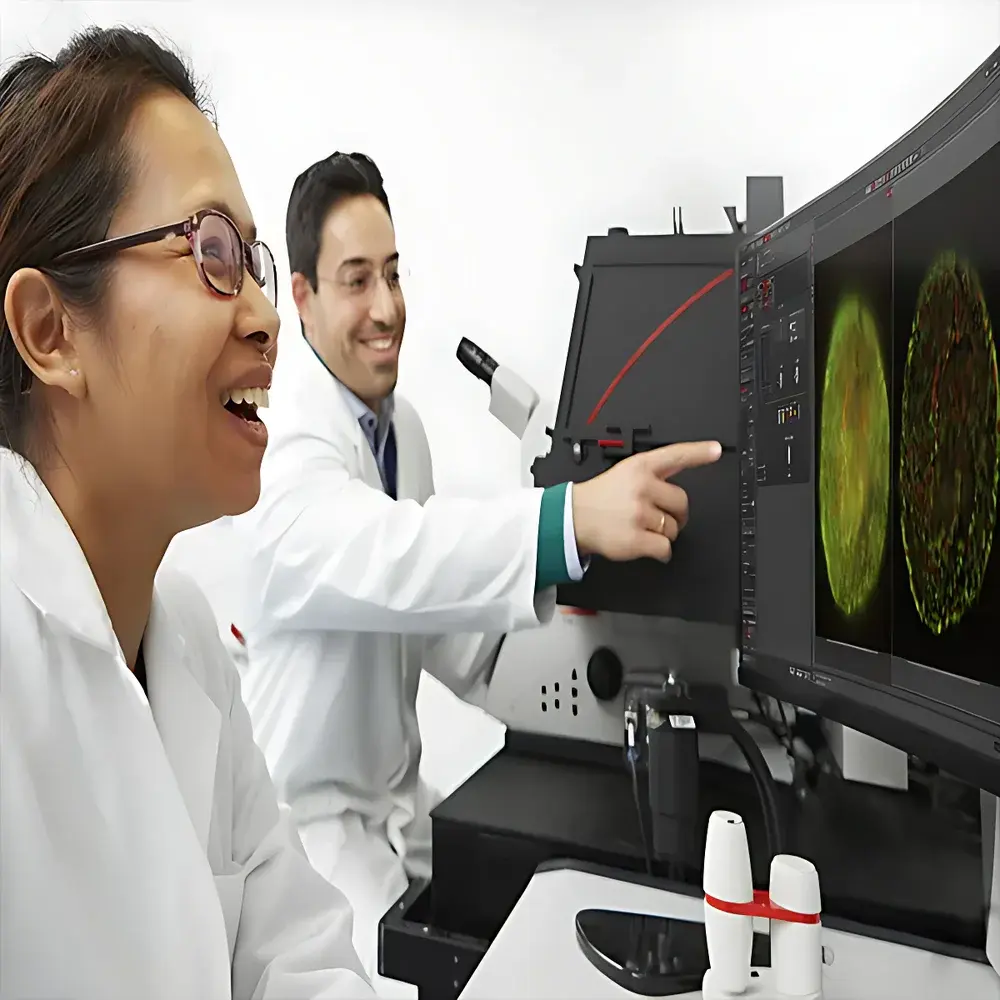
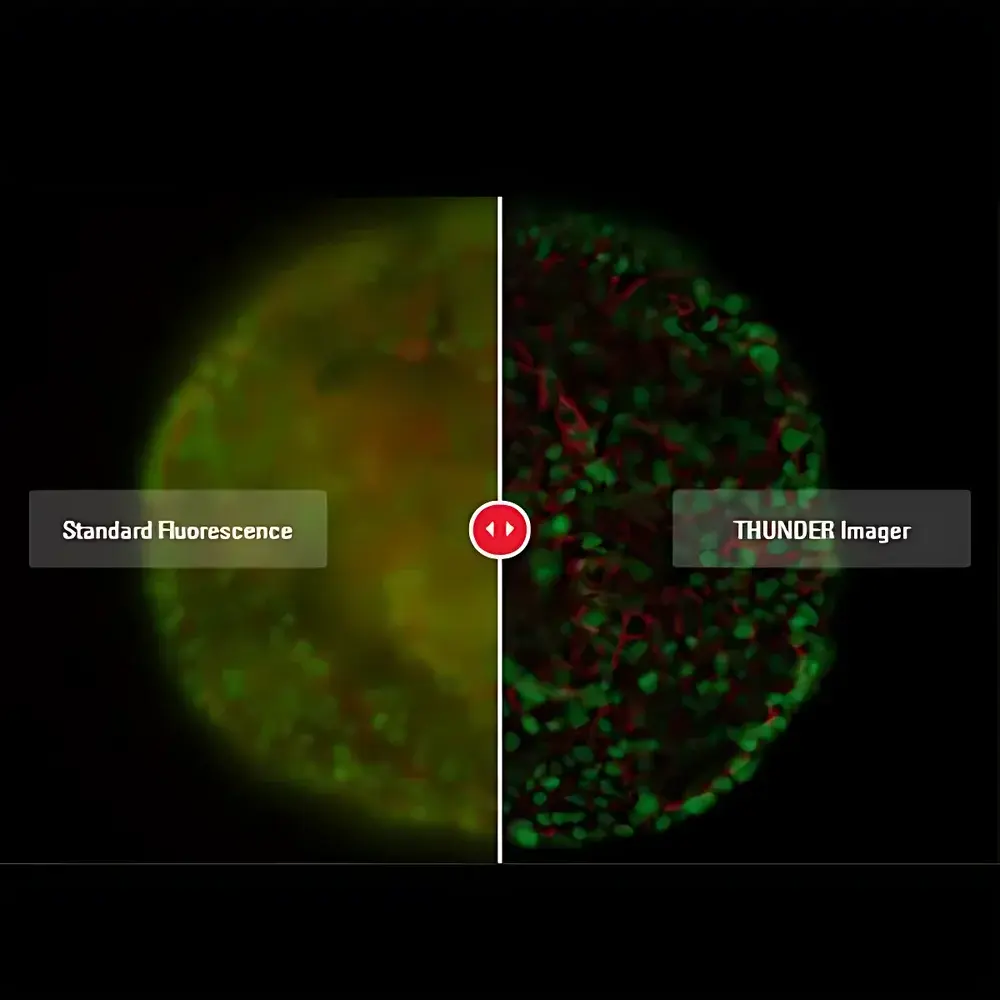
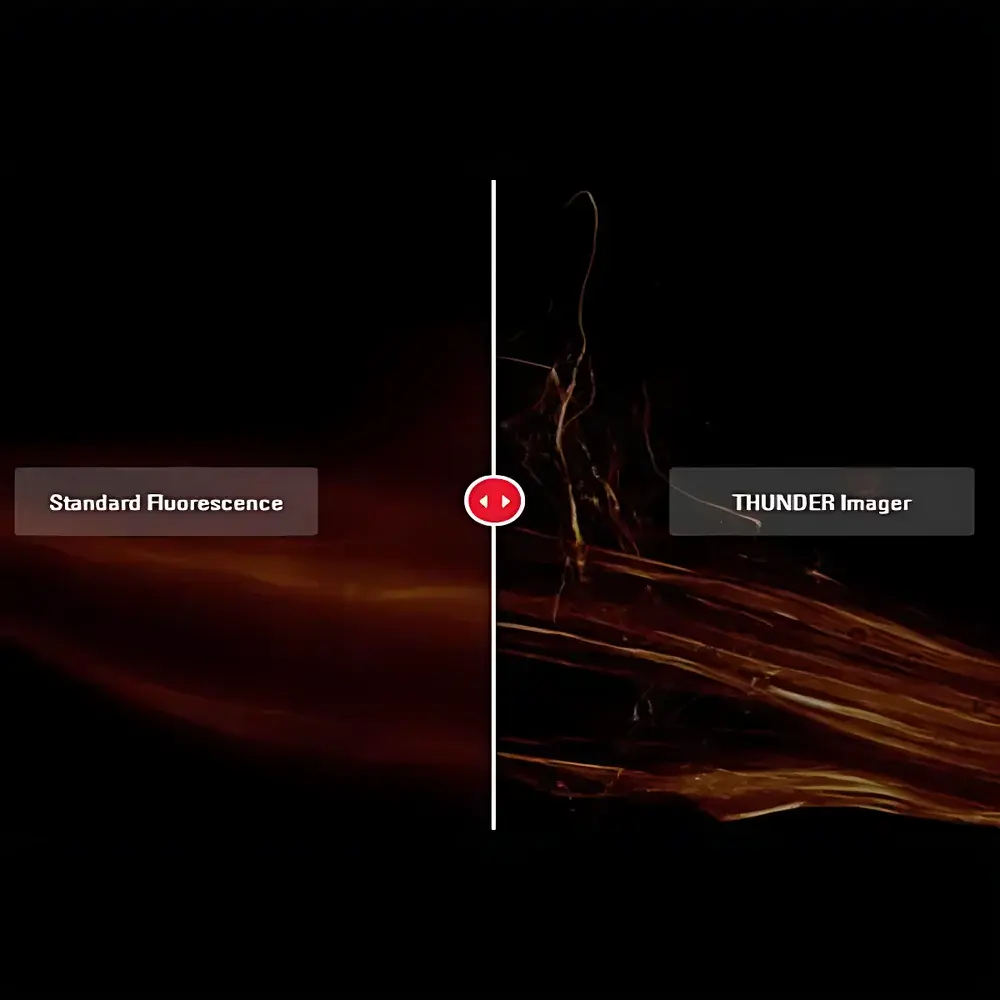
The Leica THUNDER Imager is a high-performance widefield fluorescence microscopic image analysis system engineered for rapid, high-fidelity 3D imaging of thick biological specimens without optical sectioning hardware. Unlike confocal or light-sheet systems, THUNDER leverages a proprietary optical-digital hybrid architecture centered on Computational Clearing—a real-time, physics-informed image processing methodology that computationally removes out-of-focus blur inherent in widefield microscopy. This technique operates directly within the image acquisition pipeline, using dynamic optical parameter feedback (e.g., objective NA, magnification, emission wavelength, pixel size, and Z-step) to perform adaptive background suppression and signal enhancement on-the-fly. As a result, THUNDER delivers optical-sectioning–quality contrast and resolution from single-plane acquisitions—enabling true volumetric clarity in tissue sections, organoids, spheroids, and whole-mount model organisms at speeds comparable to conventional widefield systems. Its design philosophy prioritizes experimental throughput without compromising quantitative integrity: raw data is preserved unaltered, while cleared images are generated as derivative outputs traceable to original acquisition metadata.
Key Features
- Real-time Computational Clearing engine embedded in the acquisition workflow—no post-processing delay; cleared images appear on-screen within seconds of exposure
- Hardware-agnostic compatibility with Leica DMi8 and DM6 B inverted microscopes, supporting objectives from 10× to 100× (oil/water/glycerol immersion)
- Integrated decision mask technology combining statistical modeling and constrained deconvolution to differentiate subcellular structures (e.g., actin filaments, nuclear DNA) from diffuse background
- Full preservation of raw TIFF/OME-TIFF datasets with embedded EXIF and acquisition metadata—including objective ID, filter set, exposure time, Z-stack parameters, and clearing algorithm version
- Automated parameter replication across multiple samples via LAS X experiment templates—ensuring inter-experiment reproducibility and reducing operator-induced variability
- Modular software licensing: Core Computational Clearing, 3D rendering, colocalization analysis, and AI-assisted segmentation modules available as validated add-ons
Sample Compatibility & Compliance
The THUNDER Imager supports diverse 3D biospecimens including fixed and live-cell spheroids (e.g., HeLa, MCF-7), cryosectioned and paraffin-embedded tissue slices (up to 150 µm thickness), cleared whole-mount embryos (e.g., zebrafish, Drosophila), and organotypic cultures. All imaging workflows comply with ISO/IEC 2382:2015 definitions for digital image quality metrics and align with ASTM E2925-22 guidelines for fluorescence microscopy validation. For regulated environments, optional LAS X modules provide full 21 CFR Part 11 compliance—including role-based access control, electronic signatures, and immutable audit trails for all acquisition and processing events. Data export formats meet FAIR principles (Findable, Accessible, Interoperable, Reusable), supporting integration into institutional LIMS and ELN platforms under GLP or GMP frameworks.
Software & Data Management
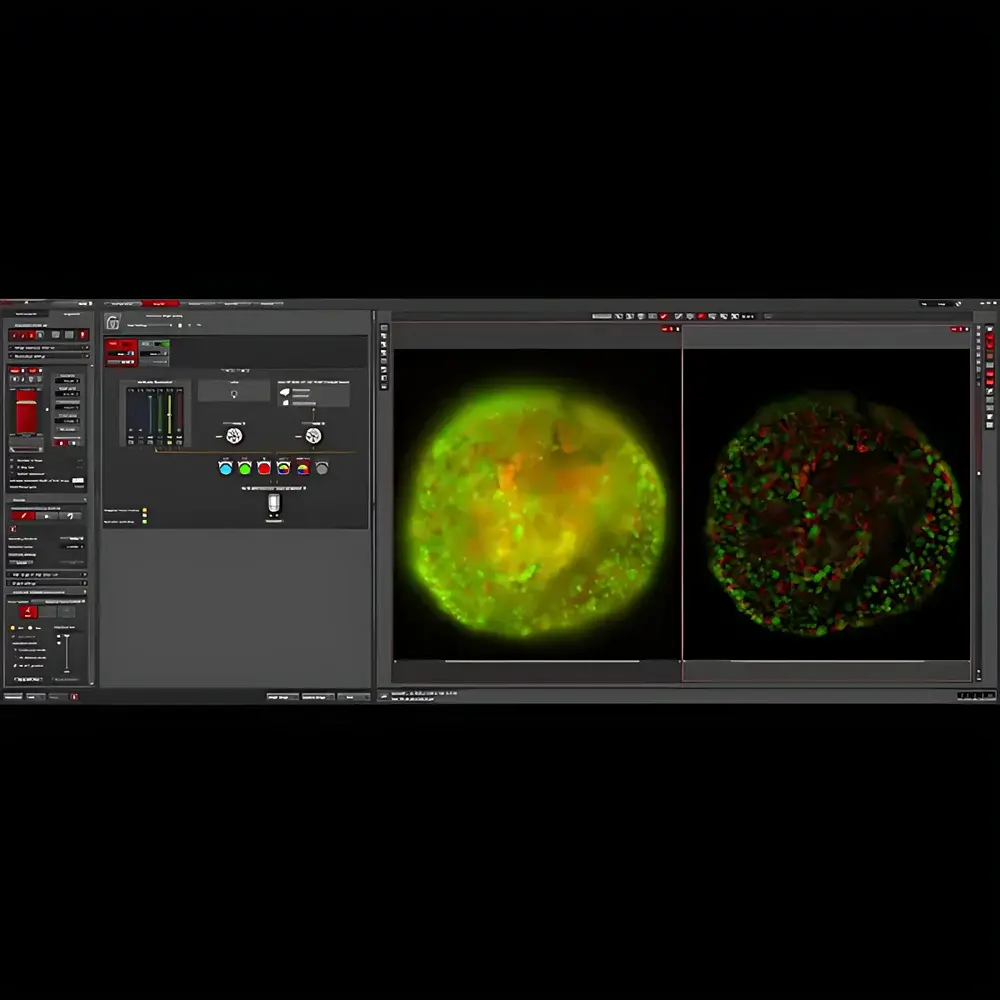
Leica Application Suite X (LAS X) serves as the unified control and analysis platform. Version 4.13 and later include native THUNDER processing kernels optimized for NVIDIA GPU acceleration (CUDA-enabled), ensuring sub-second clearance latency even for 376 MB Z-stacks. The software maintains strict separation between raw data storage (unmodified, timestamped, checksum-verified) and processed derivatives. All Computational Clearing operations are logged with full provenance: algorithm type (e.g., “Small Volume,” “Large Volume,” or “Tissue”), kernel size, regularization parameters, and hardware configuration snapshot. Batch processing pipelines support automated QC flagging based on SNR thresholds and focus metrics, enabling seamless transition to downstream analysis in third-party tools (e.g., Fiji/ImageJ, Imaris, MATLAB, Python-based scikit-image workflows).
Applications
- High-content screening of 3D tumor spheroids for drug response kinetics—enabling longitudinal tracking of nuclear morphology and cytoskeletal reorganization without Z-stack acquisition overhead
- Rapid phenotypic profiling of CRISPR-edited organoids, where THUNDER’s single-plane clarity eliminates depth-dependent signal attenuation artifacts common in widefield imaging
- Quantitative neuroanatomy studies requiring accurate neuron counting and synaptic puncta density mapping in 110 µm-thick insect ganglia preparations
- Time-lapse imaging of live zebrafish embryos during gastrulation—leveraging THUNDER’s speed to capture dynamic morphogenetic events at 15 fps with sustained axial fidelity
- Correlative workflows integrating THUNDER-cleared widefield data with subsequent super-resolution (STED) or EM validation on identical regions of interest
FAQ
How does Computational Clearing differ from traditional deconvolution?
Computational Clearing is not iterative deconvolution. It applies a spatially adaptive, non-iterative filtering approach informed by optical system parameters and specimen-specific feature scales—yielding deterministic results without convergence uncertainty or regularization bias.
Can THUNDER be used with non-Leica microscopes?
No. THUNDER requires tight synchronization between camera, illumination, and optics control buses, which is only natively supported on Leica DMi8 and DM6 B platforms with THUNDER-ready firmware.
Is raw data preserved when Computational Clearing is enabled?
Yes. Raw frames are written losslessly to disk prior to any processing. Cleared images are saved as separate derivatives with explicit metadata linking them to their source files.
Does THUNDER require user calibration or training?
No. All optical parameters are auto-detected. Decision Mask selection is guided by specimen thickness and fluorophore emission profile—no manual kernel tuning or PSF measurement is needed.
What file formats are supported for export and long-term archiving?
Primary acquisition format is OME-TIFF with embedded multi-channel, multi-Z metadata. HDF5 export is available for large-scale computational analysis; both formats retain full provenance for regulatory submission.




