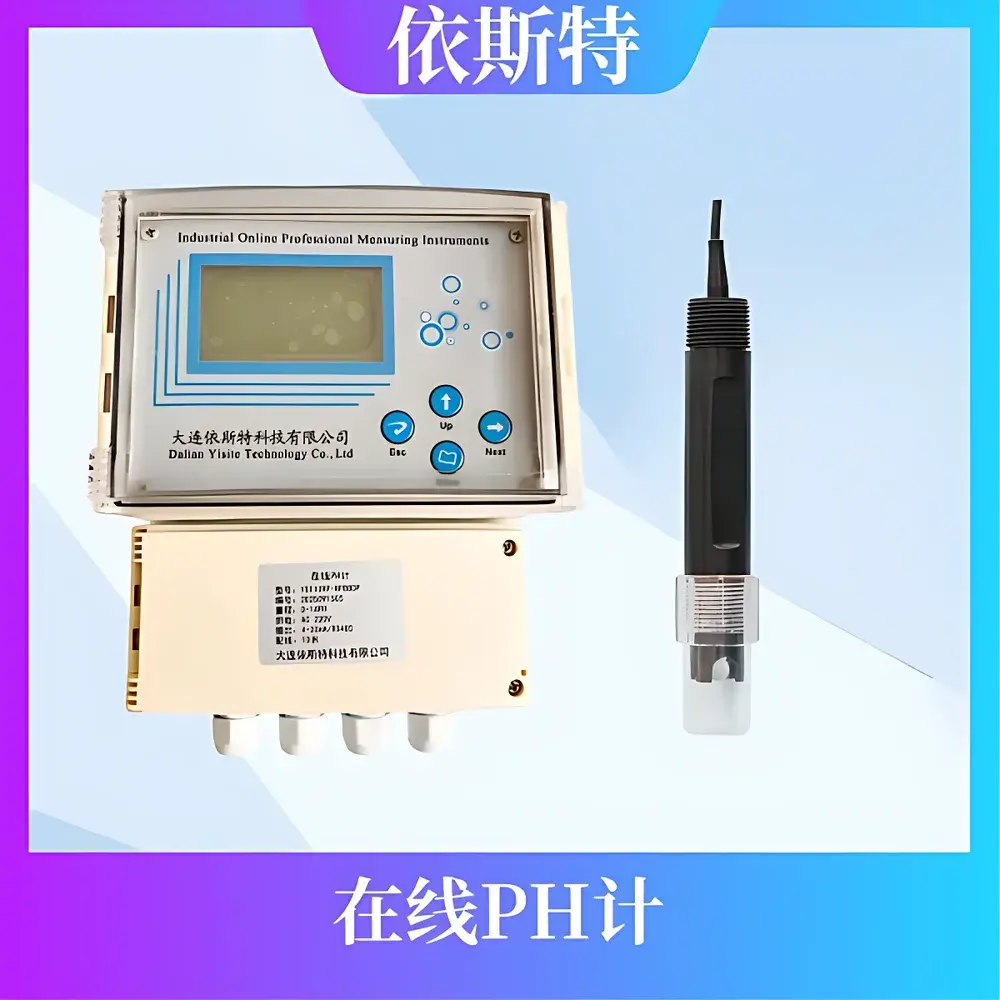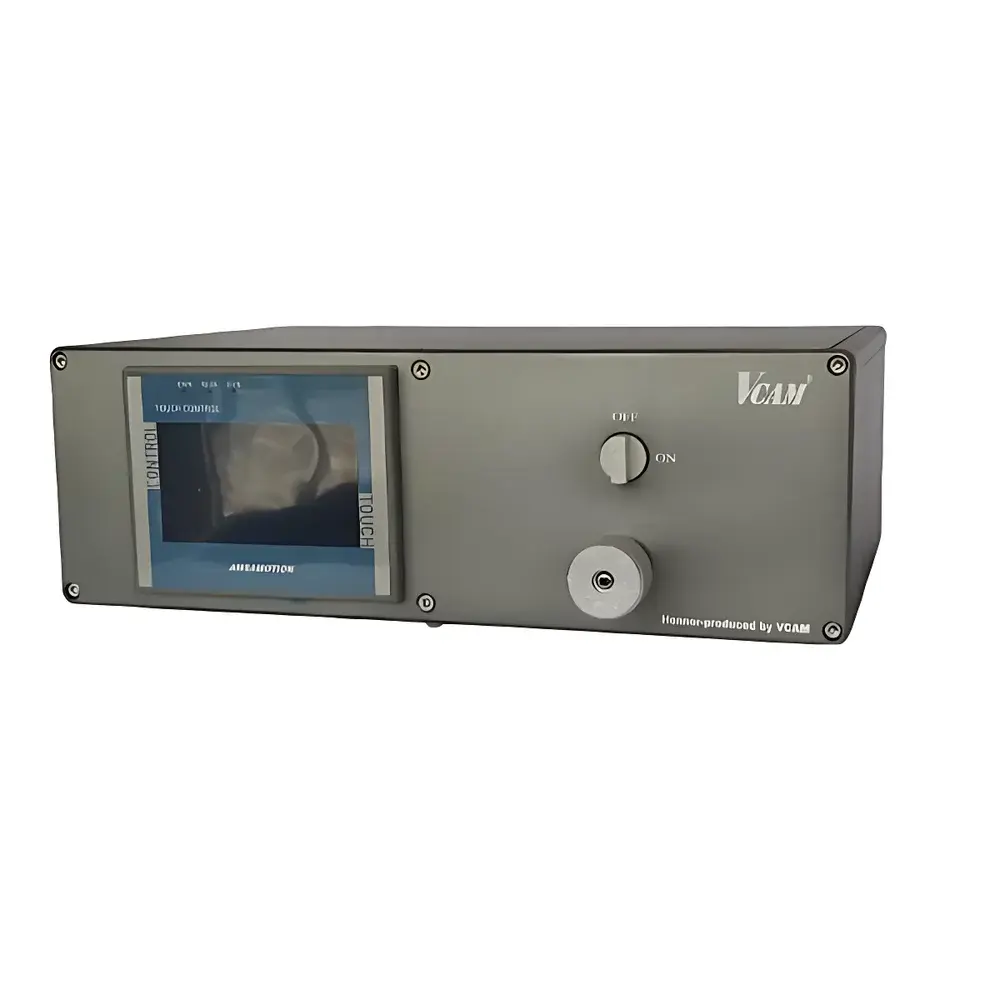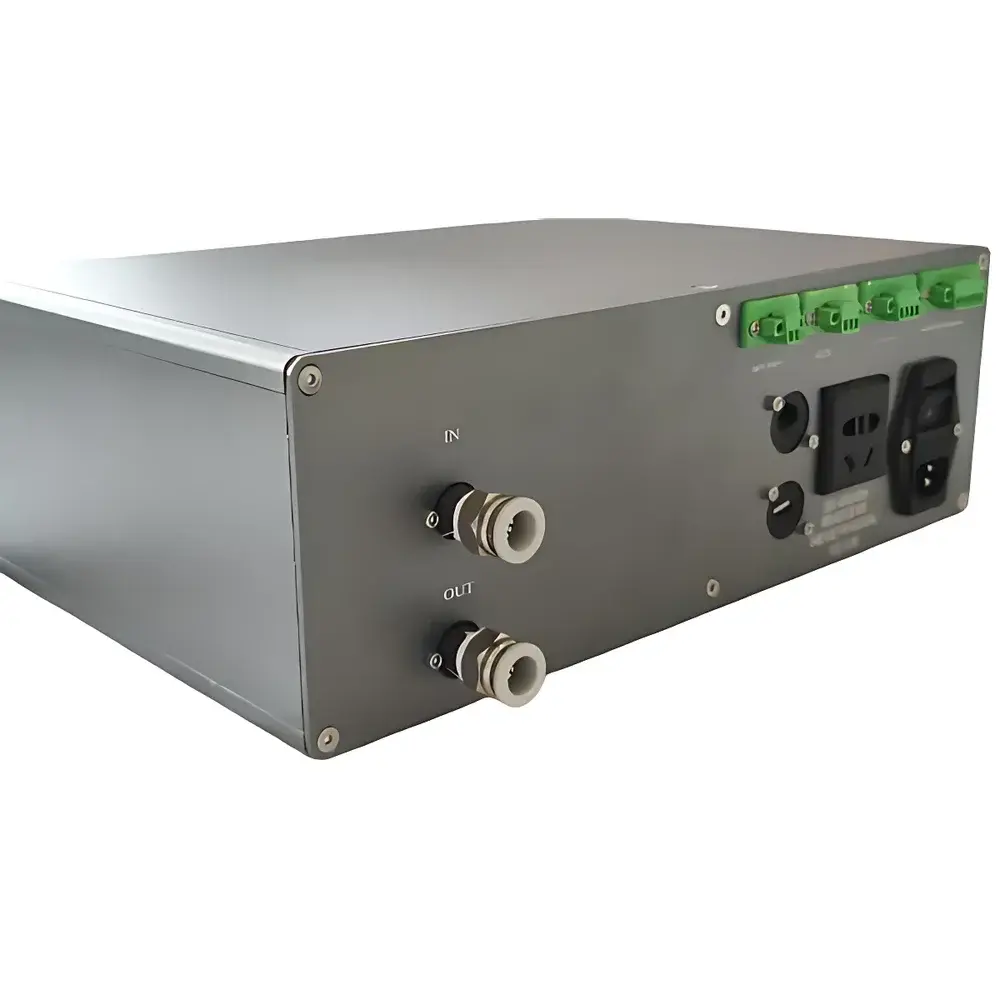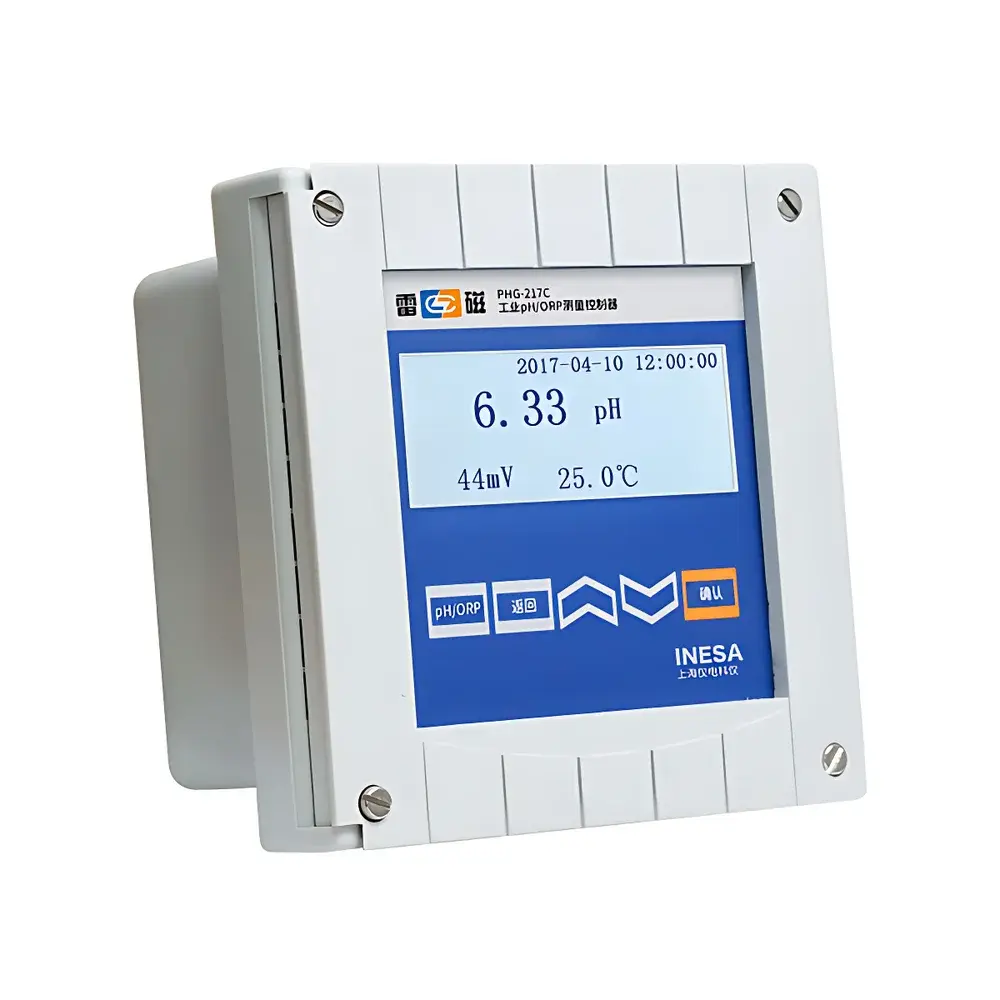
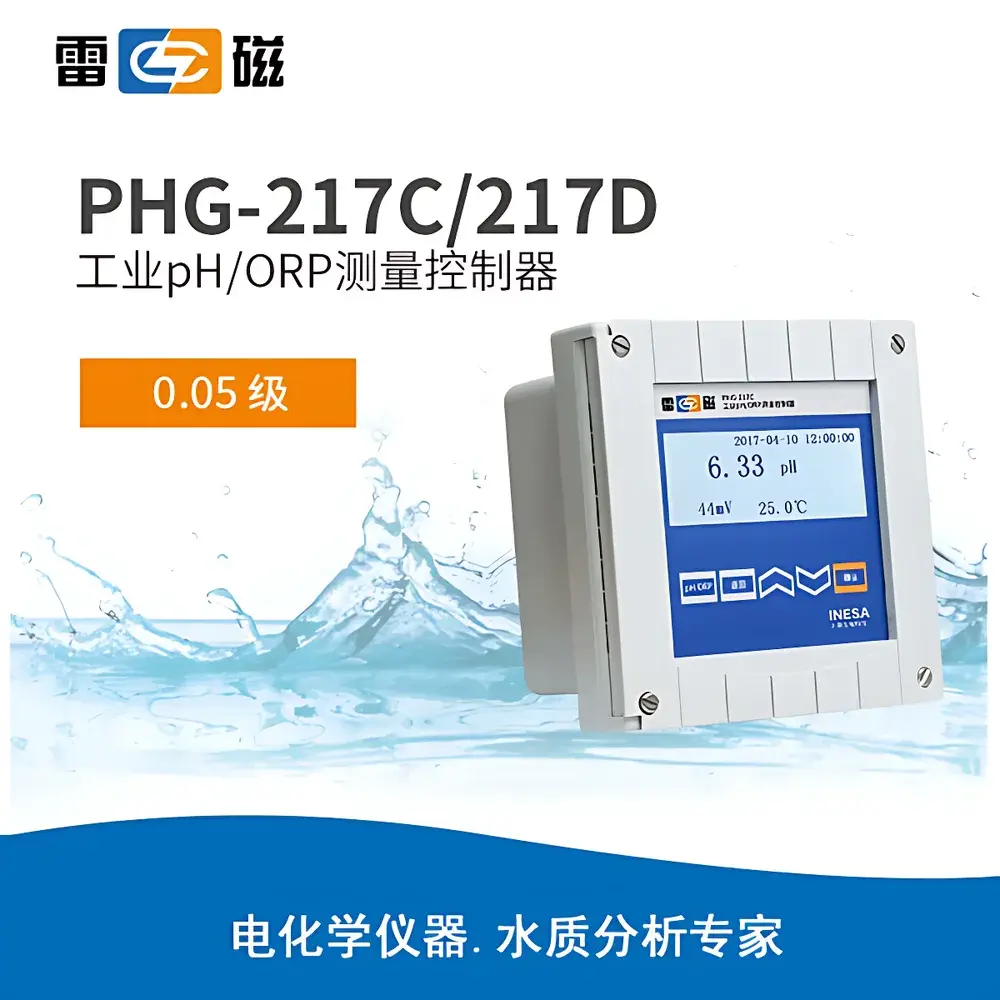
Leici PHG-217C / PHG-217D Industrial pH/ORP Transmitter and Controller
| Brand | Leici |
|---|---|
| Origin | Shanghai, China |
| Manufacturer Type | Direct Manufacturer |
| Country of Origin | China |
| Model | PHG-217C, PHG-217D |
| Price Range | USD 850–1,420 (FOB Shanghai) |
| pH Range | 0.00–14.00 pH |
| ORP Range | −1800 to +1800 mV |
| Temperature Range | −10.0 to 120.0 °C |
| pH Resolution | 0.01 pH |
| ORP Resolution | 1 mV |
| Temperature Resolution | 0.1 °C |
| pH Accuracy | ±0.05 pH ±1 digit |
| ORP Accuracy | ±10 mV |
| Temperature Accuracy | ±1.0 °C |
| Electronic Unit pH Accuracy | ±0.03 pH ±1 digit |
| Electronic Unit Stability | ≤±0.02 pH/24 h |
| Input Impedance | ≥1 × 10¹² Ω |
| Input Current | ≤2 × 10⁻¹² A |
| Output | Isolated 4–20 mA DC (configurable span), RS-232 or RS-485 (user-selectable), 4 programmable relay outputs |
| Data Storage | 400 records with configurable logging interval |
| Auto Calibration | Recognizes pH 4.00, 6.86, and 9.18 buffers |
| ATC | Automatic temperature compensation via integrated Pt1000 or external RTD |
| Enclosure Rating | IP65 |
| Power Supply | AC 220 V ±10 %, 50 Hz ±1 % |
| Dimensions (W×H×D) | 144 mm × 144 mm × 163 mm |
| Weight | 2.5 kg |
Overview
The Leici PHG-217C and PHG-217D are industrial-grade, panel-mount pH and ORP transmitters engineered for continuous, high-stability measurement in demanding process environments. Designed according to IEC 61000-6-2 (EMC immunity) and IEC 61000-6-4 (EMC emission) standards, these controllers utilize high-input-impedance analog signal conditioning (≥1 × 10¹² Ω) and low-input-current circuitry (≤2 pA) to ensure minimal loading effects on glass pH electrodes—critical for maintaining long-term electrode integrity and measurement fidelity. The dual-model architecture addresses distinct installation topologies: the PHG-217C integrates a built-in measurement board and is intended for direct electrode connection at the point of measurement (e.g., inline flow cells within 10 m). Both models implement Nernstian potential conversion with automatic temperature compensation (ATC) using Pt1000 sensors or user-configurable RTD inputs, ensuring thermally referenced accuracy across −10.0 to 120.0 °C.
Key Features
- True dual-parameter capability: Simultaneous acquisition and independent display switching between pH (0.00–14.00), ORP (−1800 to +1800 mV), and temperature (−10.0 to 120.0 °C)
- High-fidelity analog electronics: Input impedance ≥1 × 10¹² Ω and input current ≤2 × 10⁻¹² A minimize electrode polarization and drift
- Calibration intelligence: Automatic recognition of standard buffers (pH 4.00, 6.86, 9.18) with support for 1-point slope-only or 2-point full calibration; calibration history stored with timestamp
- Robust process interface: Four user-programmable SPDT relays (250 VAC / 5 A resistive) for pump control, valve actuation, or auto-cleaning cycles
- Configurable analog output: Isolated 4–20 mA DC output with fully adjustable zero/span mapping (e.g., 4 mA = pH 2.00, 20 mA = pH 12.00)
- Digital communication: Selectable RS-232 (local configuration/debug) or RS-485 (Modbus RTU, multi-drop up to 32 nodes) for SCADA integration
- Environmental resilience: IP65-rated polycarbonate enclosure suitable for washdown and dust-laden industrial zones
- Data continuity assurance: Non-volatile memory retains configuration, calibration data, and 400 measurement records—even during power loss
Sample Compatibility & Compliance
The PHG-217 series is compatible with all standard glass-body pH electrodes (e.g., double-junction, gel-filled, or refillable types) and redox electrodes with BNC or DIN connectors. It supports both aqueous and low-conductivity samples typical in boiler feedwater, ultrapure water loops, pharmaceutical rinse validation, and effluent monitoring. The instrument meets CE marking requirements per Directive 2014/30/EU (EMC) and 2014/35/EU (LVD). Its relay logic and alarm thresholds comply with SIL 1 functional safety principles per IEC 61508, and its data storage architecture satisfies basic audit-trail expectations under FDA 21 CFR Part 11 when deployed with validated software workflows. While not certified for hazardous areas, its design conforms to ISA-RP12.6 for non-incendive operation in general-purpose zones.
Software & Data Management
No proprietary PC software is required for basic operation; all setup—including relay hysteresis, alarm setpoints, logging intervals (1 s to 24 h), and mA output scaling—is performed locally via the backlit 128 × 64 dot-matrix LCD and membrane keypad. Calibration logs and measurement history are viewable directly on-screen with scroll navigation. For centralized data aggregation, the RS-485 interface enables seamless integration into Modbus-enabled DCS or PLC systems (e.g., Siemens S7, Rockwell ControlLogix). When paired with third-party historian platforms (e.g., Ignition SCADA or Siemens Desigo CC), the device supports time-synchronized trend logging and event-triggered notifications (e.g., “pH out of spec” → relay activation + Modbus alarm flag).
Applications
- Chemical process streams: Neutralization control in batch reactors, acid/base dosing feedback in scrubbers
- Power generation: Condensate polishing loop monitoring, demineralizer effluent verification
- Pharmaceutical water systems: PW (Purified Water) and WFI (Water for Injection) conductivity-pH correlation checks per USP
- Wastewater treatment: Anoxic zone ORP profiling for denitrification control, final effluent compliance reporting
- Food & beverage: CIP (Clean-in-Place) chemical concentration tracking via pH/ORP signature analysis
- Metal finishing: Electrolyte bath stability monitoring in plating lines
FAQ
What is the difference between PHG-217C and PHG-217D?
The PHG-217C contains an integrated signal conditioning board and connects directly to pH/ORP electrodes—ideal for short cable runs (<2 m) and compact installations. The PHG-217D lacks internal measurement circuitry and must be used with a dedicated transmitter (e.g., PHGF-27B) that conditions the electrode signal remotely; this configuration minimizes noise in long-distance analog transmission.
Does the unit support automatic temperature compensation (ATC)?
Yes—ATC is enabled by default using either the built-in Pt1000 sensor or an external RTD probe. Compensation follows the standard Nernst equation with temperature coefficient adjustment per IUPAC recommendations.
Can the 4–20 mA output be scaled to non-linear ranges?
No—the analog output is linear only. However, custom linear spans (e.g., 4 mA = pH 5.50, 20 mA = pH 8.50) are fully configurable to match downstream controller input requirements.
Is GLP-compliant data export possible?
Raw data can be polled via Modbus RTU and exported to CSV via SCADA historian tools. While the instrument itself does not generate electronic signatures or user-authenticated reports, its timestamped calibration and measurement logs meet foundational GLP record-keeping criteria when part of a validated system.
What maintenance is required for long-term reliability?
Annual verification against traceable buffer standards is recommended. Electrode maintenance (cleaning, refilling, junction inspection) remains the primary operational responsibility; the transmitter requires no field calibration beyond routine sensor checks.
Related Products