
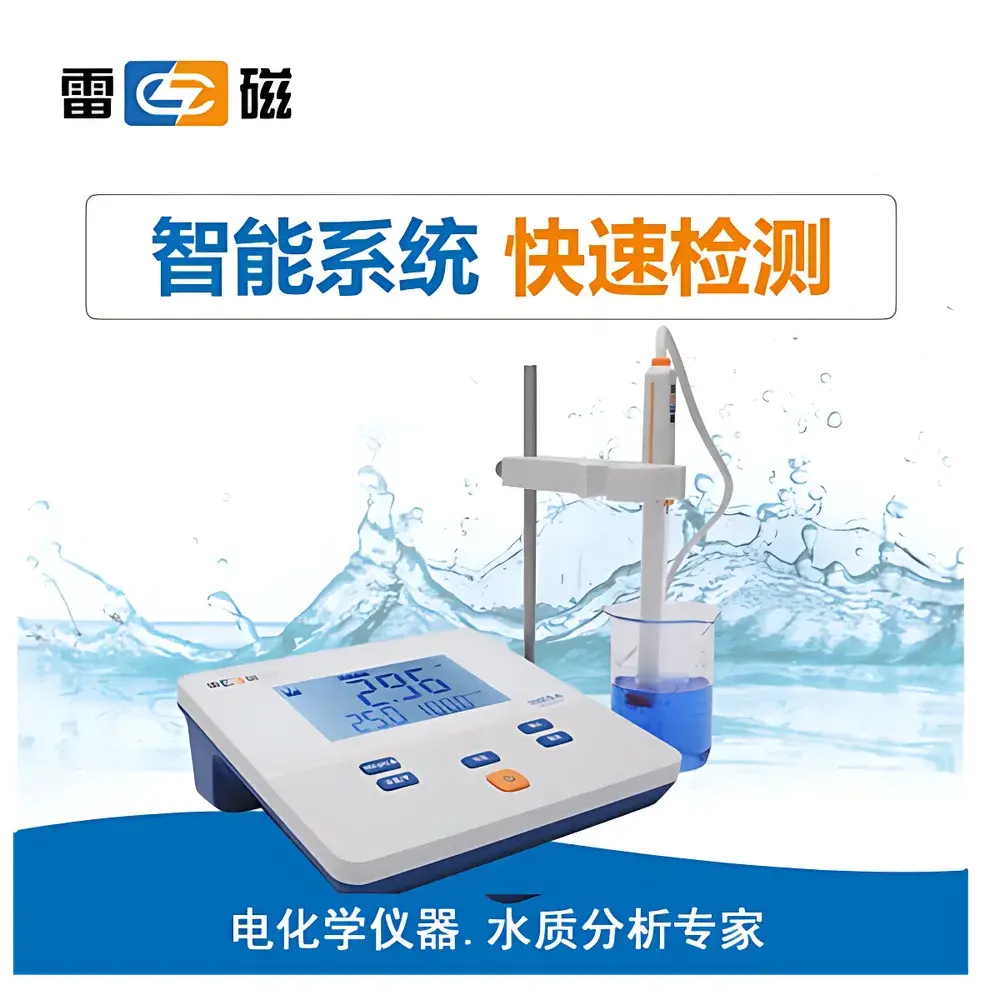
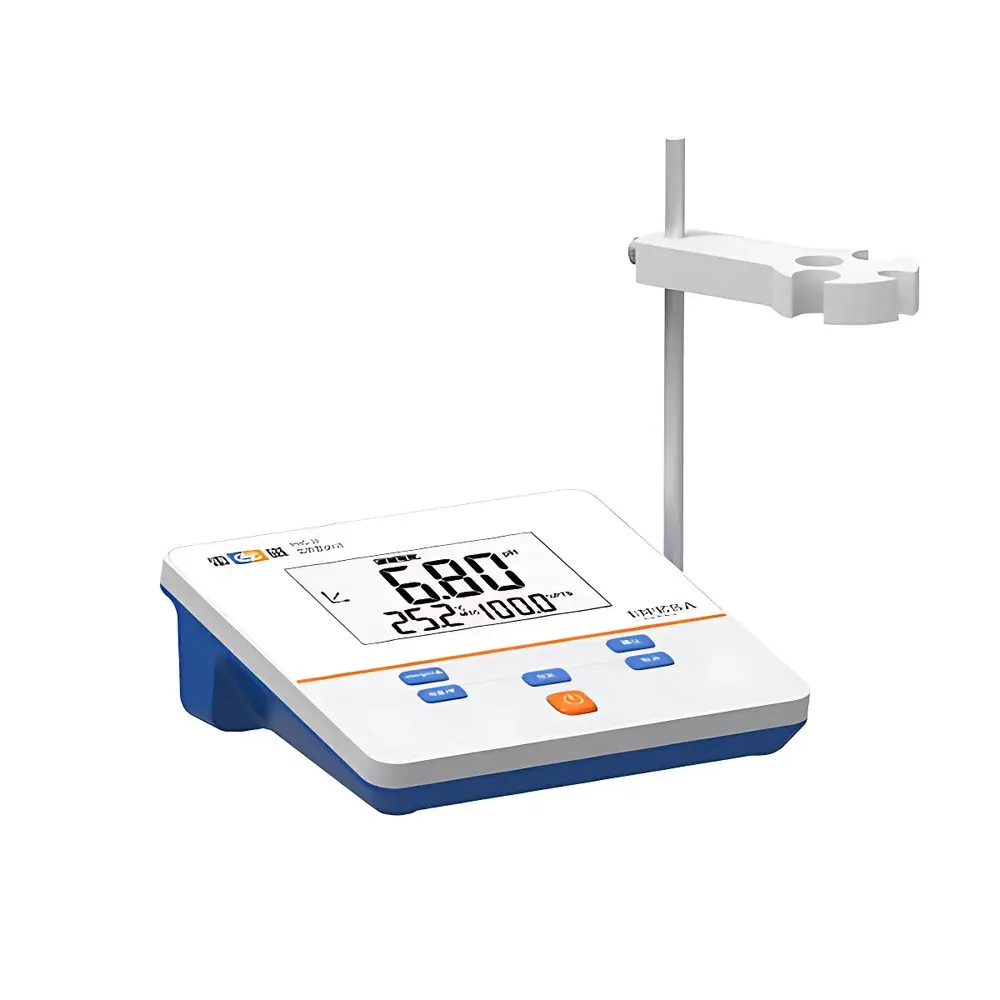
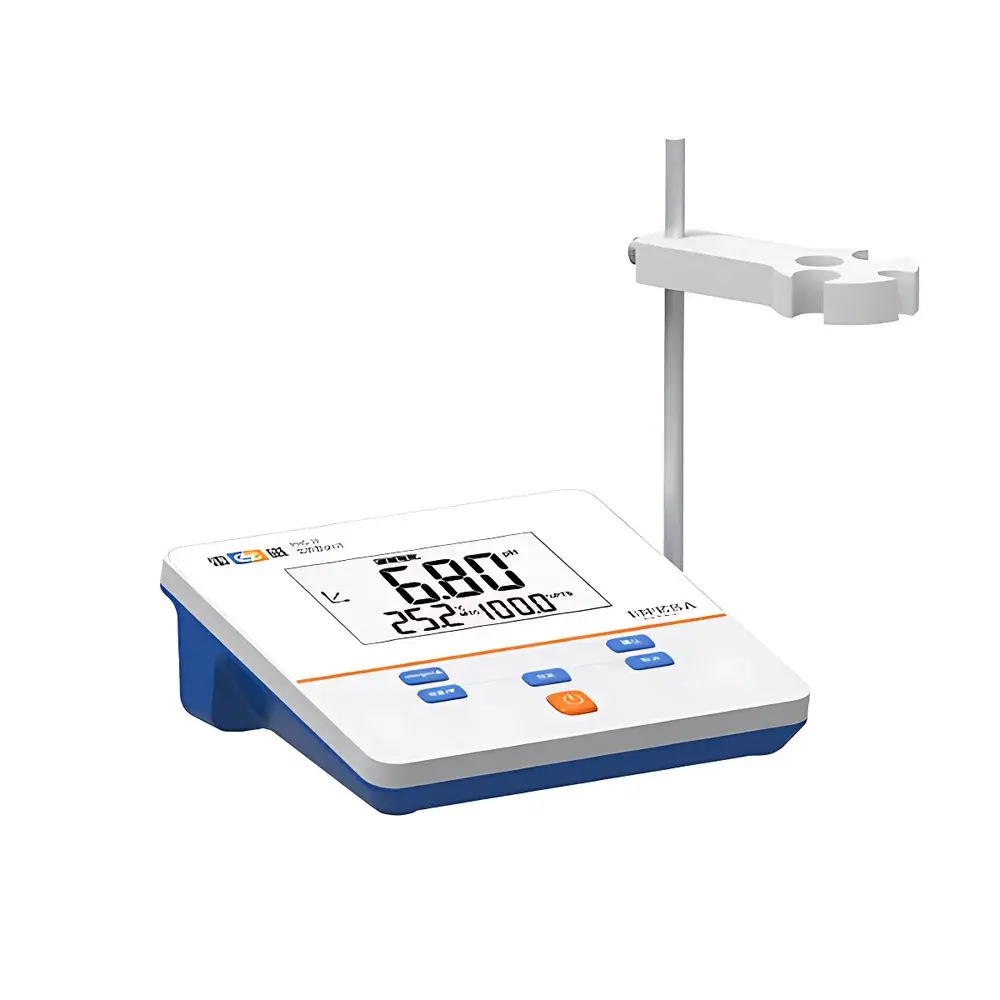
Leici PHS-2F Benchtop pH Meter
| Brand | Leici |
|---|---|
| Origin | Shanghai, China |
| Instrument Type | Benchtop |
| Parameter Type | Dual (pH/mV) |
| pH Measurement Range | 0.00–14.00 pH |
| pH Resolution | 0.01 pH |
| pH Accuracy | ±0.01 pH |
| mV Range | −1400 to +1400 mV |
| mV Resolution | 1 mV |
| mV Accuracy | ±0.1% FS |
| Input Impedance | ≥1×10¹² Ω |
| Temperature Compensation | Manual, 0.0–60.0 °C |
| Calibration Options | 1–2 point |
| Display | 6-inch HD LCD |
| IP Rating | IP54 |
| Dimensions | 290 × 210 × 95 mm |
| Weight | 1.5 kg |
| Power Supply | AC 100–240 V adapter |
Overview
The Leici PHS-2F is a precision benchtop pH meter engineered for reliable, repeatable electrochemical measurement of hydrogen ion activity in aqueous solutions. Based on the potentiometric principle—measuring the potential difference between a glass pH sensing electrode and a stable reference electrode—the instrument delivers high-fidelity pH quantification across the full physicochemical range of 0.00 to 14.00 pH. Its dual-parameter capability extends functionality to direct millivolt (mV) measurements, supporting redox potential analysis and electrode characterization tasks. Designed for routine laboratory use in quality control, environmental monitoring, and product development settings, the PHS-2F integrates robust analog front-end architecture with low-drift circuitry and ultra-high input impedance (≥1×10¹² Ω), ensuring stable readings even in low-conductivity samples such as deionized water or dilute buffer systems.
Key Features
- 6-inch high-definition LCD display with intuitive button-based navigation—optimized for clarity under varied ambient lighting conditions
- IP54-rated enclosure providing protection against dust ingress and water splashes, enhancing operational durability in shared lab environments
- Auto-recognition of three nationally standardized GB pH buffer solutions (4.00, 6.86, and 9.18 at 25 °C), reducing calibration setup time and minimizing human error
- Support for 1-point or 2-point pH calibration with optional custom buffer definition—enabling traceability to internal or client-specific reference standards
- Manual temperature compensation (0.0–60.0 °C) with real-time coefficient application, aligning measured potentials to thermodynamic pH values per Nernst equation
- Stability indicator icon and intelligent prompt system—visually signaling when readings have converged within defined drift thresholds
- Power management suite including auto-shutdown after 10 minutes of inactivity and non-volatile memory retention during power interruption
Sample Compatibility & Compliance
The PHS-2F is validated for use with standard aqueous electrolyte solutions, including buffered standards, process streams, natural waters, food extracts, and cosmetic formulations. It complies with Chinese national metrological verification regulation JJG 119–2018 for laboratory pH meters and meets general requirements outlined in ISO 7888:2019 (Water quality — Determination of pH). While not certified for GLP/GMP-regulated workflows out-of-the-box, its calibration log structure, stable baseline performance, and manual audit trail support integration into documented QC procedures. The included E-201F composite electrode features a low-resistance Ag/AgCl reference system and reinforced glass membrane suitable for general-purpose applications—not recommended for hydrofluoric acid, strong alkaline (>12 pH) or non-aqueous media without validation.
Software & Data Management
The PHS-2F operates as a standalone instrument without proprietary PC software or USB connectivity. All calibration data, last-used parameters, and user-defined buffer values are retained in non-volatile memory. No electronic records are generated; users maintain handwritten or external digital logs per institutional SOPs. For laboratories requiring 21 CFR Part 11 compliance, third-party data capture via RS-232 serial interface (optional accessory) may be implemented using validated terminal emulation or LIMS-integrated acquisition tools—though the base unit itself does not provide audit trails, electronic signatures, or role-based access control.
Applications
- Industrial quality assurance: Monitoring pH stability in pharmaceutical excipient batches, cleaning validation rinse water, and chemical synthesis intermediates
- Environmental testing: Field-deployable assessment of surface water, wastewater effluent, and soil leachates following APHA Standard Methods 4500-H+ B
- Agricultural analysis: Rapid evaluation of irrigation water alkalinity, nutrient solution balance, and compost maturity indicators
- Food & beverage R&D: Tracking acidification kinetics in dairy fermentation, optimizing enzymatic reaction pH windows, and verifying preservative efficacy
- Academic teaching labs: Demonstrating electrode theory, Nernstian behavior, and calibration uncertainty propagation in undergraduate analytical chemistry curricula
FAQ
What calibration standards are recognized by default?
The instrument automatically identifies GB-compliant pH 4.00, 6.86, and 9.18 buffer solutions at 25 °C. Custom buffers may be entered manually with assigned nominal values.
Is automatic temperature compensation (ATC) supported?
No—temperature compensation is manual only. Users must input the sample temperature prior to measurement; no integrated or external ATC probe is supported.
Can this meter be used for non-aqueous samples?
It is not designed for organic solvents, oils, or highly viscous matrices. Performance in mixed-solvent systems requires empirical validation and may exhibit significant junction potential errors.
Does the PHS-2F meet ISO/IEC 17025 requirements for accredited testing?
While the instrument satisfies fundamental metrological criteria, full accreditation requires documented calibration against traceable standards, uncertainty budgeting, and procedural controls beyond the device’s built-in capabilities.
What is the expected service life of the included E-201F electrode?
Under typical laboratory usage and proper storage (in 3 M KCl solution), the electrode demonstrates stable response for 6–12 months; performance should be verified weekly via two-point calibration and slope assessment.




