
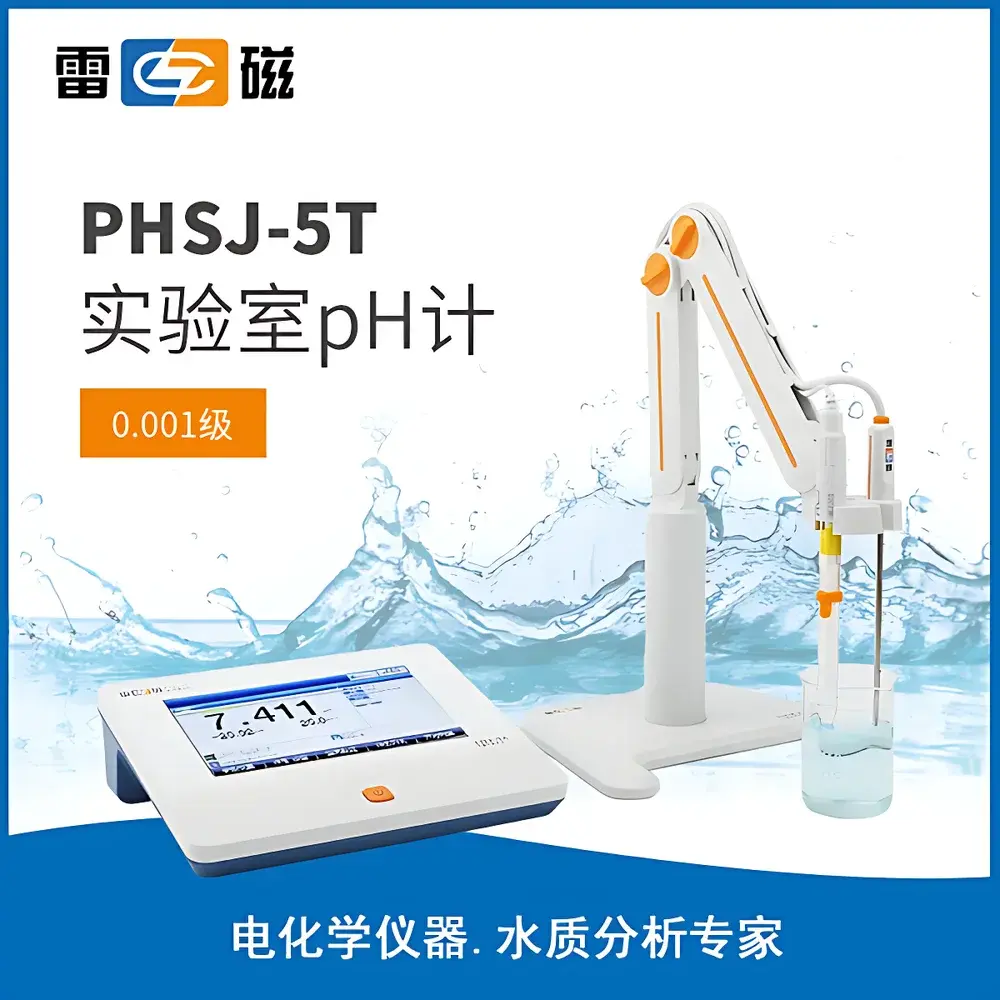
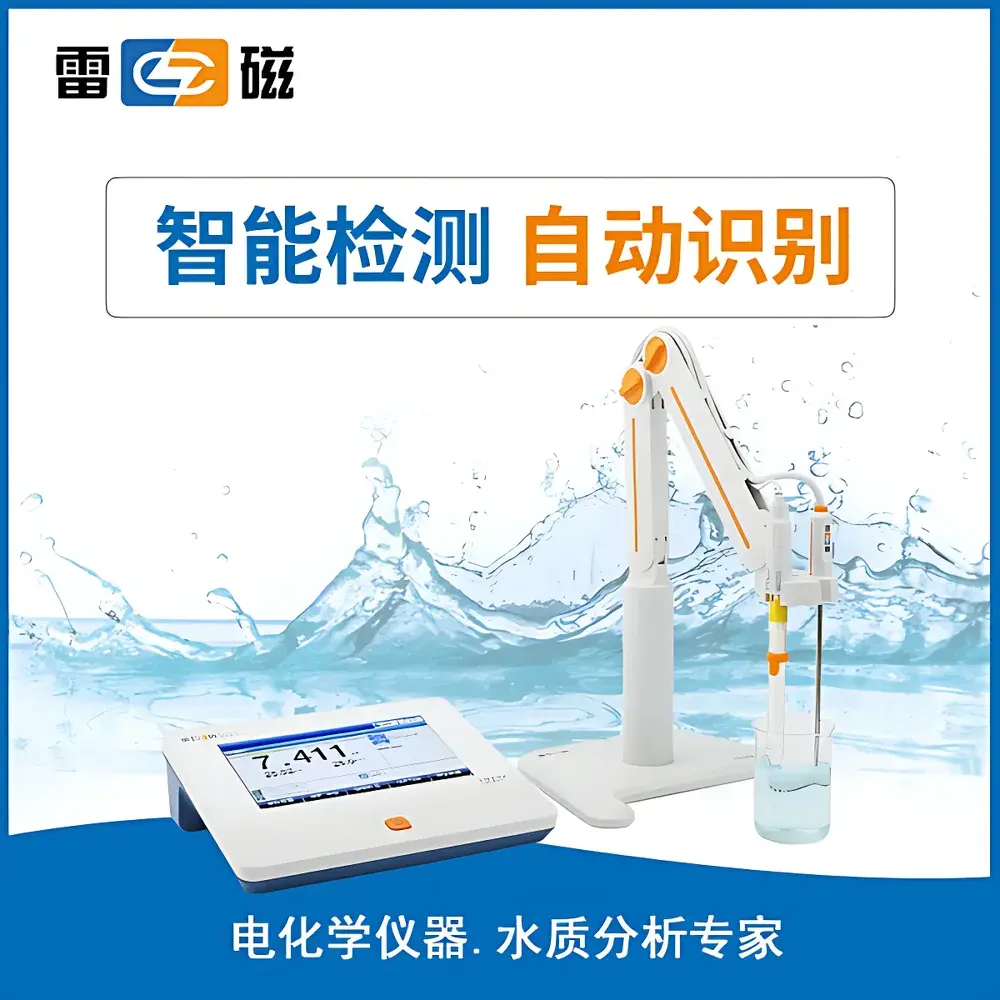
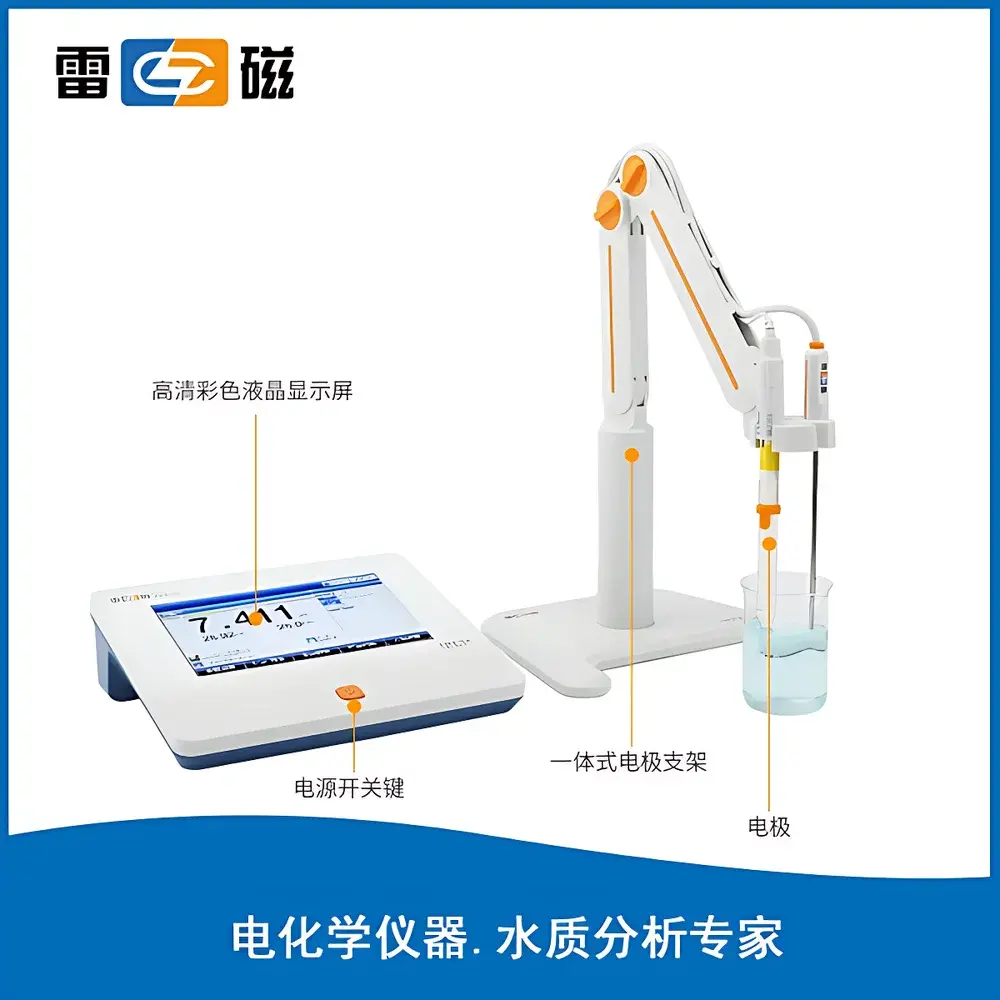
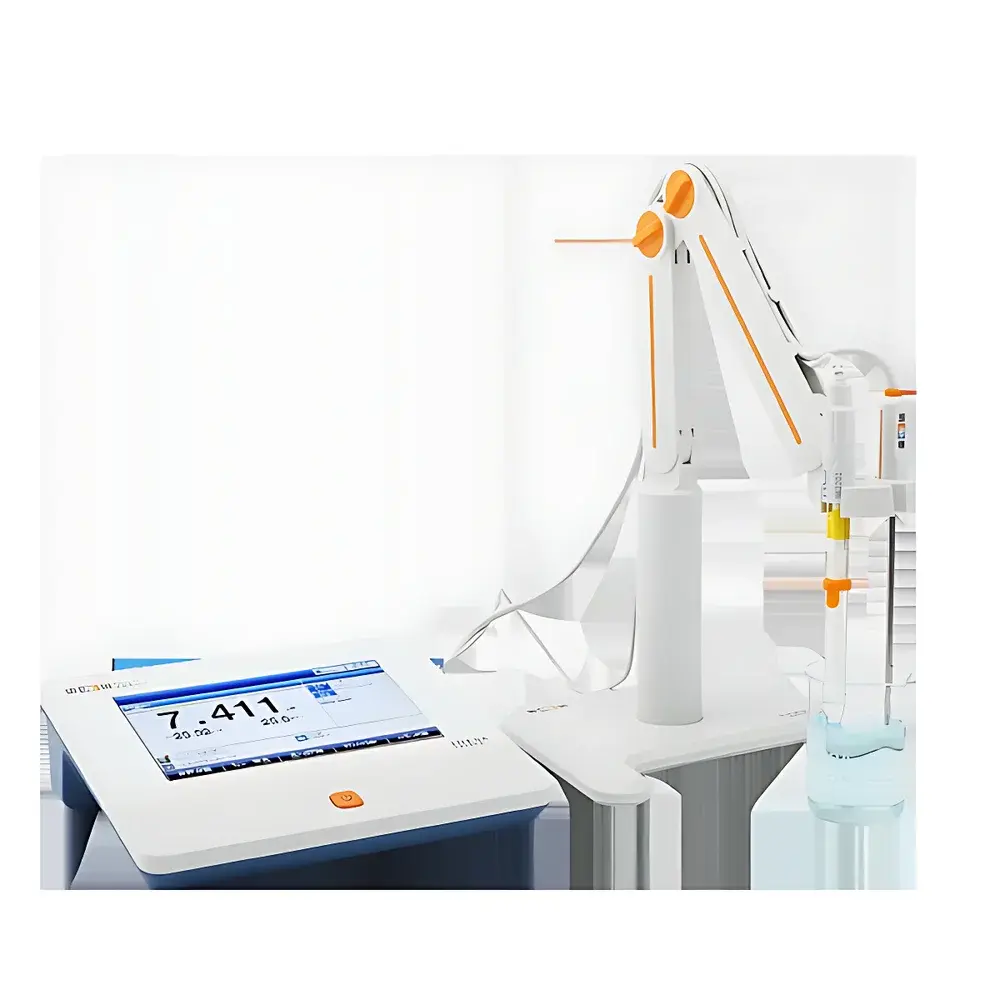
Leici PHSJ-5T Benchtop pH Meter
| Brand | Leici |
|---|---|
| Origin | Shanghai, China |
| Instrument Type | Benchtop |
| Parameter Types | Multi-parameter (pH, mV, ORP, Temperature) |
| Measurement Accuracy | ±0.002 pH |
| pH Range | −2.000 to 20.000 pH |
| Resolution | 0.001 pH / 0.01 mV / 0.1 °C |
| Temperature Compensation | Automatic (−10.0 to 135.0 °C) |
| Calibration Options | 1–6 point pH, 1 point ORP |
| Buffer Recognition | GB, DIN, NIST, USA, MERK, JIS (6 preloaded sets) + user-defined |
| Data Storage | 1000 measurement records with GLP/GMP-compliant metadata |
| Compliance | GLP, GMP-ready audit trail, 21 CFR Part 11 compatible software support |
| Connectivity | RS-232, USB, optional autosampler interface |
| IP Rating | IP54 |
| Power | DC24V adapter (AC100–240V input) |
| Dimensions & Weight | 220 × 195 × 68 mm, 0.95 kg |
Overview
The Leici PHSJ-5T is a high-precision benchtop pH meter engineered for rigorous laboratory environments where trace-level pH accuracy, regulatory compliance, and operational reproducibility are critical. It operates on the fundamental principle of potentiometric measurement—detecting the electromotive force (EMF) generated across a glass pH electrode immersed in solution, referenced against a stable Ag/AgCl internal reference system. This voltage differential, governed by the Nernst equation, is converted into pH values with temperature-compensated linearity. Designed specifically for QC/QA labs, pharmaceutical development, environmental testing, and academic research, the PHSJ-5T delivers 0.001-pH resolution and ±0.002-pH electronic unit accuracy—meeting the performance threshold required for ISO/IEC 17025-accredited testing and USP pH methodology validation.
Key Features
- High-resolution 5.7-inch color TFT touchscreen with intuitive icon-based navigation and dual-language UI (English/Chinese)
- Selectable resolution modes: pH (0.001/0.01/0.1), mV (0.01/0.1/1), and temperature (0.1 °C or 0.1 °F)
- Intelligent endpoint detection: supports auto-read, timed-read, interval-read, and manual acquisition protocols
- Comprehensive electrode management: real-time diagnostics, calibration history tracking, and electrode aging alerts
- Multi-standard buffer recognition: automatic identification of six international standard buffer groups (GB, DIN, NIST, USA, MERK, JIS) plus customizable buffer sets
- Robust hardware architecture: IP54-rated enclosure for dust and splash resistance; DC24V power supply with universal AC input (100–240 V)
- Firmware-upgradable platform enabling future protocol expansion, method customization, and enhanced security controls
Sample Compatibility & Compliance
The PHSJ-5T accommodates aqueous and low-ionic-strength samples across extreme pH ranges (−2.000 to 20.000), including aggressive alkaline media (e.g., concentrated NaOH solutions), acidic electrolytes (e.g., battery acid, pickling baths), and biological buffers. Its integrated ATC (Automatic Temperature Compensation) uses a Pt1000 thermistor probe for precise thermal correction per IUPAC-recommended algorithms. The instrument conforms to GLP data integrity requirements through timestamped, user-locked measurement records—including electrode ID, calibration date/time, buffer IDs used, slope/mV offset diagnostics, and operator credentials. Optional GMP mode enables full audit trail logging compliant with FDA 21 CFR Part 11—supporting electronic signatures, role-based access control, and immutable operation logs essential for regulated pharmaceutical and biotech workflows.
Software & Data Management
Data handling is structured around traceability and interoperability. Each of the 1000 stored measurements includes full contextual metadata: sample ID, method name, electrode serial number, calibration status, ambient temperature, and operator login. Export is supported via USB mass storage (CSV/Excel-compatible), RS-232 serial printing (with configurable report templates), or PC synchronization using Leici’s certified communication software—enabling direct import into LIMS, ELN, or statistical analysis platforms (e.g., JMP, Minitab). The system enforces password-protected user roles (Administrator, Technician, Viewer), supports forced recalibration scheduling, and logs all configuration changes with digital signatures. U disk read/write capability allows offline method deployment and firmware updates without network dependency.
Applications
- Pharmaceutical dissolution testing and buffer preparation per USP and EP 2.2.3
- Water quality monitoring in municipal treatment plants (EPA Method 150.1)
- Electroplating bath control and semiconductor wet process chemistry verification
- Food & beverage titration endpoint confirmation and shelf-life stability studies
- Academic electrochemistry labs requiring high-fidelity Nernstian response characterization
- Environmental soil leachate and acid mine drainage analysis under ASTM D1293
FAQ
What calibration standards does the PHSJ-5T support natively?
The instrument recognizes six preconfigured buffer groups (GB, DIN, NIST, USA, MERK, JIS) and allows creation of up to five custom buffer sets with user-defined pH and temperature coefficients.
Is the PHSJ-5T compatible with automated sample handling systems?
Yes—it features an RS-232 port and dedicated command protocol for integration with third-party autosamplers, enabling unattended batch analysis of up to 1000 samples with synchronized metadata capture.
How does the instrument ensure data integrity for audit purposes?
All measurements include embedded timestamps, operator IDs, electrode health metrics, and calibration traceability. GMP mode adds electronic signature enforcement and immutable audit logs aligned with 21 CFR Part 11 Annex 11 requirements.
Can the device perform ORP measurements with the same electrode setup?
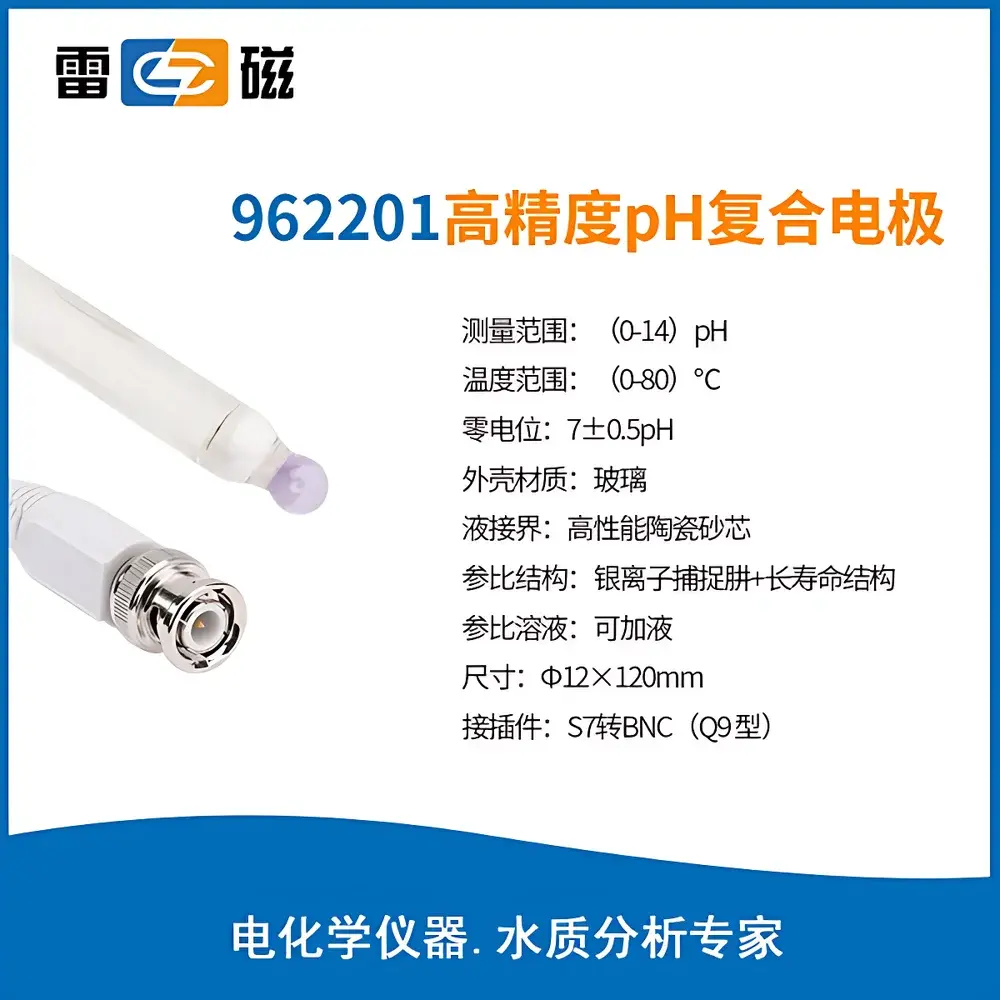
Yes—the PHSJ-5T measures redox potential (−2000.00 to +2000.00 mV) using the same composite pH electrode, with 0.01-mV resolution and ±0.1-mV accuracy, supporting single-point ORP calibration and drift monitoring.
What maintenance routines are recommended for long-term accuracy?
Daily electrode rinsing with deionized water, weekly storage in 3 M KCl solution, monthly slope verification using two-point calibration (pH 4.01 and 7.00), and annual verification against traceable NIST-certified reference standards.
Related Products





