
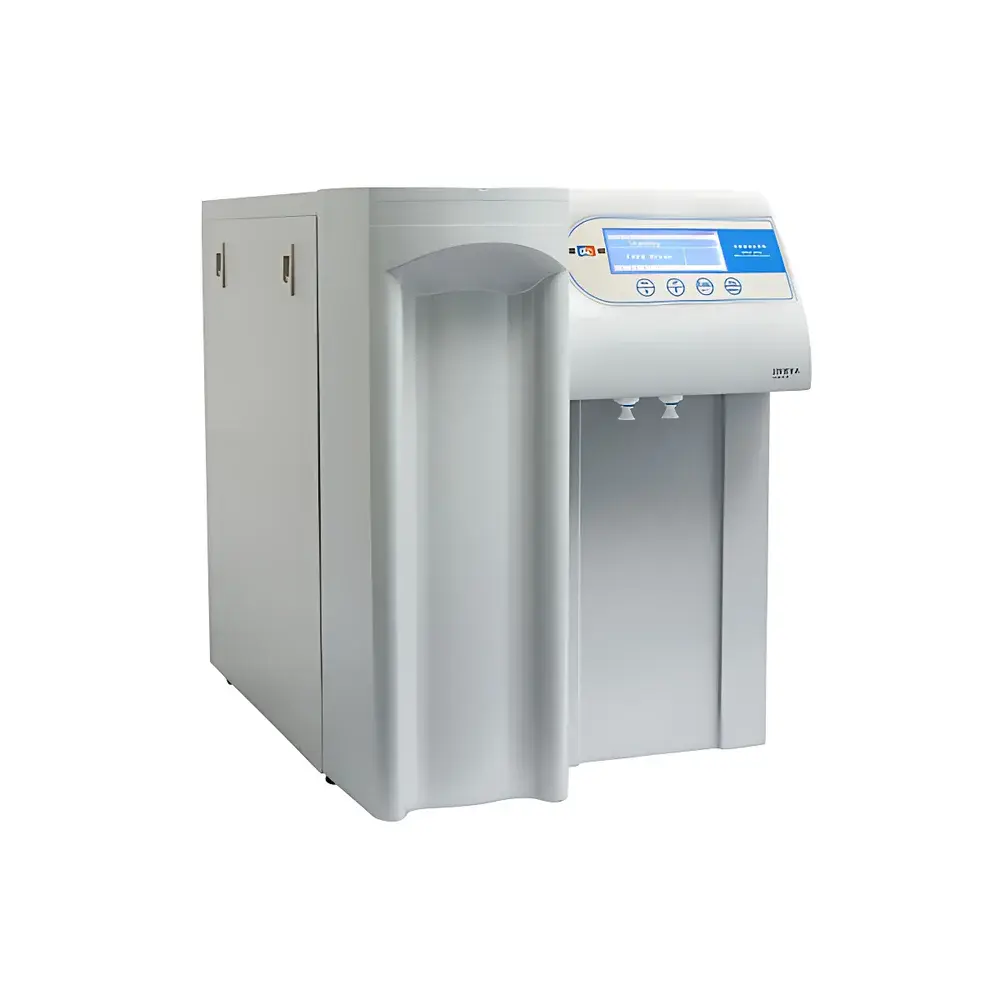
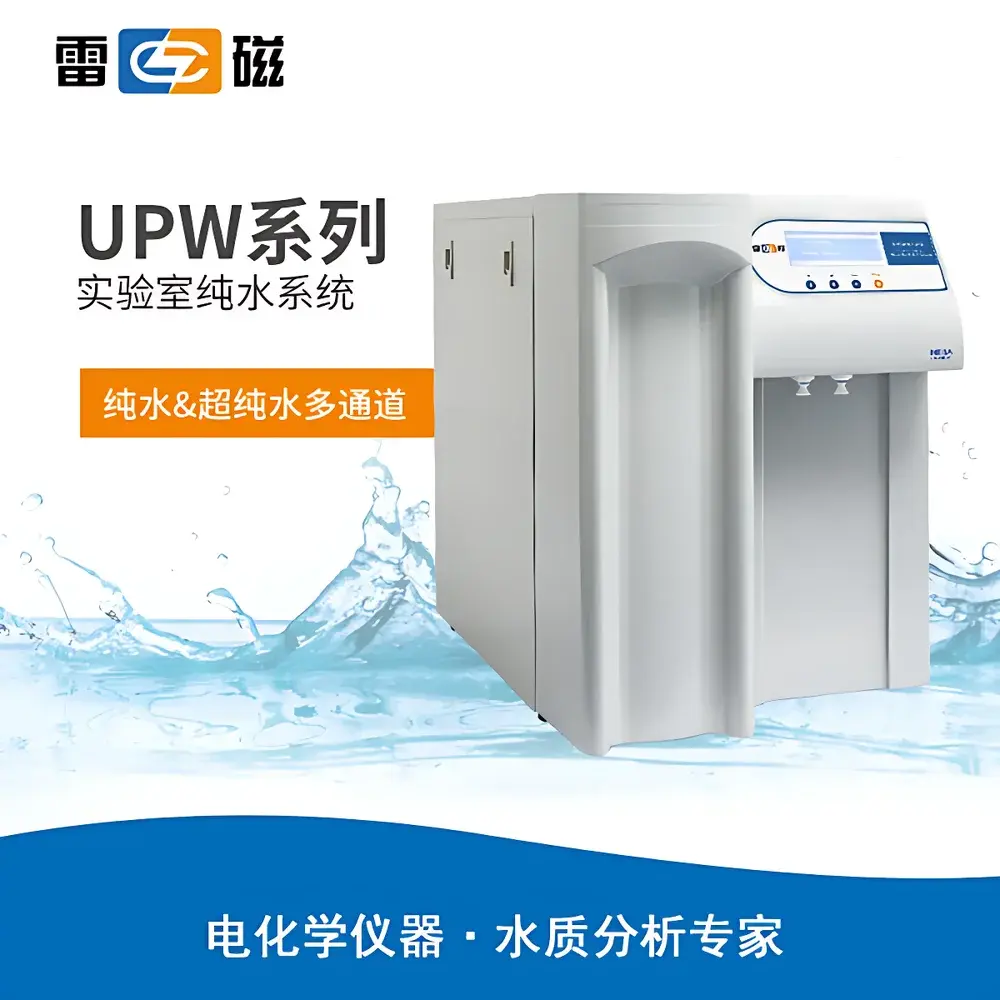
LeiCi UPW Series Ultra-Pure Water System
| Brand | LeiCi |
|---|---|
| Origin | Shanghai, China |
| Manufacturer Type | Direct Manufacturer |
| Product Category | Domestic |
| Model | UPW |
| Price Range | USD 700–1,400 |
| Purified Water Grade | ASTM Type I |
| Resistivity | 18.2 MΩ·cm at 25°C |
| Heavy Metals & Soluble Silica | <0.1 ppb |
| Total Organic Carbon (TOC) | <3 ppb |
| Microbial Count | <1 CFU/mL |
| Endotoxin | <0.001 EU/mL |
| Particles (>0.1 µm) | <1 particle/mL |
Overview
The LeiCi UPW Series Ultra-Pure Water System is an integrated, laboratory-grade water purification platform engineered for consistent production of Type I ultrapure water per ASTM D1193-20 and ISO 3696:1987 standards. It employs a multi-stage purification architecture combining pretreatment, reverse osmosis (RO), ion exchange, dual-wavelength UV photooxidation (185 nm + 254 nm), and submicron terminal filtration to remove ions, organic contaminants, microorganisms, endotoxins, and particulates. Designed for continuous operation in analytical laboratories, life science research facilities, and QC/QA environments, the system delivers stable 18.2 MΩ·cm resistivity water with TOC <3 ppb — meeting stringent requirements for HPLC, LC-MS, ICP-MS, cell culture, and molecular biology applications. Its modular configuration supports flexible deployment across varying feed water qualities and throughput demands (15–30 L/h RO production; 1.5–2 L/min ultrapure output).
Key Features
- Integrated pretreatment module with activated carbon and PP sediment filter — removes free chlorine, particulates, and colloids to protect RO membranes and extend service life.
- Selectable RO configurations: single-pass, double-pass, or two-stage RO — optimized for feed water conductivity up to 400 µS/cm and achieving >99% salt rejection.
- Dual-column purification design: high-capacity mixed-bed ion exchange resin (REX-SP301) followed by nuclear-grade polished resin (REX-SP302) — ensures long-term stability of 18.2 MΩ·cm resistivity and low ion leaching.
- Dual-wavelength UV oxidation (185 nm + 254 nm) — 254 nm inactivates bacteria and viruses; 185 nm generates hydroxyl radicals to oxidize non-volatile organics, reducing TOC to <3 ppb.
- Triple-point conductivity monitoring: temperature-compensated ultra-low-range sensor (cell constant 0.01 cm⁻¹) installed at RO permeate, purified water, and ultrapure water outlets — enables real-time tracking of system performance and early fault detection.
- Compact 2-gallon pressurized storage tank (REX-SP413) — minimizes footprint while maintaining steady flow during peak demand and reducing pump cycling frequency.
- 0.22 µm terminal filter (REX-SP504) and inline 0.22 µm microfilter (REX-SP502B) — eliminate residual particles and viable microorganisms prior to point-of-use dispensing.
- Integrated leak detection probe (REX-SP846) — triggers audible/visual alarm and automatic shutdown upon moisture contact, preventing floor damage and equipment exposure.
Sample Compatibility & Compliance
The UPW Series accommodates municipal tap water (conductivity ≤400 µS/cm, temperature 5–40°C, pressure 0.1–0.5 MPa) as feed source. All models comply with ISO 9001-certified manufacturing processes and meet critical regulatory benchmarks for laboratory water quality: ASTM D1193 Type I, CLSI EP28-A3c, and EU Pharmacopoeia 2.2.44. Systems configured with dual-wavelength UV and endotoxin-retentive terminal filters support GLP/GMP workflows requiring documented microbial and pyrogen control. Data integrity features — including audit-trail-capable event logging and password-protected parameter settings — align with FDA 21 CFR Part 11 expectations for electronic records in regulated environments.
Software & Data Management
The embedded LCD interface displays real-time parameters: resistivity, TOC, temperature, flow rate, cartridge service life, and alarm status. Historical data (up to 30 days) is stored locally and exportable via USB for traceability. Optional RS232/RS485 connectivity enables integration into centralized lab monitoring systems. Alarm events — including low-resistivity deviation (>±0.1 MΩ·cm from setpoint), high-TOC excursion (>3 ppb), leak detection, or filter saturation — are timestamped and retained for QA review. No cloud dependency or proprietary software installation is required — all operational logic resides onboard for deterministic response and cybersecurity resilience.
Applications
- HPLC and UHPLC mobile phase preparation and instrument rinsing
- LC-MS and GC-MS solvent dilution and calibration standard preparation
- ICP-OES and ICP-MS sample introduction and blank matrix generation
- Cell culture media formulation and reagent preparation for stem cell and primary cell work
- PCR, qRT-PCR, NGS library prep, and CRISPR editing workflows
- Atomic absorption spectroscopy (AAS) and spectrophotometric assays requiring low background interference
- Pharmaceutical QC testing per USP Water for Injection (WFI) supporting protocols
FAQ
What feed water specifications are required for optimal UPW system performance?
Municipal tap water with conductivity ≤400 µS/cm, free chlorine ≤2 ppm, and suspended solids <5 mg/L is recommended. Pre-filtration may be necessary for well water or high-hardness sources.
How often must consumables be replaced under typical usage?
Pretreatment cartridges: 6–12 months; RO membranes: 2–3 years; mixed-bed resin (REX-SP301): 6–18 months; polished resin (REX-SP302): 12–24 months — dependent on feed water quality and daily volume.
Does the UPW system support compliance with FDA 21 CFR Part 11?
Yes — audit-trail logging, user access levels, electronic signature capability (via optional external authentication), and immutable event records satisfy core Part 11 requirements for electronic records and signatures.
Can the UPW-N series be upgraded to UPW-P configuration?
No — UPW-P is a dedicated polish-only system requiring pre-purified feed (<20 µS/cm); it lacks pretreatment and RO modules. Cross-model upgrades are not supported due to fundamental architectural differences.
Is TOC monitoring performed continuously or intermittently?
TOC is measured continuously via integrated UV oxidation–conductivity correlation algorithm; no external analyzer or manual sampling is required. Calibration is performed semi-annually using certified KHP standards.



