
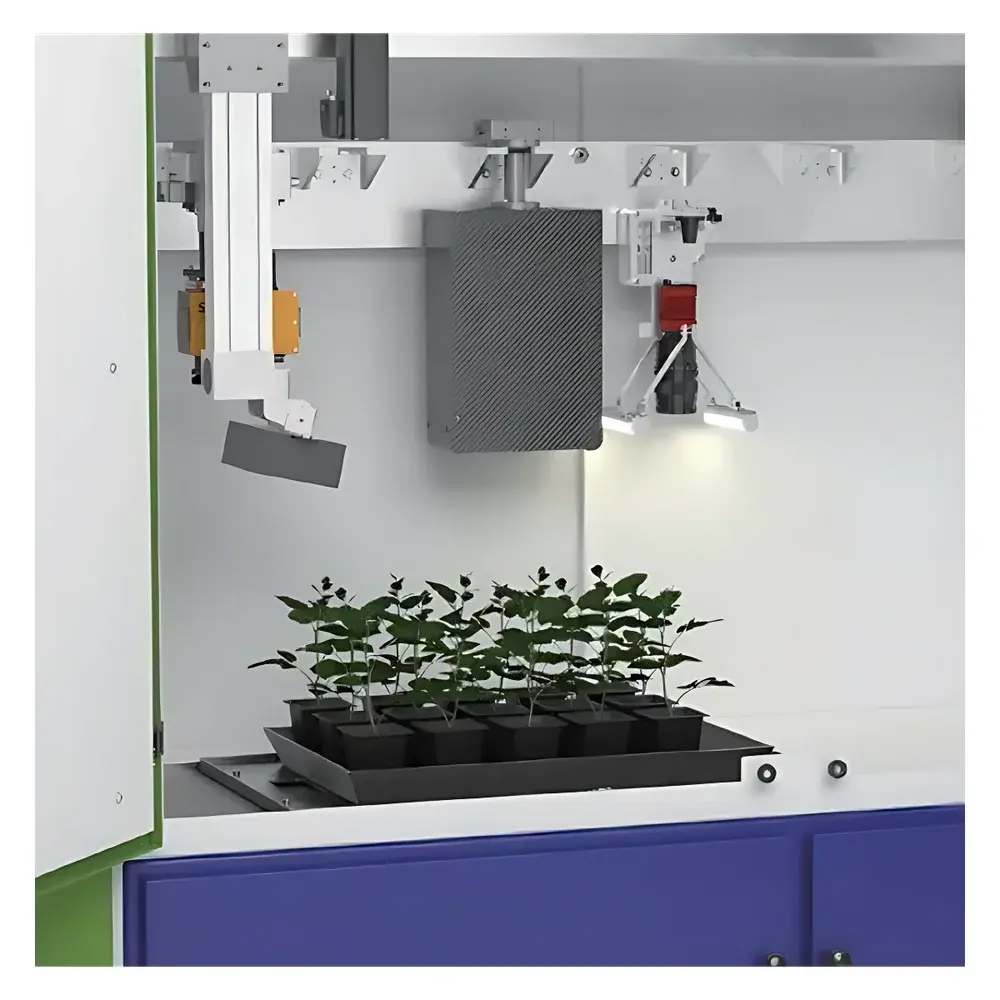
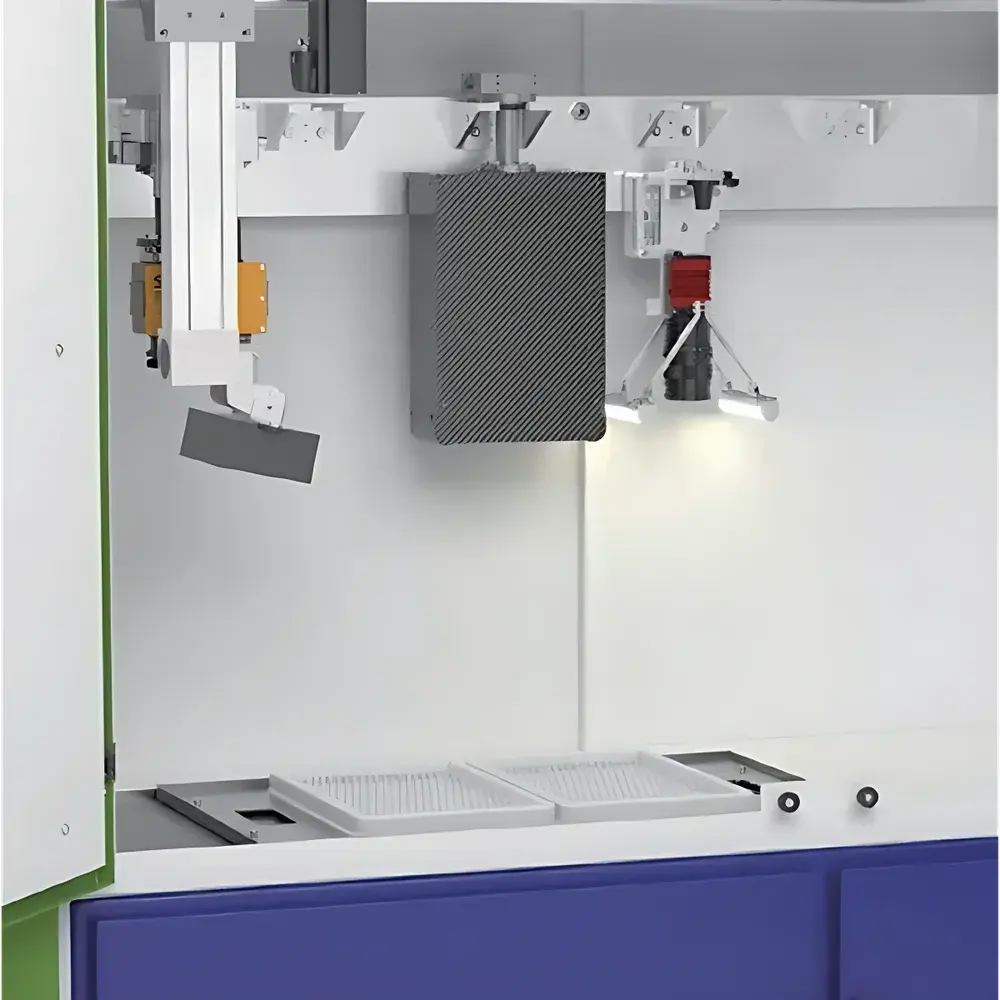
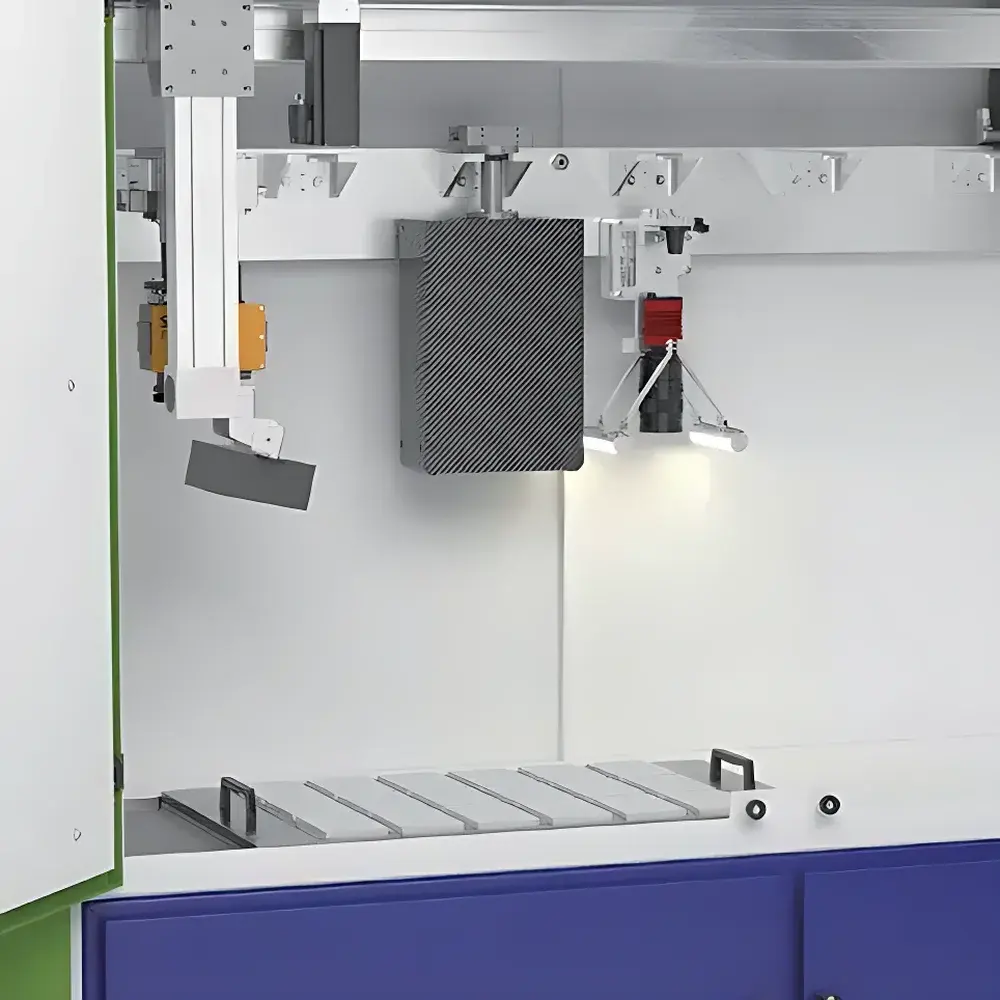
LemnaTec HyperAIxpert Multi-Sensor Laboratory Plant Phenotyping Platform
| Brand | LemnaTec |
|---|---|
| Origin | Germany |
| Model | HyperAIxpert |
| Sensor Configurability | Modular thermal-swappable imaging units |
| Sample Height Capacity | Up to 40 cm (manual loading) / 20 cm (TrayProvider™ automation) |
| Compatible Carriers | Petri dishes, multi-well plates, seed trays, pots, growth boxes, cuvettes |
| Imaging Modalities | Visible-light, Chlorophyll Fluorescence (WALZ), Hyperspectral (VIS–NIR), Near-Infrared (1450 nm), Autofluorescence, 3D Laser Scanning |
| Software Framework | AI-powered phenotypic analytics with ML-based trait extraction, batch processing, and audit-trail-enabled data management |
| Environmental Integration | Climate chamber-compatible (controlled T/RH/light), GLP-aligned metadata tagging |
Overview
The LemnaTec HyperAIxpert is a modular, laboratory-scale multi-sensor plant phenotyping platform engineered for high-fidelity, non-destructive characterization of morphological, physiological, and biochemical traits across diverse plant systems—from Arabidopsis seedlings and tissue-cultured explants to germinating seeds and small potted plants. Unlike fixed-purpose imaging rigs, the HyperAIxpert implements a sensor-agnostic architecture grounded in precision robotic positioning and thermally isolated, hot-swappable imaging modules. Each modality operates under standardized illumination and geometric calibration protocols, ensuring inter-session reproducibility required for longitudinal studies and genotype–environment interaction analysis. The system adheres to FAIR data principles (Findable, Accessible, Interoperable, Reusable) through structured metadata embedding, time-stamped acquisition logs, and traceable hardware configuration snapshots—critical for peer-reviewed publication and regulatory-compliant research workflows.
Key Features
- Modular thermal-swappable imaging unit design: Enables rapid reconfiguration between visible-light, chlorophyll fluorescence (WALZ Imaging-PAM), hyperspectral (400–1000 nm), 1450 nm NIR reflectance, autofluorescence, and 3D laser scanning without manual recalibration.
- Sub-millimeter positional repeatability: Motorized gantry with optical encoder feedback ensures <±5 µm stage positioning accuracy across all sensor modalities.
- Standardized sample illumination: Programmable LED arrays deliver spectrally defined, uniform irradiance (PAR, UV-A, far-red) synchronized with image capture; petri dish–optimized light table included.
- Height-flexible sample handling: Manual loading supports specimens up to 40 cm tall; optional TrayProvider™ automates loading/unloading of standard trays (e.g., 128-well microtiter plates, 96-well plates, 10×20 cm propagation trays) at throughput rates of ≤120 samples/hour.
- Climate chamber integration: Fully compatible with controlled-environment chambers (temperature ±0.5°C, RH ±3%, CO₂ ±50 ppm); all electronics rated for continuous operation at 5–40°C and 30–80% RH non-condensing.
- Hardware-level synchronization: All sensors trigger via TTL pulse from central timing controller, eliminating temporal drift between fluorescence decay kinetics, spectral reflectance, and structural point-cloud acquisition.
Sample Compatibility & Compliance
The HyperAIxpert accommodates a broad spectrum of biological carriers—including sterile petri dishes (35–150 mm), SBS-standard microtiter plates (6–1536 wells), plastic or aluminum growth trays (up to 60 × 40 cm), individual pots (≤15 cm diameter), and custom-designed growth boxes. All carrier interfaces are mechanically registered using precision dowel-pin alignment and validated against ISO 20697:2021 (Plant phenotyping—Requirements for imaging-based measurement systems). Data acquisition complies with GLP Annex 11 and FDA 21 CFR Part 11 requirements when configured with user-authenticated access control, electronic signatures, and immutable audit trails. Metadata conforms to MIAPPE v1.1 (Minimum Information About a Plant Phenotyping Experiment) standards for cross-platform interoperability.
Software & Data Management
HyperAIxpert is operated via LemnaGrid® 5.2 software—a Python-based, containerized application suite supporting local deployment or cloud-hosted infrastructure. Core capabilities include: automated trait segmentation (root/shoot/leaf partitioning using U-Net variants), pixel-wise vegetation index computation (NDVI, PRI, NPQI, MCARI), kinetic parameter fitting for OJIP fluorescence transients, 3D canopy volume estimation from registered point clouds, and hierarchical clustering of multi-modal trait vectors. All analyses generate FAIR-compliant HDF5 files containing raw images, calibrated reflectance spectra, processed trait tables, and full provenance metadata (sensor ID, exposure settings, ambient loggers, operator ID). Export formats include CSV, TIFF, NetCDF, and MIAPPE-compliant JSON-LD.
Applications
- Genetic screening: High-throughput quantification of developmental traits (hypocotyl elongation, rosette area, leaf number) across mutant populations or RILs under controlled abiotic stress (drought, salinity, nutrient deficiency).
- Physiological phenomics: Dynamic assessment of photosynthetic efficiency via fast chlorophyll fluorescence induction curves (Fv/Fm, ΦPSII, qP) coupled with water status inferred from 1450 nm NIR absorption.
- Breeding program support: Correlation modeling between hyperspectral indices (e.g., anthocyanin reflectance index, carotenoid index) and biochemical assays (HPLC-quantified pigments, GC-MS metabolites).
- Disease phenotyping: Early detection of pathogen-induced changes in autofluorescence patterns (e.g., lignin deposition, phenylpropanoid accumulation) prior to visible symptom onset.
- Functional genomics: Spatiotemporal mapping of fluorescent reporter lines (GFP, YFP, mCherry) across organ-level structures using co-registered visible + autofluorescence channels.
- 3D architectural modeling: Generation of quantitative descriptors (branch angle distribution, internode length variance, fractal dimension) from sub-mm-resolution laser scans for QTL mapping of growth habit.
FAQ
What sample throughput can be achieved with the TrayProvider™ automation module?
TrayProvider™ achieves ≤120 standardized trays per hour (e.g., 96-well plates or 10×20 cm seed trays), assuming full sensor suite engagement and default exposure times. Throughput scales linearly with reduced modality count.
Is the system capable of long-term time-series experiments?
Yes—integrated environmental logging (temperature, humidity, light intensity) and scheduled acquisition scripting enable unattended multi-day campaigns with automatic file versioning and integrity checksums.
Can third-party sensors be integrated into the HyperAIxpert platform?
Only LemnaTec-certified imaging modules are supported for thermal-swapping and hardware-level synchronization; however, external sensors (e.g., gas analyzers, sap flow meters) may feed time-stamped data into LemnaGrid® via TCP/IP or OPC UA interfaces.
Does the software support batch processing of legacy image datasets?
LemnaGrid® includes an offline processing mode accepting TIFF, PNG, and RAW formats with user-defined calibration profiles; output retains full MIAPPE metadata compliance.
How is calibration maintained across imaging sessions?
Each sensor module contains embedded reference targets (spectral reflectance tiles, fluorescence standards, depth calibration grids); automated pre-acquisition calibration routines execute before every session and are logged as auditable events.




