
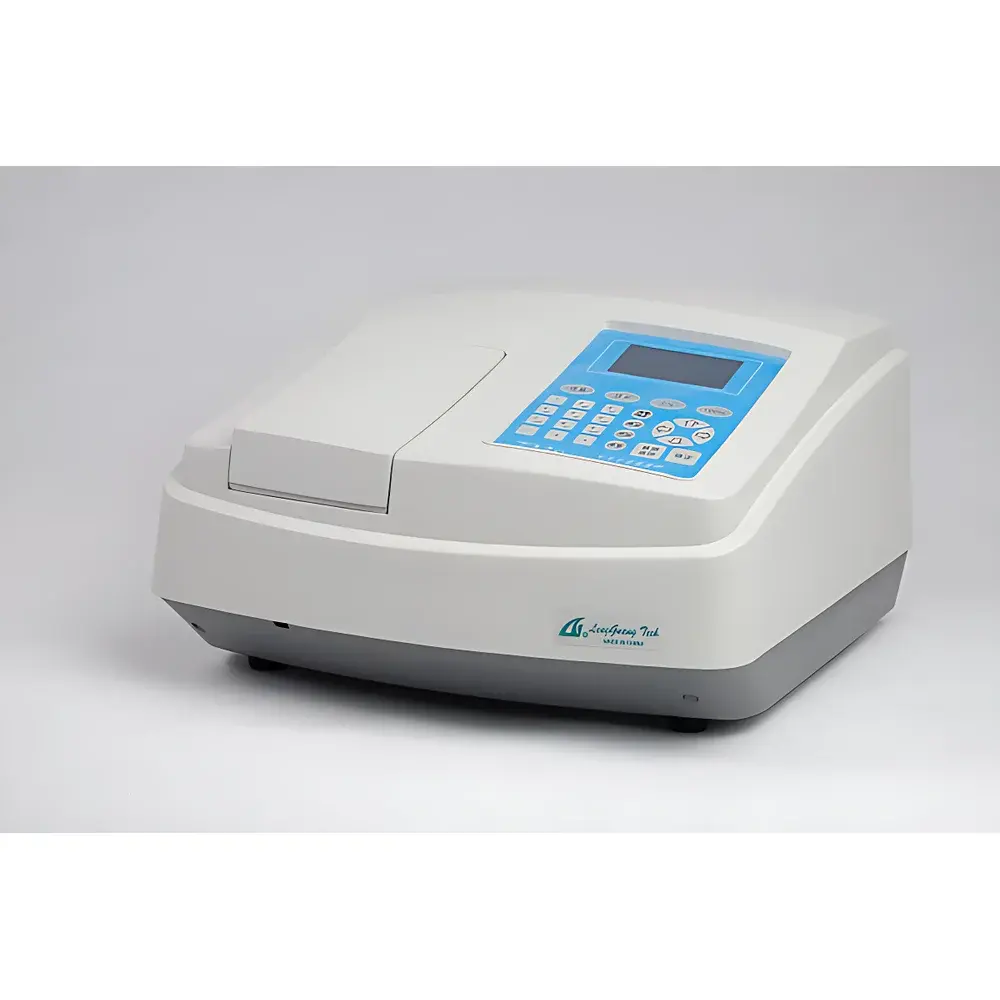
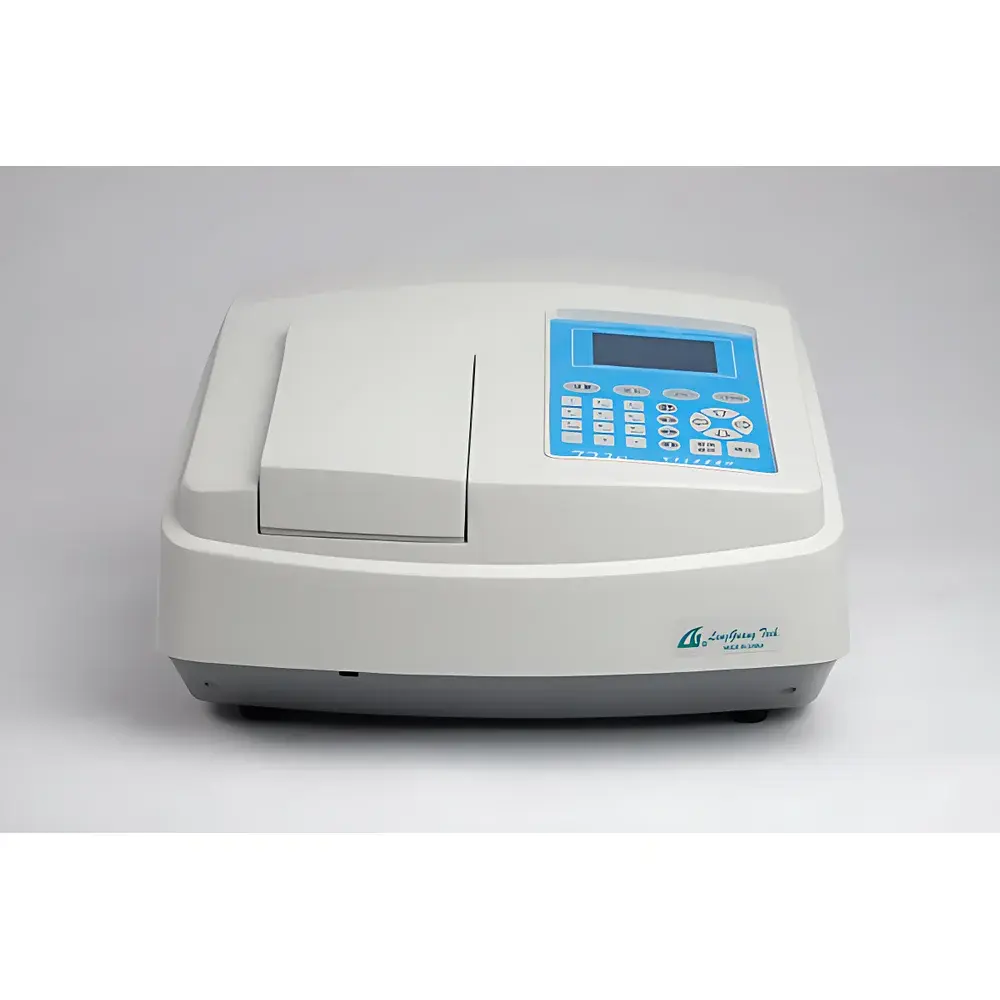
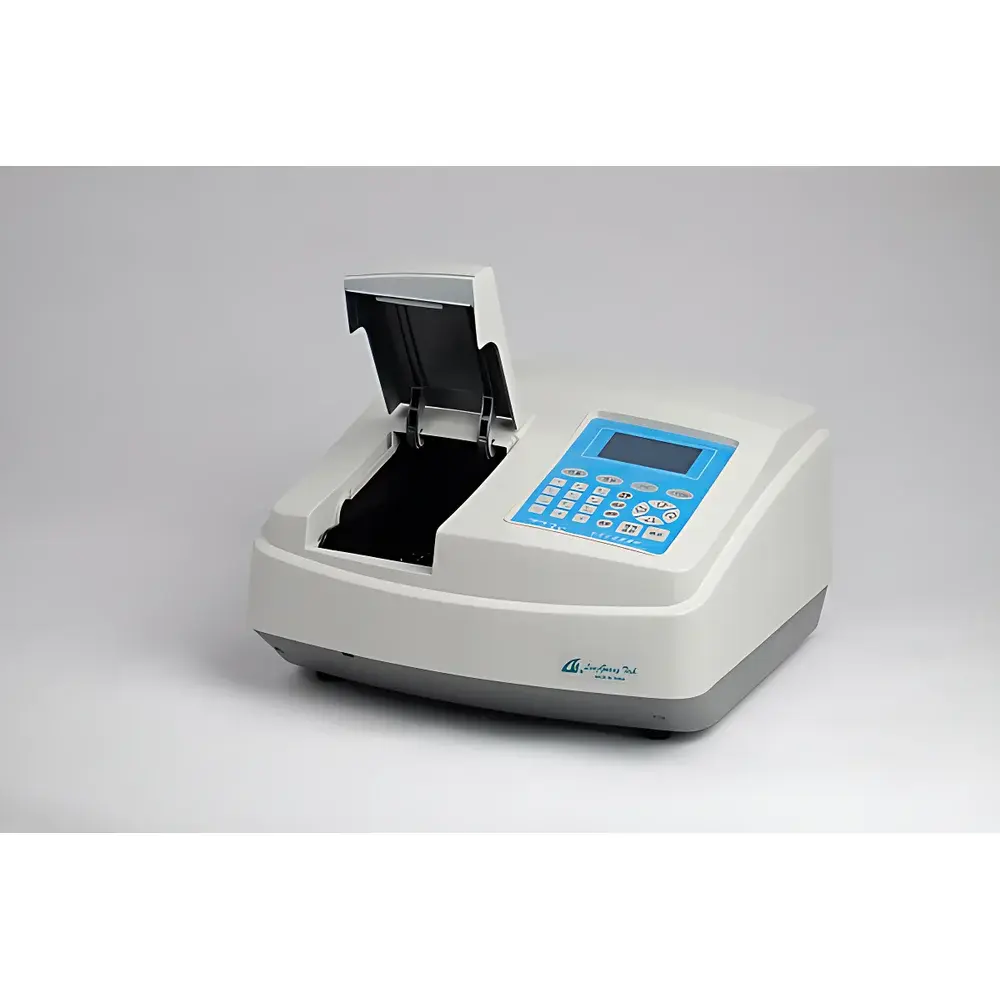
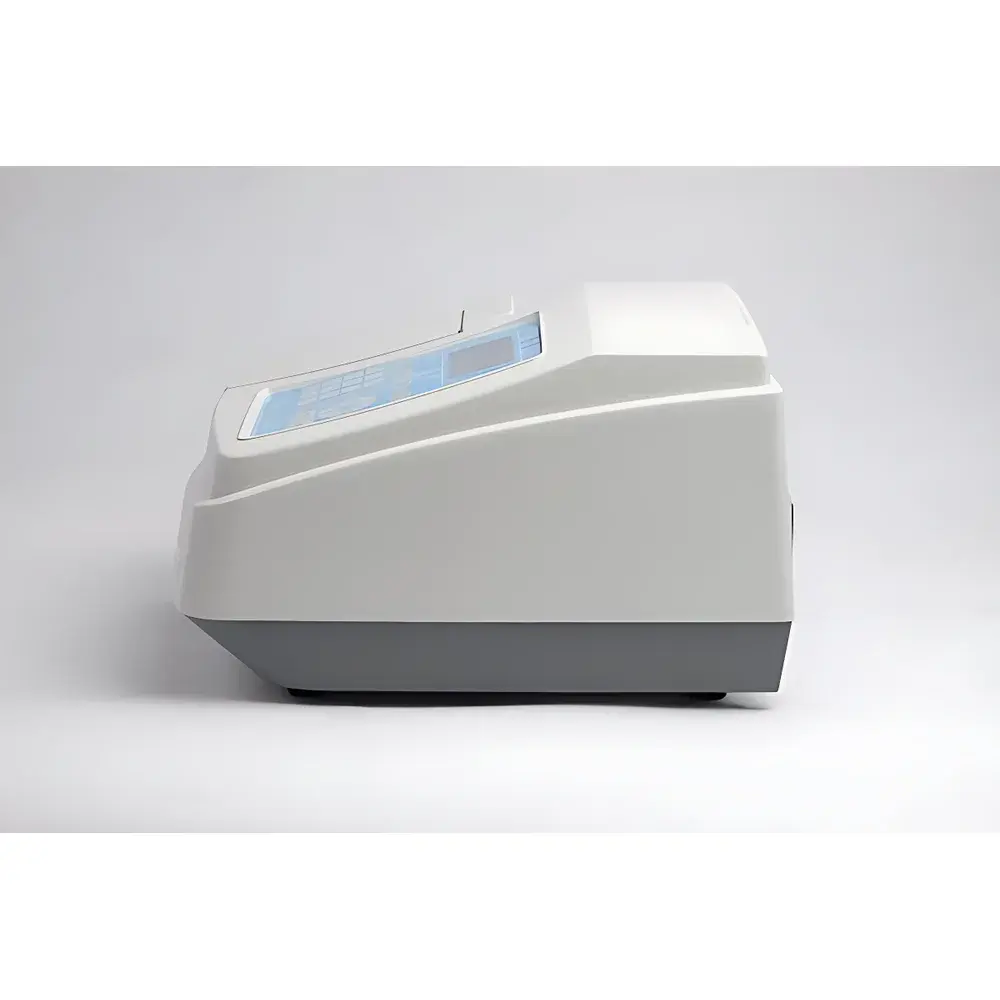
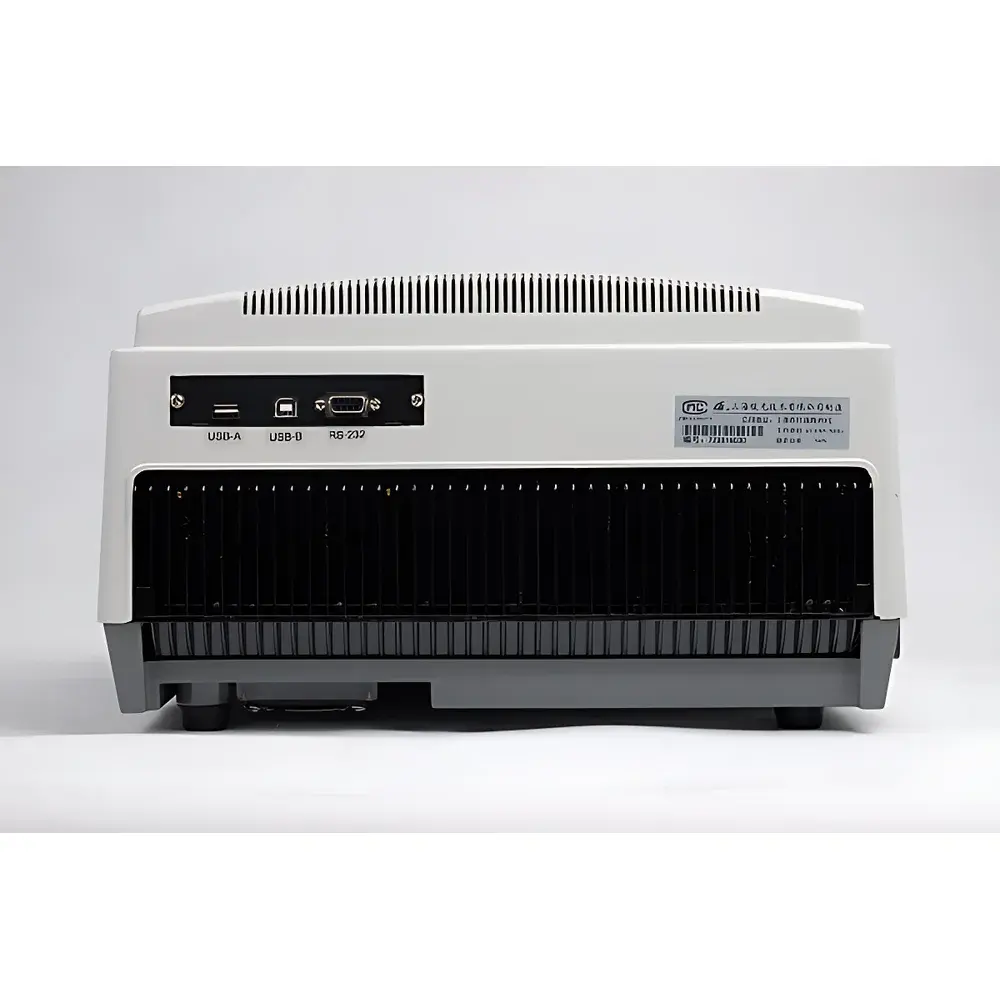
Lengguang Tech. 723S Visible Spectrophotometer
| Brand | Lengguang Tech. |
|---|---|
| Origin | Shanghai, China |
| Manufacturer Type | Original Equipment Manufacturer (OEM) |
| Product Category | Domestic |
| Model | 723S |
| Price Range | USD 1,150–1,320 |
| Optical Design | Single-beam |
| Detector Type | Silicon Photocell |
| Wavelength Range | 320–1100 nm |
| Wavelength Accuracy | ±1.0 nm |
| Wavelength Repeatability | ≤0.5 nm |
| Spectral Bandwidth | 2 nm |
| Stray Light | ≤0.1%T (at 360 nm, NaNO₂) |
| Baseline Flatness | ±0.002 A |
| Photometric Drift | <0.0008 A/h |
| Photometric Noise | <0.5%T (100%T), <0.2%T (0%T) |
| Photometric Range | 0.0–200%T / –0.3–4.0A |
| Dimensions | 370 × 357 × 220 mm |
| Net Weight | 9 kg |
Overview
The Lengguang Tech. 723S Visible Spectrophotometer is a precision single-beam optical instrument engineered for routine and research-grade quantitative and qualitative analysis in the visible-to-near-UV spectral region (320–1100 nm). Based on a Czerny-Turner monochromator architecture with a fixed diffraction grating and thermally stabilized halogen lamp (20 W / 12 V), the 723S delivers high photometric fidelity and long-term wavelength stability. Its optical path is constructed using an integrated aluminum die-cast chassis—designed to minimize mechanical drift and maintain alignment under ambient laboratory conditions. The system employs a silicon photocell detector, optimized for linear response across its operational range, and achieves a spectral bandwidth of 2 nm—sufficient for resolving typical absorption bands in pharmaceutical, biochemical, environmental, and materials applications without compromising signal-to-noise ratio.
Key Features
- Single-beam C-T monochromator with high-stability 20 W/12 V halogen source and precision-machined diffraction grating
- Automated wavelength calibration using built-in spectral reference features, enabling periodic self-check and correction of wavelength accuracy (±1.0 nm)
- High-speed wavelength scanning up to 7000 nm/min and positioning speed of 10000 nm/min, enabled by microstepping motor control and real-time digital signal processing
- Optical design optimized for low stray light (≤0.1%T at 360 nm using NaNO₂), critical for accurate measurement of highly absorbing samples (e.g., concentrated dyes, biological macromolecules)
- 32-bit ARM-based embedded system with 128×64 graphical LCD display; supports standalone operation including multi-point calibration, standard curve fitting (linear, polynomial), coefficient entry/storage, and concentration calculation
- USB 2.0 interface compliant with CDC class drivers—enables plug-and-play connectivity to Windows/Linux systems without manual COM port configuration
- Integrated USB flash drive port for direct export of quantitative results in CSV-compatible format, facilitating downstream analysis in Excel or LIMS environments
- Baseline flatness of ±0.002 A and photometric drift <0.0008 A/h ensure reproducibility over extended measurement sessions
Sample Compatibility & Compliance
The 723S accommodates standard 10 mm pathlength cuvettes (glass, quartz, or plastic) and supports both transmission and absorbance measurements. It meets core performance criteria referenced in ISO 6060 (water quality — determination of chemical oxygen demand), ASTM E275 (standard practice for describing and measuring performance of ultraviolet and visible spectrophotometers), and USP (Spectrophotometry and Light-Scattering). While not certified for GLP/GMP-regulated workflows out-of-the-box, its data export capabilities, audit-ready calibration logs, and deterministic firmware behavior support integration into validated laboratory environments when paired with appropriate SOPs and instrument qualification protocols (IQ/OQ/PQ).
Software & Data Management
Bundled PC software provides full instrument control and advanced analytical functions: spectral scanning, kinetic/time-course profiling, multi-wavelength quantitation, DNA/RNA purity assessment (A260/A280, A260/A230), peak/valley detection, baseline correction, and user-defined formula computation. All acquired spectra and quantitative reports are timestamped and stored with metadata (wavelength, slit width, date/time, operator ID if configured). Export options include CSV, TXT, and image formats (PNG, BMP); no proprietary binary lock-in is used. Software complies with FDA 21 CFR Part 11 requirements for electronic records when deployed with system-level access controls and external audit trail logging.
Applications
- Pharmaceutical QA/QC: Active ingredient assay, dissolution testing, excipient compatibility screening
- Clinical & biochemical labs: Enzyme kinetics (e.g., LDH, ALT), protein quantification (Bradford/Lowry), hemoglobin analysis
- Environmental monitoring: Nitrate/nitrite, phosphate, COD, and heavy metal complexation assays per APHA/EPA methods
- Food & beverage safety: Colorant concentration, antioxidant capacity (FRAP/DPPH), adulterant detection
- Materials science: Bandgap estimation of semiconducting oxides, dye loading efficiency in solar cells
- Educational laboratories: Teaching fundamental spectroscopic principles, Beer-Lambert law validation, method development exercises
FAQ
Is the 723S compliant with ISO/IEC 17025 requirements for accredited testing laboratories?
The instrument meets key metrological specifications outlined in ISO/IEC 17025 Annex B for spectrophotometers; however, formal accreditation requires documented calibration traceability to NIST or equivalent national standards, along with full system verification (including cuvette holder alignment and photometric linearity checks) performed by an accredited provider.
Can the 723S measure absorbance above 3.0 A reliably?
Yes—the photometric range extends to 4.0 A with demonstrated linearity up to 3.5 A under controlled conditions (e.g., using matched quartz cuvettes and stable blank reference); users should verify linearity for their specific sample matrix using certified reference standards.
Does the firmware support remote firmware updates via USB?
Firmware updates are delivered as signed HEX files and installed through the PC software interface; no over-the-air or autonomous update capability is implemented to preserve regulatory compliance and system integrity.
What is the recommended calibration frequency for routine use?
Wavelength calibration is advised before each analytical session; photometric calibration using neutral density filters or potassium dichromate solution should be performed daily or per shift in regulated environments, per internal SOPs aligned with CLSI EP10 or ISO 8466-1.
Is third-party software integration supported (e.g., LabArchives, Benchling, or custom LIMS)?
Yes—via ASCII-based command protocol over USB CDC serial emulation; complete SCPI-like command set and response syntax are provided in the technical documentation for API-level integration.






