
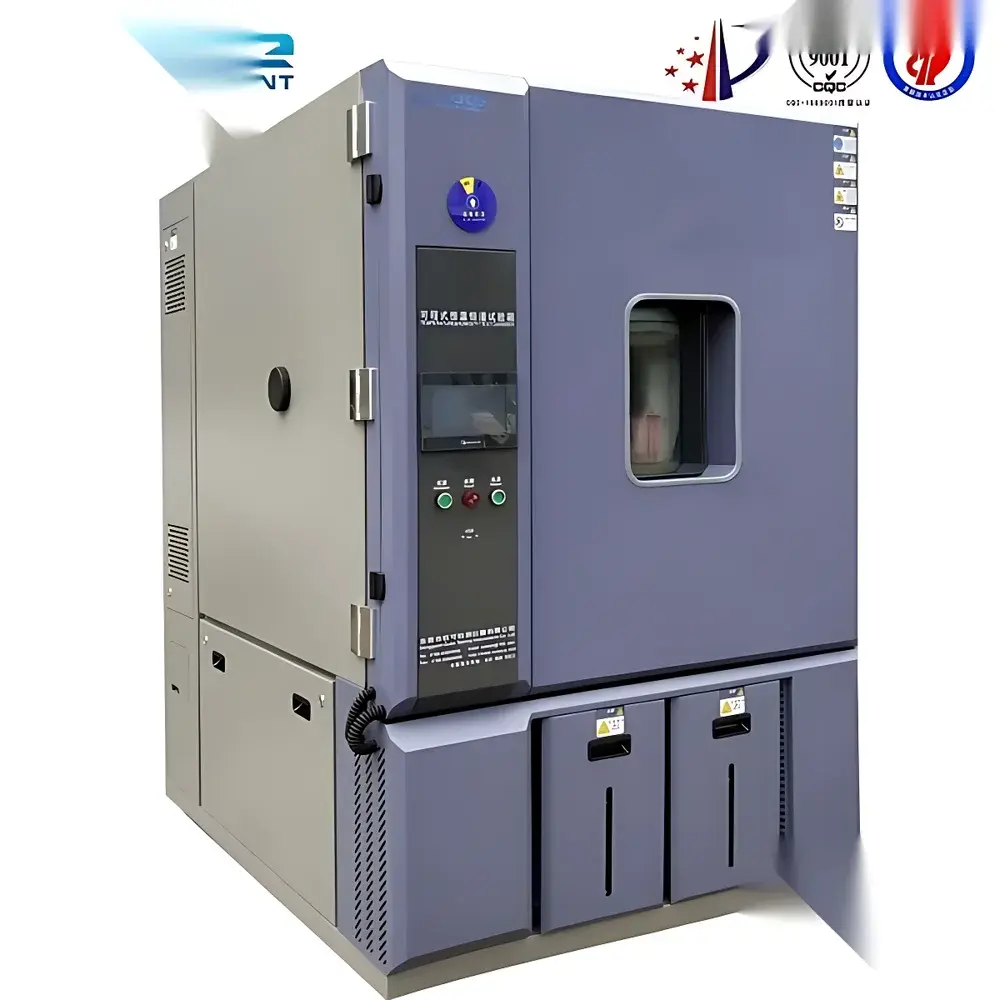
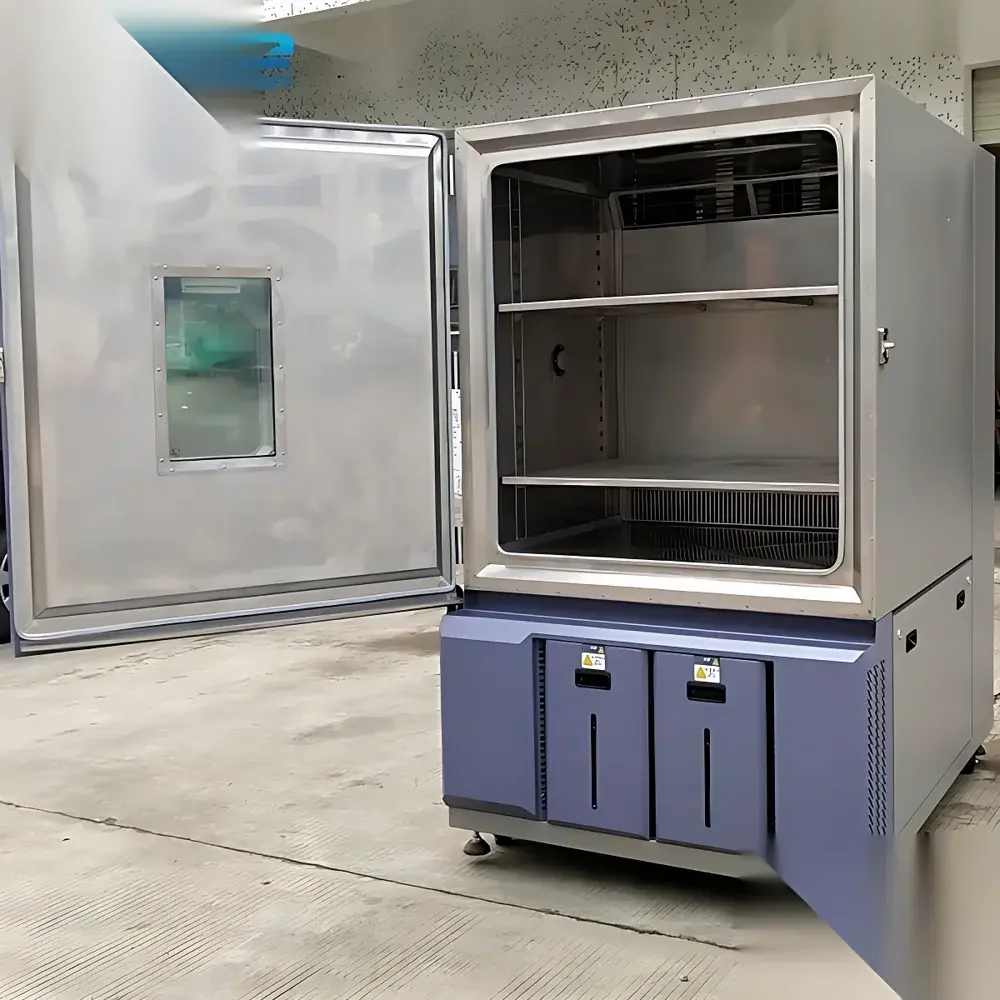
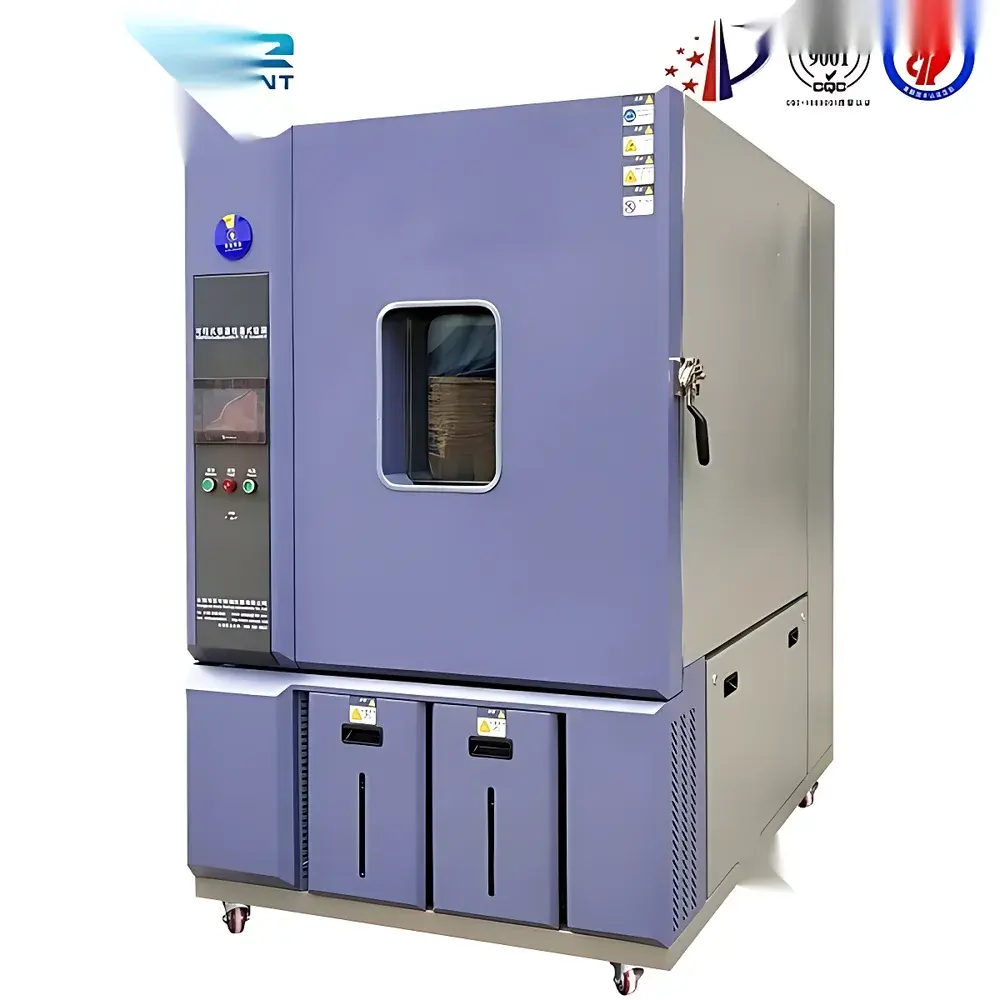
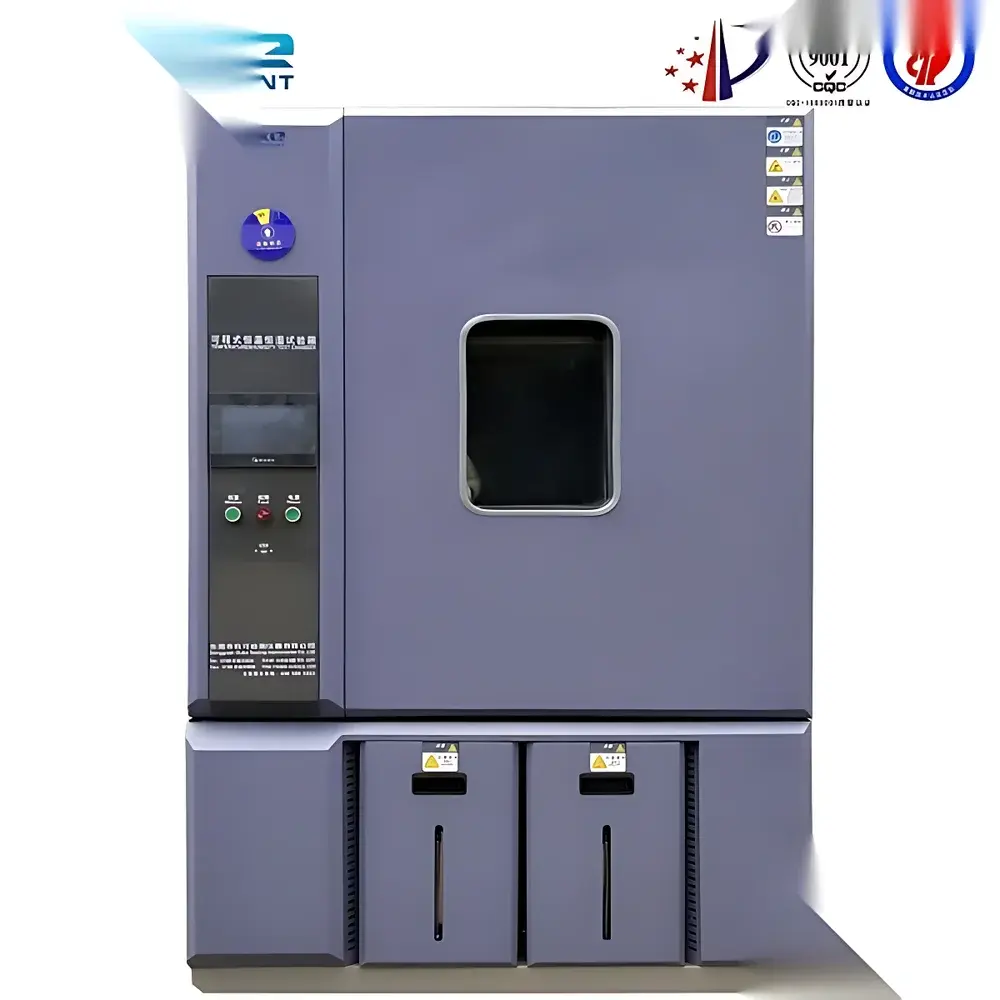
Li-ion Battery Environmental Test Chamber with Precise Temperature and Humidity Control
| Temperature Range | –40 °C to +150 °C (optional down to –120 °C) |
|---|---|
| Humidity Range | 30–98% RH (optional 5–98% RH) |
| Temperature Resolution | 0.01 °C |
| Temperature Uniformity | ±0.5 °C |
| Temperature Deviation | ≤ ±2 °C |
| Humidity Resolution | 0.1% RH |
| Humidity Deviation | ≤ ±2.5% RH |
| Cooling Rate | 0.7–1.0 °C/min |
| Heating Rate | 2.0–3.0 °C/min |
| Control System | TEMI880 Color LCD Touchscreen Programmable Controller |
| Power Supply | 380 V ±5%, 50 Hz, 3P+N+G (220 V optional) |
| Interior Material | SUS304 Stainless Steel |
| Exterior Material | SUS304 Stainless Steel or A3 Steel with Electrostatic Powder Coating |
Overview
The Li-ion Battery Environmental Test Chamber is a precision-engineered climatic test system designed specifically for the rigorous thermal and hygrothermal validation of lithium-ion battery cells, modules, and packs under controlled laboratory conditions. It operates on a dual-loop PID-controlled refrigeration and humidification architecture, integrating cascade refrigeration for ultra-low temperature capability (down to –120 °C), steam-based humidification with dehumidification via cooling coil condensation, and high-stability air circulation optimized for uniform thermal distribution across the test chamber volume. This chamber meets the fundamental environmental stress testing requirements defined in international standards including IEC 62133, UN 38.3, GB/T 31485, and ISO 12405 for electric vehicle and portable energy storage applications. Its design prioritizes repeatability, traceable calibration pathways, and long-term operational stability—critical for QC labs conducting accelerated aging, safety abuse simulation (e.g., thermal runaway initiation), and regulatory compliance verification.
Key Features
- Wide operational envelope: Standard temperature range of –40 °C to +150 °C; extended low-temperature option down to –120 °C using multi-stage cascade refrigeration.
- Precise humidity control from 30% to 98% RH (optional 5–98% RH), enabled by stainless steel steam generator and integrated refrigerant-based dehumidification circuit.
- High-resolution digital control: TEMI880 touchscreen controller with 0.01 °C temperature resolution and 0.1% RH humidity resolution, supporting up to 99 programmable segments with ramp-soak profiles.
- Robust chamber construction: Interior chamber walls, shelves, and ductwork fabricated from mirror-finished SUS304 stainless steel to ensure corrosion resistance against electrolyte vapors and cleaning agents.
- Thermal performance validated per GB/T 5170.2 (temperature) and GB/T 5170.5 (humidity), with uniformity maintained at ±0.5 °C and deviation ≤ ±2 °C under no-load, 25 °C ambient conditions.
- Configurable power input: Standard 380 V, 3-phase, 5-wire supply (3P+N+G); optional 220 V single-phase configuration available upon request for facility compatibility.
Sample Compatibility & Compliance
This chamber accommodates battery samples ranging from coin cells and pouch cells to prismatic modules (up to 1.2 m × 1.0 m × 0.8 m internal dimensions, customizable). All structural interfaces—including cable ports, observation windows, and sensor feedthroughs—are sealed to maintain environmental integrity during dynamic cycling. The system complies with key national and international test standards, including GB 2423.1 (cold test), GB 2423.2 (dry heat), GB 2423.22 (temperature change), and GB/T 5170.2–5170.5 for metrological verification. While not inherently certified to UL or IECEx, the chamber’s mechanical and electrical architecture supports integration into GLP/GMP-aligned QA workflows when paired with external calibration records and audit-ready log files.
Software & Data Management
The TEMI880 controller provides real-time display of chamber setpoints, actual values, and alarm status, with onboard data logging capacity for ≥100 days of continuous operation (sample interval configurable from 1 sec to 60 min). Exportable CSV files support post-test analysis in MATLAB, Python, or LIMS platforms. Optional Ethernet or RS485 interface enables remote monitoring and centralized fleet management via SCADA-compatible protocols. For regulated environments, optional firmware upgrades support FDA 21 CFR Part 11-compliant electronic signatures, audit trails, and user-level access control—ensuring data integrity throughout the testing lifecycle.
Applications
- Accelerated life cycle testing of Li-ion cells under combined thermal-hygric stress (e.g., 45 °C / 95% RH for electrolyte hydrolysis assessment).
- Thermal shock evaluation per GB/T 2423.22, simulating rapid transitions between sub-zero and elevated temperatures to assess seal integrity and electrode adhesion.
- Safety qualification tests: preconditioning prior to nail penetration, overcharge, or external short-circuit evaluations per UN 38.3 Section 38.3.4.
- Material compatibility screening: evaluating separator shrinkage, binder degradation, and current collector corrosion under prolonged humid heat exposure.
- Quality assurance in battery manufacturing: batch release testing against internal specifications for thermal stability and moisture sensitivity.
FAQ
What is the typical cooling water requirement for optimal low-temperature performance?
Cooling water must be supplied at 10–28 °C with stable pressure between 0.1–0.3 MPa to sustain nominal cooling rates below –40 °C. Chilled water systems are recommended for sustained operation below –70 °C.
Can the chamber be customized for walk-in configurations or non-standard internal dimensions?
Yes—custom walk-in chambers (including double-door antechamber variants) and bespoke internal volumes are available upon engineering review and thermal load calculation.
How is temperature/humidity uniformity verified and documented?
Uniformity is measured per GB/T 5170.2 and GB/T 5170.5 using NIST-traceable PT100 sensors at nine designated points. Calibration certificates and uniformity reports are provided with each unit shipment.
Is the controller compatible with third-party test sequencing software?
Yes—the TEMI880 supports Modbus RTU over RS485, enabling bidirectional communication with LabVIEW, TestStand, or custom MES integrations for automated test execution.
What maintenance intervals are recommended for long-term reliability?
Refrigerant circuit inspection and humidifier descaling every 6 months; full system calibration and sensor verification annually—both supported by factory-trained service engineers globally.



