
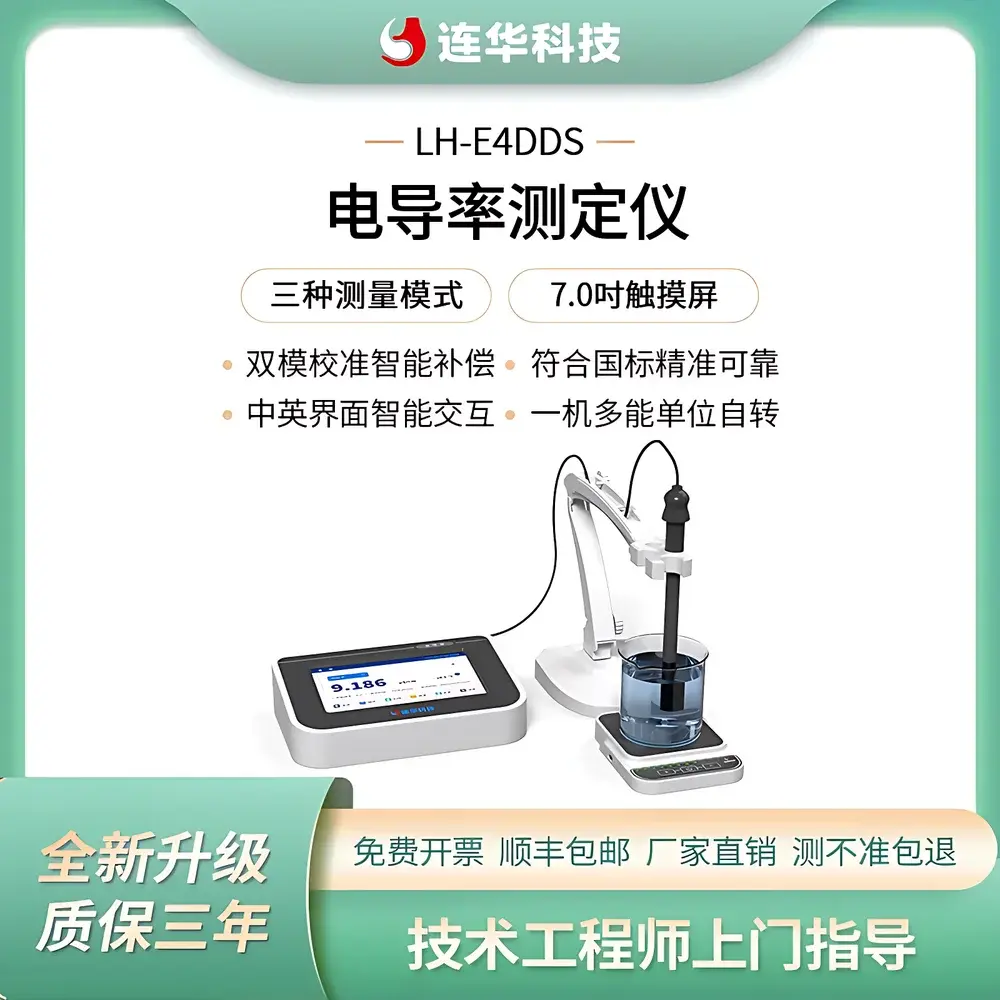
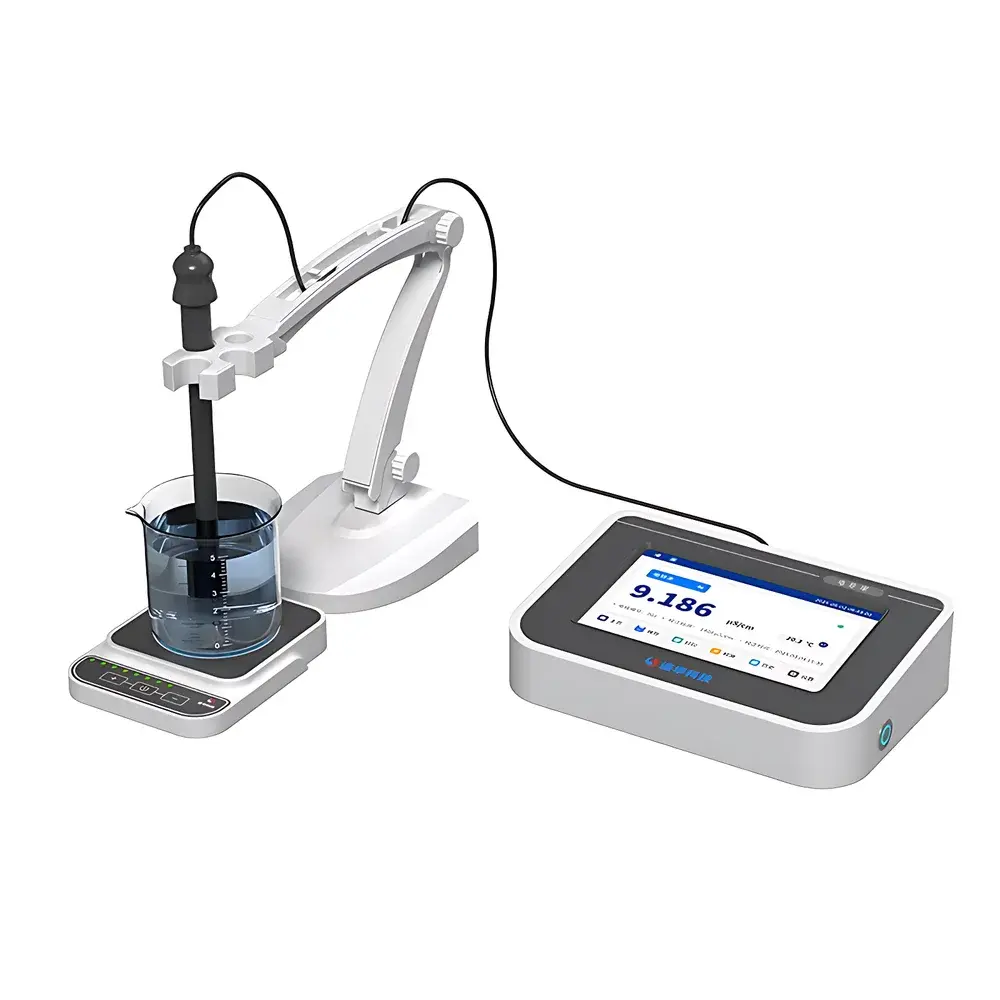
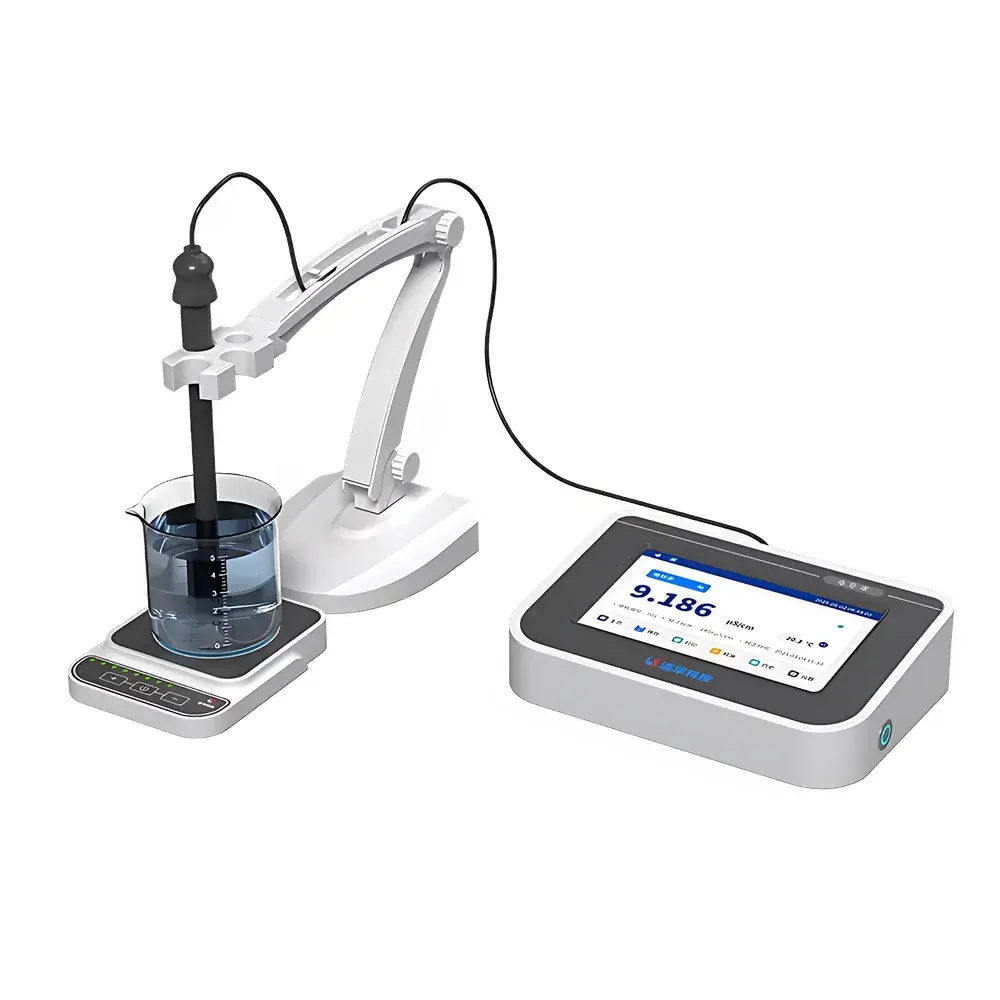
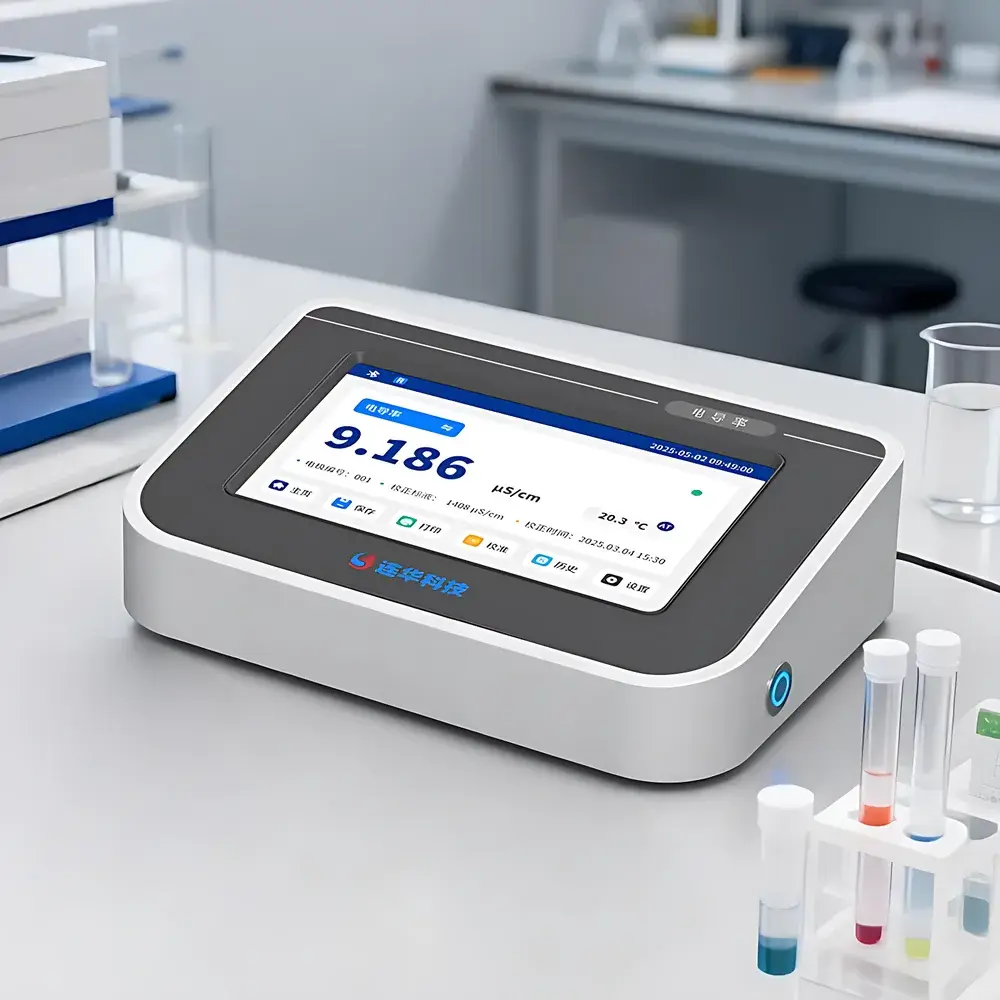
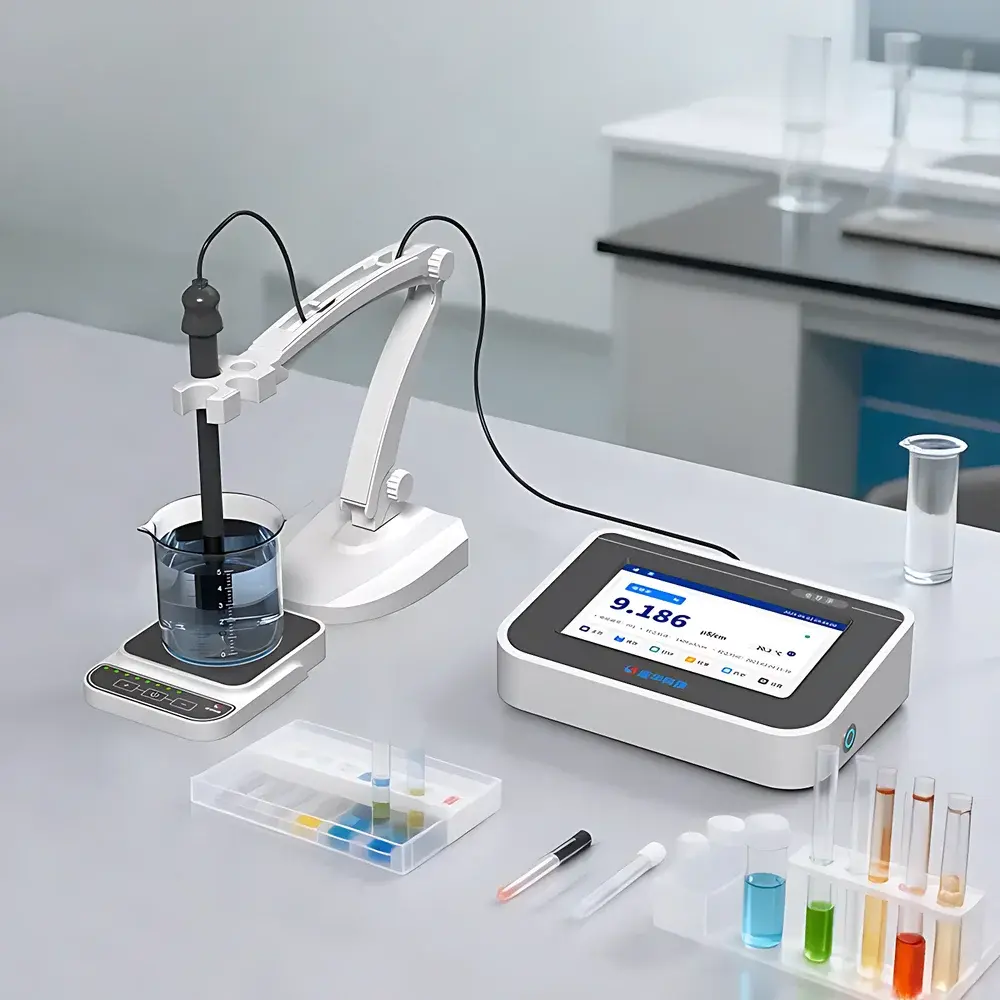
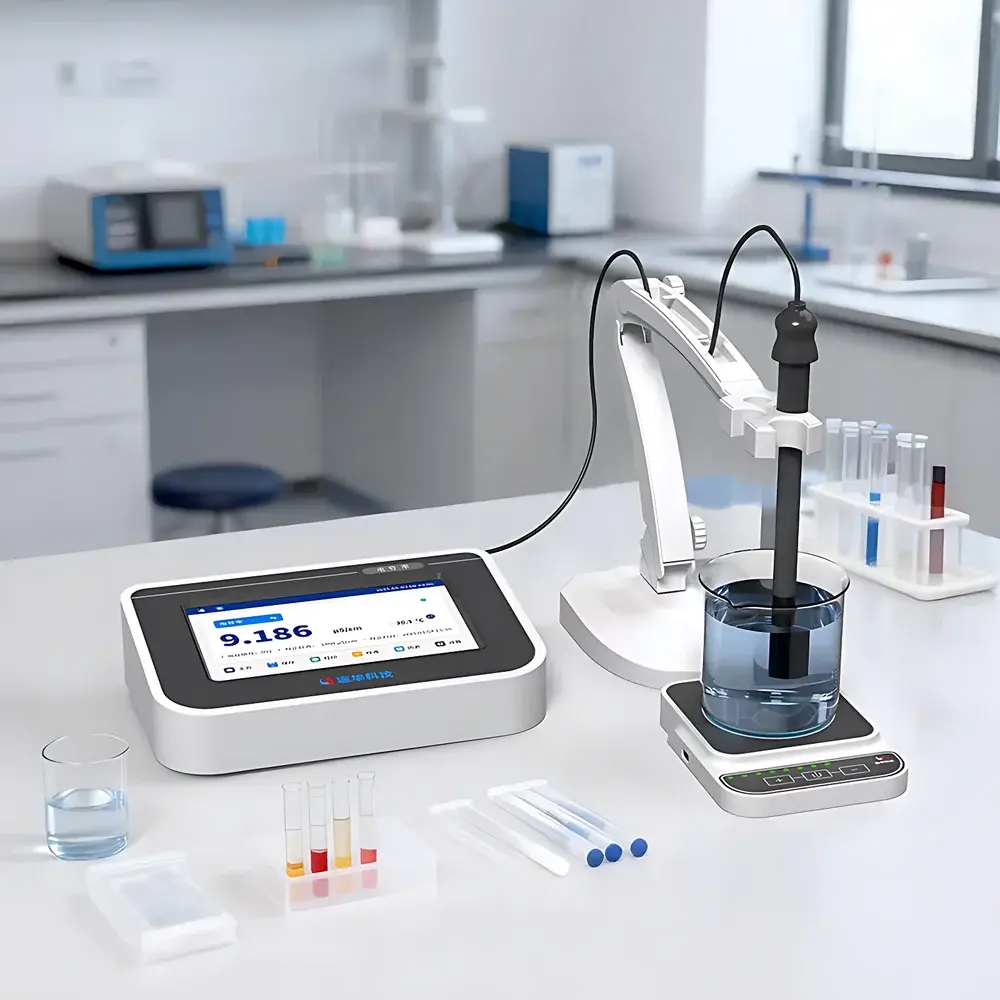
Lianhua LH-E4DDS Benchtop Multiparameter Conductivity Meter
| Brand | Lianhua |
|---|---|
| Origin | Beijing, China |
| Manufacturer Type | Direct Manufacturer |
| Product Origin | Domestic (China) |
| Model | LH-E4DDS |
| Pricing | Upon Request |
| Measured Parameters | Conductivity, TDS, Resistivity, Salinity, Temperature |
| Form Factor | Benchtop |
| Intended Use | Laboratory |
| Conductivity Range | 0–200 mS/cm |
| TDS Range | 0–200 g/L |
| Resistivity Range | 5 Ω·cm – 20,000 kΩ·cm |
| Salinity Range | 0–200 ‰ |
| Temperature Range | −25 to +125 °C |
Overview
The Lianhua LH-E4DDS is a benchtop multiparameter conductivity meter engineered for precision, stability, and regulatory traceability in routine and advanced laboratory environments. It operates on the principle of two-electrode or four-electrode conductometric measurement—selectable based on sample conductivity—to minimize polarization error and electrode fouling effects. The instrument simultaneously determines electrical conductivity, total dissolved solids (TDS), resistivity, salinity, and temperature using temperature-compensated algorithms compliant with ISO 7888 and ASTM D1125 standards. Its dual-range auto-ranging architecture ensures high resolution across low-conductivity ultrapure water (e.g., 5 Ω·cm) and high-salinity industrial effluents (up to 200 mS/cm), making it suitable for method validation, process water monitoring, and environmental compliance testing.
Key Features
- Benchtop design with ergonomic front-panel interface and large backlit LCD display (128 × 64 pixels) for simultaneous real-time visualization of all five parameters.
- Integrated Pt1000 temperature sensor with ±0.3 °C accuracy over −25 to +125 °C, enabling automatic temperature compensation (ATC) per linear or non-linear (NaCl-based) models.
- Calibration support for conductivity (1413 µS/cm and 12.88 mS/cm standard solutions), TDS (with configurable TDS factor 0.4–1.0), and salinity (based on practical salinity scale PSS-78).
- Non-volatile memory storing up to 500 data sets with timestamp, operator ID, and calibration history—exportable via USB interface to CSV-compatible software.
- Rugged ABS housing rated IP54 for dust and splash resistance; designed for continuous operation in regulated lab settings requiring GLP-compliant documentation.
Sample Compatibility & Compliance
The LH-E4DDS accommodates aqueous samples ranging from deionized water (resistivity >10 MΩ·cm) to concentrated brines and wastewater matrices. Its electrode configuration supports both standard cell constants (K = 0.1, 1.0, 10 cm⁻¹) and optional four-wire conductivity probes for high-accuracy applications where lead resistance must be eliminated. The instrument meets CE marking requirements and conforms to IEC 61010-1 for electrical safety in laboratory equipment. Data integrity aligns with FDA 21 CFR Part 11 principles through secure user login, audit-trail-enabled calibration logs, and immutable timestamping—facilitating readiness for ISO/IEC 17025 accreditation audits and EPA Method 120.1 verification.
Software & Data Management
The LH-E4DDS includes Lianhua LabLink PC software (Windows-compatible) for bidirectional communication, remote instrument control, and report generation. Raw measurements are stored with metadata including calibration date, electrode serial number, temperature drift correction factor, and measurement mode (e.g., “Auto-Range Conductivity”). Exported datasets include full uncertainty propagation fields derived from NIST-traceable calibration standards. The software supports batch export for LIMS integration and generates PDF reports compliant with ISO 17025 clause 7.8.2 (reporting of results), including statement of measurement uncertainty per GUM (JCGM 100:2008).
Applications
- Environmental monitoring: Wastewater discharge compliance (e.g., EPA NPDES permits), surface water quality assessment (ISO 5667-3), and leachate analysis in landfill studies.
- Pharmaceutical water systems: USP purified water and water-for-injection (WFI) resistivity verification at 25 °C.
- Academic research: Electrolyte characterization in battery electrolyte development, soil solution conductivity mapping, and marine biogeochemistry sampling.
- Industrial process control: Cooling tower cycles of concentration, boiler feedwater purity checks, and dairy processing rinse water validation.
- Regulatory laboratories: Accredited testing under CNAS (China National Accreditation Service) and equivalent international schemes requiring documented metrological traceability.
FAQ
Does the LH-E4DDS support GLP-compliant data handling?
Yes—the instrument enforces user authentication, records full calibration history with timestamps and operator IDs, and retains raw measurement logs with checksum-verified integrity.
Can it measure ultrapure water resistivity accurately?
Yes—its extended resistivity range (5 Ω·cm to 20,000 kΩ·cm) and low-noise analog front-end enable stable readings down to 10 MΩ·cm resistivity at 25 °C.
Is four-electrode conductivity measurement available?
Four-electrode (tetrapolar) measurement is supported via optional probe interface, eliminating errors from electrode polarization and contact resistance in high-conductivity or fouling-prone samples.
What calibration standards are recommended?
For conductivity: KCl solutions traceable to NIST SRM 3962 (1413 µS/cm at 25 °C) and SRM 3963 (12.88 mS/cm). For temperature: certified Pt100 reference probes calibrated per ISO/IEC 17025.
How is temperature compensation implemented?
The instrument applies either linear (α = 2.0 %/°C default) or non-linear (PSS-78 or NaCl curve-fitted) compensation, selectable per application protocol and aligned with ASTM D1125 Annex A1 recommendations.






