
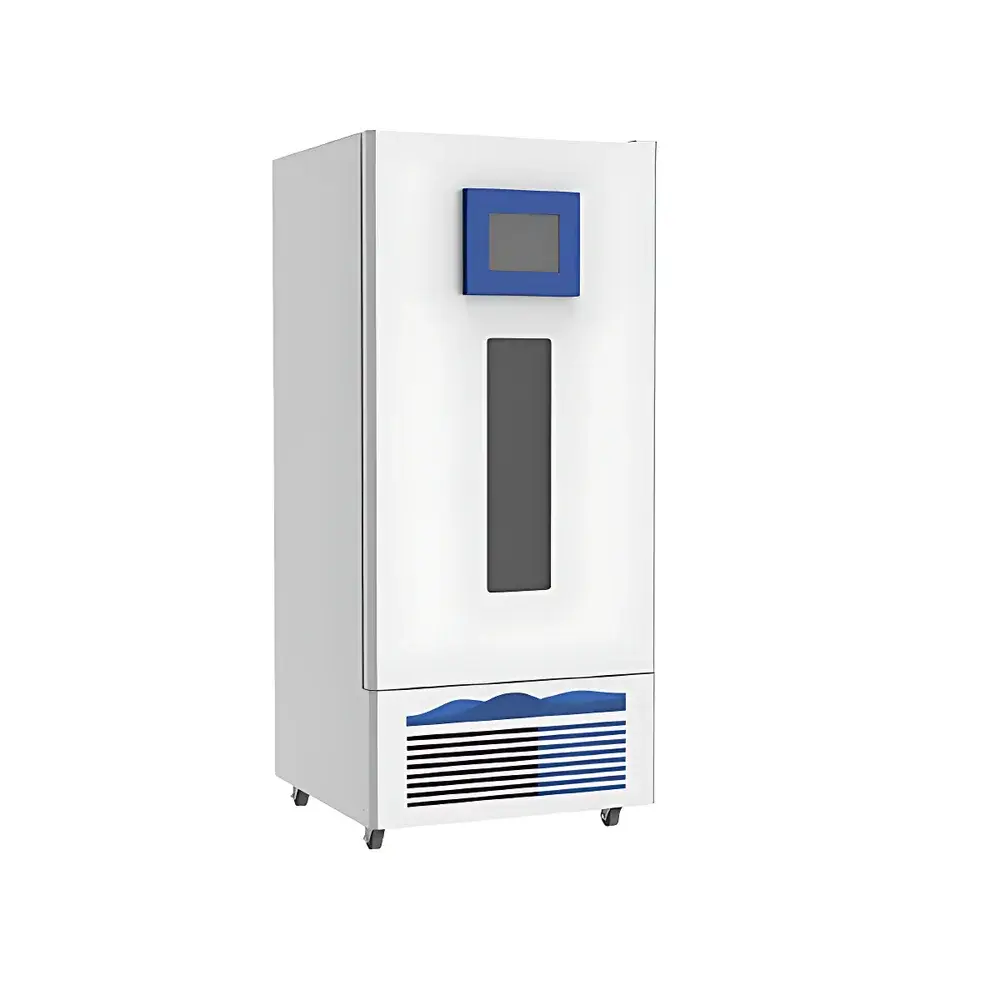
Lihero LFBOD₅-L2015 Laboratory 5-Day Biochemical Oxygen Demand (BOD₅) Analyzer
| Brand | Lihero |
|---|---|
| Model | LFBOD₅-L2015 |
| Measurement Principle | Mercury-Free Pressure Differential Method |
| Incubation Duration | 5 Days |
| Sample Capacity | 47 Samples per Batch |
| Automation Level | Fully Automated (Sampling, Incubation, Measurement) |
| Data Storage | Internal Memory for 20 Years of BOD Curves + External microSD Card Support |
| Connectivity | USB and Infrared Interface |
| Compliance | Designed to Meet Standard Methods 5210B and HJ 505-2009 (China), Compatible with ASTM D5210 & ISO 5815-1 Requirements |
| Power Supply | AC 220 V ±10%, 50 Hz |
Overview
The Lihero LFBOD₅-L2015 is a fully automated, mercury-free laboratory-scale biochemical oxygen demand (BOD₅) analyzer engineered for precise, reproducible, and regulatory-compliant measurement of dissolved oxygen depletion in water samples over a standard 5-day incubation period. Unlike traditional dilution or manometric methods requiring manual titration or mercury-based pressure transducers, this instrument employs a validated pressure differential principle—measuring the partial pressure change of CO₂-absorbed headspace gas above the sample as microbial respiration consumes dissolved oxygen. This approach eliminates toxic mercury hazards while maintaining metrological traceability to established BOD protocols. The system is calibrated against certified reference materials and operates under controlled temperature (20 ± 0.5 °C) and dark incubation conditions per Standard Methods for the Examination of Water and Wastewater (5210B) and Chinese Environmental Monitoring Standard HJ 505–2009. Its architecture supports unattended operation across extended monitoring campaigns, making it suitable for municipal wastewater laboratories, environmental testing centers, and third-party certification facilities requiring GLP-aligned data integrity.
Key Features
- Mercury-free pressure differential sensing technology—compliant with global mercury phase-out directives (Minamata Convention Annex A, Part I)
- Triple-drawer modular incubation chamber accommodating up to 47 samples simultaneously, each isolated for independent pressure monitoring and temperature equilibration
- Embedded microprocessor control system with real-time channel-specific data acquisition—each sensor operates autonomously without cross-talk or signal interference
- Automated kinetic curve generation: continuous BOD value calculation at user-defined intervals (e.g., every 2, 4, 6, or 12 hours), with automatic endpoint detection based on slope convergence criteria
- Low-maintenance design: sealed electrochemical pressure sensors and CO₂ absorbent cartridges require replacement only after ≥7 days of continuous operation under nominal load
- Robust internal memory architecture storing full-resolution BOD time-series data—including raw pressure readings, calculated DO consumption rates, and temperature logs—for up to 20 years; expandable via industrial-grade microSD card (up to 32 GB)
- Integrated power management: automatic shutdown sequence initiated upon completion of all scheduled measurements, including purge-and-reset of sensor heads to ensure baseline stability for subsequent runs
Sample Compatibility & Compliance
The LFBOD₅-L2015 accepts standard 60 mL BOD bottles (glass or PETG) and accommodates undiluted or pre-diluted samples from diverse matrices—including surface water, groundwater, domestic sewage, secondary effluent, and industrial wastewater pretreatment streams. Turbidity up to 400 NTU does not affect measurement accuracy due to optical isolation of the pressure transduction pathway. The system meets functional equivalency requirements of ASTM D5210 (Standard Test Method for Determining the Anaerobic Biodegradation of Plastic Materials in the Presence of Municipal Sewage Sludge), ISO 5815-1:2019 (Water quality — Determination of biochemical oxygen demand after n days — Part 1: Dilution and inoculation method), and US EPA Method 1010A. All data records include immutable timestamps, operator ID fields, and audit-ready metadata required for ISO/IEC 17025 accreditation and FDA 21 CFR Part 11-compliant electronic recordkeeping when paired with validated laboratory information management systems (LIMS).
Software & Data Management
Data export is supported via dual-path interface: high-speed USB 2.0 for bulk transfer of encrypted CSV or XML-formatted datasets, and infrared (IrDA 1.2) for secure point-to-point transmission to air-gapped lab PCs. The included desktop application (Windows 10/11 compatible) enables visualization of multi-channel BOD curves, statistical comparison across batches, outlier identification using Grubbs’ test, and generation of PDF reports compliant with ISO 14001 environmental management documentation. Raw sensor logs are stored with SHA-256 hash verification to prevent tampering. Firmware updates are digitally signed and applied via authenticated firmware update package (FUP) protocol to maintain system integrity.
Applications
- Regulatory compliance testing for discharge permits (NPDES, EU Urban Wastewater Treatment Directive)
- Performance evaluation of biological treatment units (activated sludge, MBR, trickling filters)
- Biodegradability screening of new chemical substances under OECD 301 series guidelines
- Long-term trend analysis in watershed monitoring programs
- Method validation and interlaboratory comparison studies
- Academic research on microbial community oxygen utilization kinetics
FAQ
Does the LFBOD₅-L2015 require sample dilution prior to analysis?
Dilution is optional and determined by anticipated BOD₅ concentration; the instrument supports direct measurement of samples with BOD₅ values between 0–50 mg/L O₂. For higher concentrations, standard dilution protocols per Standard Methods 5210B apply.
Can the system be integrated into an existing LIMS environment?
Yes—via configurable ASCII/CSV export templates and optional OPC UA gateway module (sold separately) for real-time data ingestion into enterprise LIMS platforms.
What is the calibration frequency and traceability basis?
Factory calibration is NIST-traceable; field verification uses certified zero-oxygen and span-gas standards (N₂/CO₂ mixtures) at least once per quarterly maintenance cycle, documented per ISO/IEC 17025 clause 6.6.
Is remote monitoring supported?
Local network connectivity (Ethernet port option) enables SNMP-based status polling and email alerts for incubation completion or sensor fault conditions—no cloud dependency or external server required.
Related Products







