
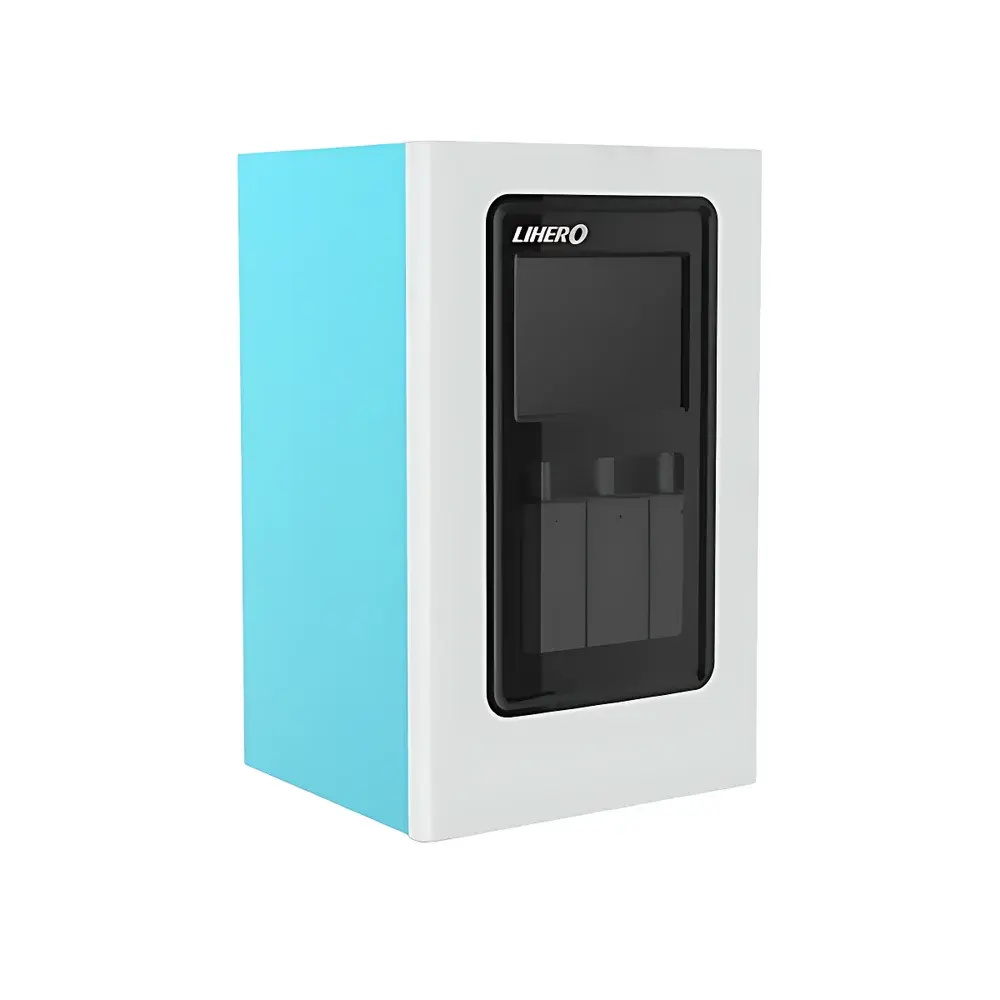
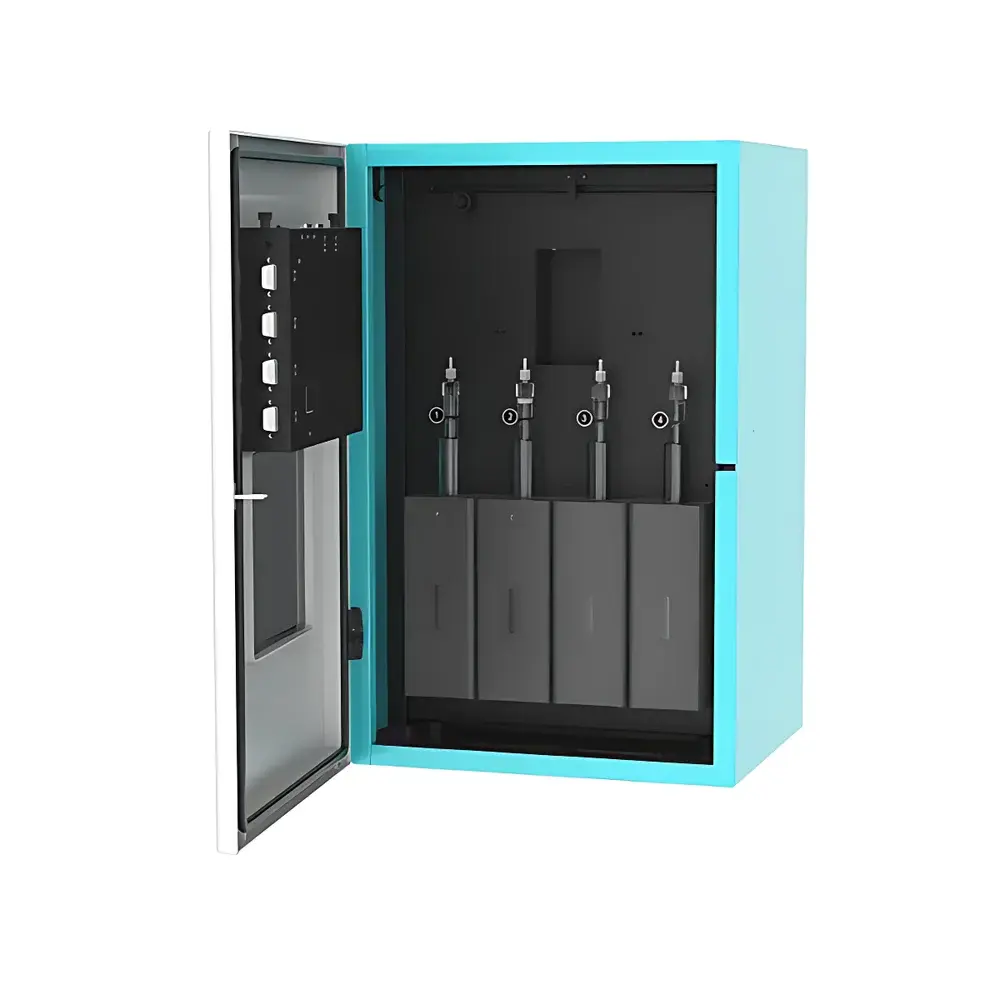
Lihero LFFColi-2016 Fecal Coliform Analyzer
| Brand | Lihero |
|---|---|
| Origin | Hunan, China |
| Model | LFFColi-2016 |
| Detection Principle | Enzyme-Substrate Method (Defined-Substrate Technology) |
| Detection Limit | 1 MPN/100 mL |
| Analysis Time | 4–18 h |
| Sample Types | Drinking Water, Raw Water, Surface Water, Groundwater, Tap Water, Healthcare Facility Water |
| Operating Mode | Standalone Manual / Standalone Automatic / PC-Connected Automatic |
| Temperature Control | Independent恒温培养模块 (Multi-zone thermostatic incubation system) |
| Turbidity Correction | Built-in optical turbidity compensation |
| Maintenance | Automated line disinfection and rinsing cycle |
| Calibration | Field-deployable NIST-traceable calibration module compliant with GB/T 5750.12–2023 (Standard Methods for Examination of Water and Wastewater – Microbiological Parameters) |
| Data Output | RS485/Modbus RTU, Ethernet, optional 4G/LTE telemetry |
| Compliance | Designed to support ISO 9308-1:2014, EPA Method 1604, and GB/T 5750.12–2023 microbiological validation requirements |
| Remote Monitoring | Web-based dashboard with audit trail and user-access control |
Overview
The Lihero LFFColi-2016 Fecal Coliform Analyzer is an automated, on-site water quality monitoring instrument engineered for the quantitative detection of fecal coliform bacteria—including Escherichia coli—in potable and environmental water matrices. It employs a standardized enzyme-substrate method (also known as defined-substrate technology), in which bacterial β-glucuronidase activity hydrolyzes a chromogenic/fluorogenic substrate (e.g., MUG or X-Gluc), yielding a measurable optical signal proportional to viable cell concentration. Unlike membrane filtration or most-likely-number (MPN) tube-based assays, this approach eliminates subjectivity in colony identification and enables unattended, real-time enumeration without plating or incubator dependency. The system achieves a validated detection limit of 1 MPN/100 mL and delivers results within 4–18 hours—significantly reducing turnaround time compared to traditional 24–48 h culture-based protocols. Its design prioritizes operational robustness in variable field conditions, supporting continuous deployment at water intake points, distribution networks, wastewater outfalls, and healthcare facility water loops.
Key Features
- Triple-mode operation: Standalone manual mode for spot-checking; standalone automatic mode for scheduled unattended runs; and PC-connected automatic mode for synchronized data logging and remote configuration.
- Multi-channel independent thermostatic incubation system: Each detection channel maintains precise temperature control (±0.3 °C) across a 35–44 °C range, enabling parallel analysis of up to six samples per cycle while minimizing cross-contamination risk.
- Integrated turbidity correction algorithm: Real-time optical path compensation adjusts fluorescence/chromogenic signal intensity based on sample turbidity (0–100 NTU), ensuring accuracy in raw surface waters and low-clarity groundwater.
- Automated fluidic maintenance: A programmable sequence performs sodium hypochlorite-based disinfection followed by deionized water rinse prior to each sampling event, preserving line sterility and minimizing biofilm accumulation.
- Field-calibratable architecture: Includes a portable, NIST-traceable reference module aligned with GB/T 5750.12–2023 Annex B, allowing on-site verification using certified E. coli suspensions without lab return.
- Secure remote interface: Supports encrypted HTTP(S) and Modbus TCP communication; stores ≥30 days of raw fluorescence kinetics data locally with timestamped metadata and operator log entries.
Sample Compatibility & Compliance
The LFFColi-2016 is validated for use with chlorine-treated drinking water, untreated surface water (including turbid reservoir and river samples), groundwater from boreholes, municipal tap water, and non-sterile medical facility utility water (e.g., dialysis feed lines). It meets performance criteria outlined in ISO 9308-1:2014 for fecal coliform enumeration in water and aligns with the analytical sensitivity and reproducibility benchmarks of U.S. EPA Method 1604. Instrument firmware implements electronic audit trails compliant with GLP principles, including immutable timestamps, user authentication logs, and change history for all calibration and method parameters—facilitating readiness for regulatory inspection under national drinking water standards frameworks.
Software & Data Management
Embedded firmware (v3.2+) provides local touchscreen navigation and supports external integration via RESTful API and Modbus RTU over RS485. The companion web application—accessible via standard browsers—displays real-time growth curves, MPN conversion tables, historical trend charts, and alarm event timelines. All measurement records include embedded digital signatures, configurable retention policies (up to 180 days), and export options in CSV and PDF formats. For regulated environments, optional 21 CFR Part 11 compliance packages are available, adding role-based access control, electronic signatures, and electronic record integrity validation.
Applications
- Continuous monitoring of municipal water treatment plant effluent and distribution system entry points.
- Early-warning surveillance at watershed intake stations and recreational water bodies.
- Compliance testing for healthcare-associated water systems per ASHRAE Guideline 12–2020 and CDC’s Legionella prevention toolkit.
- Field validation of point-of-use filters and UV disinfection units in rural and emergency response deployments.
- Research-grade longitudinal studies requiring high-frequency (n ≥ 4/day) fecal indicator tracking in hydrological modeling.
FAQ
What regulatory standards does the LFFColi-2016 comply with?
It supports method validation per ISO 9308-1:2014, EPA Method 1604, and GB/T 5750.12–2023. While not pre-certified by third-party agencies, its performance documentation enables users to complete internal method verification per their QA/QC program.
Can the instrument operate without internet connectivity?
Yes. All core functions—including incubation, optical detection, MPN calculation, and local data storage—are fully autonomous. Network connectivity is required only for remote diagnostics, dashboard visualization, or centralized database synchronization.
How frequently must the reagent cartridges be replaced?
Each cartridge contains sufficient substrate and buffer for 30 analyses (100 mL each) under typical usage. Cartridge life is tracked automatically and signaled via front-panel alert before depletion.
Is operator training required for routine maintenance?
Basic operation requires less than 2 hours of instruction. Preventive maintenance (e.g., optical window cleaning, pump tubing replacement) follows documented procedures in the service manual and can be performed by trained site technicians without factory support.
Does the system support integration with SCADA or LIMS platforms?
Yes. Native Modbus TCP and HTTP(S) APIs allow bidirectional integration with industry-standard SCADA systems (e.g., Ignition, Siemens Desigo) and LIMS platforms supporting REST or ODBC ingestion protocols.
Related Products







