
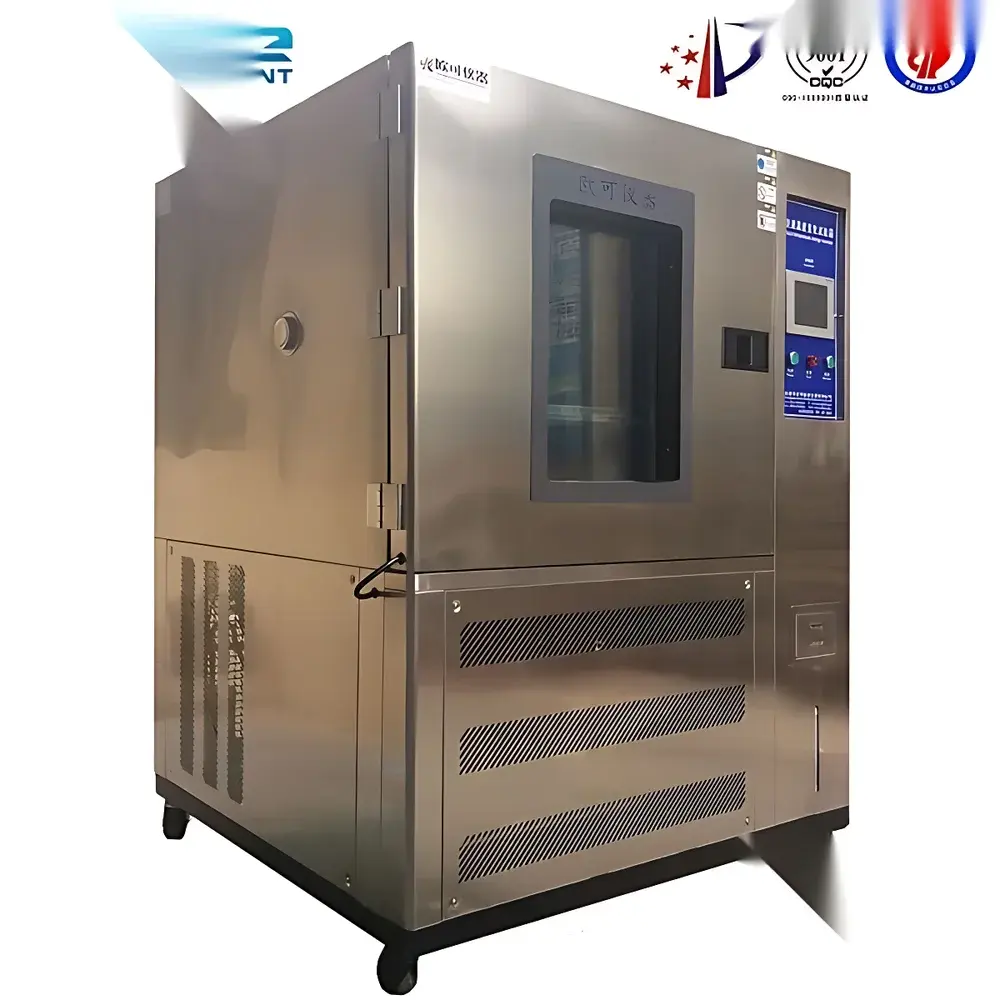
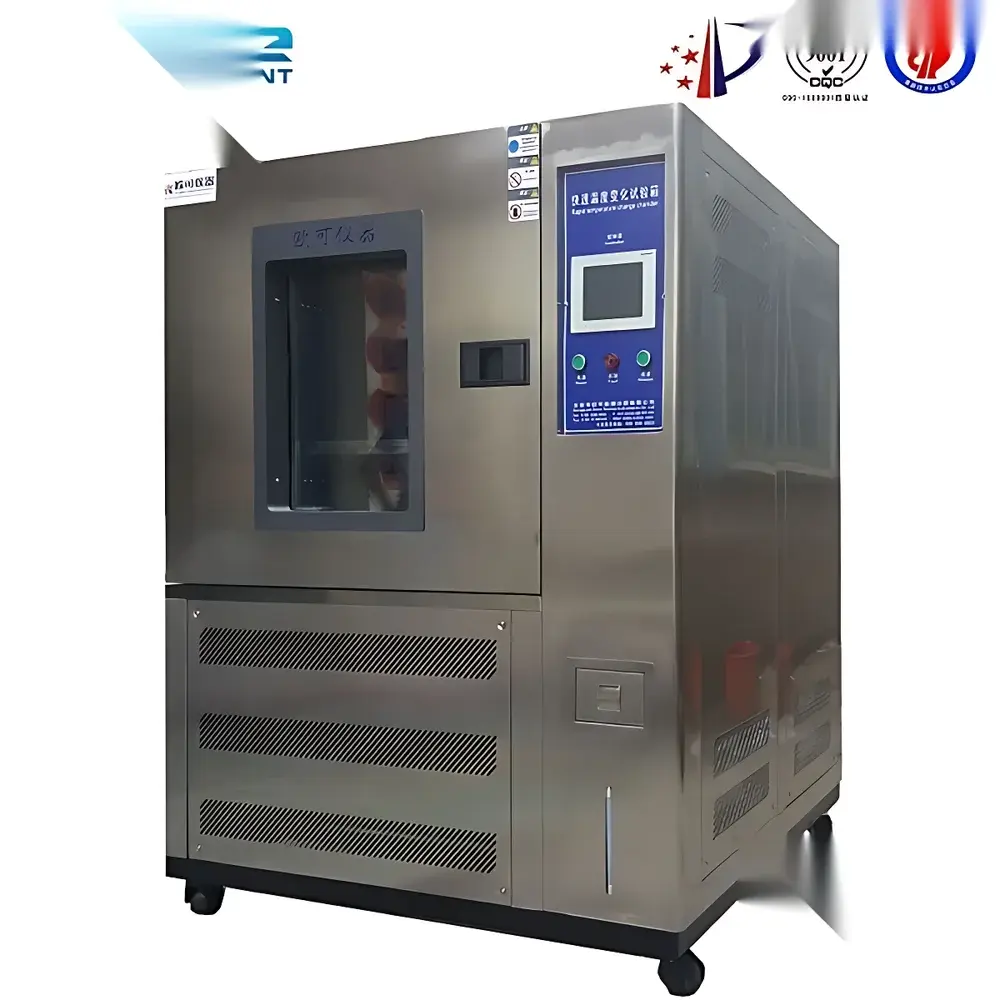
Linear Rapid Temperature Cycling Chamber
| Brand | Other Brands |
|---|---|
| Origin | Imported |
| Manufacturer Type | Authorized Distributor |
| Price | USD 2,650 (FOB) |
Overview
The Linear Rapid Temperature Cycling Chamber is a dual-zone thermal shock test system engineered for precise, repeatable evaluation of material and component resilience under extreme, abrupt temperature transitions. It operates on the principle of sequential exposure—transferring test specimens between independently controlled high-temperature and low-temperature chambers—enabling quantification of thermal stress response in accordance with MIL-STD-810H Method 503.4, GJB 150.3A–2009 (High Temperature), and GJB 150.4A–2009 (Low Temperature). Unlike single-chamber ramp-based systems, this linear configuration ensures minimal thermal inertia interference, delivering true step-change thermal profiles critical for validating solder joint integrity, polymer dimensional stability, coating adhesion, and semiconductor packaging reliability. The chamber is designed for laboratory and production-line integration, supporting both qualification testing per military and aerospace specifications and accelerated life-cycle screening in R&D environments.
Key Features
- Independent dual-chamber architecture: High-temperature zone (RT to +150 °C) and low-temperature zone (RT to –40 °C), each equipped with dedicated refrigeration and heating subsystems
- Automated specimen transfer mechanism with pneumatic actuation and position feedback, ensuring ≤5 s transfer time between zones
- Temperature uniformity: ±1.5 °C within working volume (per GJB 150.1A–2009 Clause 3.2 tolerance requirements)
- Stainless steel 304 interior construction with insulated double-wall panels and silicone-sealed door gaskets for long-term thermal integrity
- Programmable controller with real-time logging, adjustable dwell time (minimum 1 min, configurable up to 999 min), and user-defined cycle count (1–999 cycles)
- Integrated safety interlocks including over-temperature cutoff, refrigerant pressure monitoring, and door-open alarm
Sample Compatibility & Compliance
The chamber accommodates samples up to 300 mm × 300 mm × 300 mm (W×D×H) with maximum mass load of 15 kg per cycle. Compatible with PCB assemblies, MEMS devices, optical housings, metal fasteners, elastomeric seals, and ceramic substrates. All operational parameters meet the environmental conditioning requirements specified in GJB 150.1A–2009 (General Requirements), GJB 150.3A–2009 (High Temperature), and GJB 150.4A–2009 (Low Temperature). System design supports traceability per ISO/IEC 17025:2017 for accredited testing laboratories and includes calibration certificate documentation per manufacturer’s QA protocol. Optional NIST-traceable sensor validation kits are available for GLP/GMP-regulated environments.
Software & Data Management
Equipped with embedded Windows CE-based control software featuring intuitive touchscreen interface, multi-language support (English, Simplified Chinese, Spanish), and USB export of CSV-formatted temperature logs. Full audit trail functionality records operator ID, start/stop timestamps, setpoint changes, alarm events, and chamber status—fully compliant with FDA 21 CFR Part 11 requirements when paired with optional electronic signature module. Data files include metadata tags for test standard reference (e.g., “GJB150.3A Cycle 3”), chamber zone identifiers, and thermocouple channel assignments. Remote monitoring via Ethernet (Modbus TCP) enables integration into centralized lab information management systems (LIMS).
Applications
- Qualification of avionics enclosures subjected to stratospheric-to-ground thermal transients
- Evaluation of thermal expansion mismatch in multilayer ceramic capacitors (MLCCs) and SiC power modules
- Validation of conformal coating performance on printed circuit board assemblies under rapid ambient cycling
- Reliability screening of automotive LED headlamp housings per AEC-Q200 Annex G
- Material science research on phase transition behavior in shape-memory alloys and thermoplastic composites
- Pre-shipment stress screening for industrial sensors deployed in oilfield downhole tools
FAQ
What standards does this chamber comply with?
It meets the technical and procedural requirements of GJB 150.1A–2009, GJB 150.3A–2009, and GJB 150.4A–2009. It is also compatible with test execution per MIL-STD-810H Method 503.4 and IEC 60068-2-14.
Is calibration certification included with shipment?
Yes—a factory calibration report with measurement uncertainty values for all internal PT100 sensors is provided. On-site verification or third-party calibration services can be arranged separately.
Can the chamber be integrated into an existing test automation framework?
Yes—RS-485 (Modbus RTU) and Ethernet (Modbus TCP) communication interfaces are standard. API documentation and driver libraries for LabVIEW, Python, and MATLAB are available upon request.
What maintenance intervals are recommended?
Compressor oil and refrigerant filter replacement every 24 months; door seal inspection and cleaning every 6 months; full system performance verification annually or after 500 thermal cycles, whichever occurs first.



