
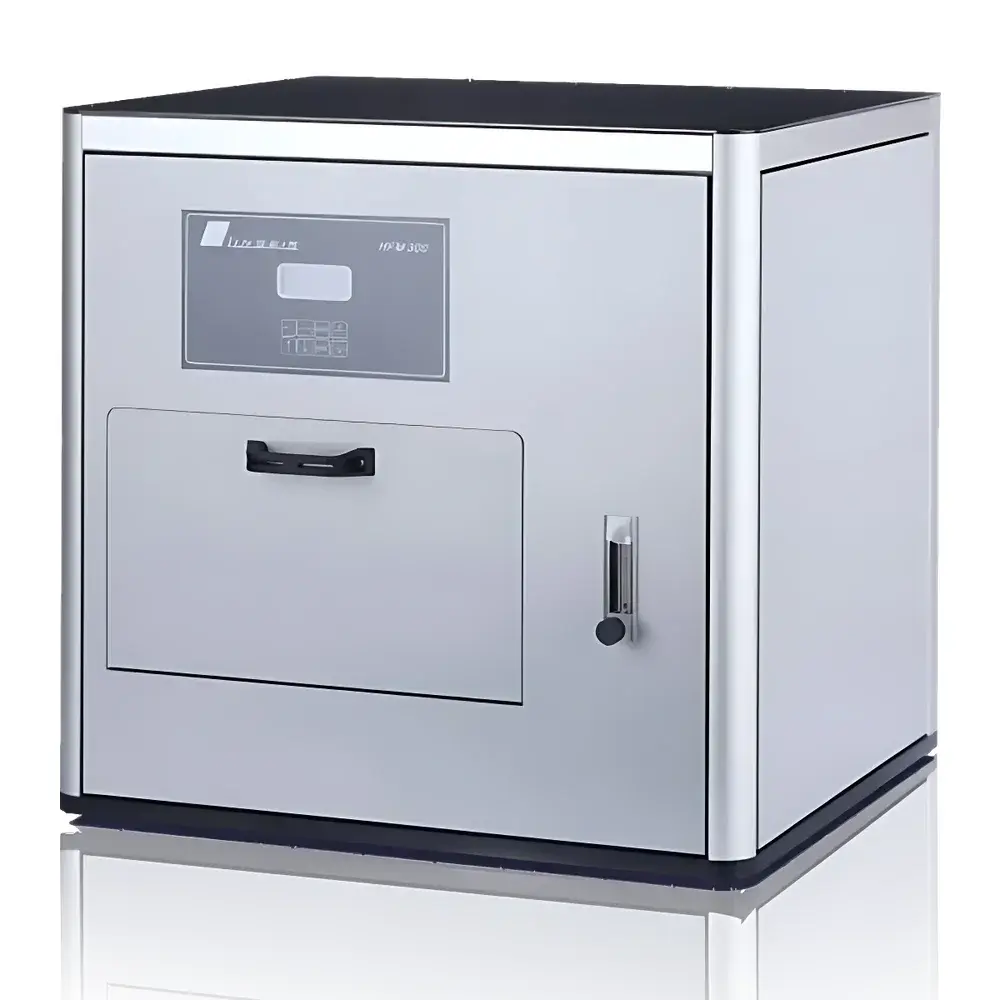
LINSEIS HFM L57 Heat Flow Meter
| Brand | LINSEIS |
|---|---|
| Origin | Germany |
| Model | HFM L57 |
| Measurement Principle | Heat Flow Method (Steady-State) |
| Thermal Conductivity Range | 0.001–0.5 W/(m·K), extendable to 2.5 W/(m·K) |
| Temperature Range | −35 °C to 90 °C |
| Sample Dimensions (max) | 600 mm × 600 mm × 200 mm |
| Thickness Resolution | μm-level via integrated potentiometer |
| Temperature Resolution | 0.0001 °C |
| Contact Pressure | up to 1.3 kPa (optional 25 kPa) |
| Thermal Resistance Range | 0.036–9.0 m²·K/W |
| Compliance | ASTM C518, ISO 8301, JIS A1412, DIN EN 12664, DIN EN 12667 |
Overview
The LINSEIS HFM L57 Heat Flow Meter is a precision steady-state thermal conductivity analyzer engineered for high-reproducibility characterization of low-conductivity insulating materials—including foams, aerogels, fiber mats, and flexible composites. Operating on the heat flow meter (HFM) principle per ASTM C518 and ISO 8301, it applies a controlled, uniform temperature gradient across a flat, sandwiched sample and measures the resulting heat flux via calibrated thermopile sensors embedded in parallel guarded hot and cold plates. This dual-sensor configuration eliminates edge-loss artifacts and ensures traceable, absolute thermal conductivity (λ) determination without reference standards. The instrument’s Peltier-based thermal control enables rapid stabilization—typically within 15 minutes—and maintains temperature resolution better than 0.0001 °C over its full operating range (−35 °C to 90 °C). Its robust mechanical architecture, combined with μm-resolution real-time thickness monitoring via integrated linear potentiometers, guarantees accurate λ calculation even for compressible or anisotropic specimens where dimensional change under contact pressure significantly influences thermal transport.
Key Features
- Steady-state heat flow measurement compliant with ASTM C518, ISO 8301, JIS A1412, DIN EN 12664, and DIN EN 12667
- Peltier-driven hot/cold plate assembly enabling precise, maintenance-free temperature control without external chillers (optional external cooling available for extended low-temperature operation)
- Dual thermopile sensor array with active guard zones for minimized lateral heat loss and improved spatial uniformity
- Real-time sample thickness acquisition at µm resolution using built-in linear potentiometers—critical for compressible materials such as elastomeric foams and polyester batts
- Integrated anti-condensation system preventing moisture accumulation during sub-ambient measurements, ensuring long-term sensor integrity and data consistency
- Modular platform supporting three standard configurations (HFM L57 200, 300, and 600) with maximum sample dimensions up to 600 mm × 600 mm × 200 mm
- Adjustable contact pressure (standard: ≤1.3 kPa; optional high-pressure kit: up to 25 kPa) to simulate application-relevant loading conditions
- Thermal conductivity range: 0.001–0.5 W/(m·K), extendable to 2.5 W/(m·K); thermal resistance range: 0.036–9.0 m²·K/W
Sample Compatibility & Compliance
The HFM L57 accommodates rigid, semi-rigid, and highly compressible solids—including polyurethane and melamine foams, mineral wool, glass fiber batts, vacuum insulation panels (VIPs), aerogel blankets, and bio-based insulation composites. Its programmable contact force and real-time thickness feedback allow users to quantify the effect of compression on λ, directly supporting building envelope modeling per ISO 10456 and EN 13162. All measurement protocols adhere to GLP-aligned documentation practices. Data acquisition meets FDA 21 CFR Part 11 requirements when paired with LINSEIS’ validated software suite, including electronic signatures, audit trails, and user-access controls. Calibration certificates are traceable to national metrology institutes (e.g., PTB, NIST) and include uncertainty budgets according to GUM (JCGM 100).
Software & Data Management
LINSEIS ThermoSoft® v5.0 provides fully automated measurement sequencing, real-time convergence monitoring, and ISO-compliant reporting templates. Users define multi-point temperature ramps, pressure profiles, and dwell times for dynamic thermal resistance mapping. Raw thermopile voltages, plate temperatures, and thickness values are logged at ≥1 Hz with timestamped metadata. Export options include CSV, XML, and PDF formats compatible with LIMS integration. Software validation packages (IQ/OQ/PQ) are available upon request. All data files include embedded checksums and digital signatures to ensure integrity throughout archival and regulatory review cycles.
Applications
- Quality control of commercial insulation products (e.g., spray foam, rigid boardstock, loose-fill cellulose)
- R&D of next-generation low-λ materials including silica aerogels, nano-porous polymers, and phase-change composites
- Building physics research: quantifying compression-induced λ shifts in flexible insulation layers under roof or wall loading
- Aging studies: long-term thermal stability assessment under cyclic thermal stress (−20 °C ↔ 70 °C)
- Validation of computational models (e.g., finite-element analysis of heat transfer in heterogeneous media)
- Regulatory submissions requiring ISO/ASTM-compliant thermal property data for CE marking or ENERGY STAR qualification
FAQ
What standards does the HFM L57 comply with?
ASTM C518, ISO 8301, JIS A1412, DIN EN 12664, and DIN EN 12667—covering steady-state thermal transmission properties of flat, homogeneous materials.
Can the instrument measure compressible samples accurately?
Yes. Real-time μm-resolution thickness monitoring and programmable contact pressure enable precise λ determination across variable compression states, critical for foams and fiber-based insulators.
Is calibration traceable to international standards?
All factory calibrations are traceable to PTB (Physikalisch-Technische Bundesanstalt) or NIST, with full uncertainty budgets provided per ISO/IEC 17025 guidelines.
How is condensation prevented during sub-zero testing?
The integrated anti-condensation system actively heats peripheral sealing zones and employs desiccated purge gas channels to eliminate dew formation on sensor surfaces.
What software features support regulatory compliance?
ThermoSoft® includes 21 CFR Part 11-compliant audit trails, role-based access control, electronic signatures, and locked report generation with embedded metadata and digital hashes.



