
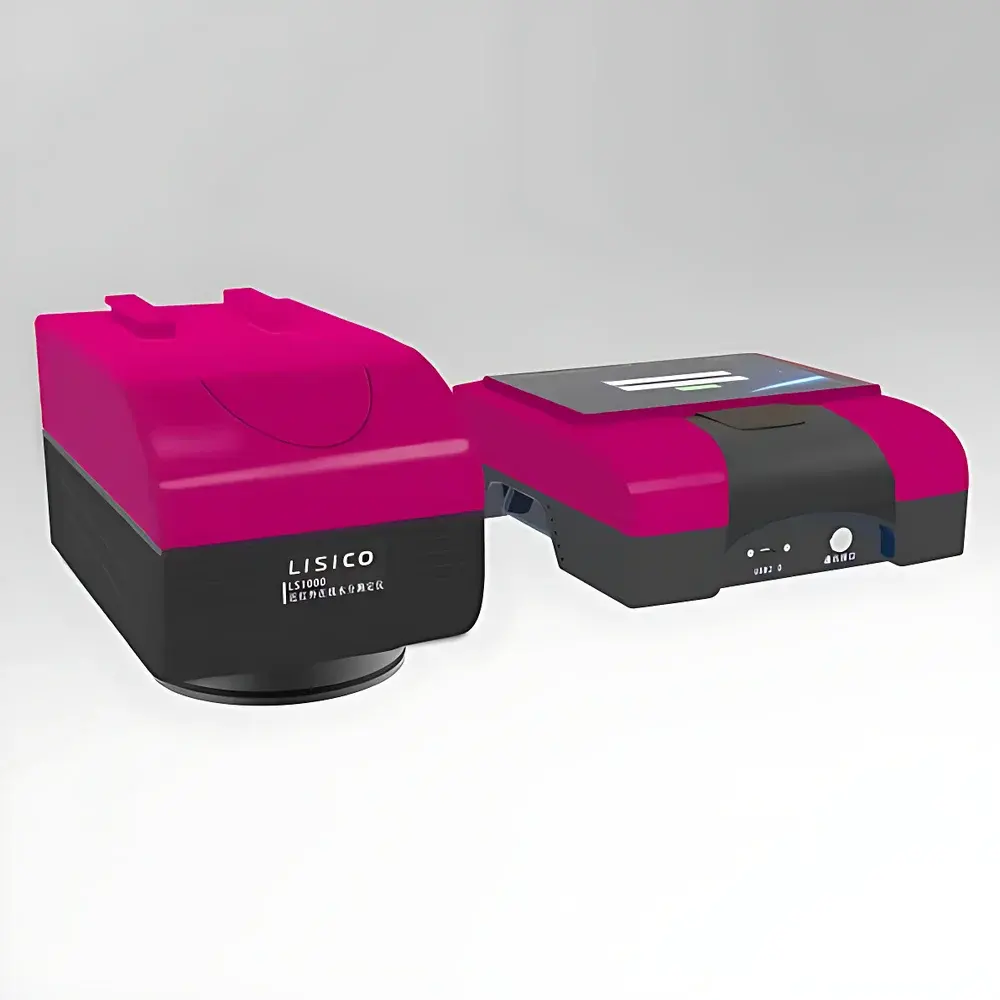
LISICO LS1000 Online Near-Infrared Moisture Analyzer
| Brand | LISICO |
|---|---|
| Model | LS1000 |
| Measurement Principle | Near-Infrared Absorption (1.43 µm, 1.8 µm, 1.94 µm, 2.1 µm) |
| Moisture Range | 0–70% H₂O |
| Accuracy | ±0.1% H₂O (application-dependent) |
| Repeatability | ±0.04% H₂O |
| Sampling Interval | 10 ms |
| Optical Path | 8-beam wavelength multiplexing |
| Light Source | 12 V / 20 W halogen lamp (≥2000 h lifetime) |
| Detector | Thermoelectrically cooled PbS infrared detector |
| Measurement Distance | 250 ± 100 mm |
| Spot Diameter | 60 mm |
| Probe Housing Material | Anodized aluminum alloy |
| Probe IP Rating | IP67 |
| Probe Dimensions | 194 × 194 × 320 mm |
| Probe Weight | ≤12 kg |
| Controller Display | 10-inch capacitive touchscreen |
| Controller OS | Android 8.0 |
| Internal Storage | 32 GB |
| Max. Probe Support per Controller | 4 |
| Communication Interfaces | 4–20 mA analog output, USB ×2, DC power input (24 V / 3 A) |
| Cooling Method | Forced-air convection |
| Operating Temperature | 0–50 °C |
| Operating Humidity | 40–60% RH (non-condensing) |
| Cable Length | Probe-to-controller ≥10 m (shielded twisted pair), controller cables ≥20 m |
Overview
The LISICO LS1000 Online Near-Infrared Moisture Analyzer is an industrial-grade, non-contact process analytical instrument engineered for real-time, in-line quantification of water content across heterogeneous solid and semi-solid materials. It operates on the fundamental spectroscopic principle that water molecules exhibit characteristic absorption bands in the near-infrared (NIR) region—specifically at 1.43 µm, 1.8 µm, 1.94 µm, and 2.1 µm—enabling selective, interference-resistant detection without sample preparation or physical contact. Unlike benchtop NIR spectrometers, the LS1000 integrates a purpose-built optical architecture featuring an 8-beam wavelength multiplexing system, thermoelectrically stabilized PbS detectors, and a high-stability halogen light source (rated ≥2000 h), ensuring consistent spectral fidelity under dynamic plant-floor conditions. Its modular probe-and-controller design decouples sensing from human interface and data handling, supporting scalable deployment in continuous manufacturing lines where measurement reliability, environmental resilience, and integration readiness are critical.
Key Features
- Non-destructive, non-contact measurement with 10 ms sampling interval—enabling true real-time process feedback and closed-loop control readiness.
- Dual-stage thermal stabilization: integrated Peltier cooling for PbS detectors and forced-air convection for electronics, maintaining spectral baseline stability across ambient temperature fluctuations (0–50 °C).
- Optimized 8-beam optical path architecture—simultaneously interrogating multiple NIR absorption wavelengths—to suppress scattering artifacts and improve signal-to-noise ratio in granular, fibrous, or uneven surfaces.
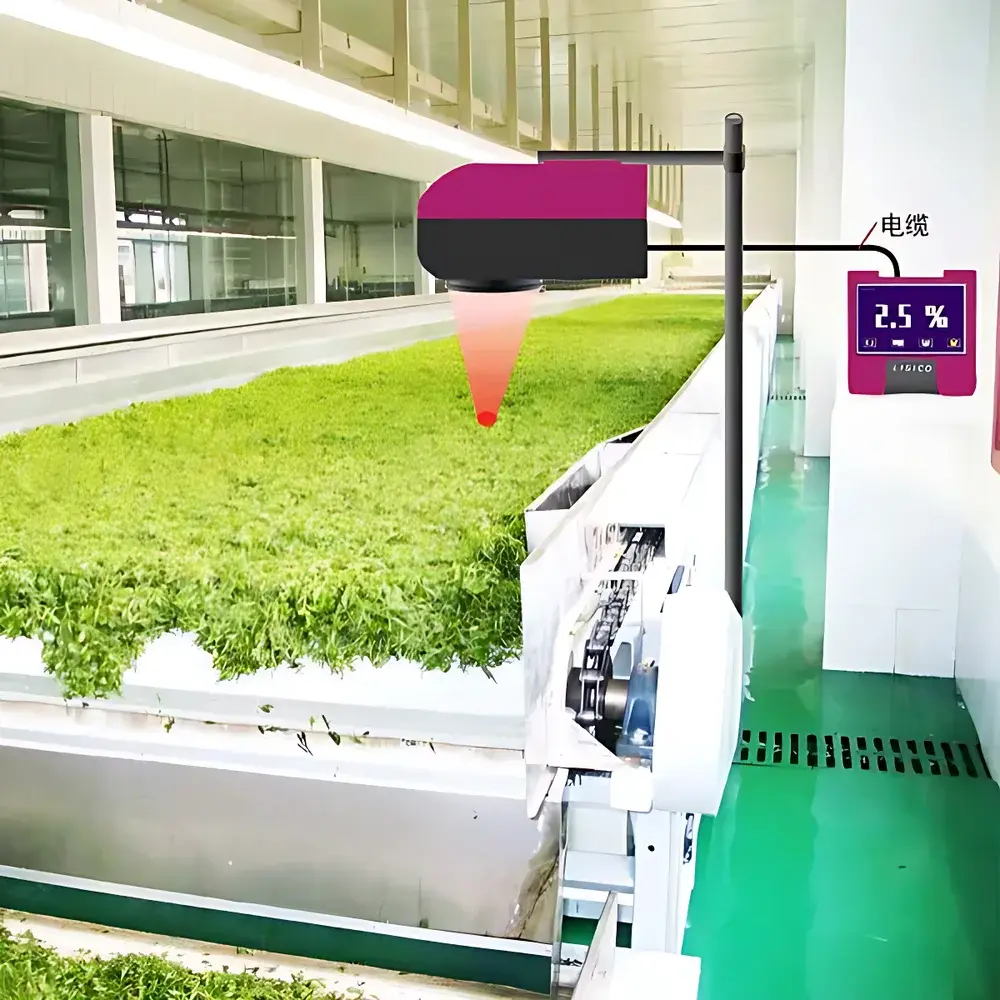
- Modular topology: one controller supports up to four independent probes via shielded twisted-pair cabling (≥10 m standard), enabling synchronized moisture mapping across conveyor belts, hoppers, or multi-zone dryers.
- Ruggedized probe housing fabricated from anodized aluminum alloy (IP67 rated), with fused-silica optical window resistant to abrasion, dust ingress, and condensation—validated for deployment in cement kilns, metallurgical sintering plants, and battery electrode coating lines.
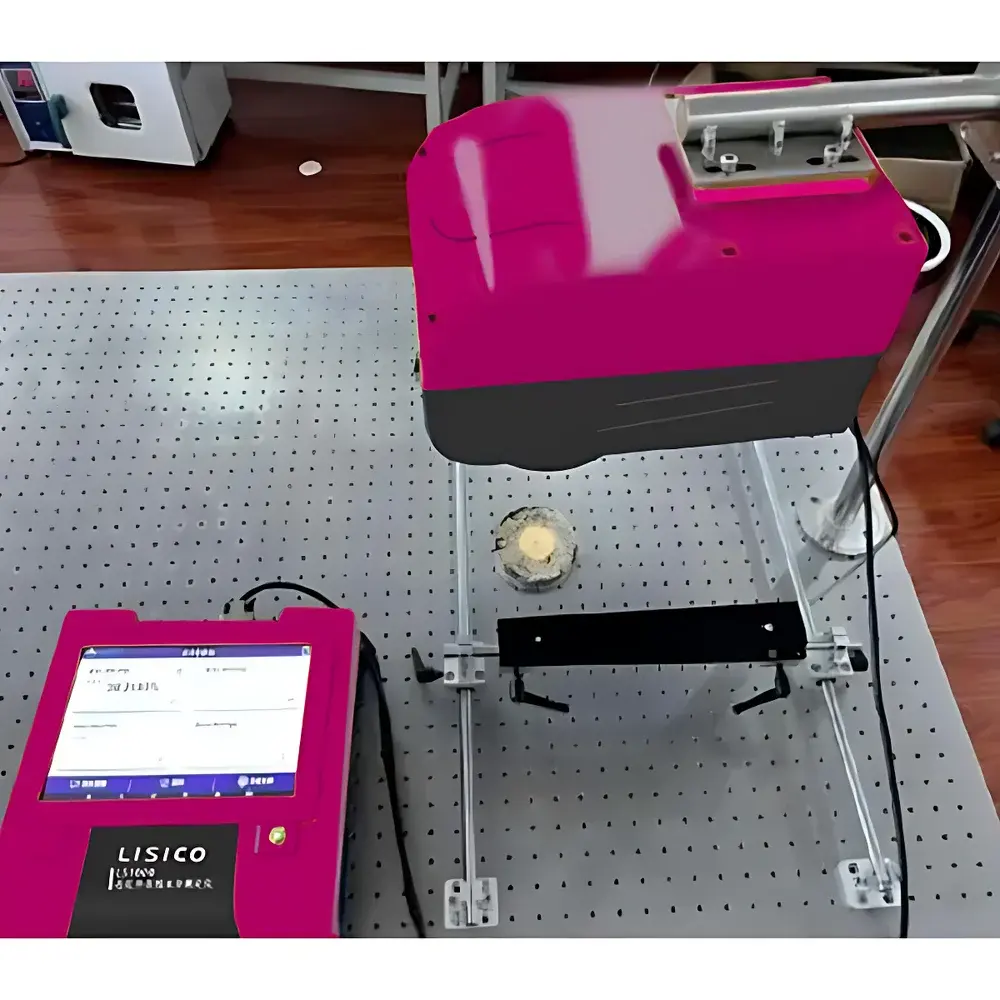
- Embedded 10-inch capacitive touchscreen interface running Android 8.0, providing local visualization of moisture trends, motor RPM status (3000 rpm scanning actuator), ambient temperature, and historical curve overlays—with onboard 32 GB storage retaining ≥30 days of timestamped measurements.
- Native support for industrial communication protocols: isolated 4–20 mA analog output for PLC/DCS integration, dual USB ports for firmware updates or external data export, and configurable alarm thresholds with relay-triggered notifications.
Sample Compatibility & Compliance
The LS1000 is validated for use across diverse material classes exhibiting variable optical density, particle size distribution, and surface reflectivity—including lithium-ion battery cathode/anode slurries and dried electrode films, tobacco lamina and cut filler, iron ore sinter feedstocks, aluminum hydroxide hydrates, PET and PP polymer granules, pharmaceutical herbal powders, ceramic green bodies, and wood chip streams. Its calibration framework accommodates both factory-default chemometric models and user-defined partial least squares (PLS) regression models trained against reference Karl Fischer titration or loss-on-drying (LOD) data. While not pre-certified to ISO 8573, ASTM E1655, or USP , the instrument’s hardware architecture and data logging functionality comply with foundational requirements for GMP-aligned environments: full audit trail capability (time-stamped events, parameter changes, calibration logs), electronic signature readiness, and secure data export in CSV/JSON formats compatible with LIMS and MES platforms. All firmware updates undergo deterministic version control and CRC integrity verification prior to installation.
Software & Data Management
The embedded Android-based controller firmware provides a deterministic real-time operating environment for sensor control, spectral preprocessing (baseline correction, multiplicative scatter correction), and PLS inference. Raw interferograms and processed moisture values are time-synchronized and stored with millisecond precision. Historical datasets can be exported via USB to external drives in comma-separated format, preserving metadata including probe ID, measurement timestamp, ambient temperature, and algorithm version. Remote diagnostics and configuration updates are supported through encrypted HTTP(S) endpoints—requiring client-authenticated TLS 1.2+ handshake. No cloud connectivity is enabled by default; all data remains on-device unless explicitly exported. For regulated environments, optional firmware extensions support 21 CFR Part 11-compliant electronic signatures, role-based access control (admin/operator modes), and immutable log archiving—subject to site-specific validation documentation.
Applications
- Battery Manufacturing: Real-time monitoring of moisture in NMP-based cathode slurries and dried electrode coatings—critical for preventing LiPF₆ hydrolysis and SEI layer defects.
- Metallurgical Processing: Continuous analysis of moisture in sinter mixtures and concentrate pellets prior to rotary kiln feeding—optimizing thermal energy consumption and agglomeration efficiency.
- Pharmaceutical & Herbal Processing: In-line verification of drying endpoints for botanical extracts and granulated APIs, reducing over-drying risks and batch rework.
- Food & Tobacco: Dynamic control of tobacco leaf conditioning, tea roasting, and snack extrusion—ensuring consistent texture, shelf life, and regulatory compliance with moisture limits.
- Building Materials: Monitoring free water content in cement raw meal, gypsum slurries, and ceramic tile bodies to maintain green strength and firing predictability.
- Polymer & Textile Production: Closed-loop adjustment of dryer setpoints for synthetic fiber bales and film extrusion lines—minimizing energy use while meeting hygroscopic specification windows.
FAQ
What reference methods are recommended for initial calibration validation?
Karl Fischer coulometric titration (ASTM D6304) for liquid-phase samples and gravimetric loss-on-drying (LOD) per ISO 540:2020 for solids—both performed under controlled humidity and temperature conditions matching the process environment.
Can the LS1000 operate in explosive atmospheres?
No. The LS1000 is not ATEX, IECEx, or UL HazLoc certified. For hazardous area deployment, it must be installed outside classified zones with fiber-optic or pneumatic signal transmission to intrinsically safe barriers.
Is spectral library transfer between instruments supported?
Yes—via encrypted .cal files containing PLS model coefficients, wavelength masks, and preprocessing parameters. Transfer requires identical probe hardware revision and firmware version to ensure optical response consistency.
How frequently does the halogen lamp require replacement?
Under continuous operation at nominal voltage, the lamp maintains ≥95% radiant flux stability for ≥2000 hours. Replacement is field-serviceable using the included alignment jig and spectral verification routine.
Does the system support Modbus TCP or Profibus DP natively?
Not natively. Integration with Modbus TCP networks requires an external protocol gateway; however, the 4–20 mA analog output is fully compatible with standard PLC analog input modules and supports HART digital overlay if configured with optional HART-enabled transmitters.
Related Products





