
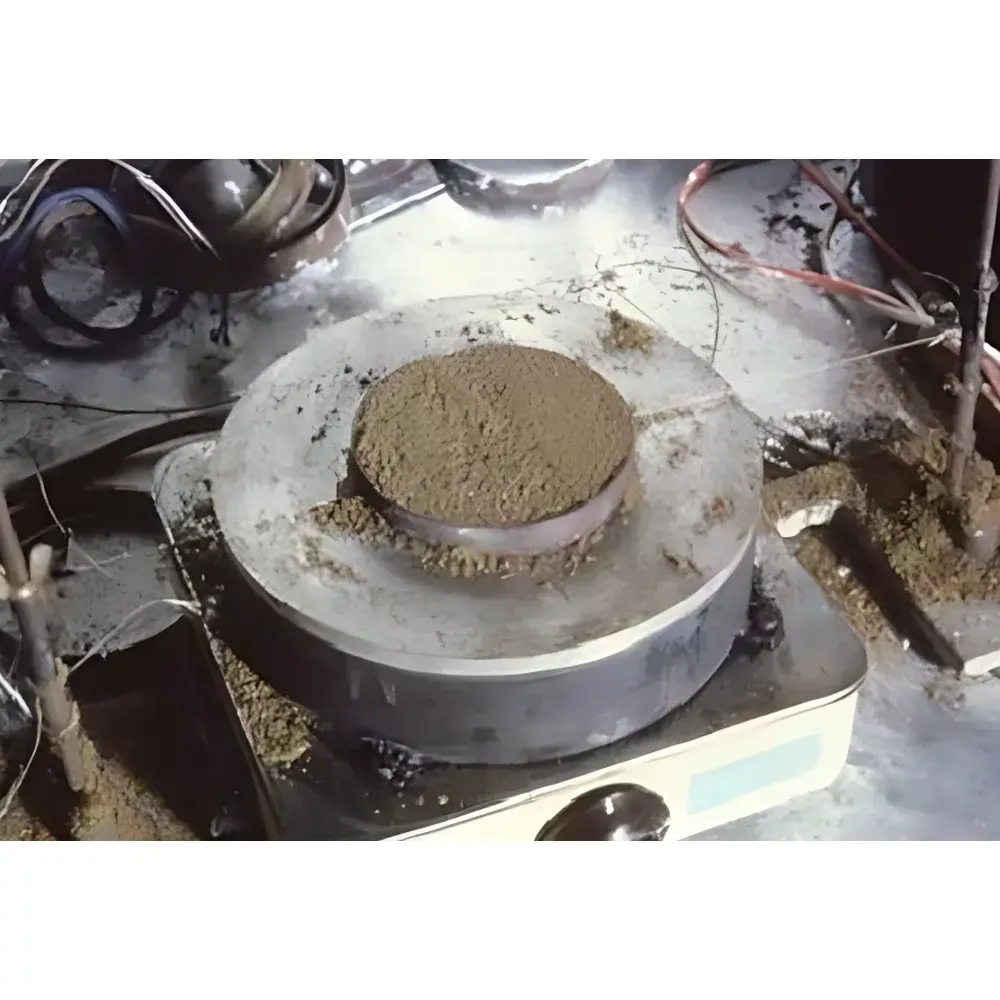
LIT Continuous Burning Test Apparatus (Germany-manufactured)
| Origin | Germany |
|---|---|
| Manufacturer Type | Authorized Distributor |
| Origin Category | Imported |
| Model | LIT |
| Pricing | Upon Request |
Overview
The LIT Continuous Burning Test Apparatus is a precision-engineered instrument designed to assess the propensity of liquid hazardous substances to sustain combustion under standardized thermal and ignition conditions. It operates on the principle of controlled thermal exposure followed by calibrated flame application, in strict accordance with internationally recognized test protocols for flammability classification. The apparatus heats a machined metal block—featuring a precisely dimensioned sample recess—to a defined temperature (60.5 °C or 75 °C), introduces a fixed-volume specimen via a calibrated syringe, and applies a regulated propane or butane flame of defined geometry (8–9 mm height × 5 mm width) at a fixed vertical offset (2.2 mm above the sample recess rim). The test determines whether the specimen transitions from transient ignition to self-sustained combustion after flame withdrawal—a critical distinction for hazard classification under UN TDG and national regulatory frameworks.
Key Features
- High-stability heating plate (1000 W) with integrated PID temperature controller and Class A thermocouple sensor, delivering ±0.1 °C thermal accuracy across the operational range;
- Machined stainless-steel test block with geometrically defined sample recess conforming to UN Manual of Tests and Criteria, Part III, Section 33.2.2 (Test L.2);
- Adjustable gas burner assembly with precision-machined nozzle, enabling repeatable flame positioning and consistent ignition energy delivery;
- 2 mL volumetric syringe (±0.1 mL tolerance) for accurate sample dosing—critical for inter-laboratory reproducibility;
- Robust mechanical design compliant with IEC 61010-1 safety standards for laboratory electrical equipment;
- Front-panel controls with real-time temperature display and flame activation timing indicators to support GLP-aligned procedural documentation.
Sample Compatibility & Compliance
The LIT apparatus is validated for liquids with closed-cup flash points ≤60.5 °C or open-cup flash points ≤65.5 °C, including solvents, fuel blends, cleaning agents, and industrial intermediates. It fully satisfies the procedural requirements of UN Recommendations on the Transport of Dangerous Goods (Rev. 22, Test L.2) and GB/T 21622–2008 “Dangerous Goods — Test Method for Sustained Combustibility”. The test methodology supports classification under GHS Category 2 (Flammable Liquids) and informs SDS Section 9 (Physical and Chemical Properties) reporting. Instrument configuration and operating procedures are compatible with ISO/IEC 17025-accredited laboratories performing routine regulatory testing under audit conditions.
Software & Data Management
While the LIT apparatus operates as a manually executed, operator-controlled test system, its procedural structure aligns with electronic recordkeeping requirements per FDA 21 CFR Part 11 and EU Annex 11. Laboratories may integrate test execution logs—including temperature setpoint, flame duration, ignition observation timestamp, and pass/fail determination—into validated LIMS or ELN platforms. All critical parameters (heating plateau time, thermal stability window, flame application timing) are objectively measurable and documentable without proprietary software dependency, facilitating traceability and audit readiness in GMP/GLP environments.
Applications
- Hazard classification of new chemical substances prior to transport or storage under ADR, IMDG Code, and IATA Dangerous Goods Regulations;
- Quality control release testing for solvent-based formulations in pharmaceutical, coatings, and adhesive manufacturing;
- Regulatory submission support for REACH registration dossiers requiring sustained combustibility data;
- Internal safety assessment of process intermediates where flash point data alone is insufficient to determine fire risk profile;
- Training and method validation in accredited test laboratories maintaining ISO/IEC 17025 scope for physical hazard testing.
FAQ
What regulatory standards does the LIT apparatus directly support?
UN Manual of Tests and Criteria, Test L.2; GB/T 21622–2008; and supplementary alignment with ASTM D4206 (Standard Test Method for Sustained Burning of Liquid Mixtures).
Is calibration certification included with the instrument?
Yes—each unit ships with a factory-issued calibration certificate for the thermocouple sensor and syringe volume verification, traceable to national metrology institutes (e.g., PTB, Germany).
Can the apparatus be used for semi-solid or paste-like materials?
No—the test method is explicitly validated for homogeneous liquids only; non-Newtonian or viscous samples require alternative assessment per UN Test N.1 or ISO 3675.
What gas supply specifications are required for safe operation?
Propane or butane with minimum purity ≥99.5%, delivered at 0.5–1.0 bar regulated pressure; certified flashback arrestors and leak-tested tubing are mandatory per local laboratory safety policy.
How is operator variability minimized during test execution?
Through standardized training modules, SOP templates aligned with ISO 22196, and inclusion of timing aids (audible countdown, LED status indicators) to enforce prescribed 15-second flame dwell and post-withdrawal observation intervals.



