
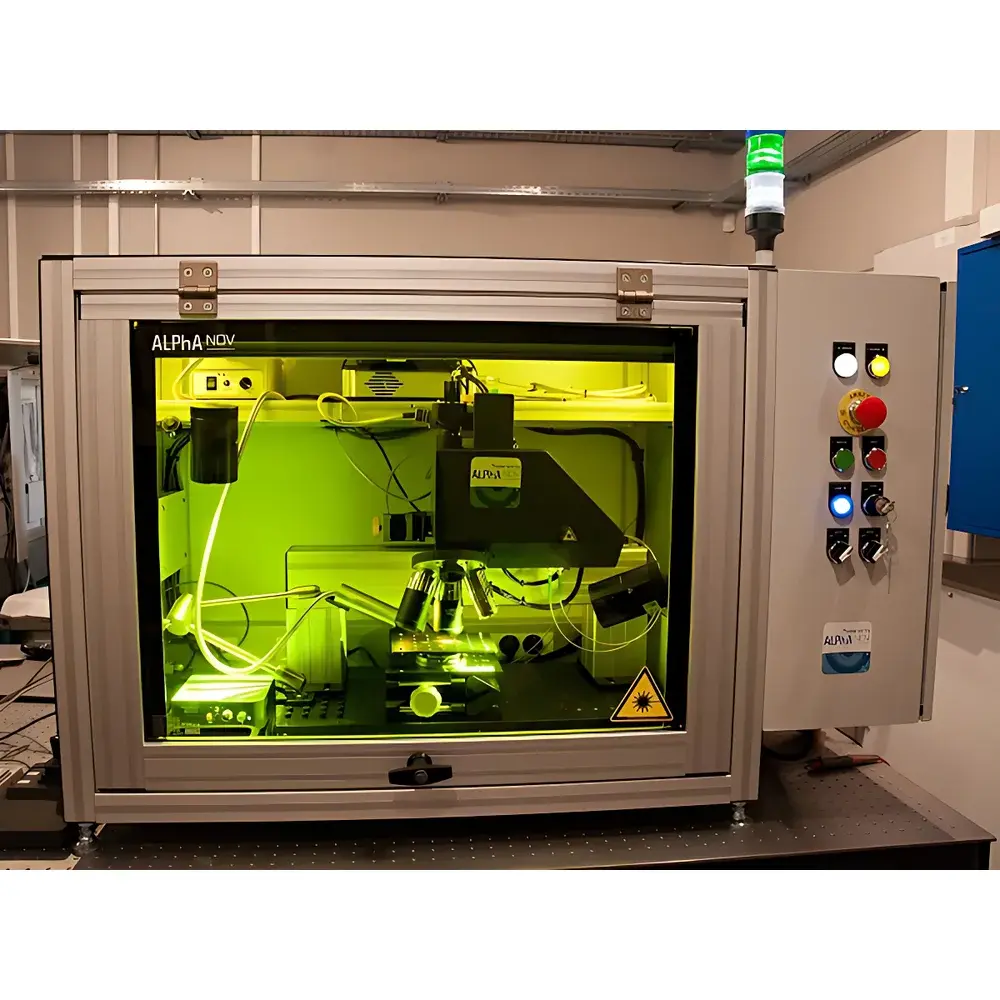
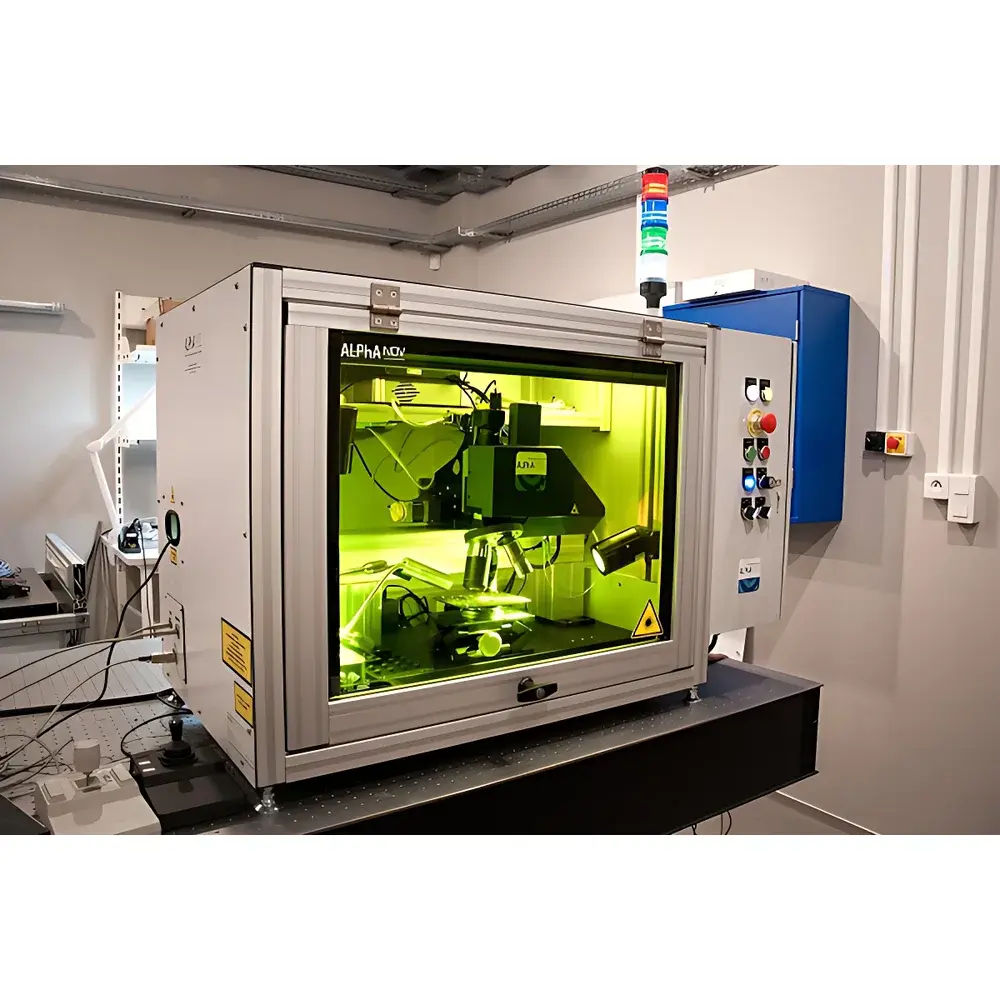
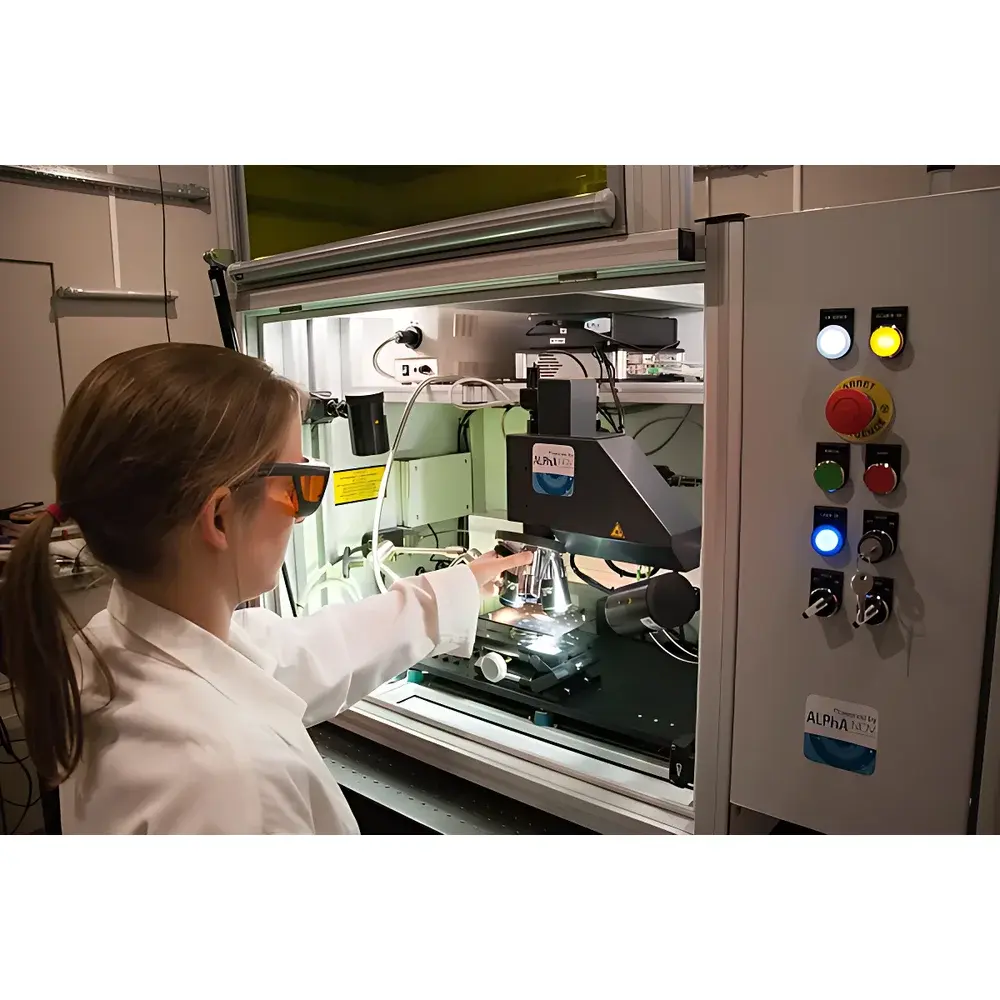
D-LMS Double Laser Microscope Station for IC Security Evaluation and Fault Injection
| Brand | ALPhANOV |
|---|---|
| Origin | France |
| Model | D-LMS |
| Type | Dual-Beam Laser Microscopy Platform |
| Application | Optical Fault Injection (OFI), Side-Channel Analysis Support, Semiconductor IC Security Testing |
| Core Components | Integrated Semiconductor Laser Sources (Wavelengths Configurable, Typically 1064 nm & 532 nm), High-NA Microscope Objective, Precision XYZ Nanopositioning Stage, Synchronized Pulse Control Unit, Beam Steering & Focusing Optics |
Overview
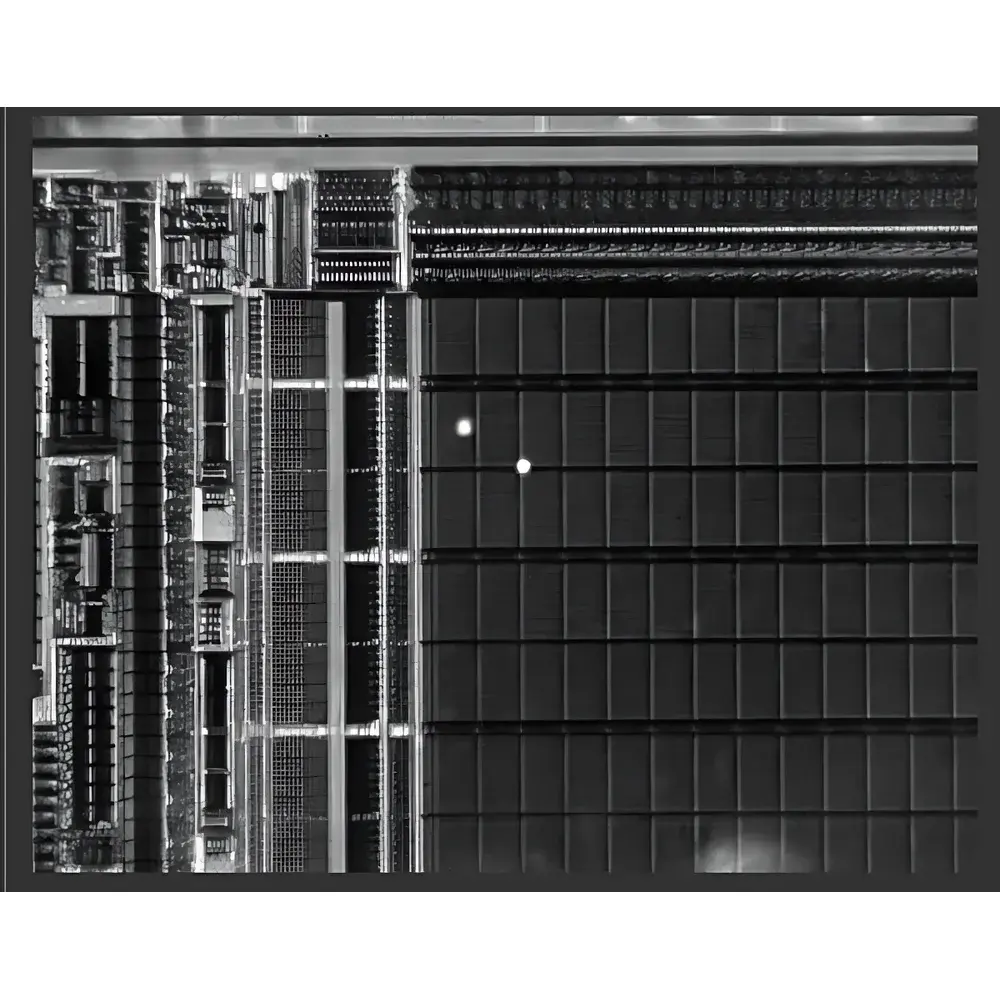
The D-LMS Double Laser Microscope Station is a purpose-built optical platform engineered for physical security evaluation of integrated circuits (ICs) through controlled optical fault injection (OFI). Based on the principle of laser-induced transient perturbation—where precisely focused, nanosecond-scale laser pulses generate localized photocurrents or thermal gradients in silicon—this system enables non-invasive, spatially resolved fault activation at sub-micron resolution. Unlike generic laser microscopes, the D-LMS integrates two independently tunable, synchronized semiconductor laser sources with collinear or offset beam paths, allowing comparative or sequential irradiation strategies essential for differential fault analysis (DFA), glitch injection timing studies, and electromagnetic–optical cross-correlation experiments. Designed for use in certified secure labs, it supports both static and dynamic IC testing under real-time electrical monitoring (e.g., via external oscilloscopes or logic analyzers), fulfilling foundational requirements for Common Criteria (CC) EAL5+ and ISO/IEC 17825-compliant evaluation methodologies.
Key Features
- Dual-wavelength laser architecture: Configurable semiconductor lasers (standard options: 1064 nm for deep silicon penetration and 532 nm for surface-sensitive carrier generation), each with independent pulse width (1–20 ns), repetition rate (1 Hz–1 MHz), and energy control (0.1–500 µJ/pulse).
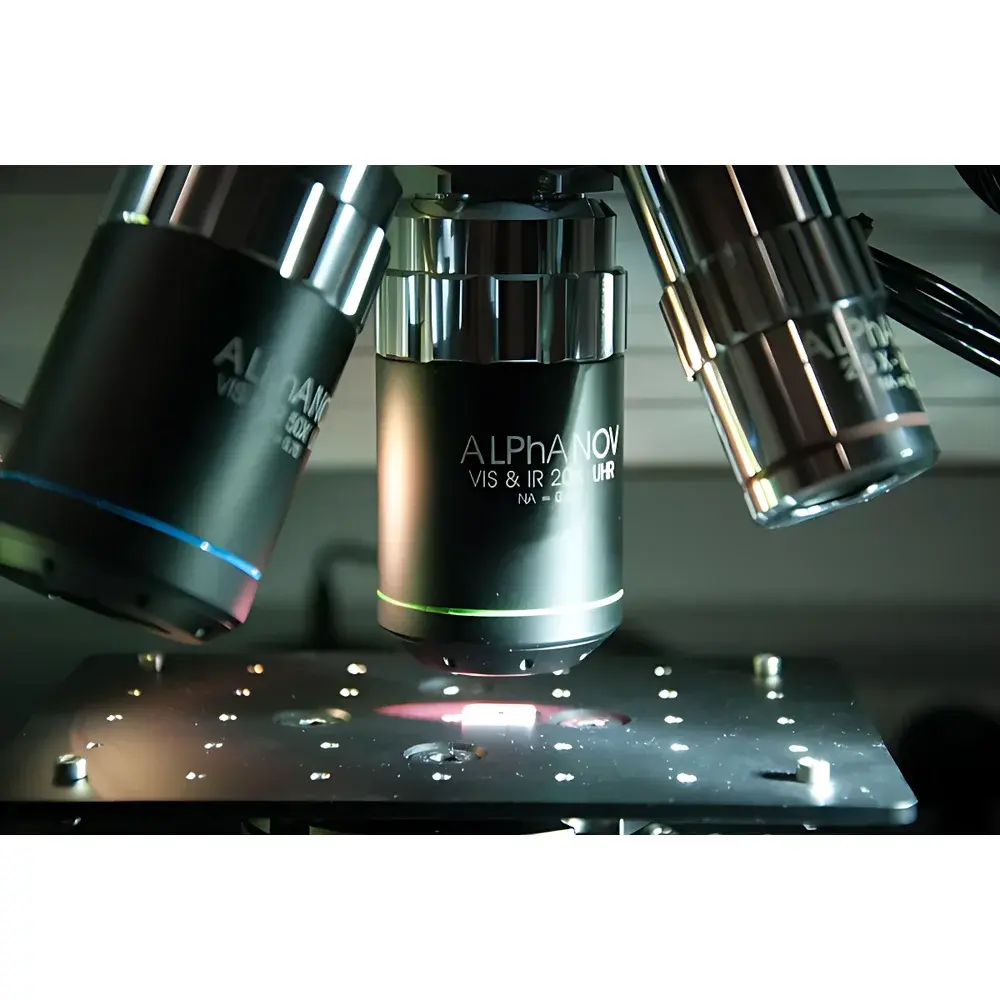
- High-precision optical alignment: Motorized XYZ nanopositioning stage (resolution: 50 nm, repeatability: ±100 nm) coupled with a 50×, NA 0.55 microscope objective enabling diffraction-limited spot sizes down to ~0.7 µm (at 532 nm).
- Synchronized trigger interface: TTL-compatible I/O ports for precise temporal coordination with IC clock signals, power supply modulators, or external measurement equipment (e.g., digital storage oscilloscopes, pattern generators).
- Modular optical path design: Interchangeable beam combiners, neutral density filters, and optional polarization controllers support multi-modal attack vectors including polarized OFI and wavelength-dependent sensitivity mapping.
- Lab-grade mechanical stability: Vibration-isolated optical breadboard base and rigid aluminum housing ensure long-term alignment retention during extended test campaigns (e.g., >8-hour DFA sessions).
Sample Compatibility & Compliance
The D-LMS accommodates standard IC packages—including QFP, BGA, WLCSP, and flip-chip dies—via adjustable sample holders with vacuum clamping and thermal stabilization options (−20 °C to +85 °C). It operates in accordance with ISO/IEC 17025 laboratory management principles and supports traceability requirements for GLP-compliant security validation reports. While not itself a certification body tool, its hardware architecture aligns with test setup recommendations defined in IEC TS 62443-4-2 (security assurance levels) and NIST SP 800-193 (hardware-based attestation). All laser safety components meet Class 4 laser product requirements per IEC 60825-1:2014, with integrated interlocks, beam shuttering, and key-controlled access.
Software & Data Management
The D-LMS is operated via ALPhANOV’s proprietary LMS-Control Suite—a Windows-based application supporting script-driven experiment sequencing (Python API available), real-time laser parameter logging, and coordinate-mapped fault injection grids. Data export conforms to HDF5 format for interoperability with MATLAB, Python (NumPy/Pandas), and industry-standard IC analysis tools such as ChipWhisperer and Jupyter-based side-channel workbenches. Audit trails record operator ID, timestamp, laser settings, stage coordinates, and external trigger events—enabling full compliance with FDA 21 CFR Part 11 electronic record requirements when deployed in regulated environments (e.g., trusted foundry validation labs).
Applications
- Optical fault injection on cryptographic accelerators (AES, RSA, ECC modules) to induce skip instructions, bypass authentication checks, or leak internal state bits.
- Glitch characterization across voltage/frequency domains using laser-triggered timing faults combined with supply modulation.
- Failure analysis correlation: Overlaying OFI-induced failure maps with SEM/FIB cross-sections or emission microscopy (EMMI) hotspots.
- Countermeasure validation: Quantifying effectiveness of optical shielding layers, layout randomization, or dual-rail logic against localized laser attacks.
- Research-grade vulnerability discovery: Mapping laser sensitivity across process nodes (28 nm to 3 nm FinFET), memory arrays, and analog/mixed-signal blocks.
FAQ
Is the D-LMS compatible with automated test equipment (ATE) platforms?
Yes—the system provides IEEE-488 (GPIB), USB-TMC, and Ethernet (VXI-11) interfaces for integration into ATE workflows, including synchronization with pattern generators and parametric testers.
Can users define custom laser pulse trains for advanced attack sequences?
Absolutely—LMS-Control Suite supports user-defined pulse burst profiles (up to 1024 pulses per train) with programmable inter-pulse delays ranging from 10 ns to 10 s.
Does ALPhANOV provide application support for security lab accreditation?
Yes—ALPhANOV offers technical documentation packages aligned with Common Criteria evaluation evidence requirements, including uncertainty budgets, calibration certificates, and configuration management records.
What maintenance is required for long-term operational reliability?
Annual laser energy calibration and stage positional verification are recommended; all optics are sealed and do not require routine cleaning under normal lab conditions.
Is remote operation supported for collaborative security research?
Remote desktop control is enabled via secure RDP over VLAN-isolated networks; however, physical laser interlock integrity must be locally verified before each session.




