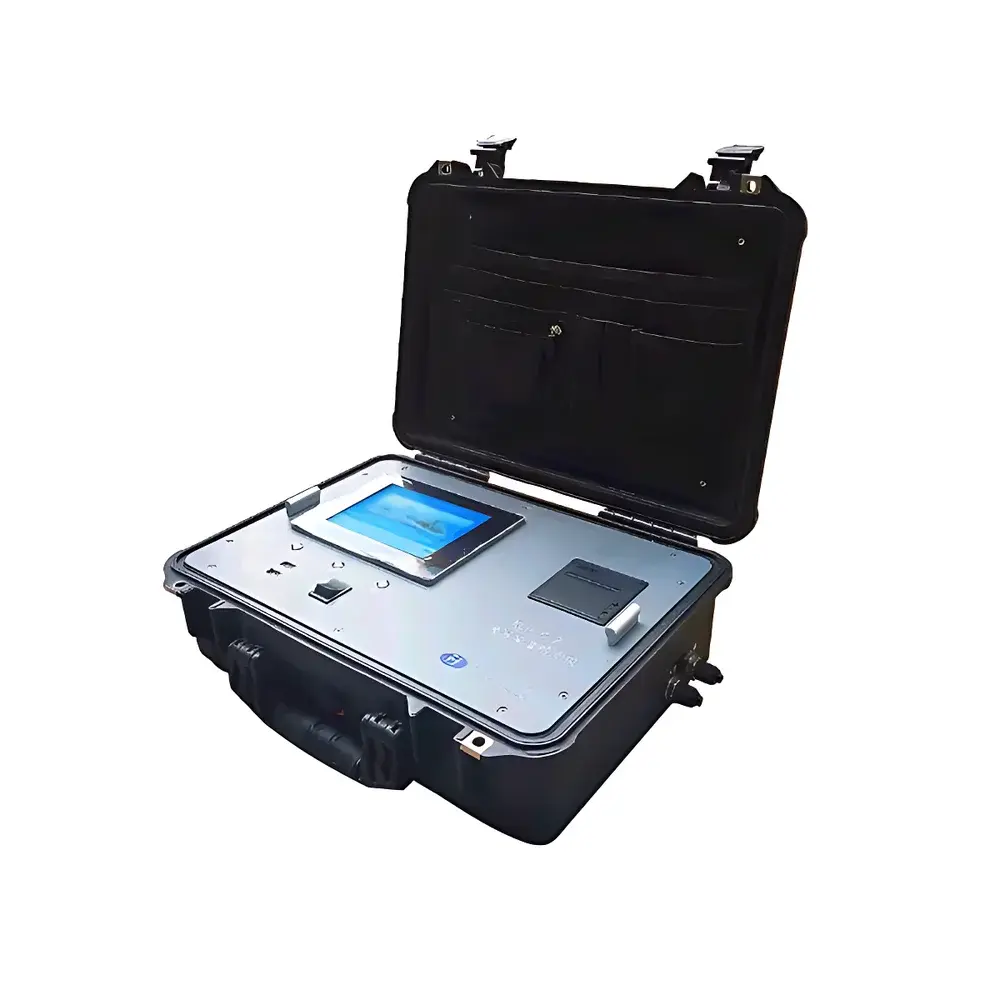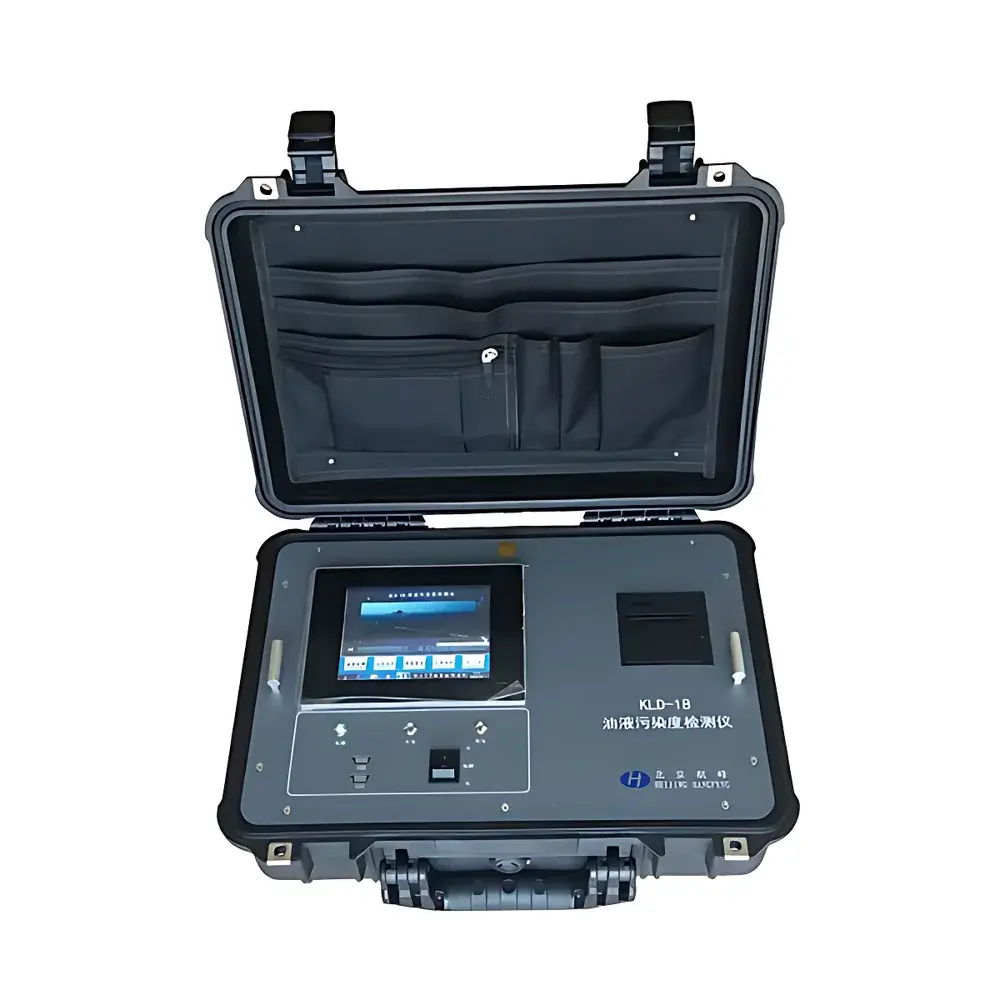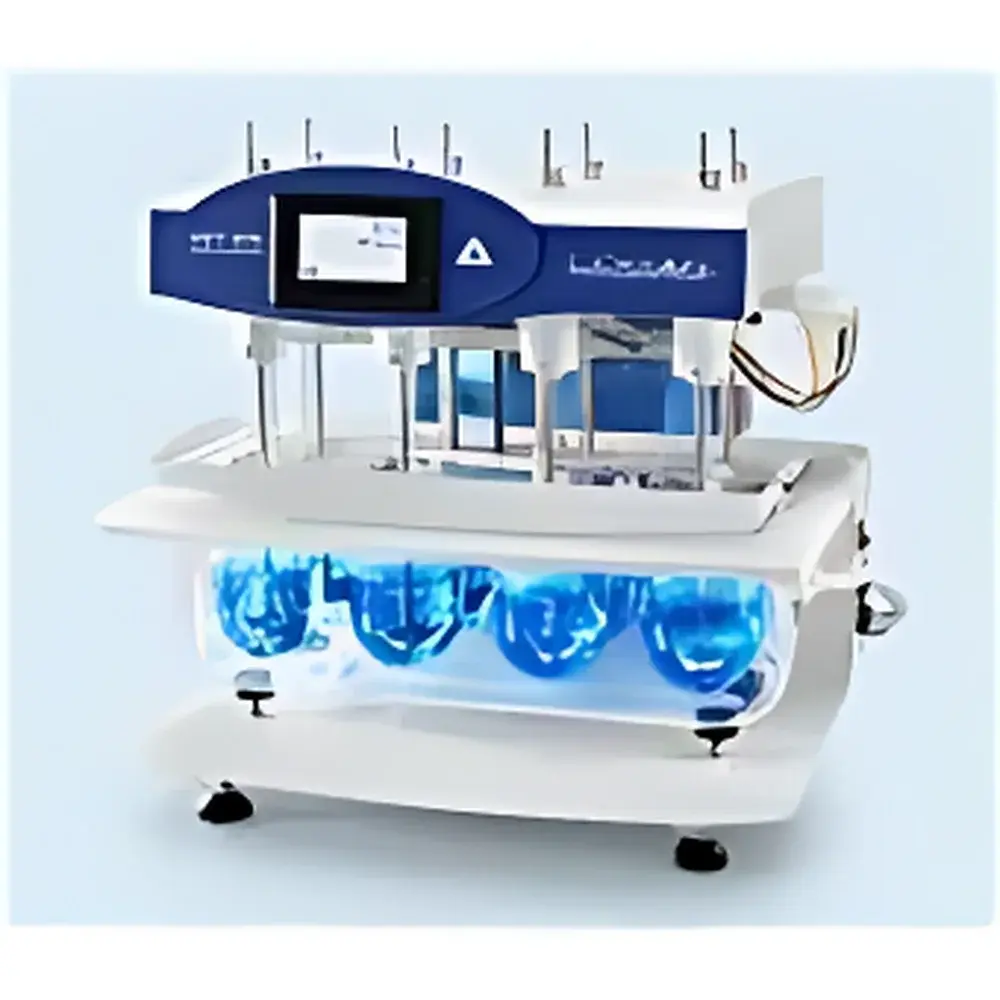
LOGAN UDT-818A-8 Eight-Station Automated Dissolution Tester
| Brand | LOGAN |
|---|---|
| Origin | USA |
| Model | UDT-818A-8 |
| Instrument Type | Online Dissolution Tester |
| Number of Vessels | 8 |
| Temperature Range | 20–60°C |
| Temperature Accuracy | ±0.1°C |
| Rotation Speed Range | 25–250 rpm (±1 rpm) |
| Paddle Wobble Amplitude | ≤0.5 mm |
| Basket Wobble Amplitude | ≤1.0 mm |
| Water Bath Temperature Range | Ambient to 45°C |
| Water Bath Temperature Resolution | 0.1°C |
| Water Bath Volume | 18 L |
Overview
The LOGAN UDT-818A-8 is an eight-station, online-capable dissolution testing system engineered for regulatory-compliant pharmaceutical development and quality control. It operates in accordance with USP , , and , as well as ISO 10993-12 and ASTM D6512 standards for controlled-release and immediate-release dosage forms. The system employs classical paddle and basket apparatus configurations (Apparatus 2 and 1), with mechanical design optimized to minimize hydrodynamic variability—ensuring high reproducibility across vessels and runs. Its integrated water bath architecture provides uniform thermal distribution, while dual-vessel sealing and independent temperature monitoring per vessel support rigorous method validation requirements under ICH Q5C and Q2(R2). Designed for both R&D and QC environments, the UDT-818A-8 serves as a foundational platform for bioequivalence (BE) studies, formulation optimization, and comparative dissolution profiling.
Key Features
- Eight independent dissolution vessels with individually monitored temperature sensors (one per vessel), enabling real-time thermal traceability and deviation logging per USP Annex 3 requirements.
- Precision motor-driven shafts with wobble control: paddle shaft eccentricity ≤0.5 mm; basket shaft eccentricity ≤1.0 mm—meeting USP mechanical calibration tolerances for Apparatus 1 and 2.
- Water bath system with 18 L capacity, ambient-to-45°C range, and 0.1°C resolution; integrated anti-evaporation dual-lid configuration minimizes solvent loss during extended runs (e.g., 24+ h sustained-release profiles).
- Integrated LED auxiliary lighting for visual observation of tablet disintegration, capsule floating, or gel matrix erosion—critical for qualitative event correlation during dissolution kinetics analysis.
- Modular expansion interface supporting seamless integration with automated sampling systems (e.g., LOGAN AS-800), UV/Vis spectrophotometers, HPLC autosamplers, fiber-optic probes, and dilution modules—enabling end-to-end dissolution–analysis workflows without manual intervention.
- Configurable multi-speed zoning: up to four independent speed zones across the eight vessels, permitting parallel evaluation of multiple formulations or release mechanisms within a single run.
Sample Compatibility & Compliance
The UDT-818A-8 accommodates standard USP-compliant vessels (1000 mL) and supports method adaptation to small-volume formats (e.g., mini-vessels for pediatric or low-dose formulations), flow-through cells (Apparatus 4), rotating cylinder (Apparatus 3), and paddle-over-disc (Apparatus 5) via optional accessory kits. All vessel geometries maintain strict adherence to USP dimensional tolerances and surface finish specifications. The system is validated for use with solid oral dosage forms—including immediate-release tablets, extended-release capsules, transdermal patches, buccal films, and semi-solid gels—and complies with FDA 21 CFR Part 11 requirements when paired with LOGAN’s compliant software suite (Dissolution Pro v5.2+), which includes electronic signatures, audit trails, and role-based access control.
Software & Data Management
Dissolution Pro software provides full instrument control, real-time parameter visualization, and automated data capture synchronized with external analytical devices. It supports GLP/GMP-aligned workflows through configurable method templates, version-controlled protocol storage, and timestamped raw data export in CSV, PDF, and XML formats. Audit trail functionality records all user actions—including method edits, calibration events, and sample assignments—with immutable timestamps and operator IDs. Data integrity is reinforced by checksum verification and optional network backup to secure NAS or cloud repositories compliant with ISO/IEC 27001 information security standards.
Applications
- Comparative dissolution profiling for generic drug development and quality-by-design (QbD) initiatives.
- In vitro–in vivo correlation (IVIVC) modeling using multi-timepoint sampling and kinetic deconvolution.
- Solubility-limited formulation assessment under biorelevant media (e.g., FaSSIF/FeSSIF) with precise pH and temperature control.
- Dissolution-permeation coupling studies via integration with Franz diffusion cells or PAMPA systems for mechanistic BE prediction.
- Stability-indicating dissolution methods for detecting degradation-related changes in release behavior over shelf life.
- Regulatory submission support—including ANDA, NDA, and DMF documentation—with full traceability from raw sensor output to final report generation.
FAQ
Does the UDT-818A-8 meet USP mechanical calibration requirements?
Yes—the system undergoes factory calibration for shaft wobble, centering, and vertical alignment per USP Annex 2, with certificates of conformance supplied with each unit.
Can it be used for non-USP apparatus configurations?
Yes—optional accessories enable Apparatus 3 (rotating cylinder), Apparatus 4 (flow-through cell), Apparatus 5 (paddle-over-disc), and Apparatus 6 (cylinder), all validated against ISO 10993-12 dimensional criteria.
Is the system compatible with 21 CFR Part 11 compliance?
When operated with Dissolution Pro v5.2 or later and configured with appropriate IT infrastructure (e.g., domain authentication, encrypted storage), the system satisfies electronic record and signature requirements for regulated laboratories.
What maintenance intervals are recommended for long-term accuracy?
Annual mechanical verification (shaft alignment, temperature probe calibration, speed calibration) is recommended; LOGAN provides certified service contracts with NIST-traceable calibration documentation.
How is data integrity ensured during extended dissolution runs (e.g., >12 hours)?
Continuous sensor logging, redundant power supply options, and automatic recovery from brief communication interruptions prevent data gaps; all timestamps are hardware-synchronized to UTC via onboard RTC.