
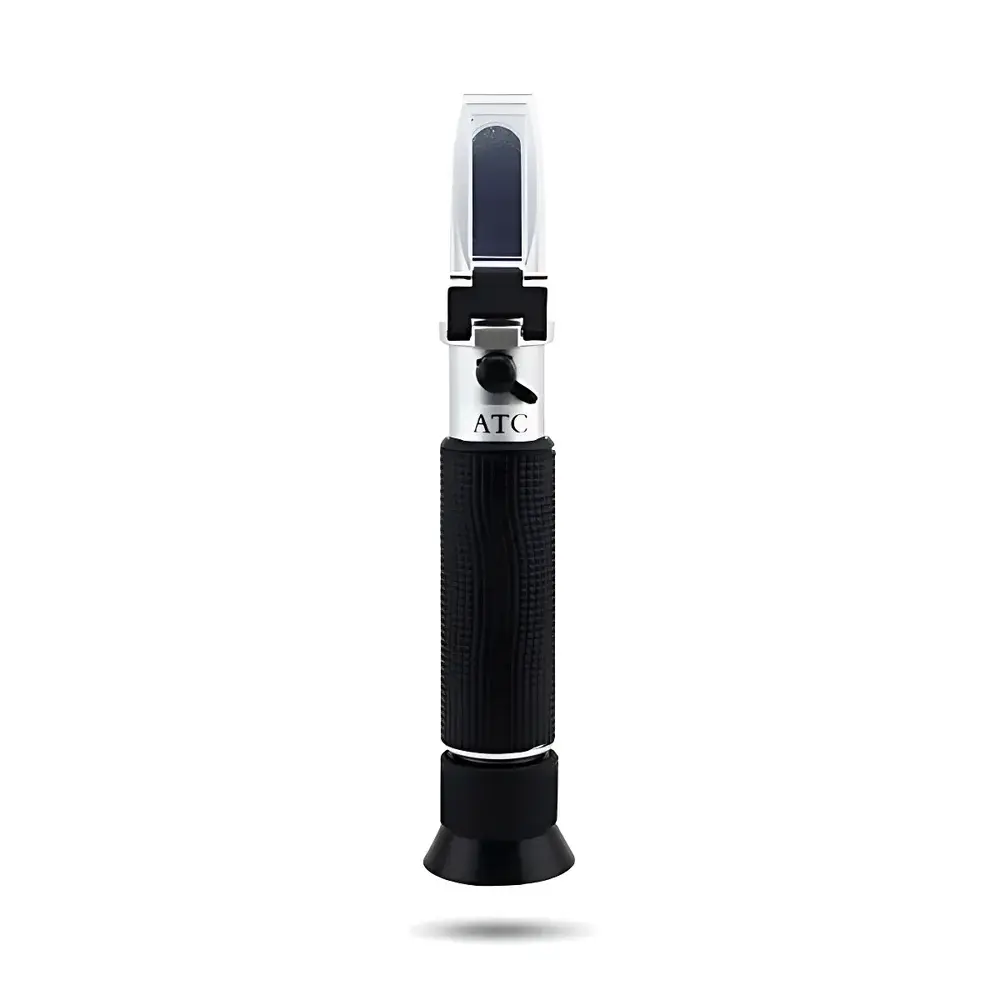
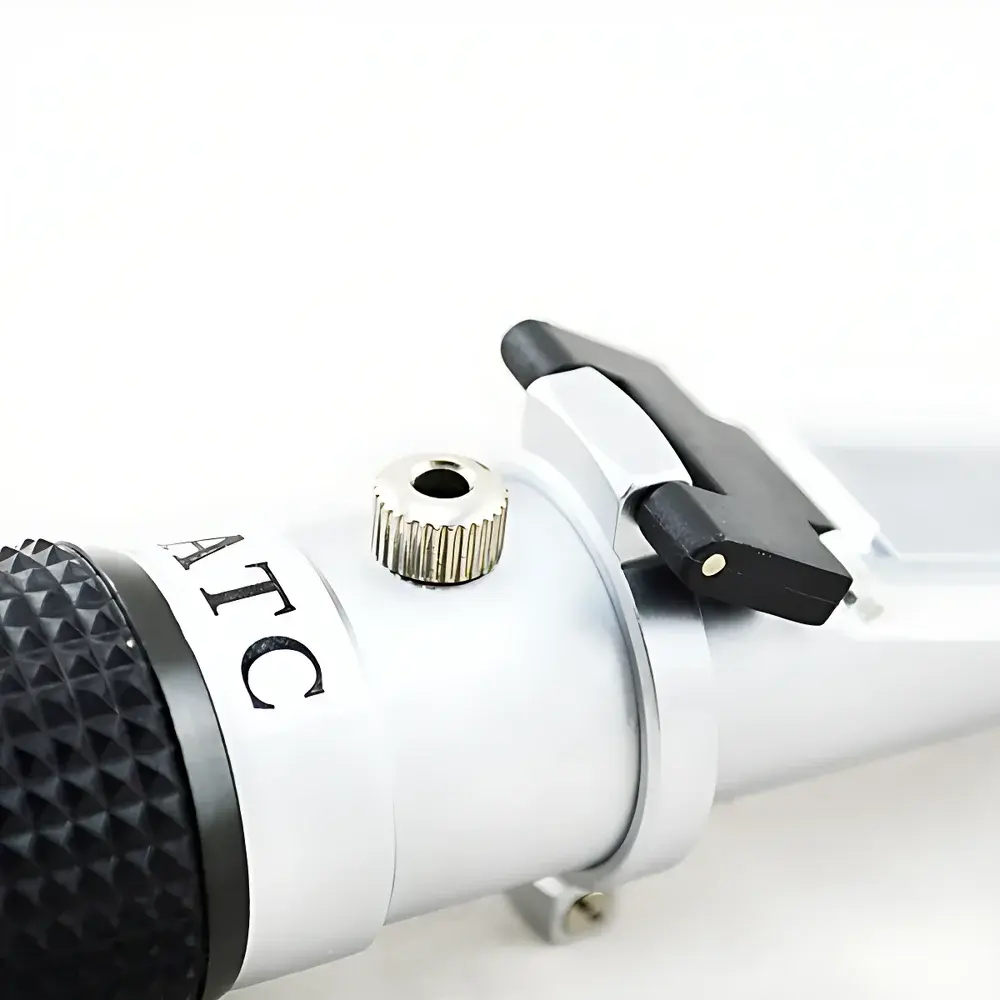
LoHand LH-B50 Portable Milk Cryoscope
| Brand | LoHand |
|---|---|
| Model | LH-B50 |
| Origin | Zhejiang, China |
| Instrument Type | Milk Cryoscope (Freezing Point Depression Analyzer) |
| Measurement Principle | Thermistor-based freezing point depression detection |
| Sample Volume | ~1.0–1.5 mL |
| Resolution | 0.001 °C |
| Repeatability | ±0.002 °C |
| Operating Temperature Range | 10–30 °C ambient |
| Power Supply | Rechargeable lithium-ion battery (≥8 hrs continuous operation) |
| Compliance | Designed per ISO 5725 (accuracy verification), aligned with IDF Standard 192 (Milk Cryoscopy), and supports GLP data integrity requirements |
Overview
The LoHand LH-B50 Portable Milk Cryoscope is a field-deployable, thermistor-based freezing point depression analyzer engineered for rapid, on-site determination of milk adulteration—primarily water dilution. It operates on the fundamental colligative property that pure milk freezes at approximately −0.520 °C (±0.005 °C), while addition of exogenous water elevates the freezing point toward 0 °C. The LH-B50 precisely measures this shift using a calibrated platinum resistance thermometer (PRT) sensor embedded in a copper-chromium alloy sample chamber, ensuring thermal stability and minimal hysteresis. Its compact, handheld architecture enables use in dairy collection centers, farm gates, mobile quality control units, and cold-chain inspection points—without reliance on laboratory infrastructure or external refrigeration. The device conforms to the physical measurement principles defined in ISO 9622 and IDF Standard 192, providing traceable, reproducible results suitable for preliminary screening and regulatory triage.
Key Features
- Portable, battery-powered design with >8 hours of continuous operation—ideal for off-grid or high-mobility environments
- Copper-chromium alloy sample chamber offering superior thermal conductivity, corrosion resistance, and long-term calibration stability
- High-resolution thermistor sensing system with 0.001 °C digital resolution and ±0.002 °C repeatability under controlled ambient conditions (15–25 °C)
- Automatic temperature compensation algorithm correcting for ambient drift during measurement cycles
- One-button operation with intuitive LED display showing real-time cooling curve, endpoint detection, and final freezing point value
- No consumables required—dry, non-destructive analysis with <1.5 mL sample volume per test
- IP54-rated enclosure for dust and splash resistance during field handling
Sample Compatibility & Compliance
The LH-B50 is validated for raw bovine milk, pasteurized whole milk, and standardized skim milk. It is not intended for ultra-heat-treated (UHT), fermented, or plant-based milks due to non-colligative solute interference. Sample viscosity and fat content within typical dairy ranges (0.5–4.5% fat, ≤200 cP at 20 °C) do not significantly affect measurement accuracy. The instrument meets functional alignment with ISO 5725-2 (repeatability and reproducibility assessment) and follows the procedural framework of IDF 192:2017 (“Milk — Determination of freezing point”). While not a certified reference method instrument, its performance characteristics support compliance with national dairy quality ordinances requiring on-farm adulteration screening (e.g., China’s GB 19301-2010 Annex B, India’s FSSAI Directive No. FSSAI/CDSCO/2021/17). Data output adheres to GLP documentation expectations—time-stamped readings are stored locally with audit-ready timestamps.
Software & Data Management
The LH-B50 operates as a standalone unit with embedded firmware—no PC connection or proprietary software required. All measurements are retained in internal memory (up to 500 records) with automatic time/date stamping. Export functionality is available via optional USB-C interface (sold separately), enabling CSV-formatted data transfer for integration into LIMS or QA reporting platforms. Firmware supports user-defined calibration offset adjustment (per ISO/IEC 17025 Section 6.5.2) and includes built-in diagnostic self-checks for sensor integrity and thermal equilibrium validation. Audit trails—though limited to timestamped result logs—meet minimum traceability thresholds for first-tier dairy cooperatives operating under basic GMP frameworks.
Applications
- Routine screening of raw milk at collection hubs to detect intentional water adulteration prior to processing
- On-farm quality verification during bulk tank loading, supporting contractual fairness between producers and processors
- Mobile veterinary or extension service deployment for regional dairy hygiene audits
- Training and educational use in food science laboratories focusing on colligative properties and dairy authenticity
- Supplementary verification tool in cold-chain logistics where refrigerated transport integrity must be cross-checked against freezing point stability
FAQ
What is the minimum detectable level of water adulteration?
The LH-B50 reliably identifies ≥0.5% (v/v) added water under standard conditions, corresponding to a freezing point shift of ≥0.003 °C above baseline.
Does the instrument require daily recalibration?
No—factory calibration remains stable for ≥6 months under normal use; annual verification against NIST-traceable standards (e.g., −0.520 °C glycerol/water reference) is recommended.
Can it measure frozen or partially thawed samples?
No—samples must be liquid, homogenized, and within 4–25 °C prior to loading to ensure accurate nucleation detection.
Is the copper-chromium chamber compatible with cleaning agents?
Yes—ethanol, isopropanol, or 0.1% sodium hypochlorite solutions may be used; avoid abrasive pads or acidic descalers.
How does ambient temperature affect measurement accuracy?
The integrated compensation algorithm corrects for ambient fluctuations between 10–30 °C; operation outside this range invalidates stated repeatability specifications.





