
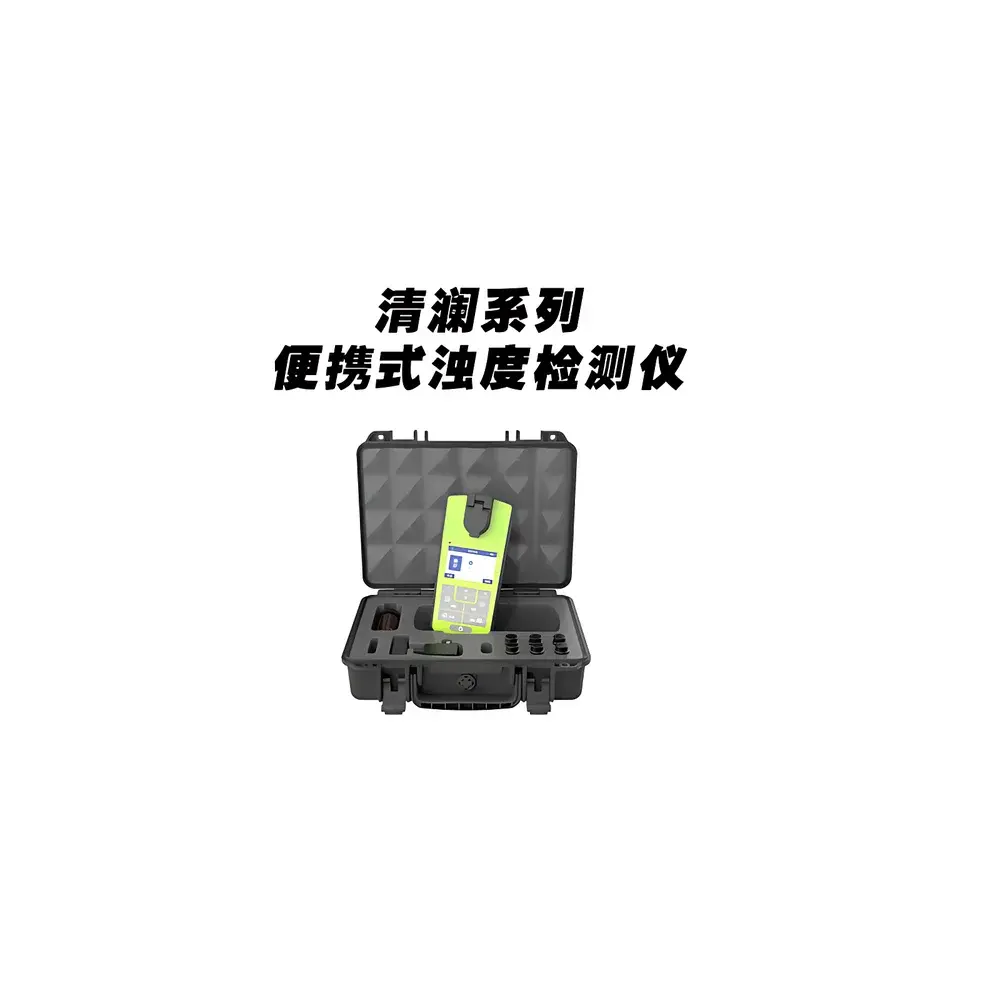
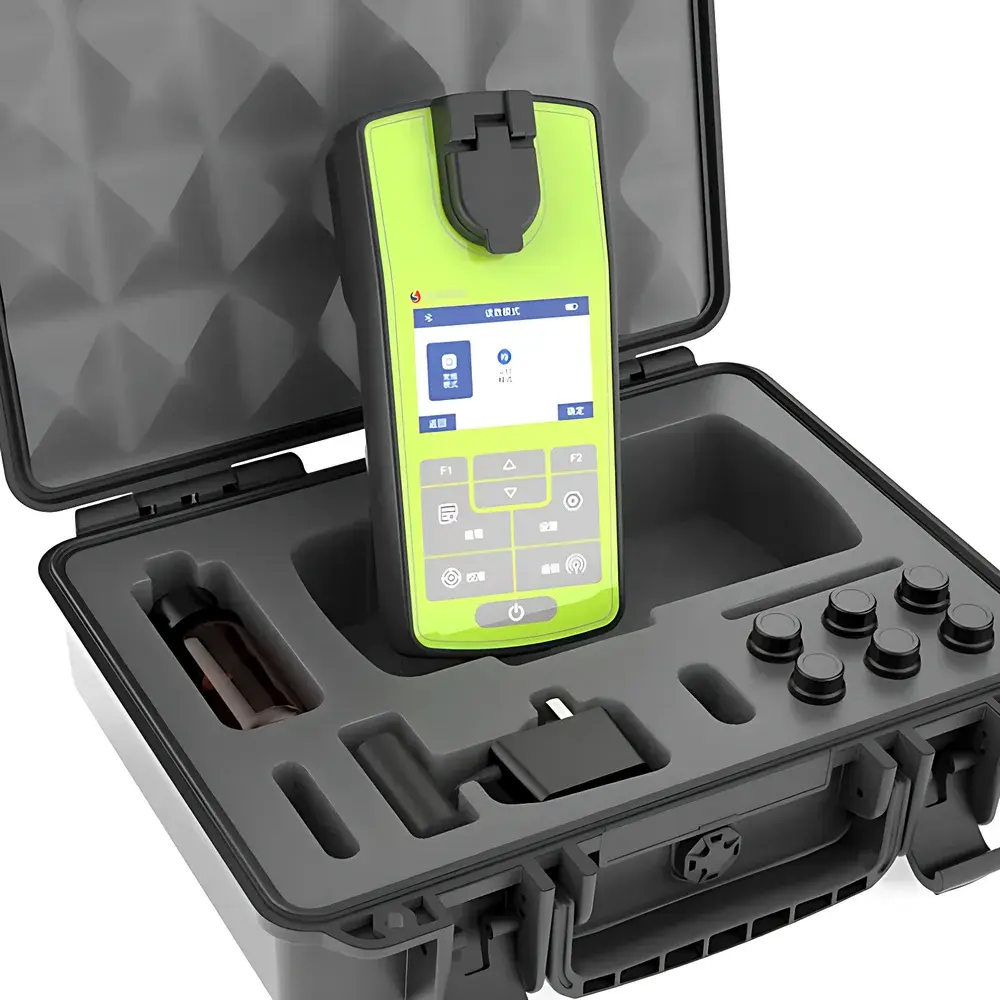
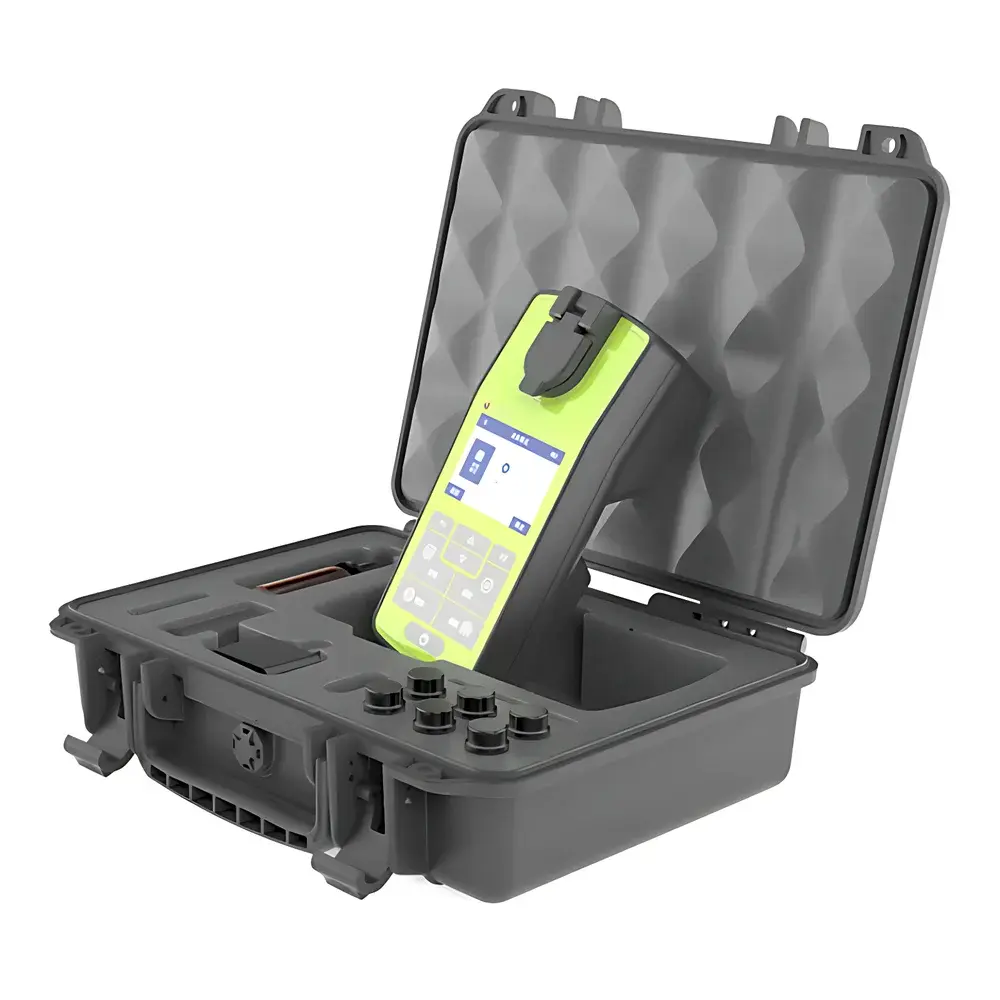
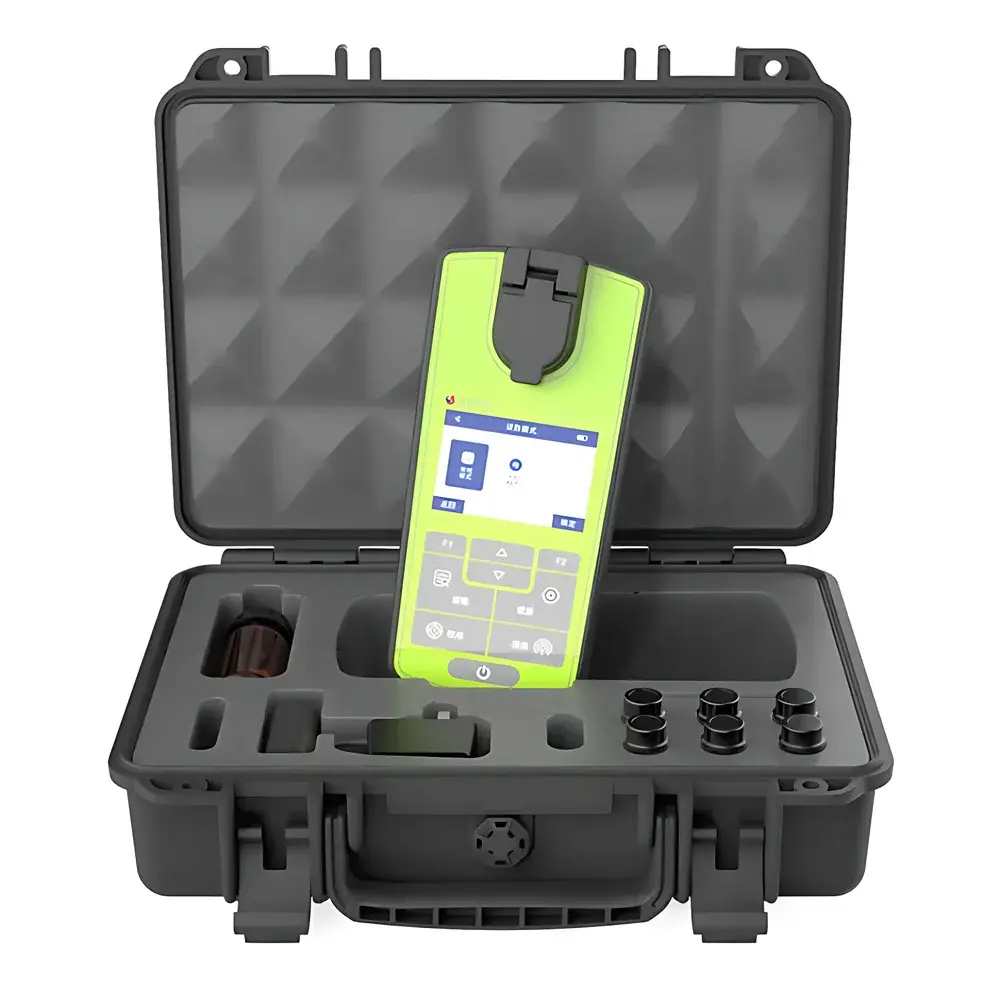
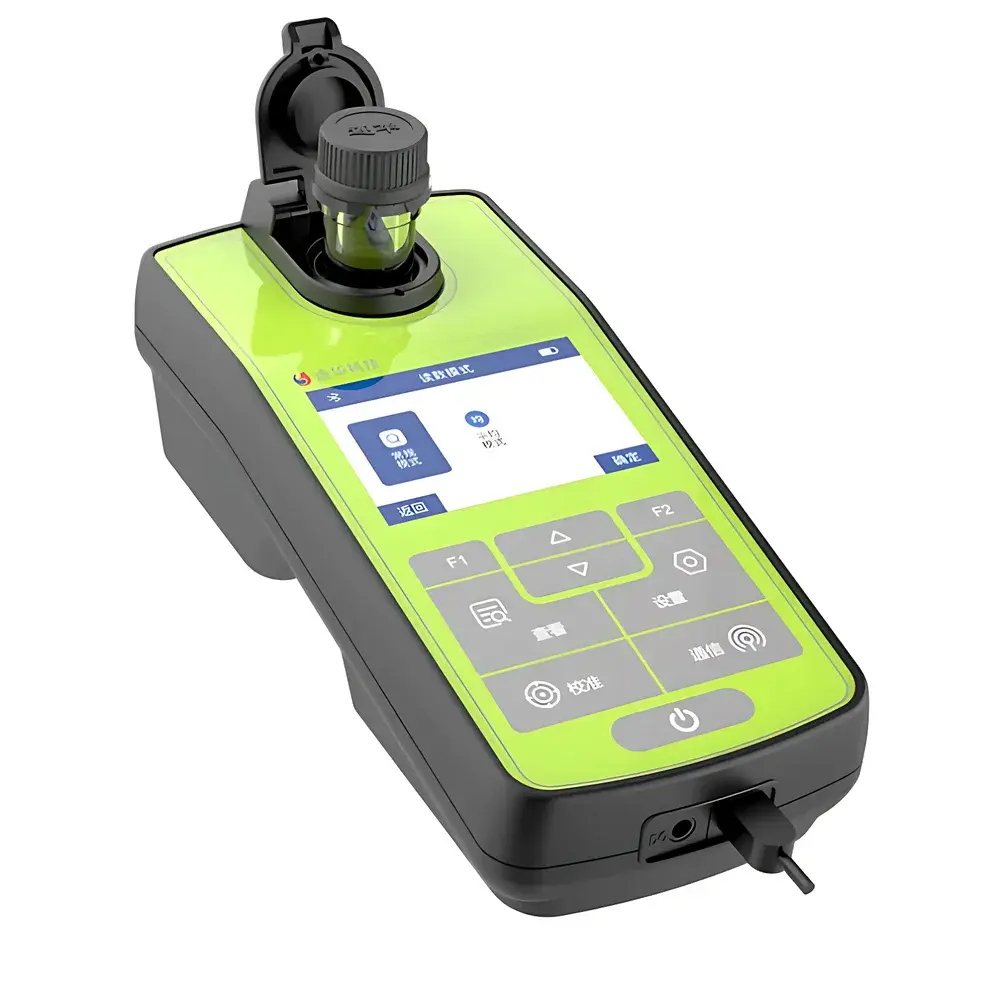
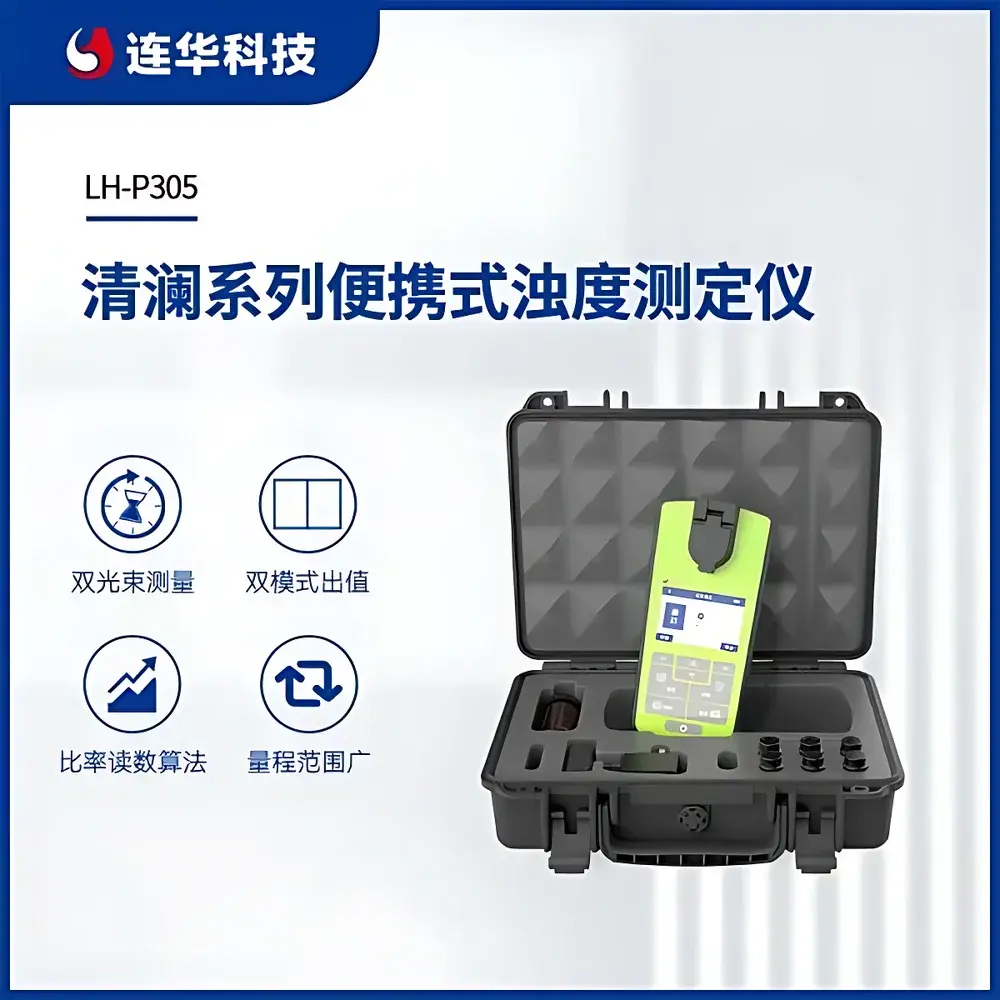
LoHua LH-P305 Portable Turbidimeter
| Brand | LoHua |
|---|---|
| Origin | Beijing, China |
| Manufacturer Type | Direct Manufacturer |
| Regional Category | Domestic (China) |
| Model | LH-P305 |
| Product Type | Portable |
| Measurement Range | 0–2000 NTU |
| Resolution | 0.01 NTU (for values <10 NTU) |
| Operating Temperature | 5–40 °C |
| Accuracy | ±10% |
| Light Source | Dual-beam LED (White + Infrared) |
| Detection Principle | 90° Scattering + Transmission Ratio Method |
| Calibration | Multi-point calibration with automatic storage of latest calibration record |
| Display | 3.5-inch high-resolution color LCD with dial-style UI |
| Power | Rechargeable lithium battery (8 h typical operation), auto-off after 10 min idle, USB Type-C charging |
| Accessories Included | Formazin standard solution, sealed reaction tubes, light-shielding cap, adapter, silicone oil |
Overview
The LoHua LH-P305 Portable Turbidimeter is an engineered field-deployable instrument designed for rapid, reliable turbidity quantification in water quality monitoring applications. It implements a dual-beam optical architecture compliant with HJ 1075–2019 (“Determination of Turbidity in Water Quality—Turbidimeter Method”), the national Chinese environmental standard aligned with ISO 7027 principles. The instrument utilizes a ratio-based detection methodology combining 90° scattered light intensity and transmitted light attenuation—minimizing drift caused by source instability, cell surface imperfections, or ambient temperature fluctuations. Unlike single-beam systems requiring frequent blanking, the LH-P305 operates in direct measurement mode using standardized 25 mm pathlength sample tubes, eliminating manual zero adjustment prior to analysis. Its white + infrared dual-light-source configuration enables adaptive spectral selection: white light optimizes sensitivity in low-turbidity regimes (<10 NTU), while infrared illumination compensates for chromatic interference in colored samples—a critical capability for wastewater, surface water, or treated effluent analysis where absorbance overlaps with scattering signals.
Key Features
- Dual-beam LED optical system (white + infrared) with automatic wavelength switching based on sample turbidity and color index
- Ratio measurement principle (90° scatter / transmission) ensuring long-term stability and reduced sensitivity to temperature-induced refractive index shifts
- High-resolution display (3.5-inch color LCD) featuring LoHua’s proprietary dial-style UI for intuitive real-time parameter visualization—including dynamic range indication and measurement status
- Two operational modes: Standard Mode for routine clarity assessment; Signal-Averaging Mode for heterogeneous suspensions with transient particle settling or agglomeration
- No-blank measurement protocol using 25 mm optical path quartz or high-grade polymer tubes—reducing procedural error and operator dependency
- Multi-point calibration support (up to 5 points) with non-volatile memory retention of the most recent calibration coefficients and date-stamped metadata
- Integrated silicone oil applicator kit for surface treatment of sample tubes during sub-5 NTU measurements—mitigating scatter artifacts from micro-scratches or residual contaminants
- USB Type-C rechargeable lithium battery delivering ≥8 hours of continuous field use under mixed measurement duty cycles, with programmable auto-shutdown after 10 minutes of inactivity
Sample Compatibility & Compliance
The LH-P305 accommodates aqueous samples across municipal drinking water, wastewater treatment plant influent/effluent, industrial process streams, and environmental surface water monitoring. Its dual-spectrum capability ensures robust performance with chromatically complex matrices—including humic-rich groundwater, algal blooms, or dye-contaminated discharges—where conventional white-light-only turbidimeters exhibit bias due to absorption masking scattering signals. The instrument meets functional equivalence to ISO 7027:2016 (optical properties of turbidimeters) and satisfies method validation requirements under HJ 1075–2019. While not certified to GLP or FDA 21 CFR Part 11 out-of-the-box, its audit-ready calibration logging, timestamped measurement records, and firmware-traceable configuration parameters support integration into QA/QC workflows compliant with ISO/IEC 17025 laboratory accreditation frameworks.
Software & Data Management
Data output is supported via direct screen readout and manual transcription. Though the LH-P305 does not feature Bluetooth or USB data export in its base configuration, all calibration events—including reference standard concentrations, measured responses, and deviation metrics—are stored internally with time/date stamps. Users may manually log measurement sessions alongside contextual field notes (e.g., sampling location ID, temperature, pH). The instrument’s firmware architecture supports future OTA updates to expand connectivity options. For regulated environments requiring electronic records, integration with external LIMS is achievable via documented SOPs referencing instrument ID, calibration history, and operator credentials—consistent with ALCOA+ (Attributable, Legible, Contemporaneous, Original, Accurate, Complete, Consistent, Enduring, Available) data integrity expectations.
Applications
- Field verification of drinking water turbidity compliance against WHO and GB 5749–2022 limits (≤1 NTU)
- Real-time monitoring of filtration efficiency in water treatment plants
- Wastewater discharge compliance checks per local environmental permits
- Environmental impact assessments involving sediment-laden runoff or dredging operations
- Educational laboratories requiring portable, maintenance-light instrumentation for ISO/ASTM-standardized turbidity experiments
- Emergency response scenarios—floodwater, post-disaster well screening, or temporary distribution system audits
FAQ
Does the LH-P305 require daily blank calibration before each measurement?
No. The dual-beam ratio method eliminates the need for manual blanking; users insert the sample tube directly and initiate measurement.
Can the instrument measure colored samples without interference?
Yes. The infrared channel provides inherent color compensation, significantly reducing absorbance-related bias in yellow/brown water matrices.
What is the recommended maintenance interval for the optical path?
Wipe the sample tube holder and detector window with lint-free cloth and isopropyl alcohol after every 10 measurements in high-turbidity or organic-rich samples.
Is formazin standard included with the instrument?
Yes. A certified formazin stock solution (400 NTU) and dilution protocol are supplied as part of the standard accessory kit.
How is traceability ensured for calibration records?
Each calibration event is timestamped and stored with reference values, measured responses, and % deviation—accessible via on-device menu navigation without external software.




