
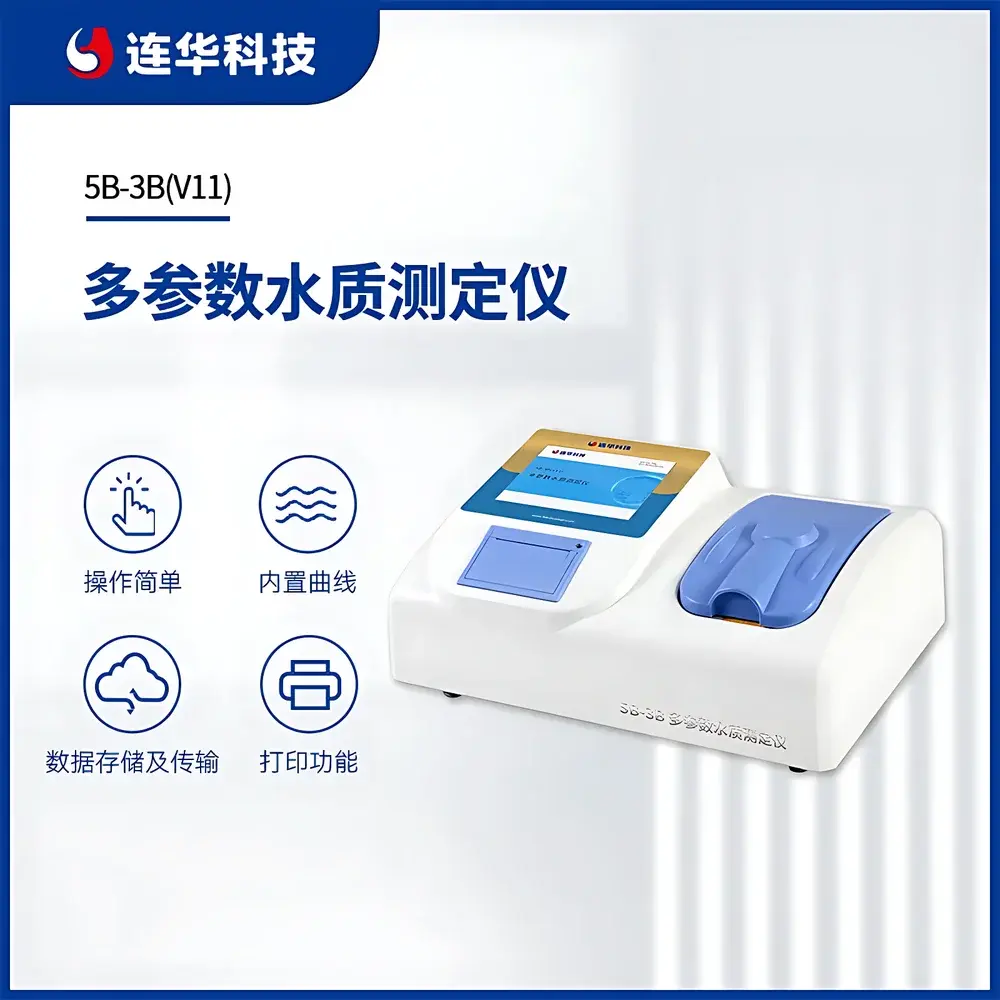
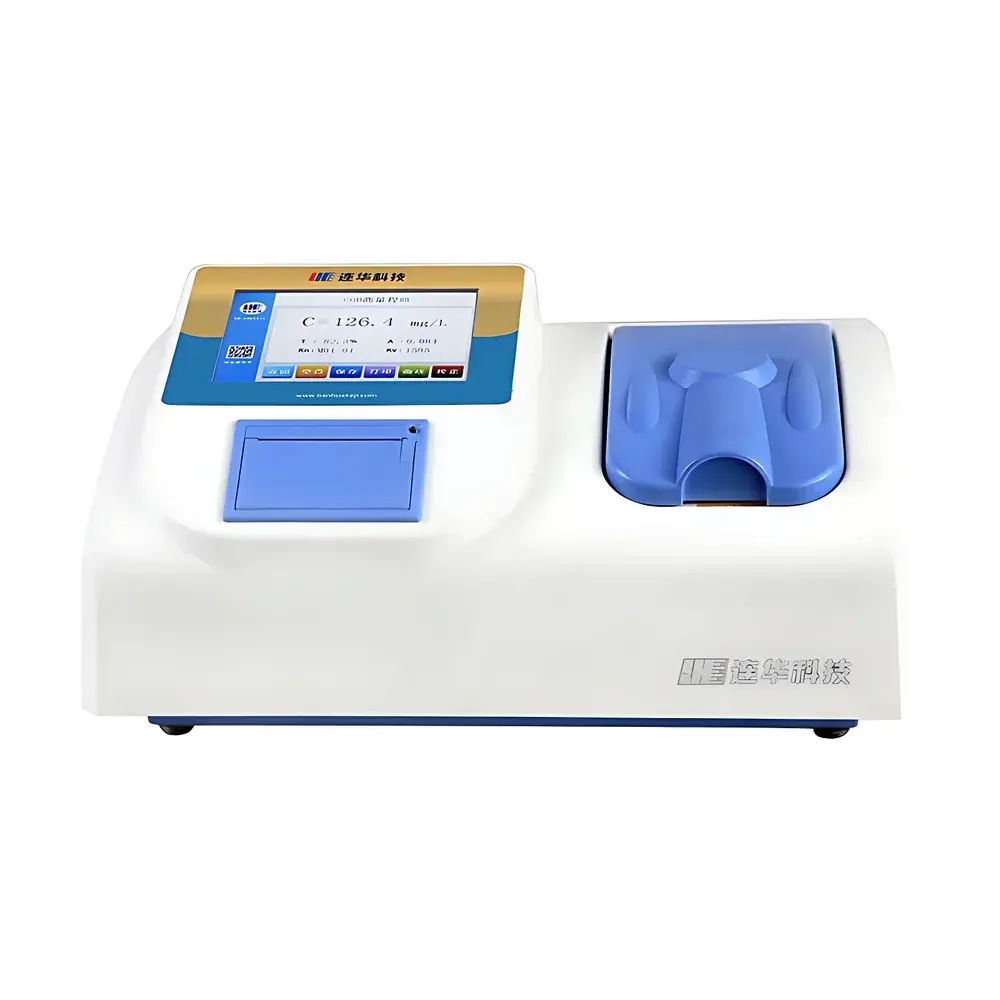
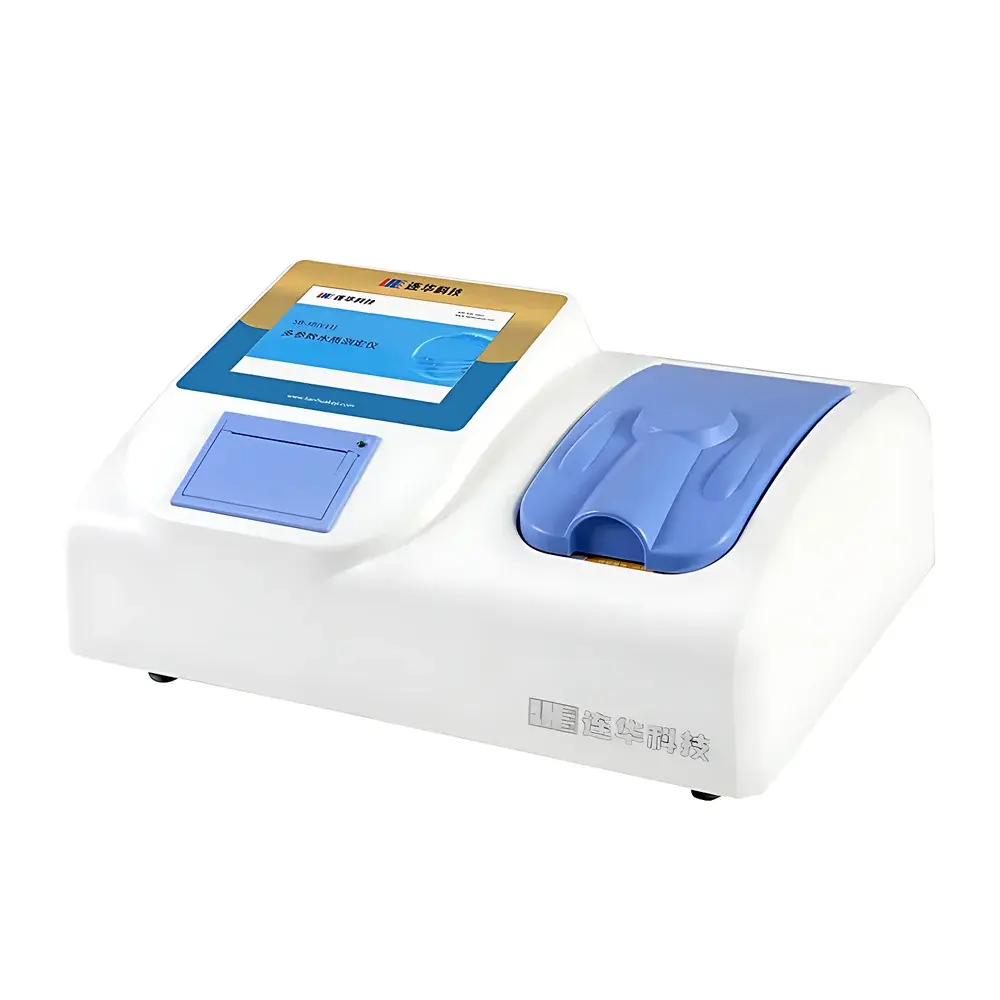
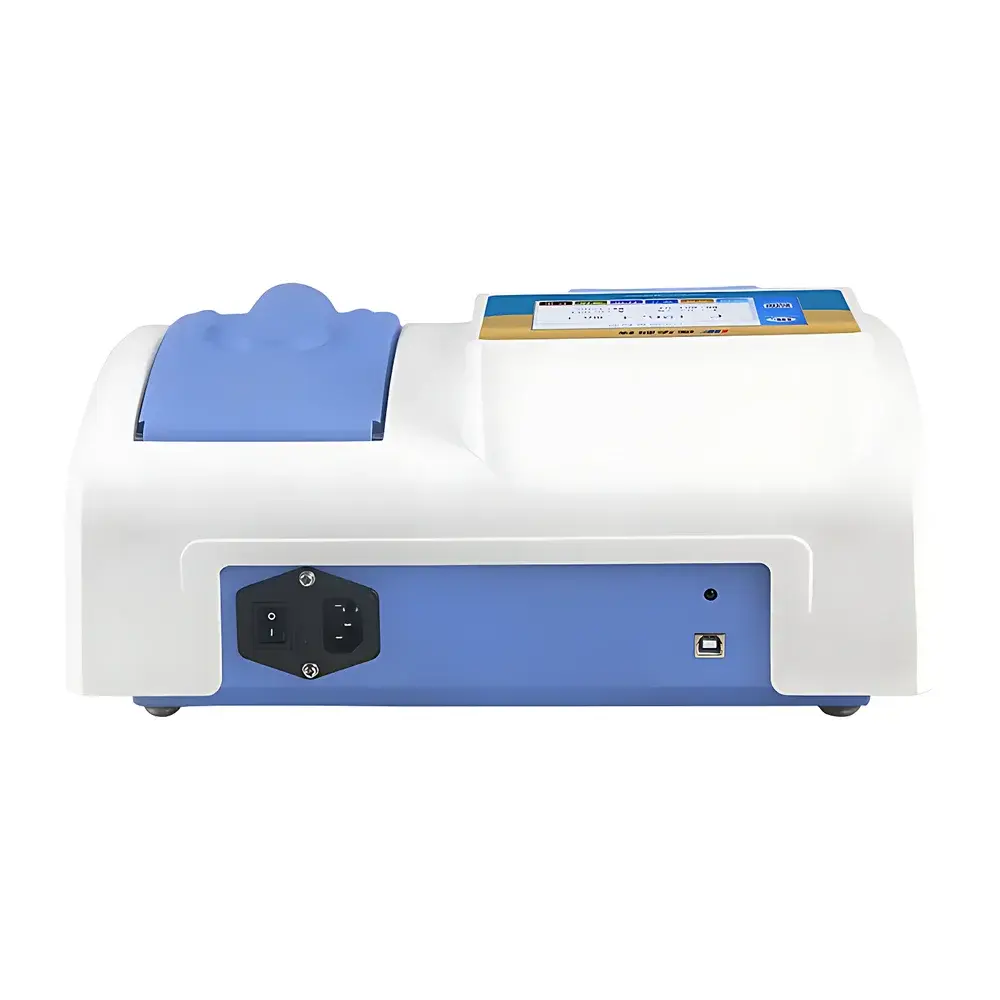
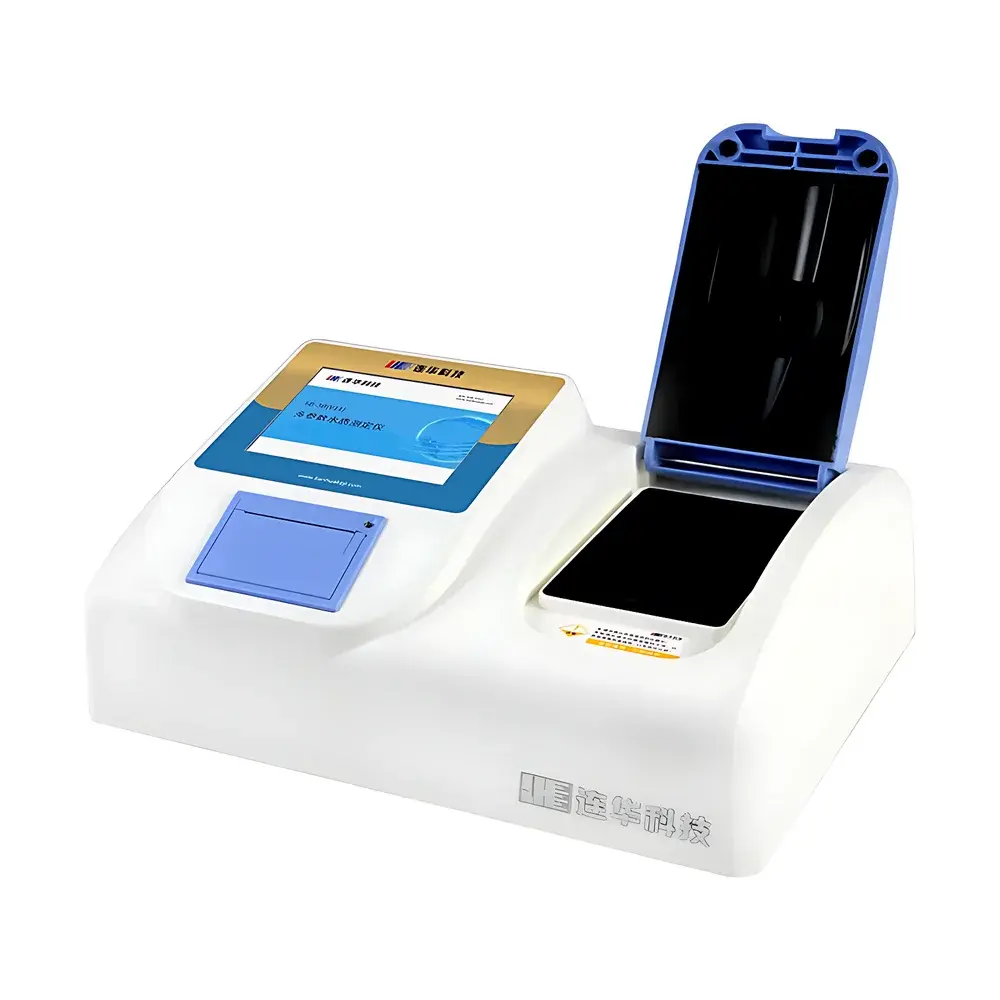
LoHua Tech 5B-3B(V11) Multi-Parameter Water Quality Analyzer
| Brand | LoHua Tech |
|---|---|
| Origin | Beijing, China |
| Manufacturer Type | Direct Manufacturer |
| Product Origin | Domestic (China) |
| Model | 5B-3B(V11) |
| Instrument Type | Laboratory Benchtop Analyzer |
| Measurement Principle | Absorption Photometry (Multi-Wavelength Optical Detection) |
| Wavelength Range | Programmable Multi-Wavelength (e.g., 420 nm, 470 nm, 620 nm, 700 nm) |
| Measurement Range | 0–15,000 mg/L (COD equivalent) |
| Accuracy | ≤ ±5–10% of reading |
| Repeatability | ≤ ±5–10% RSD |
| Detection Limit | 2–15,000 mg/L (method-dependent) |
| Analysis Time | COD < 20 min |
| Batch Capacity | 16 / 25 / 30 samples (user-selectable cuvette rack configuration) |
Overview
The LoHua Tech 5B-3B(V11) Multi-Parameter Water Quality Analyzer is a laboratory-grade benchtop photometric analyzer engineered for routine and regulatory-compliant analysis of key water quality parameters using standardized absorption photometry. It operates on the Beer–Lambert principle, employing programmable multi-wavelength optical detection across discrete spectral bands (including but not limited to 420 nm, 470 nm, 620 nm, and 700 nm) to quantify analyte-specific colorimetric reactions. The instrument supports over 50 pre-validated test methods—including Chemical Oxygen Demand (COD), Ammonia Nitrogen (NH₃-N), Total Phosphorus (TP), Total Nitrogen (TN), Suspended Solids (SS), Turbidity, Color (Platinum-Cobalt scale), Heavy Metals (e.g., Cu²⁺, Fe²⁺/³⁺, Cr⁶⁺), and select organic/inorganic contaminants—enabling comprehensive compliance screening in municipal wastewater, surface water, industrial effluent, and drinking water source monitoring. Its design prioritizes method traceability, operational robustness, and alignment with widely adopted Chinese national standards (e.g., HJ 399–2017 for COD, HJ 535–2009 for NH₃-N, GB 11893–1989 for TP), while maintaining architectural compatibility with international QA/QC workflows.
Key Features
- 5.6-inch high-resolution capacitive touchscreen with intuitive Chinese-language UI—designed for rapid operator onboarding without prior instrumentation training
- Integrated dual-zone intelligent digestion module (LH-A220, 20-position standard): independent temperature control (room temp to 200 °C) for simultaneous digestion of two sample batches at different protocols (e.g., COD at 165 °C and TP at 120 °C), reducing total assay turnaround time by up to 40%
- Onboard calibration and curve management: 228 stored calibration curves (165 factory-loaded standard curves + 63 user-defined regression curves); auto-curve generation via standard solution input eliminates manual calibration plotting
- High-capacity data logging: stores up to 12,000 measurement records, each containing timestamp (date/time), instrument configuration (wavelength, digestion temp/duration), raw absorbance, and final concentration result
- Dual-mode data export: USB 2.0 interface for direct file transfer to PC; optional infrared wireless module compliant with ISO/IEC 14443-A for secure short-range transmission
- Embedded thermal printer: enables immediate hardcopy output of current results or full historical datasets with audit-ready formatting
- Flexible reagent compatibility: supports liquid reagents, solid powder reagents, and pre-filled sealed vials—reducing analyst handling errors and improving shelf-life stability
Sample Compatibility & Compliance
The 5B-3B(V11) accommodates standard 16 mm round glass or quartz cuvettes (10–50 mm pathlength), as well as disposable plastic cells compatible with EPA Method 365.2 and ISO 6060 for COD. Sample matrices include raw sewage, treated effluent, river/lake water, groundwater, and potable water—with turbidity compensation algorithms applied where appropriate. All embedded test methods are developed in accordance with GB/T 5750 (Standard Methods for Examination of Drinking Water), HJ series environmental monitoring standards (Ministry of Ecology and Environment, PRC), and harmonized principles of ISO 7027 (turbidity), ISO 6226 (ammonia), and ISO 15681-1 (phosphorus). While not certified under FDA 21 CFR Part 11, the system supports GLP-aligned documentation practices through timestamped, non-editable data logs and configurable user access levels.
Software & Data Management
Instrument firmware includes a built-in database engine supporting structured query, chronological filtering, and statistical summary (mean, SD, CV%). Data files export in CSV format for import into LIMS or spreadsheet software. Optional PC software (LoHua LabLink v3.x) provides advanced features: method versioning, electronic signature support, QC charting (X-bar/R charts), and automated report generation per GB/T 8170 rounding rules. Audit trail functionality records all critical events—including method selection, calibration updates, user login/logout, and data deletion attempts—with immutable timestamps. Firmware updates are delivered via encrypted USB drive with SHA-256 verification.
Applications
- Municipal wastewater treatment plants: daily monitoring of influent/effluent COD, NH₃-N, TP, and TN for process control and discharge compliance reporting
- Environmental monitoring stations: field-deployable lab validation of surface water quality indices across seasonal sampling campaigns
- Industrial pretreatment facilities: rapid screening of electroplating, textile, pharmaceutical, and food processing effluents for heavy metals and nutrient loading
- Academic and research laboratories: method development, inter-laboratory comparison studies, and student training in standardized water analysis protocols
- Drinking water utilities: verification of filtration and disinfection efficiency via turbidity, color, and residual oxidant assays
FAQ
Does the 5B-3B(V11) comply with ISO or ASTM standards?
It implements measurement principles and procedural logic consistent with ISO 6060 (COD), ISO 7150-1 (NH₃-N), and ISO 15681-1 (TP), though formal ISO/IEC 17025 accreditation requires lab-specific validation.
Can custom calibration curves be imported from external sources?
Yes—users may upload CSV-formatted curve coefficients or manually define polynomial/logarithmic equations via the setup menu.
Is the digestion module compatible with third-party digestion vessels?
It accepts standard 16 mm OD borosilicate glass tubes (up to 15 mL volume); custom adapters are available upon request.
What is the recommended maintenance interval for optical components?
We recommend quarterly inspection of the light source stability and cuvette holder alignment; no routine lamp replacement is required within the first 5 years of operation.
How does the instrument handle high-turbidity samples during colorimetric analysis?
For turbidity > 100 NTU, the system applies algorithmic scatter correction using dual-wavelength ratioing (e.g., 700 nm reference channel), validated per HJ 828–2017 methodology.
Related Products







