
Lovibond EC2000 & EC3000 Electronic Colorimeters
| Brand | Lovibond (Tintometer) |
|---|---|
| Origin | UK |
| Model | EC2000 & EC3000 |
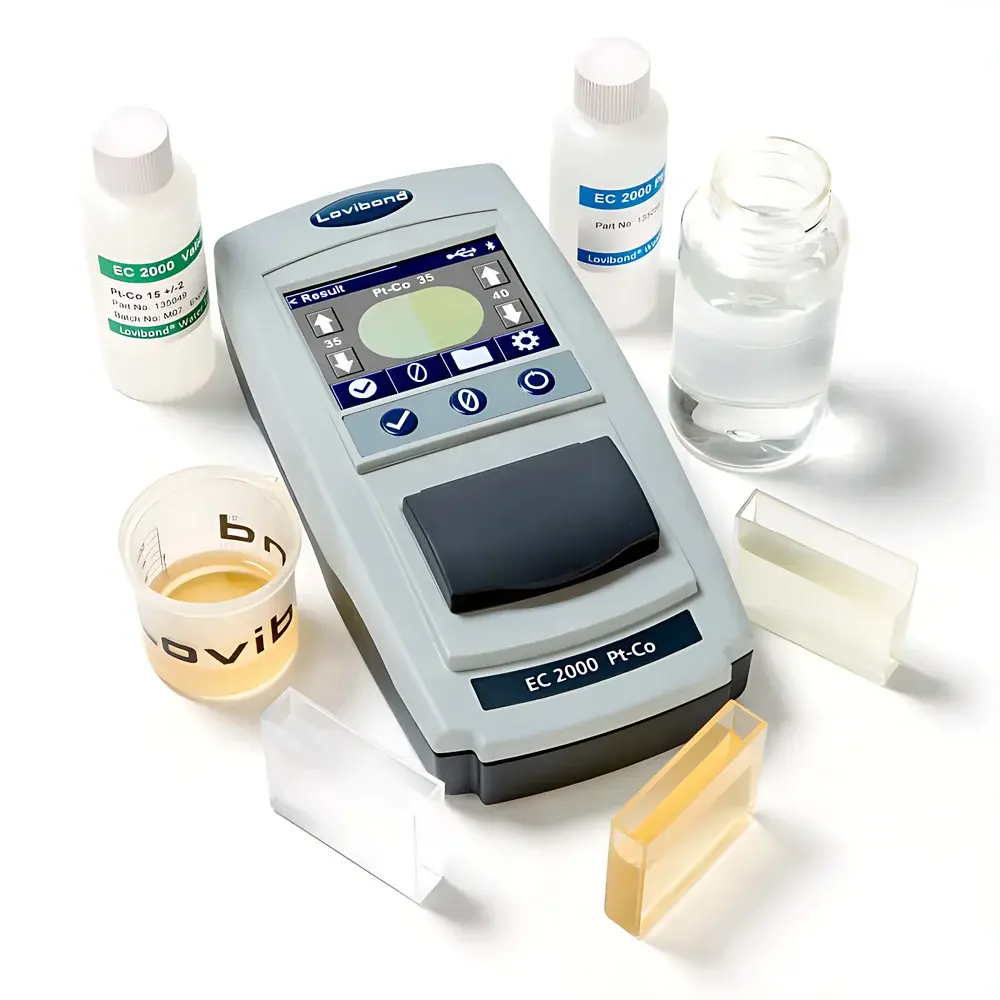
| EC2000 Pt-Co Range | 0–500 Pt-Co, Resolution: 1 Pt-Co, Repeatability: ±3% or ±1 Pt-Co, Path Length: 50 mm, Standard: ASTM D1209 |
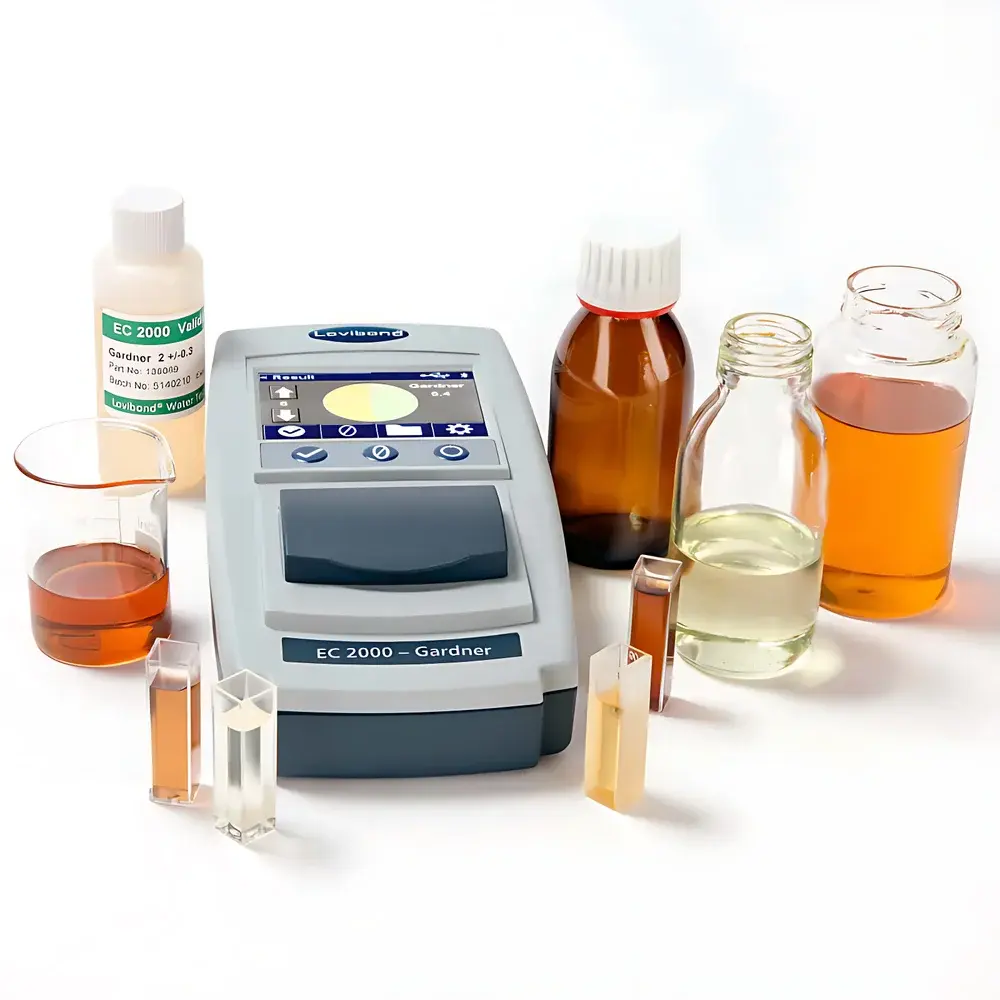
| EC2000 Gardner Range | 0–18 Gardner, Resolution: 0.1 Gardner, Repeatability: ±0.2 Gardner, Path Length: 10 mm, Standard: ASTM D1544, D6166 |
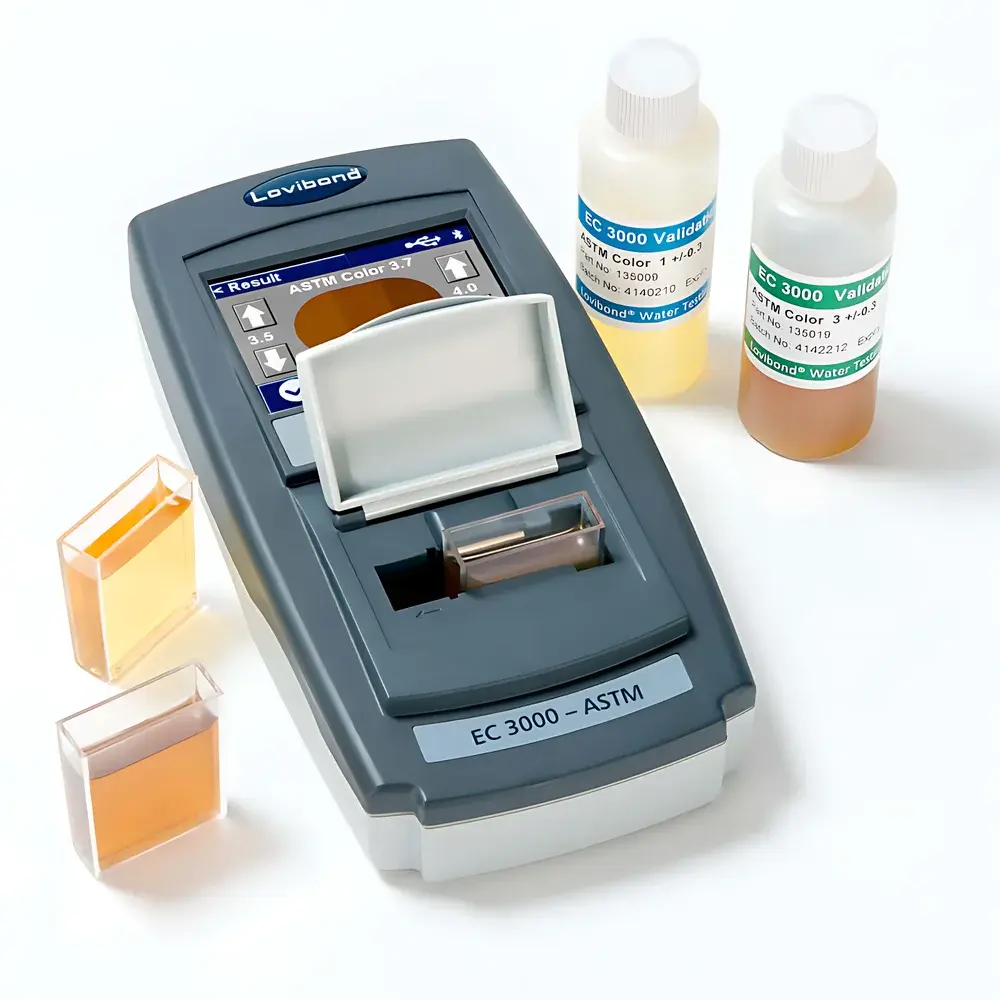
| EC3000 ASTM Range | 0–8 ASTM, Resolution: 0.1 ASTM, Repeatability: ±0.1 ASTM, Path Length: 33 mm, Standard: ASTM D1500, D6045 |
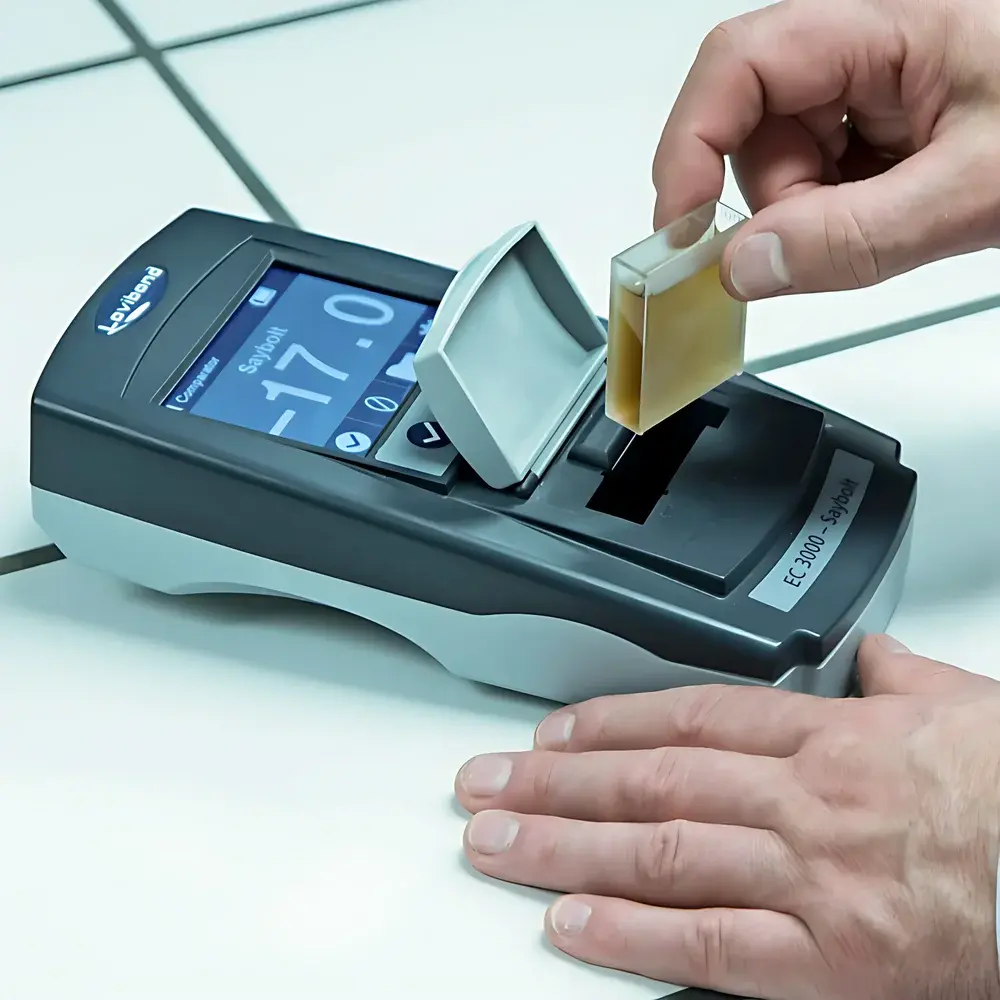
| EC3000 Saybolt Range | −16 to +30 Saybolt, Resolution: 1 Saybolt, Repeatability: ±1 Saybolt, Path Length: 50 mm, Standard: ASTM D156, D6045 |
| Viewing Field | 2-field (EC2000), 3-field (EC3000) |
| Cuvettes | Plastic and glass W100 cells in multiple path lengths (10 mm, 33 mm, 50 mm) |
| Calibration Standards | Bottled reference liquids (60 mL) and certified interference filters |
Overview
The Lovibond EC2000 and EC3000 Electronic Colorimeters are precision optical instruments engineered for objective, reproducible color assessment in liquid samples across industrial quality control, research, and regulatory compliance environments. Based on the principle of transmitted visible-light photometry, these instruments quantify color by measuring absorbance at specific wavelength bands corresponding to standardized color scales—Pt-Co (APHA), Gardner, ASTM, and Saybolt—using matched optical filters and stable tungsten-halogen illumination. Unlike subjective visual comparison methods, the EC series eliminates observer variability through fixed-path-length cuvette geometry, calibrated photodetectors, and digital signal processing. Each model is designed to meet the metrological requirements of ASTM International standards, ensuring traceability and comparability across laboratories and production sites. The EC2000 supports dual-scale operation (Pt-Co and Gardner) with dedicated 2-field viewing optics, while the EC3000 extends capability to ASTM and Saybolt scales via interchangeable filter sets and a 3-field optical configuration optimized for high-contrast discrimination.
Key Features
- Dual- and quad-scale measurement capability: EC2000 covers Pt-Co (0–500) and Gardner (0–18); EC3000 covers ASTM (0–8) and Saybolt (−16 to +30), all compliant with relevant ASTM test methods.
- Precision optical architecture: Fixed-path-length cuvette holders (10 mm, 33 mm, 50 mm) ensure consistent beam geometry; tungsten-halogen light source provides stable spectral output in the visible range (approx. 380–780 nm).
- High repeatability performance: EC2000 achieves ±1 Pt-Co or ±3% (whichever is greater) and ±0.2 Gardner units; EC3000 delivers ±0.1 ASTM unit and ±1 Saybolt unit under controlled ambient conditions.
- Dedicated viewing field design: EC2000 employs a 2-field comparator for side-by-side sample-reference evaluation; EC3000 utilizes a 3-field arrangement enabling simultaneous reference–sample–reference assessment to minimize bias from background adaptation.
- Calibration traceability: Supplied with NIST-traceable liquid standards (60 mL bottles) and certified interference filters, enabling verification and adjustment per ISO/IEC 17025-aligned laboratory procedures.
- Robust mechanical construction: All-optical alignment is factory-set and sealed; cuvette compartments accept both disposable plastic and reusable borosilicate glass W100 cells (10 × 10 × 45 mm, 33 × 10 × 45 mm, 50 × 10 × 45 mm).
Sample Compatibility & Compliance
The EC2000 and EC3000 accommodate clear to moderately hazy liquids—including petroleum distillates, edible oils, pharmaceutical solvents, wastewater effluents, and polymer solutions—provided they meet ASTM-defined clarity criteria for each scale (e.g., ASTM D1209 requires absence of turbidity that interferes with Pt-Co assessment). Instruments comply with ASTM D1209 (Pt-Co), D1544/D6166 (Gardner), D1500/D6045 (ASTM), and D156/D6045 (Saybolt) for method-specific validation. Their optical design satisfies ISO 7724-1 for colorimetric measurement principles and supports GLP/GMP documentation requirements when used with logbook-based calibration records. No internal software validation is required, as the instruments operate without embedded microprocessors—measurement is purely analog photometric comparison, eliminating concerns related to FDA 21 CFR Part 11 electronic record integrity.
Software & Data Management
These are standalone, non-digital-readout instruments: no firmware, no USB interface, no data logging. Results are displayed directly on an analog meter or illuminated digital display (model-dependent), with values recorded manually into laboratory notebooks or LIMS-compatible spreadsheets. This architecture ensures long-term reliability, immunity to software obsolescence, and full auditability—each measurement is tied to physical reference standards, operator identity, date/time, and environmental notes per ISO/IEC 17025 clause 7.7. Calibration verification is performed using supplied liquid standards and filter kits at defined intervals (e.g., daily pre-analysis check, weekly full verification), with records retained for regulatory review. No password protection, user roles, or electronic signature functionality is present—consistent with traditional wet-lab colorimetry workflows requiring human-in-the-loop verification.
Applications
- Petroleum refining: Monitoring color stability of jet fuel (ASTM D1500), lubricating oils (Saybolt), and naphthas (Pt-Co).
- Food & beverage: Assessing refined vegetable oil color (Gardner), sugar syrup clarity (Pt-Co), and edible glycerin specification compliance.
- Pharmaceutical manufacturing: Verifying solvent purity (e.g., ethanol, isopropanol) per USP and EP 2.2.27 color tests.
- Wastewater treatment: Quantifying discharge color against regulatory limits (e.g., EPA Method 8025B adaptations).
- Chemical synthesis: Tracking reaction progress in oxidation-sensitive products where color development correlates with impurity formation.
- Academic teaching labs: Demonstrating fundamental principles of absorption spectroscopy, standardization methodology, and inter-laboratory reproducibility studies.
FAQ
Are the EC2000 and EC3000 compliant with current ASTM standards?
Yes—both models are explicitly designed and verified to meet the optical, geometric, and procedural requirements of ASTM D1209, D1544, D1500, D156, and associated revision dates cited in their respective user manuals.
Can I use non-Lovibond cuvettes with these instruments?
Only W100-format cuvettes (10 mm × 10 mm cross-section, specified path lengths) made from optically matched materials should be used; deviations in dimensional tolerance or transmission profile will compromise accuracy and invalidate ASTM conformance.
Do these instruments require annual recalibration by an accredited lab?
No—recalibration is not performed on the instrument itself. Instead, users conduct periodic verification using supplied reference standards; full metrological recalibration is not applicable due to the analog, comparator-based design.
Is there a difference between “Lovibond” and “Tintometer” branding?
Lovibond is a registered trademark owned by Tintometer Limited (UK); both names refer to the same manufacturer and product lineage—Tintometer is the legal entity, Lovibond the legacy brand for color measurement systems.
Can EC2000 and EC3000 results be directly compared to spectrophotometric measurements?
Not without empirical correlation: These are filter-based tristimulus comparators—not full-spectrum devices—so direct numerical equivalence to CIE L*a*b* or % transmittance spectra is not supported; method-specific validation is required for cross-technique equivalence studies.



