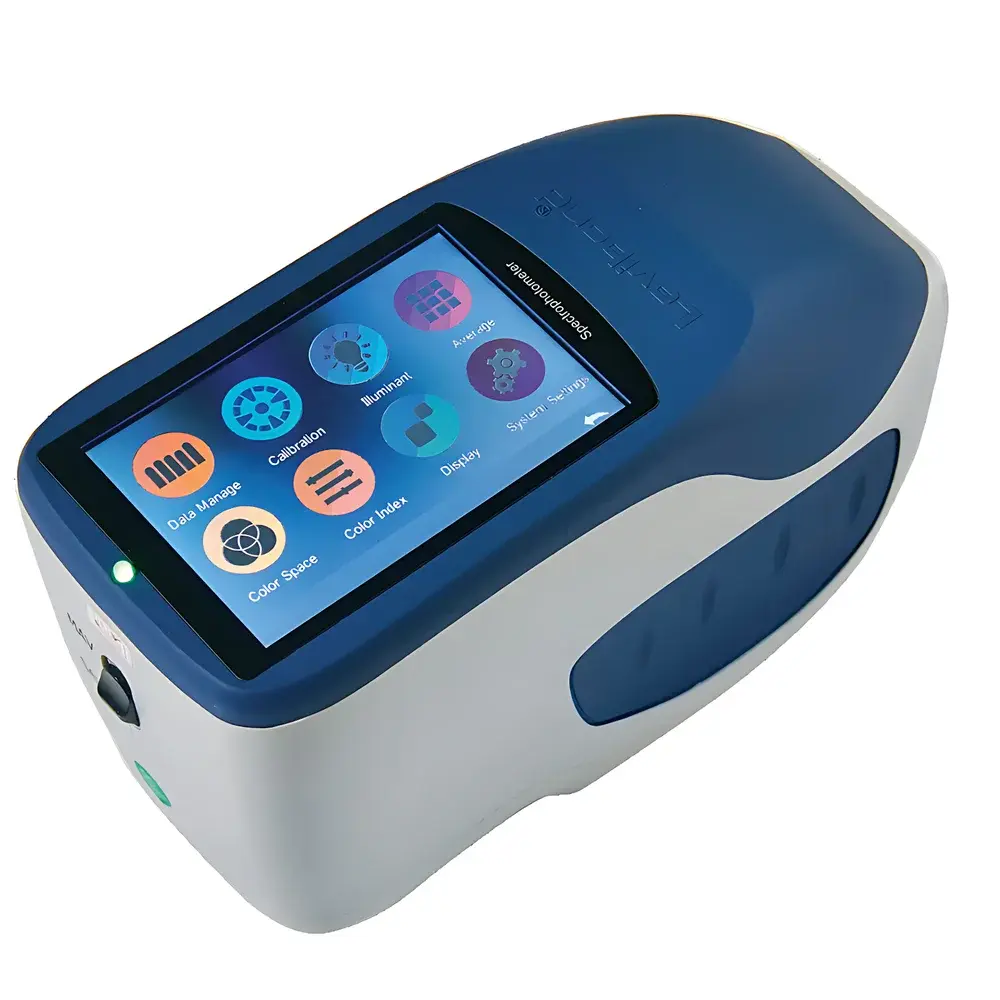
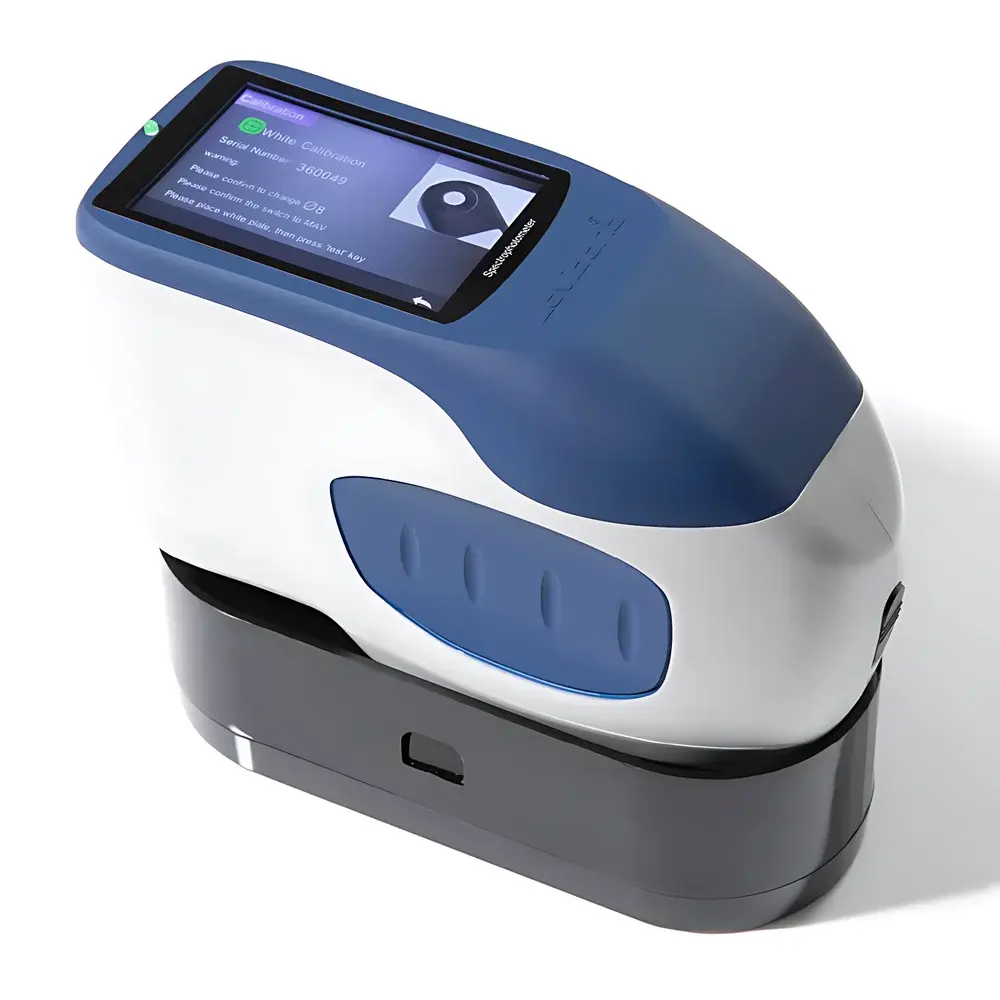
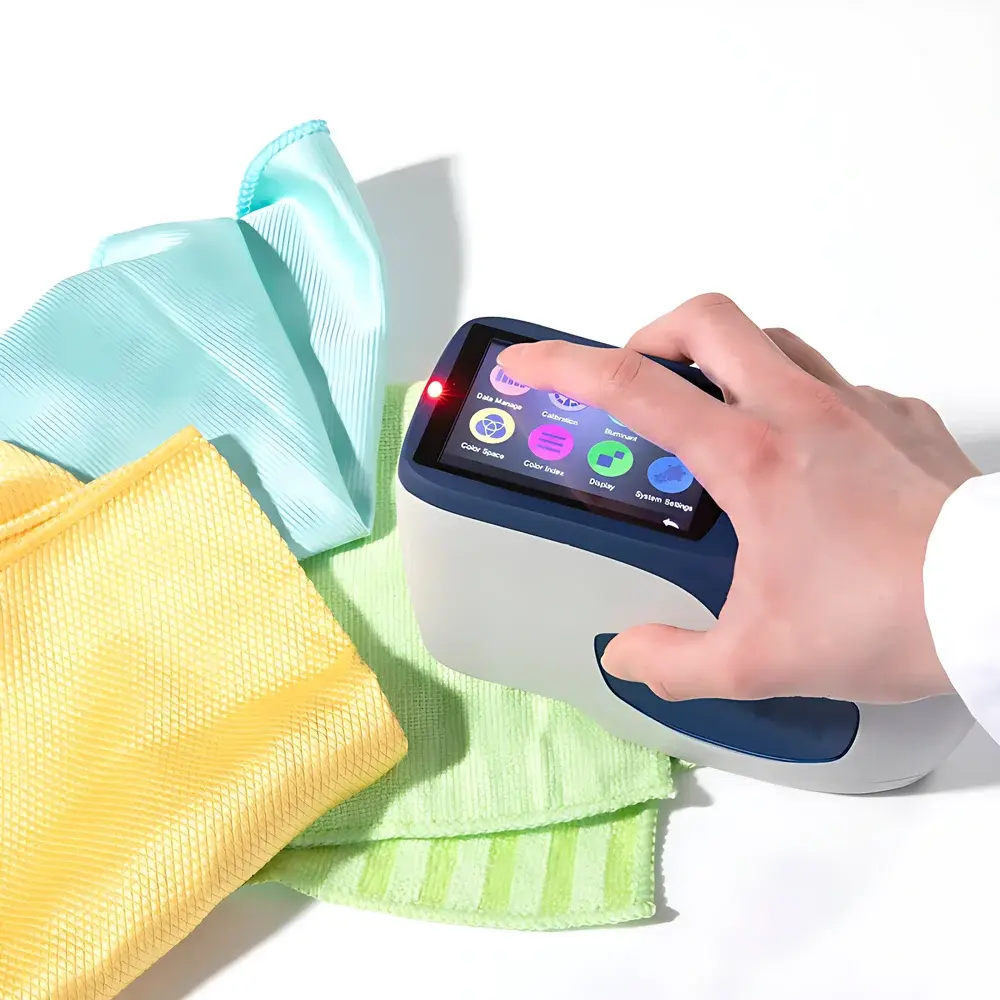
Lovibond TR520/500 Handheld Color Difference Meter
| Brand | Lovibond (Tintometer) |
|---|---|
| Origin | United Kingdom |
| Model | TR 520 / TR 500 |
| Instrument Type | Portable |
| Optical Geometry | d/8° integrating sphere |
| Light Source | Combined LED + UV |
| Spectral Range | 400–700 nm |
| Repeatability | TR520 (MAV/SCI): ΔE* ≤ 0.03 |
| TR500 (MAV/SCI) | ΔE* ≤ 0.05 |
Overview
The Lovibond TR520/500 Handheld Color Difference Meter is a precision optical measurement instrument engineered for high-reproducibility color assessment across diverse sample forms—including liquids, powders, gels, pastes, granules, and solid surfaces. Designed and manufactured in the United Kingdom by Tintometer Ltd—global leader in color science since 1874—the TR series implements CIE-compliant d/8° geometry with an integrating sphere to ensure uniform illumination and diffuse viewing conditions per ISO 7724-1, ASTM E308, and CIE 15:2004 standards. Its dual-wavelength LED light source (including selectable UV component) enables accurate evaluation of fluorescent and non-fluorescent materials, supporting compliance with ASTM D6290 (fluorescent whitening agents) and ISO 11475 (paper and board). The instrument’s core function is spectral reflectance capture at 10-nm intervals across the visible spectrum (400–700 nm), followed by real-time computation of CIE standard color spaces and difference metrics using embedded NIST-traceable algorithms.
Key Features
- Ergonomic handheld form factor with balanced weight distribution and textured grip for extended use in production line or laboratory settings.
- Integrated high-resolution camera viewfinder for precise targeting and consistent measurement positioning—critical for minimizing spatial variability in heterogeneous or textured samples.
- Interchangeable apertures on the TR520 model support flexible field-of-view selection (e.g., 8 mm, 4 mm, or 3 mm), enabling reliable analysis of both macroscopic batches and localized surface defects.
- UV-enabled measurement mode allows toggling of ultraviolet excitation—essential for assessing optical brighteners in textiles, detergents, and pharmaceutical coatings per USP & EP monographs.
- Multi-language UI (English, German, French, Spanish, Chinese, Japanese) configurable via on-device menu or PC software—designed for global manufacturing environments subject to multilingual SOP requirements.
- Rugged IP54-rated enclosure with chemical-resistant housing and scratch-resistant sapphire window—validated for operation under industrial ambient conditions (10–40 °C, 20–80% RH, non-condensing).
Sample Compatibility & Compliance
The TR520/500 system accommodates a broad physical spectrum of materials through optional accessories: liquid cuvette holders, powder compaction cells, gel trays, and flat-surface contact adapters—all designed to maintain consistent sample geometry and minimize specular reflection artifacts. Each adapter complies with ISO 13655 (M0/M1/M2/M3 measurement modes) and supports measurement repeatability within stated ΔE* tolerances under GLP-aligned operating procedures. Regulatory alignment includes full traceability to NPL (UK National Physical Laboratory) calibration standards, compatibility with FDA 21 CFR Part 11–compliant audit trails when used with supplied software, and support for ISO/IEC 17025 method validation documentation packages.
Software & Data Management
The included free ColorSoft™ desktop application provides comprehensive data governance capabilities: statistical process control (SPC) charting (X-bar/R, Cp/Cpk), spectral library management, batch comparison reports, and automated pass/fail flagging against user-defined tolerance limits. All measurements store timestamped metadata—including operator ID, instrument serial number, aperture setting, UV status, and environmental sensor readings (optional external hygrothermograph integration). Export formats include CSV, PDF, XML, and industry-standard CGATS.2 for cross-platform color workflow interoperability (e.g., with Adobe® Creative Suite or QC systems like LabWare LIMS).
Applications
- Food & Beverage: Quantitative evaluation of browning index in baked goods, color stability in fruit juices, and batch-to-batch consistency in confectionery coatings.
- Pharmaceuticals: Verification of tablet film-coating uniformity, excipient color matching, and stability testing per ICH Q5C guidelines.
- Automotive Paints: Metallic flake orientation assessment, clear-coat yellowness tracking (YI), and multi-angle gloss-corrected ΔE*00 reporting.
- Textiles & Dyes: Fastness rating correlation (ISO 105), whiteness index (WI) calculation per AATCC TM110, and metamerism index (MI) quantification.
- Chemicals & Polymers: Pigment dispersion homogeneity monitoring, degradation-induced hue shift detection in UV-exposed resins, and regulatory submission-ready color data packages.
FAQ
What calibration standards are supported?
NIST-traceable ceramic tiles (BCRA Series II), plus user-defined reference standards stored in instrument memory.
Is the TR520/500 compliant with FDA 21 CFR Part 11?
Yes—when used with ColorSoft™ v4.2+, it supports electronic signatures, audit trail logging, and role-based access control for regulated environments.
Can the device measure translucent or backlit samples?
No—it is optimized for reflective/transmissive (liquid cuvette) measurements only; transmission mode requires dedicated cuvette pathlength configuration.
How often does the instrument require recalibration?
Annual factory recalibration is recommended; daily verification using supplied white tile is required per ISO 9001 internal calibration procedures.
Does Bluetooth connectivity support real-time data streaming to MES or SCADA systems?
Yes—via BLE 5.0 and custom API integration; raw spectral data and computed indices can be pushed to OPC UA or MQTT endpoints using third-party middleware.