
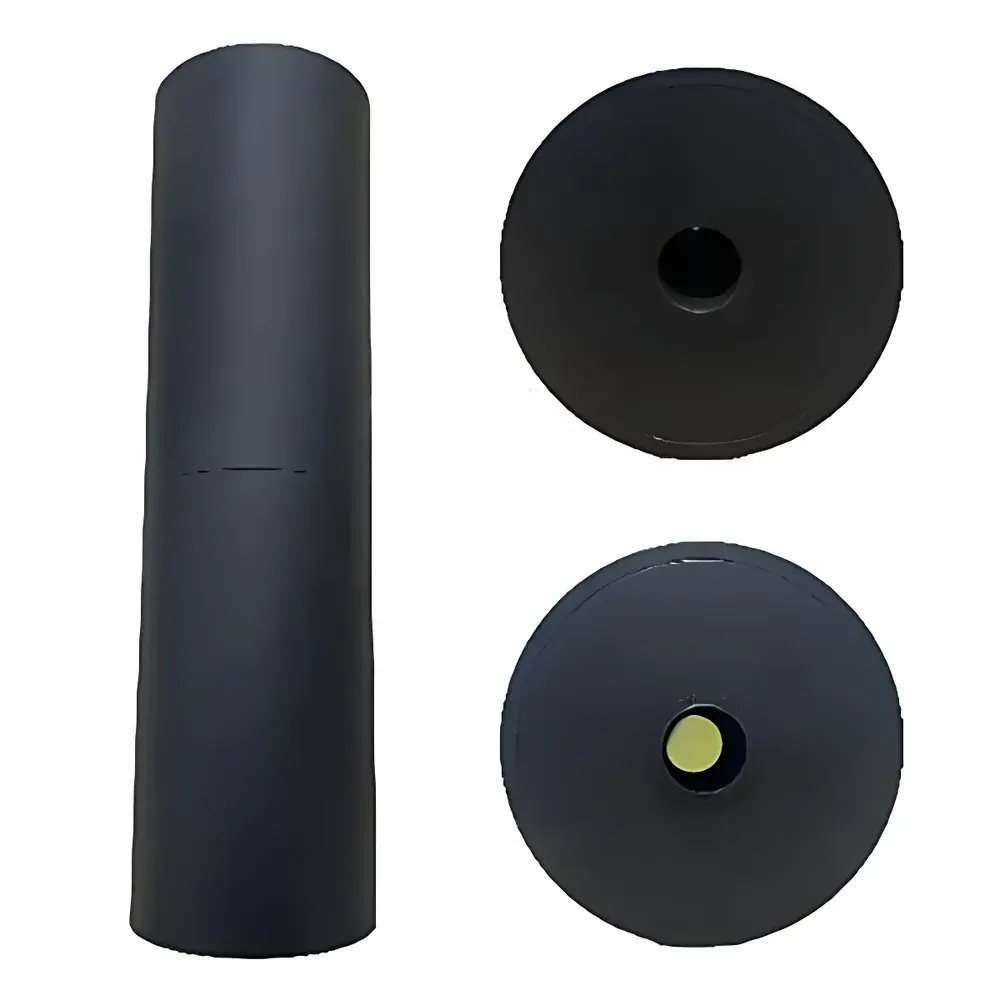
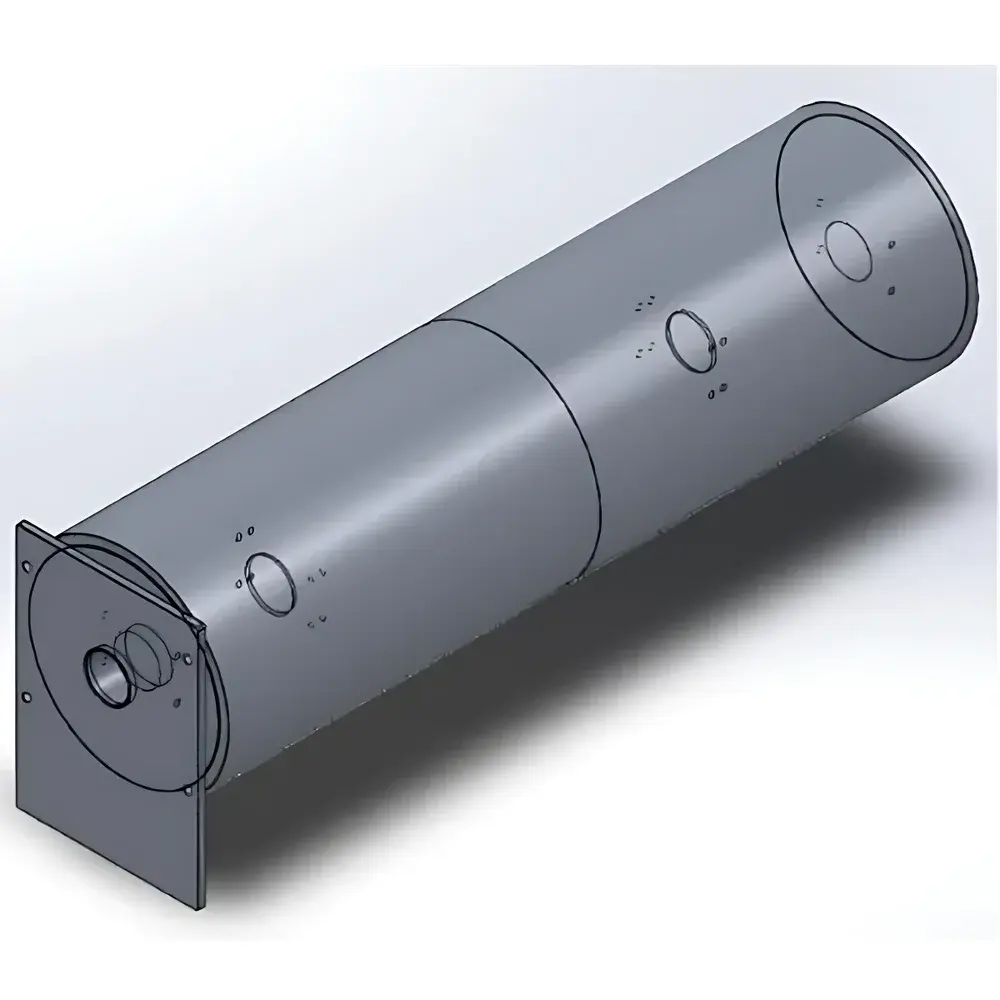
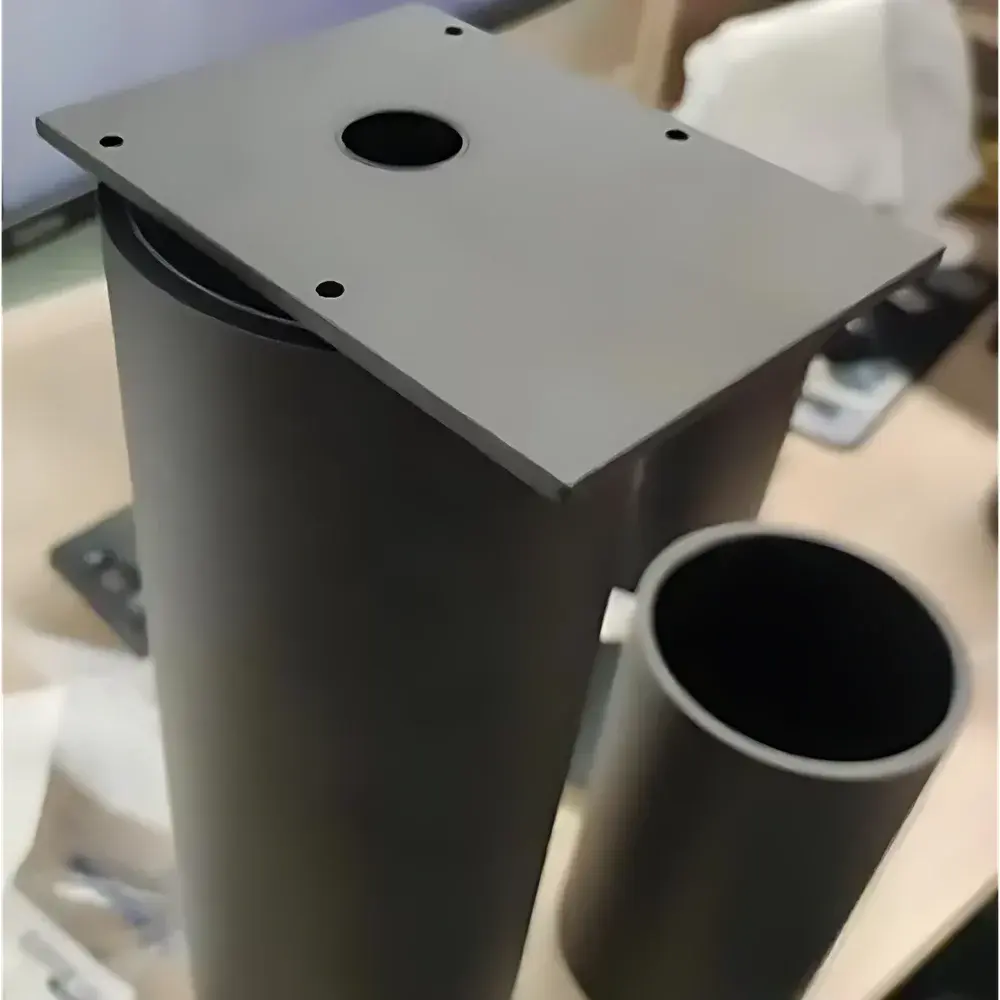
LSZJQ+ Relay Lens for Microscope-to-Spectrometer Coupling
| Brand | ZOLIX |
|---|---|
| Origin | Beijing, China |
| Manufacturer Type | Original Equipment Manufacturer (OEM) |
| Product Category | Domestic |
| Model | LSZJQ |
| Pricing | Upon Request |
| Compatible Systems | Universal Microscope–Spectrometer–Camera Integration |
Overview
The LSZJQ+ Relay Lens is an optomechanically engineered imaging relay system designed to maintain high-fidelity optical conjugation between inverted or upright microscopes and downstream detection units—including grating-based spectrometers, EMCCD cameras, sCMOS sensors, and scientific-grade imaging devices. Operating on the principle of afocal image relaying, the LSZJQ+ preserves the intermediate image plane generated at the microscope’s side port (C-mount interface) and projects a collimated, upright, magnified virtual image onto the entrance slit or sensor plane of the spectrometer or camera. This configuration eliminates image inversion, minimizes field curvature and chromatic aberration across the visible–NIR range (350–1100 nm), and ensures diffraction-limited performance when paired with standard 25 mm or 30 mm diameter optics. Unlike simple extension tubes or fixed-focus couplers, the LSZJQ+ incorporates adjustable lens spacing and precision-machined aluminum housing to accommodate variable working distances and spectral alignment requirements—critical for quantitative micro-spectroscopy and spatially resolved photoluminescence mapping.
Key Features
- Optimized for C-mount microscope side ports (standard 17.526 mm flange focal distance)
- Upright, non-inverted image transfer with 1:1 or 2:1 magnification options (configurable via lens group selection)
- Integrated light-tight barrel design to suppress stray light—essential for dark-field spectroscopy and low-signal applications
- AR-coated fused silica and BK7 lens elements with broadband anti-reflection coating (R<0.5% per surface, 400–1000 nm)
- Mechanically stable, kinematic mounting compatible with standard 30 mm cage systems and spectrograph input flanges
- No internal focusing mechanism required—designed for fixed conjugate distances matching ZOLIX wide-slit spectrometers (e.g., Omni-λ series) and EMCCD detectors
Sample Compatibility & Compliance
The LSZJQ+ supports universal integration with inverted and upright microscopes equipped with side-view C-mount output (including Nikon Eclipse, Olympus IX, Leica DMi8, and Zeiss Axio Observer platforms). It is fully compatible with ZOLIX grating spectrometers featuring 25 µm–300 µm entrance slits, f/4–f/6 imaging optics, and reflective or transmissive grating configurations. For camera coupling, it maintains MTF >60% at 50 lp/mm across the full 11 mm diagonal field—meeting ISO 19246:2018 specifications for spectral imaging fidelity. The device complies with CE marking requirements for optical instrumentation and conforms to RoHS 2011/65/EU material restrictions. No FDA or IEC 61000-4 electromagnetic compatibility certification is required, as the unit contains no active electronics.
Software & Data Management
As a purely passive optical component, the LSZJQ+ requires no firmware, drivers, or software control. Its performance is fully characterized during optical alignment and remains invariant across acquisition sessions. When used in GLP/GMP-compliant laboratories, the relay lens is documented as a fixed-parameter optical element within instrument qualification protocols (IQ/OQ/PQ). Its mechanical repeatability (<±2 µm axial positioning tolerance) enables traceable calibration workflows aligned with ASTM E275–22 (Standard Practice for Describing and Measuring Performance of UV–Vis–NIR Spectrophotometers) and ISO/IEC 17025:2017 clause 6.4.4 (Equipment Verification). Users integrate the LSZJQ+ into existing spectral acquisition pipelines—whether via ZOLIX DWin software, Andor Solis, or open-source Python-based frameworks (e.g., PySpectrum, SpecViz)—without modification.
Applications
- Micro-photoluminescence (µ-PL) spectroscopy of 2D materials (MoS₂, WS₂, hBN) and quantum dots
- Dark-field hyperspectral imaging of plasmonic nanostructures and metamaterials
- In situ Raman–microscopy coupling using back-illuminated EMCCD detectors
- Real-time bright-field monitoring of microfluidic reactions with synchronized spectral acquisition
- Confocal spectral filtering in multi-channel fluorescence lifetime imaging (FLIM) setups
- Calibration transfer between reference spectrometers and field-deployable micro-spectrographs
FAQ
What is the effective focal length and magnification range of the LSZJQ+?
The LSZJQ+ operates as a two-element afocal relay; its nominal magnification is 1× (unity) by default, but optional lens subgroups enable 2× magnification while preserving telecentricity at the output plane.
Can the LSZJQ+ be used with fiber-coupled spectrometers?
No—it is optimized for free-space imaging coupling only. Fiber input requires a separate fiber collimator and focus adapter.
Is the LSZJQ+ compatible with UV-enhanced spectrometers (e.g., below 350 nm)?
Standard AR coatings are optimized for 400–1000 nm. For UV operation, ZOLIX offers a custom MgF₂-coated variant (model LSZJQ-UV) upon request.
Does the relay lens introduce measurable spectral distortion or polarization dependence?
Measured retardance is <0.5 nm across the visible band; polarization extinction ratio exceeds 100:1 for linear input states, making it suitable for polarized micro-spectroscopy.
How is mechanical alignment verified during installation?
Alignment is performed using a HeNe laser (632.8 nm) and shear plate interferometer; ZOLIX provides a detailed OQ protocol including M² beam profiling and Strehl ratio validation against ISO 10110-5.




