
LTB ARYELLE 400 Laser-Induced Breakdown Spectroscopy (LIBS) Echelle Spectrometer
| Brand | LTB |
|---|---|
| Origin | Germany |
| Manufacturer Status | Authorized Distributor |
| Origin Category | Imported |
| Model | ARYELLE400 |
| Price Range | USD 135,000–162,000 (est.) |
| Instrument Type | Benchtop |
| Integration | Fully Integrated |
| Laser Energy Range | 5 mJ – 850 mJ |
| Focal Length | 400 mm |
| Relative Aperture | f/10 |
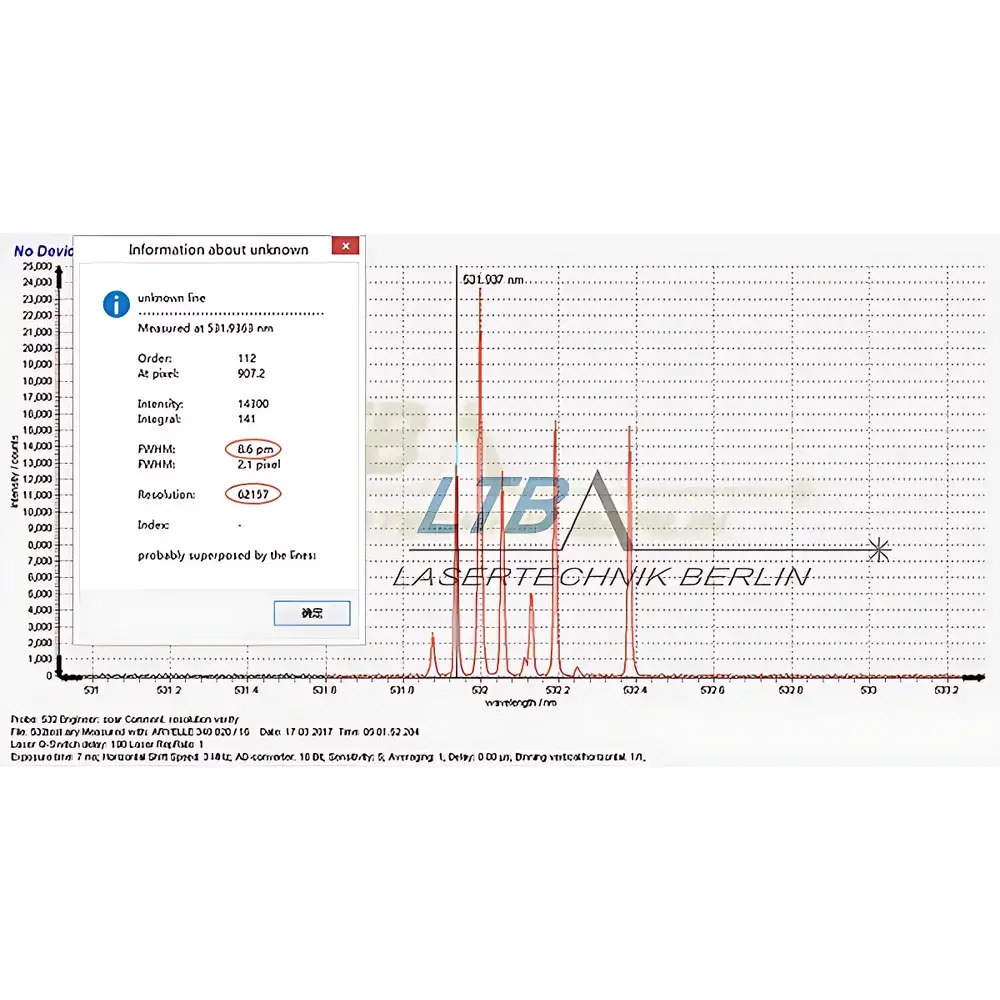
| Spectral Resolution (practical) | 8 pm @ 192 nm (typical), down to 4 pm @ 192 nm (max) |
| Resolving Power (λ/Δλ) | 9,400–25,000 (typical), up to 50,000 (max, practical) |
| Wavelength Coverage (single acquisition) | 192–1090 nm (configurable subsets: 192–950 nm, 192–750 nm, etc.) |
| Slit Dimensions | 50 × 50 µm (custom widths available) |
| Detector Compatibility | PI/Andor CCD (2048 × 512 px |
| Timing Resolution | 100 ns minimum gate step (2 ns / 5 ns achievable with compatible detectors) |
| Dynamic Range | 15-bit system, 16-bit A/D conversion |
| Spectral Calibration | Internal Hg lamp + motorized shutter for automated recalibration |
| Spectral Database | NIST atomic emission line database with auto-line-matching algorithm |
| Optical Coupling | Mirror-based or fiber-optic (SMA connector) |
| Spectral Accuracy | Better than 1/4 of spectral resolution |
Overview
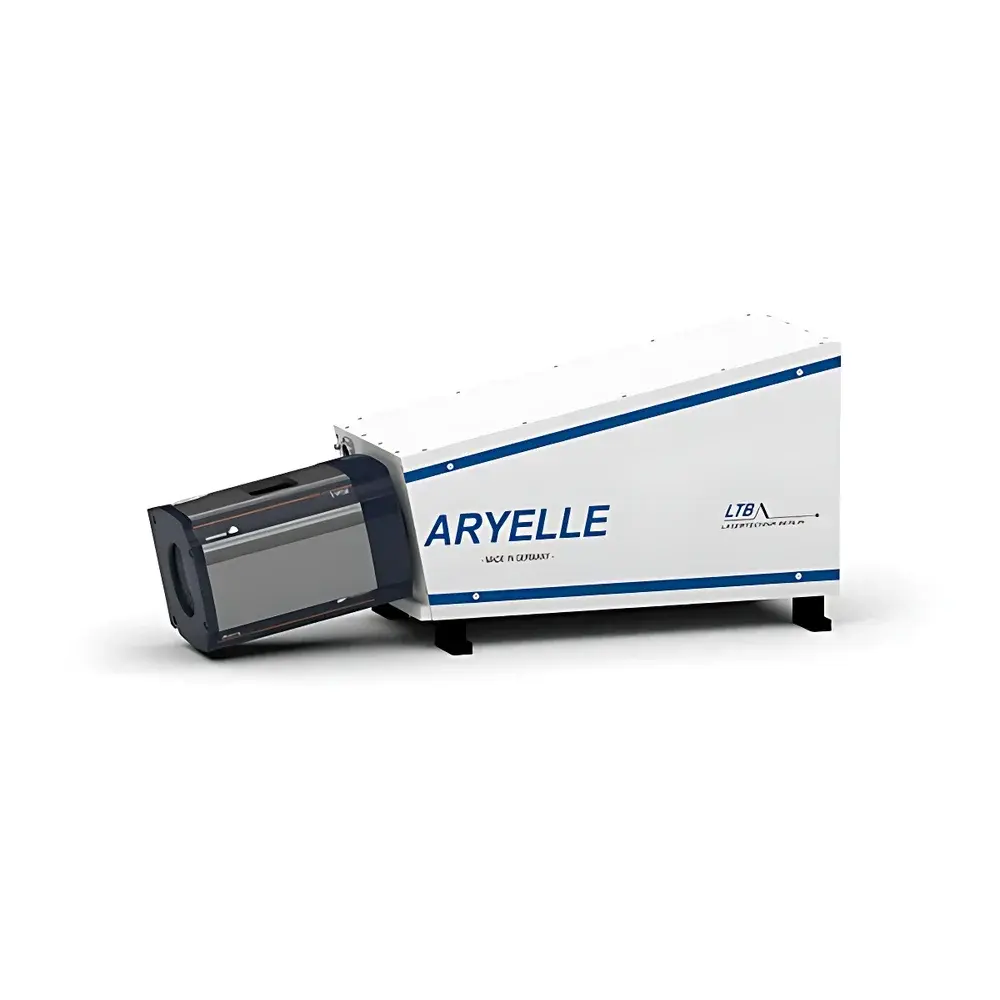
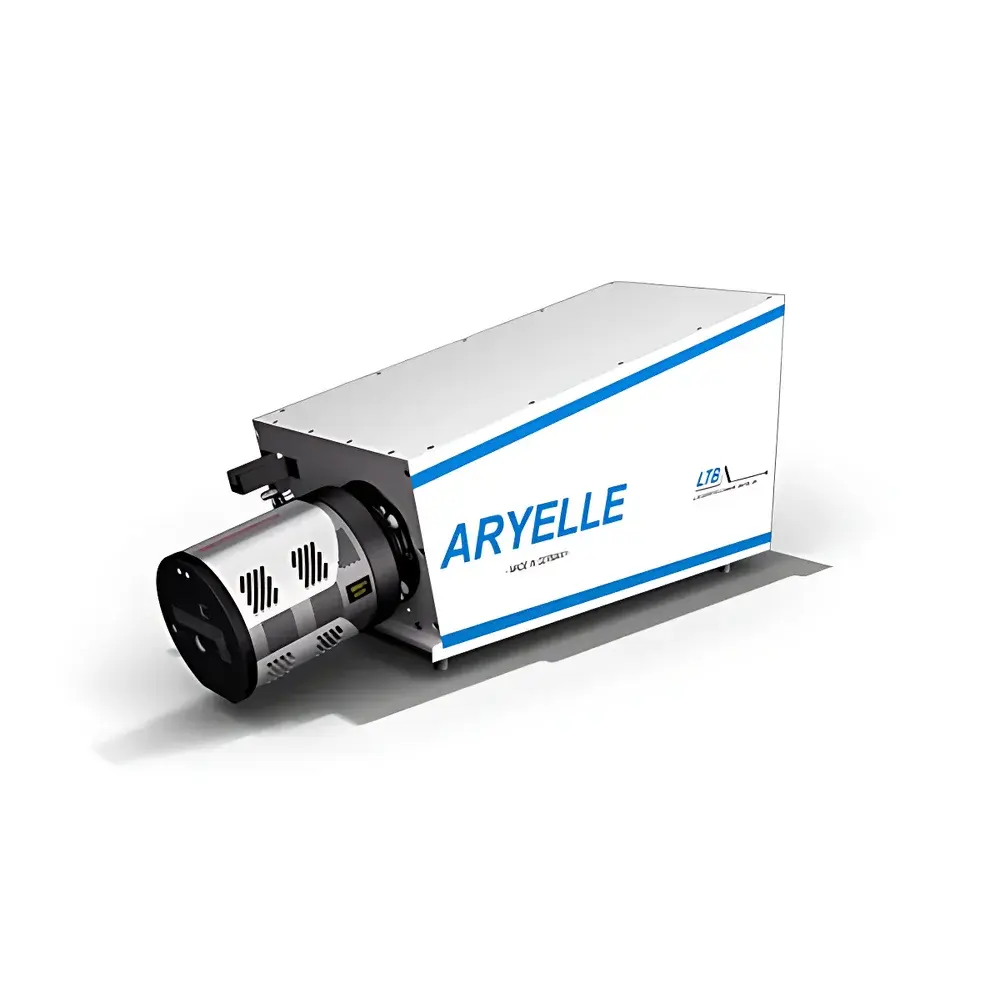
The LTB ARYELLE 400 is a high-performance, benchtop echelle spectrometer engineered specifically for laser-induced breakdown spectroscopy (LIBS) and complementary Raman spectroscopy applications. Based on a robust Czerny–Turner–echelle optical architecture, it combines a 400 mm focal length, f/10 imaging spectrograph with a high-efficiency echelle grating and prism cross-disperser to deliver exceptional wavelength coverage and resolving power in a single-shot acquisition. Unlike scanning monochromators or low-resolution array spectrometers, the ARYELLE 400 captures full UV-VIS-NIR spectra—spanning 192 nm to 1090 nm—with no mechanical movement, enabling real-time elemental fingerprinting and time-resolved plasma diagnostics. Its optical design ensures high throughput and minimal stray light, critical for detecting weak atomic and ionic emission lines from microsecond-scale laser plasmas. The instrument operates as the core spectral detection module within fully integrated LIBS systems, incorporating synchronized laser triggering, gated detector control, and vacuum- or purged-path options for VUV extension down to 175 nm.
Key Features
- Single-acquisition broadband spectral capture across 192–1090 nm (configurable ranges: 192–950 nm, 192–750 nm)
- Practical resolving power up to λ/Δλ = 50,000, corresponding to spectral resolution of 4 pm at 192 nm
- Optimized f/10 optical train with 400 mm focal length, delivering high étendue and signal-to-noise ratio
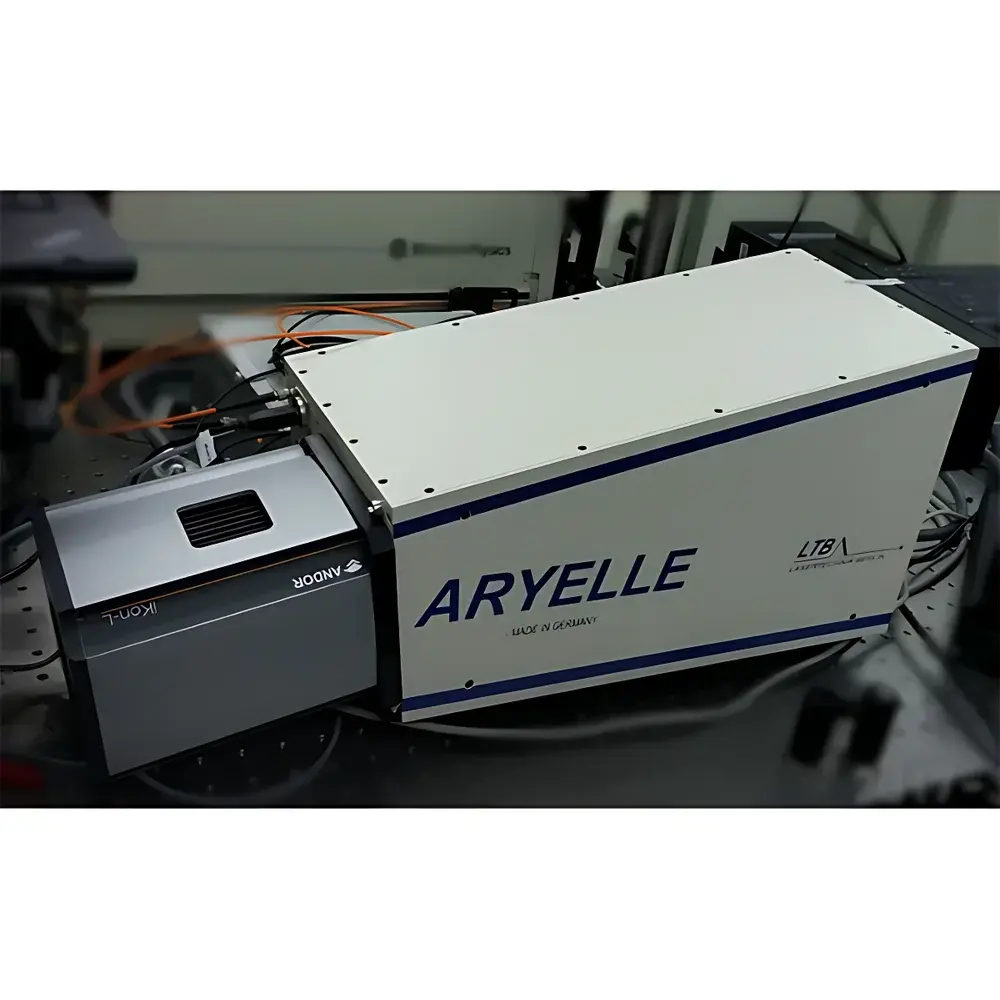
- Modular detector interface supporting scientific-grade CCDs (e.g., PI/Andor: 2048 × 512 pixels, 13 µm pitch, -75 °C thermo-electric cooling), ICCDs, and EMCCDs
- Automated wavelength calibration via internal mercury lamp and precision motorized shutter
- Sub-100 ns temporal gating capability (down to 2 ns with compatible ICCD detectors) for plasma evolution studies
- 15-bit dynamic range system with 16-bit A/D conversion and >1 Me⁻ full-well capacity for quantitative intensity linearity
- Flexible optical coupling: free-space mirror alignment or SMA-fiber input (with optional UV-grade fiber)
Sample Compatibility & Compliance
The ARYELLE 400 is designed for direct analysis of solid, liquid, and aerosol samples via LIBS plasma generation, requiring no sample preparation for conductive or insulating materials. It supports integration into ISO/IEC 17025-compliant laboratories through traceable calibration protocols and audit-ready metadata logging. While the spectrometer itself does not carry CE/FDA certification, its optical and electronic subsystems comply with IEC 61000-6-3 (EMC) and IEC 61010-1 (safety). When deployed in regulated environments (e.g., pharmaceutical raw material screening per USP , metallurgical QC per ASTM E2926, or environmental soil analysis per EPA Method 6010D), the system supports GLP/GMP-aligned data integrity through secure user access controls, electronic signatures, and FDA 21 CFR Part 11–compliant software modules (available via optional LTB SpectraSuite Pro license).
Software & Data Management
Control and analysis are performed using LTB’s SpectraSuite platform—a modular, Windows-based application supporting real-time spectrum acquisition, multi-pulse averaging, background subtraction, and peak identification against the embedded NIST Atomic Spectra Database. SpectraSuite Pro adds advanced features including multivariate calibration (PLS, PCA), spectral library matching, spatial mapping (for LIBS imaging), and automated report generation compliant with ISO 14836 and ASTM E2602. All spectral data are stored in HDF5 format with embedded metadata (wavelength calibration coefficients, detector temperature, laser energy, gate delay), ensuring FAIR (Findable, Accessible, Interoperable, Reusable) principles. Export options include CSV, ASCII, and JCAMP-DX for third-party chemometric tools (e.g., MATLAB, Python SciPy, Unscrambler X).
Applications
- Laser-induced breakdown spectroscopy (LIBS) for rapid, stand-off or in-situ elemental analysis of metals, alloys, geological samples, polymers, and cultural heritage artifacts
- Time-resolved plasma spectroscopy for fundamental studies of laser–matter interaction, electron temperature (via Boltzmann plot), and ionization equilibrium
- Combined LIBS–Raman hybrid analysis using shared optics and synchronized excitation (dual-laser configuration)
- Process analytical technology (PAT) in metallurgy, recycling, and additive manufacturing for melt pool monitoring and powder composition verification
- Environmental monitoring of heavy metals in soils and aerosols, complying with EPA and EU WEEE directives
- Academic research in atomic physics, plasma diagnostics, and spectroscopic metrology
FAQ
Is the ARYELLE 400 suitable for vacuum UV (VUV) measurements below 190 nm?
Yes—when configured with a nitrogen-purged or vacuum optical path and MgF₂-coated optics, the system achieves stable operation down to 175 nm, enabling detection of key emission lines such as Al I (167.08 nm), Si I (171.52 nm), and C I (193.09 nm).
Can the spectrometer be used without an external LIBS laser source?
No—the ARYELLE 400 is a passive spectrometer and requires an external pulsed laser (typically Q-switched Nd:YAG, 1064 nm or frequency-doubled) and associated beam delivery and sample chamber. LTB offers complete turnkey LIBS systems integrating the ARYELLE 400 with lasers, timing controllers, and environmental chambers.
What level of spectral calibration stability can be expected over an 8-hour measurement session?
With internal Hg-lamp recalibration activated every 30 minutes, wavelength drift remains below ±0.2 pixels (equivalent to <0.5 pm at 193 nm) under constant thermal conditions (±0.5 °C ambient stability).
Does the system support time-gated detection for suppressing continuum radiation in LIBS?
Yes—fully programmable detector gating (minimum 2 ns width, adjustable delay from 0 ns) allows precise isolation of atomic line emission during the decay phase of laser-induced plasma, significantly improving signal-to-background ratio.
Are custom slit widths or detector mounts available for specialized applications?
Yes—LTB provides engineering support for OEM integration, including non-standard slit geometries (e.g., 25 µm, 100 µm), cryogenic detector interfaces, and fiber-coupled variants with UV-enhanced transmission coatings.
Related Products




