
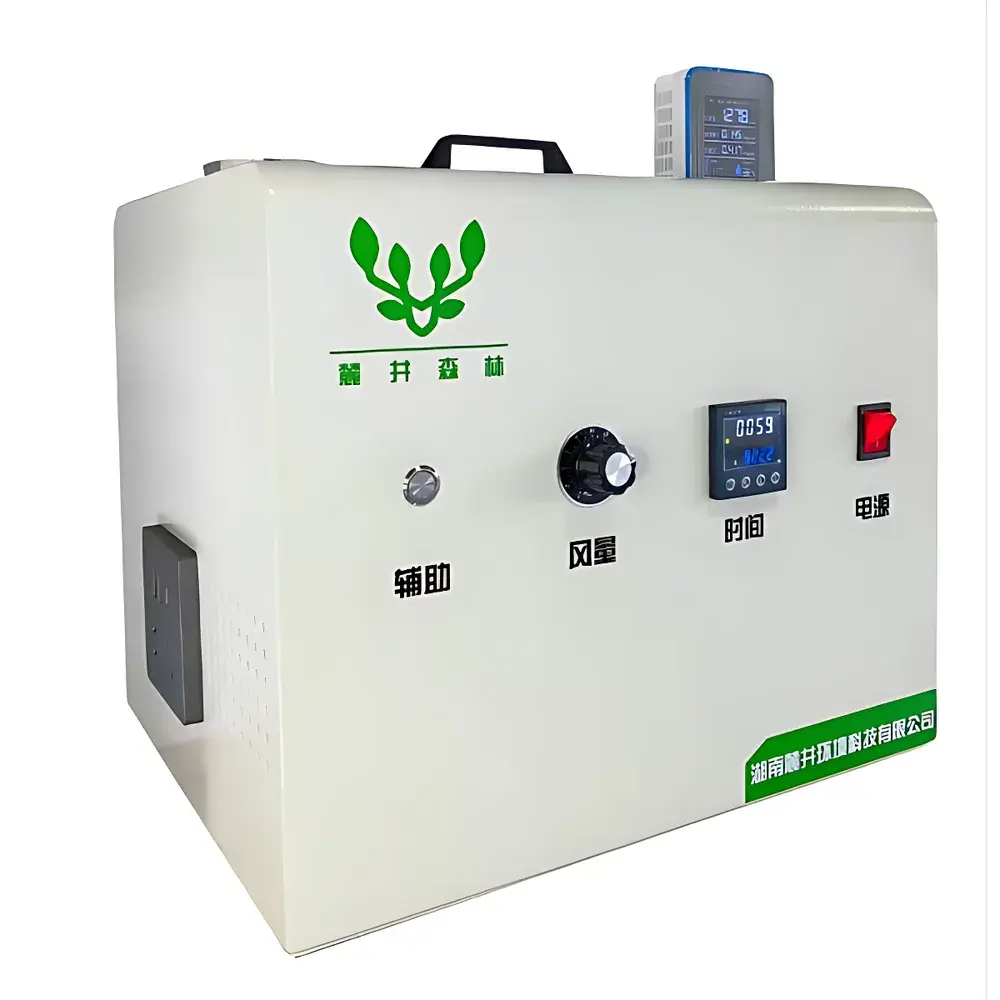
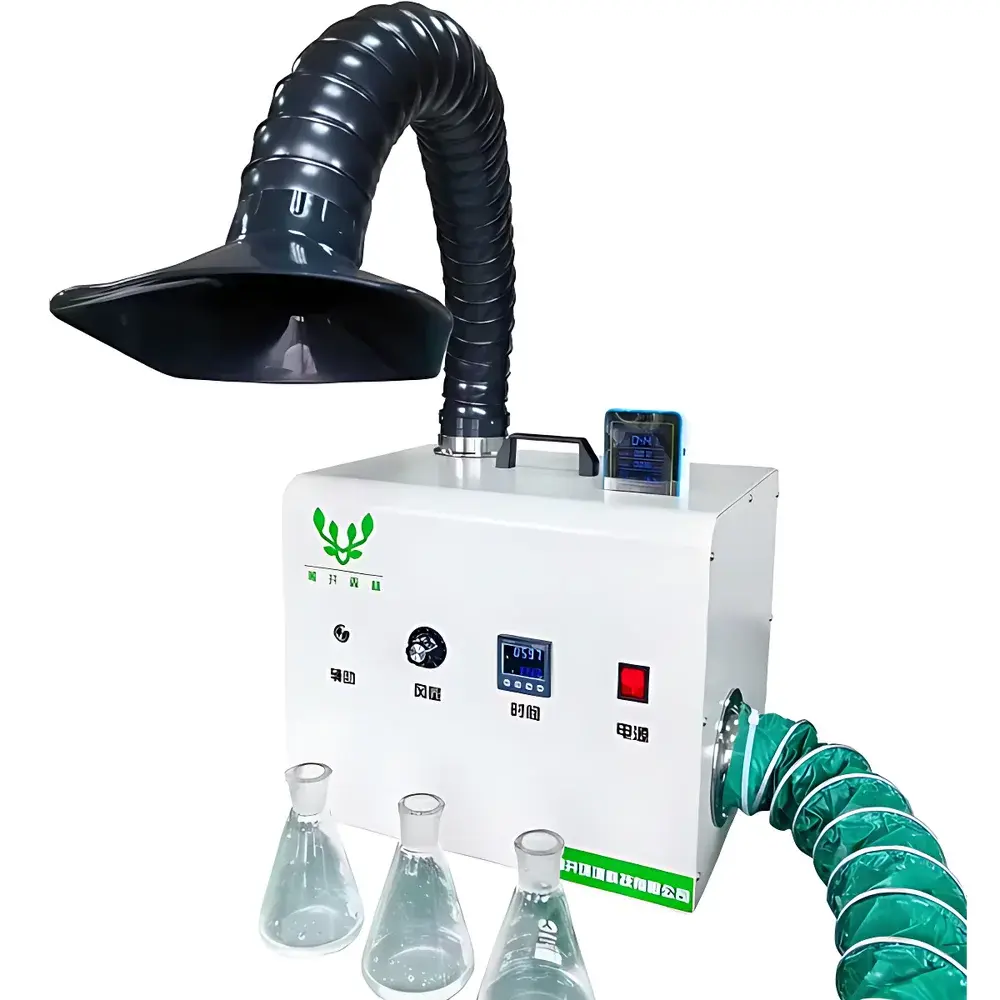
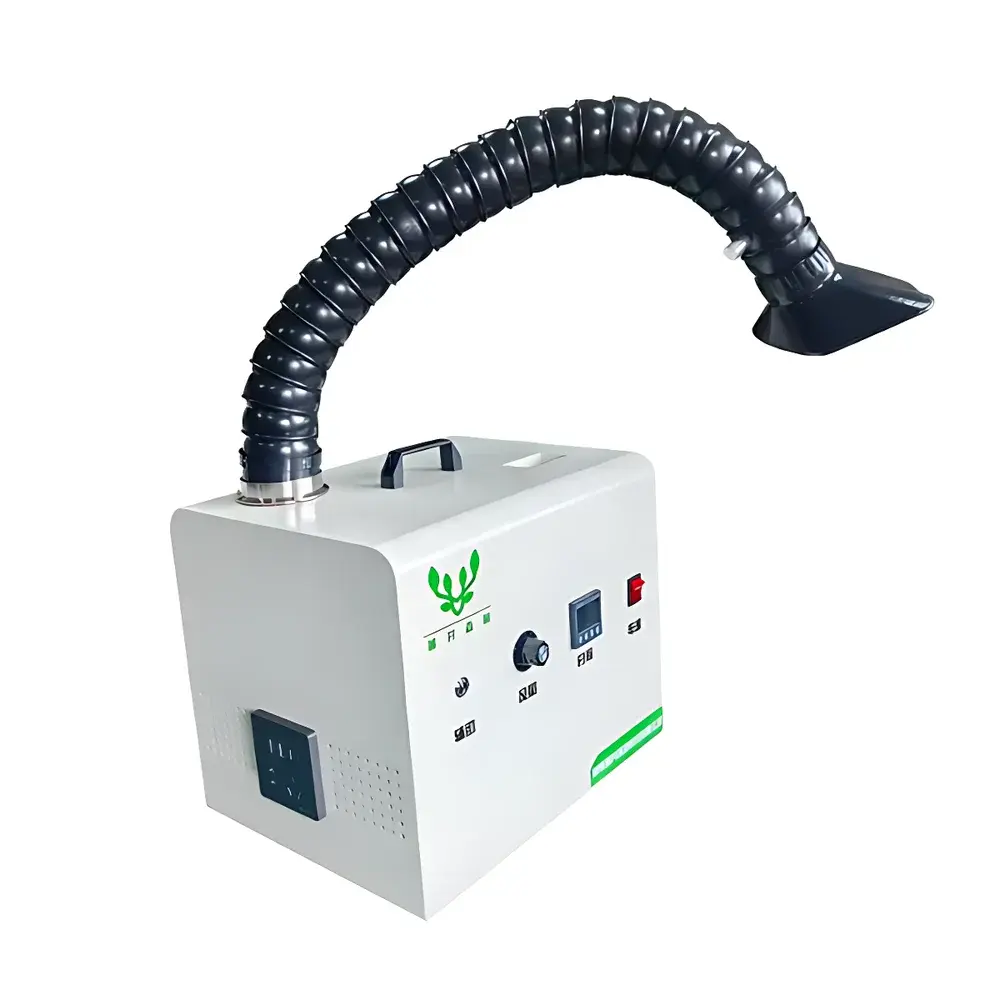
LUJINGHUANJING LJ-JHQ01 Laboratory-Grade Air Purifier
| Brand | LUJINGHUANJING |
|---|---|
| Origin | Hunan, China |
| Manufacturer Type | Authorized Distributor |
| Country of Origin | China |
| Model | LJ-JHQ01 |
| Instrument Type | Filter-Based Air Purifier |
| Recommended Coverage Area | 58–100 m² |
| Noise Level | 15–55 dB(A) |
| Airflow Rate | 300 m³/h |
Overview
The LUJINGHUANJING LJ-JHQ01 Laboratory-Grade Air Purifier is an engineered solution for controlled environments where airborne particulate matter, volatile organic compounds (VOCs), microbial contaminants, and trace gaseous pollutants must be consistently mitigated to meet occupational health, environmental compliance, and quality assurance requirements. Designed specifically for laboratories, cleanrooms, analytical workspaces, and precision manufacturing facilities—including pharmaceutical R&D labs, semiconductor fabrication support areas, and chemical synthesis suites—the LJ-JHQ01 integrates multi-stage physical and chemical filtration with configurable functional modules. Its core architecture follows ASHRAE Standard 52.2 principles for filter efficiency rating and aligns with ISO 14644-1 Class 7–8 ambient air quality benchmarks when deployed in non-ducted, localized applications. Unlike consumer-grade units, the LJ-JHQ01 prioritizes reproducible airflow dynamics, low acoustic signature under sustained operation, and modularity compatible with integration into fume hoods, gloveboxes, or HVAC bypass ducting.
Key Features
- Six-stage composite filtration system: Pre-filter + graded HEPA (H13 equivalent) + activated carbon block + catalytic oxidation layer + optional UV-C (254 nm) germicidal module + optional negative ion generator
- High-efficiency particulate capture: ≥99.9% removal efficiency for particles ≥0.3 µm (tested per ISO 16890:2016 coarse/fine fraction methodology)
- VOC and acid gas abatement: Activated carbon impregnated with food-grade potassium permanganate and triethylenetetramine for formaldehyde, acetic acid, hydrogen sulfide, and low-concentration halogenated organics
- Low-noise operational profile: Acoustic output maintained between 15 dB(A) (sleep mode) and 55 dB(A) (max airflow), validated per ISO 3744 using hemi-anechoic chamber protocols
- Modular expansion interface: Standardized 24 V DC power and RS-485 communication bus enabling integration of optional humidity control, LED task lighting, USB-A charging ports, and aromatic diffusion cartridges
- Robust mechanical housing: Powder-coated steel chassis with IP20 ingress protection, designed for continuous-duty cycles in temperature-stable indoor environments (15–30 °C, RH 30–70%)
Sample Compatibility & Compliance
The LJ-JHQ01 supports air purification workflows compliant with multiple regulatory frameworks governing laboratory and industrial hygiene. It contributes to adherence with OSHA 29 CFR 1910.1200 (Hazard Communication Standard) by reducing inhalation exposure to airborne chemicals during benchtop operations. In GMP-aligned environments—particularly those referenced in Annex 1 (EU GMP) and USP /—the unit serves as a supplementary engineering control for non-ducted containment zones where full HVAC recirculation is impractical. While not certified as a primary cleanroom air handler, its HEPA-grade filtration meets ISO 14644-3 testing criteria for particle challenge validation. Optional UV-C modules comply with IEC 62471 photobiological safety classifications for Class 1 (low-risk) emission profiles. All filter media are RoHS-compliant and documented per REACH Annex XIV substance restrictions.
Software & Data Management
The LJ-JHQ01 includes an embedded microcontroller-based monitoring system with real-time PM2.5, total VOC (ppb-equivalent), and relative humidity sensing. Data logging occurs at 1-minute intervals with local SD card storage (up to 30 days). Optional cloud connectivity via Wi-Fi or Ethernet enables remote status monitoring and audit-ready event logs—supporting GLP/GMP data integrity requirements through timestamped, non-erasable records. Firmware adheres to NIST SP 800-53 Rev. 4 controls for secure boot and firmware signing. No proprietary cloud platform dependency; raw CSV export and Modbus TCP interface allow integration with existing facility SCADA or LIMS systems.
Applications
- Chemical synthesis labs: Mitigation of solvent vapors (e.g., acetone, methanol, THF) and acid fumes during open-vessel handling
- Microbiology and cell culture facilities: Reduction of airborne fungal spores and gram-negative endotoxin carriers adjacent to biosafety cabinets
- Electronics assembly zones: Control of solder flux aerosols and metal oxide particulates without introducing static discharge risks
- Pharmaceutical QC labs: Supplemental air cleaning in stability chambers and dissolution testing rooms where HVAC air changes are limited
- Research animal holding areas: Odor and ammonia suppression without ozone generation (UV-C module operates only when airflow is active)
FAQ
Is the LJ-JHQ01 certified to meet HEPA filter standards?
Yes—the primary particulate filter is rated to ISO 16890 ePM1 99.95% efficiency and functionally equivalent to EN 1822 H13 classification for 0.3 µm particles.
Can this unit be integrated into a fume hood exhaust recirculation system?
It is not designed for closed-loop recirculation within Class II BSCs or ducted fume hoods. However, it may be mounted externally on hood sashes or installed upstream of dedicated make-up air ducts per ASHRAE 110 guidance.
Does the UV-C module require periodic lamp replacement?
Yes—UV-C lamps have a nominal service life of 8,000 hours; replacement intervals are tracked via the onboard controller and logged in audit reports.
Are filter replacement parts traceable for quality documentation?
Each filter batch carries a unique serial number and CoA (Certificate of Analysis) referencing ISO 16890 test reports, available upon request for QA record retention.
What maintenance schedule is recommended for continuous lab operation?
Pre-filters: Clean every 2 weeks; Main filter stack: Replace every 6–12 months depending on ambient particulate load; Carbon bed: Replace every 9–18 months based on VOC sensor drift thresholds.



