
LUM Sample Tube for LUMiSizer and LUMiFuge Analyzers
| Brand | LUM |
|---|---|
| Origin | Germany |
| Model Compatibility | LUMiFuge 110, LUMiFuge 111, LUMiSizer 610, LUMiSizer 611, LUMiSizer 650, LUMiSizer 651 |
| Material | Optical-grade quartz or borosilicate glass (standard) |
| Dimensions | Ø24 mm × 90 mm (standard cylindrical format) |
| Optical Path Length | 40 mm (centered measurement zone) |
| Max. Rotor Speed Compatibility | Up to 2000 rpm (LUMiSizer), up to 4000 rpm (LUMiFuge) |
| UV-Vis Transmission Range | 200–1100 nm |
| Thermal Stability | –20 °C to +60 °C |
| Sterilization | Autoclavable (glass variants) |
| Compliance | ISO 9001-manufactured components, CE-marked per EU Directive 2014/30/EU (EMC) and 2014/35/EU (LVD) |
Overview
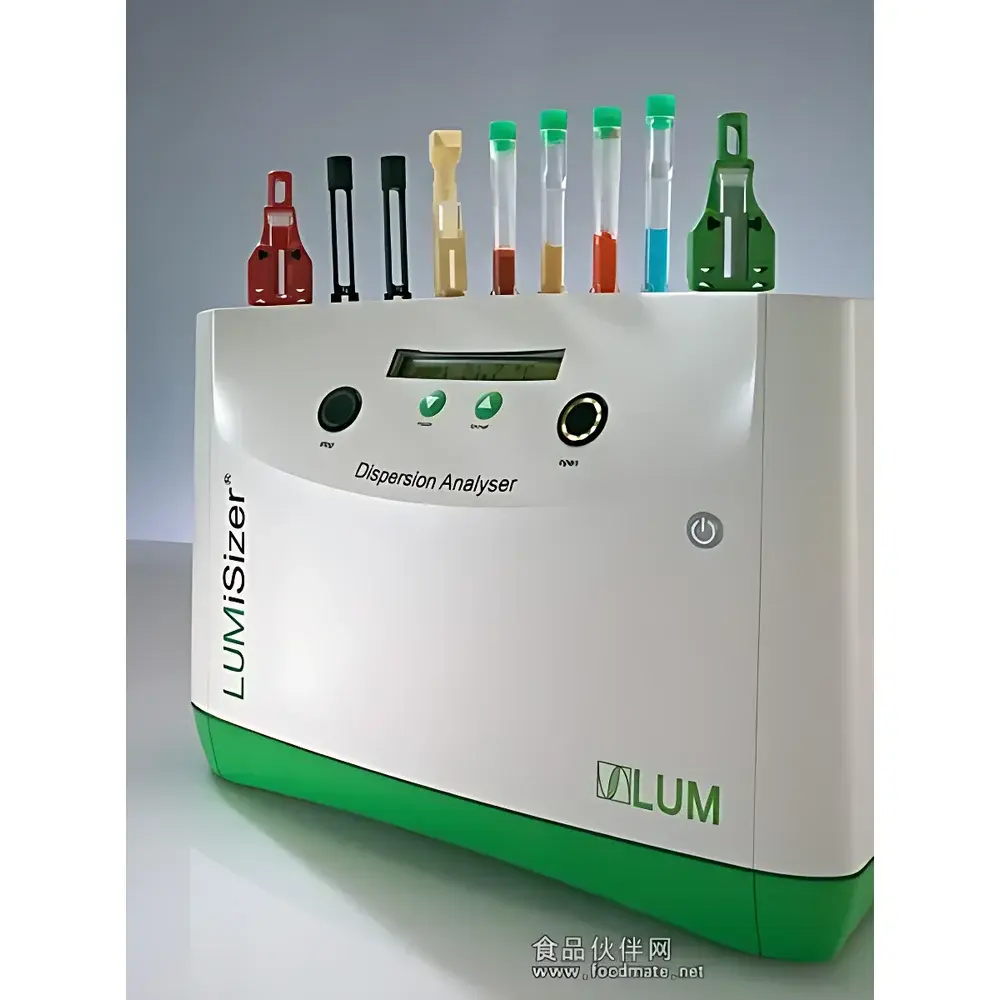
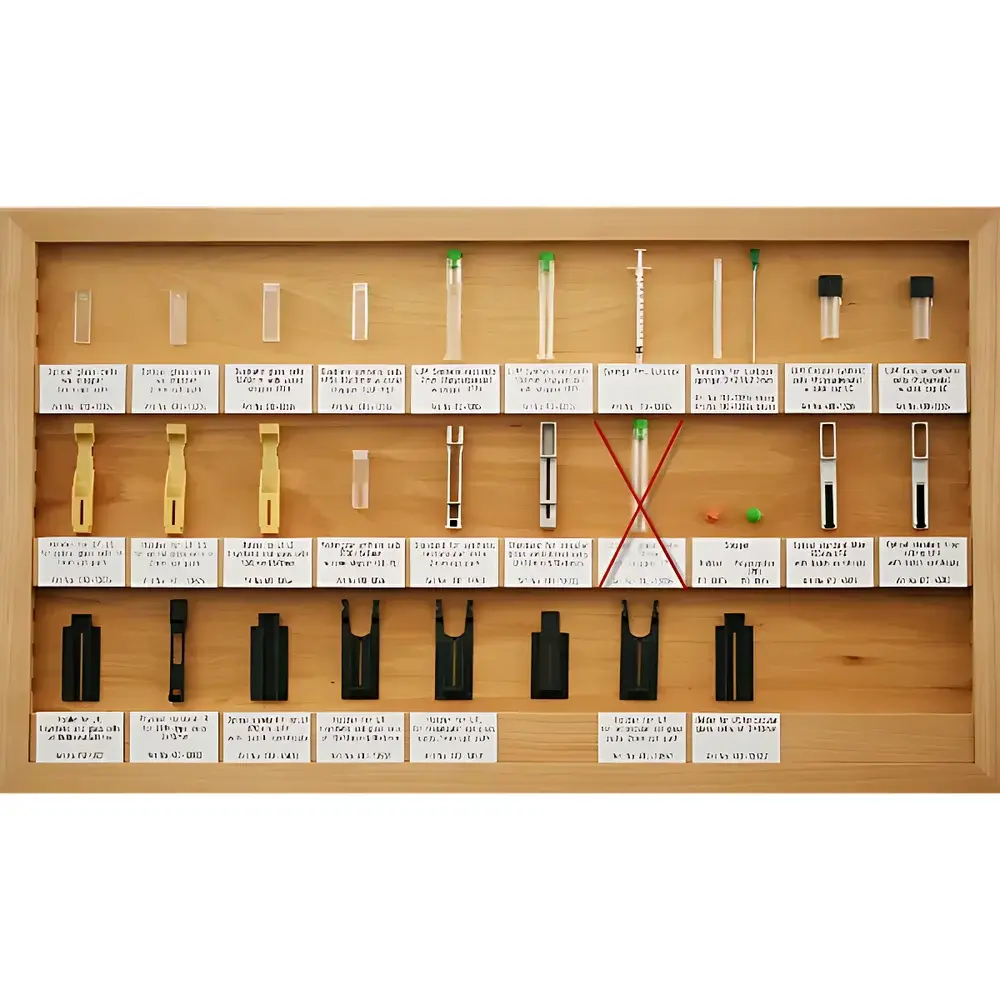
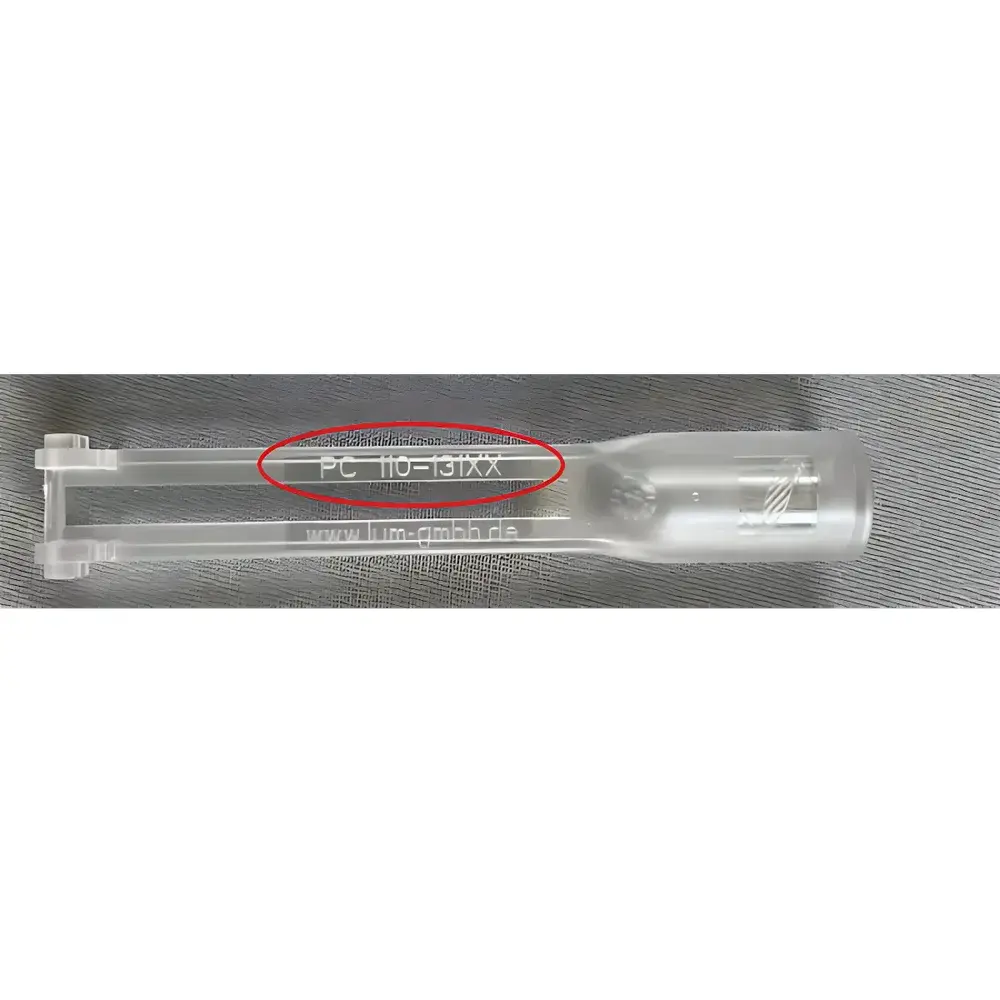
The LUM Sample Tube is a precision-engineered consumable component designed exclusively for use with LUM’s analytical centrifugation platforms—including the LUMiFuge 110/111 and LUMiSizer 610/611/650/651 series. These tubes serve as the optical and mechanical interface between the sample and the instrument’s patented STEP-Technology® (Space- and Time-resolved Extinction Profiles), enabling high-resolution, non-invasive monitoring of particle migration, phase separation, aggregation kinetics, and sedimentation behavior under controlled centrifugal force fields. Unlike conventional centrifuge tubes, LUM sample tubes are manufactured to stringent dimensional tolerances and optical homogeneity standards to ensure reproducible light transmission across the full UV-Vis spectrum (200–1100 nm). Their standardized geometry—Ø24 mm × 90 mm with a 40 mm optical path length—ensures precise alignment within the rotating rotor chamber and optimal signal-to-noise ratio during real-time extinction profiling.
Key Features
- Optical-grade construction using either fused quartz or high-purity borosilicate glass, ensuring minimal autofluorescence and consistent spectral transmittance.
- Tight dimensional control (±5 µm tolerance on outer diameter and wall thickness) to guarantee repeatable rotor balance and rotational stability at speeds up to 4000 rpm.
- Chemically inert surface compatible with acidic, alkaline, and organic solvent-based formulations commonly encountered in edible oil, dairy, and emulsion stability testing.
- Autoclavable (121 °C, 20 min) for rigorous cleaning protocols required in GLP-compliant food quality laboratories.
- Pre-calibrated reference markings aligned to the instrument’s laser detection plane, eliminating manual positioning errors during tube loading.
- Batch-certified traceability documentation provided with each pack, including spectral transmission curves and dimensional verification reports.
Sample Compatibility & Compliance
The LUM Sample Tube supports a broad range of food-grade dispersions, including but not limited to virgin olive oils, refined sunflower and soybean oils, margarine emulsions, protein-stabilized dairy beverages, and starch-based suspensions. Its thermal stability range (–20 °C to +60 °C) permits direct integration into accelerated oxidation studies conducted under ISO 6886 (oxidative stability of fats and oils) and AOCS Cd 12b-92 (Rancimat method validation). All tubes comply with EU Regulation (EC) No 1935/2004 on materials intended to come into contact with foodstuffs. Manufacturing adheres to ISO 9001:2015 quality management systems, and final packaging meets ISO 11137 (radiation sterilization) and ISO 11140 (sterility assurance level validation) requirements where applicable.
Software & Data Management
When used with LUM’s native SEPView® software (v5.2+), the sample tube enables full audit-trail functionality compliant with FDA 21 CFR Part 11. Each tube scan generates time-stamped, position-referenced extinction profiles that are automatically linked to instrument calibration logs, environmental sensor data (temperature, humidity), and user-defined metadata (sample ID, batch number, test protocol). Raw .lum files are stored in a vendor-neutral HDF5 container format, supporting third-party integration via Python-based APIs (lumio) for custom kinetic modeling (e.g., Stokes’ law fitting, creaming velocity calculation, instability index derivation). All data exports include embedded digital signatures and checksums to satisfy internal QA/QC and external accreditation audits (e.g., ISO/IEC 17025).
Applications
- Quantitative assessment of oxidative degradation kinetics in edible oils under accelerated centrifugal stress, correlating with traditional Rancimat induction periods.
- Stability ranking of fat crystal networks in cocoa butter analogs and palm oil fractions via sedimentation velocity analysis.
- Detection of early-stage flocculation in UHT-treated milk proteins under thermal and mechanical stress conditions.
- Characterization of droplet size distribution evolution in plant-based beverage emulsions (e.g., oat, almond, coconut) over shelf-life simulation cycles.
- Validation of antioxidant efficacy (e.g., tocopherols, rosemary extract) by monitoring delay in phase separation onset under standardized g-force profiles.
FAQ
Are LUM Sample Tubes interchangeable between LUMiFuge and LUMiSizer models?
Yes—mechanical and optical specifications are harmonized across all listed instruments (LUMiFuge 110/111 and LUMiSizer 610/611/650/651), enabling cross-platform reuse without recalibration.
Can I use third-party tubes with LUM instruments?
No—non-LUM tubes lack the certified optical path alignment, dimensional repeatability, and material certification required for STEP-Technology® data integrity; instrument error states will be triggered upon detection.
What is the recommended maximum number of reuse cycles for a single tube?
For routine QC applications, up to 50 centrifugation cycles are validated under GLP conditions; beyond this, spectral drift exceeding ±0.5% transmission variance requires replacement.
Do LUM Sample Tubes require pre-conditioning before first use?
Yes—prior to initial operation, tubes must undergo a 10-minute ultrasonic clean in deionized water followed by nitrogen drying to remove micro-particulates affecting baseline extinction.
Is there a version available with integrated temperature sensors?
No—temperature monitoring is performed externally via the instrument’s built-in Peltier-controlled rotor housing; tube-integrated sensors would compromise optical path consistency and are not supported by STEP-Technology® architecture.
Related Products





