
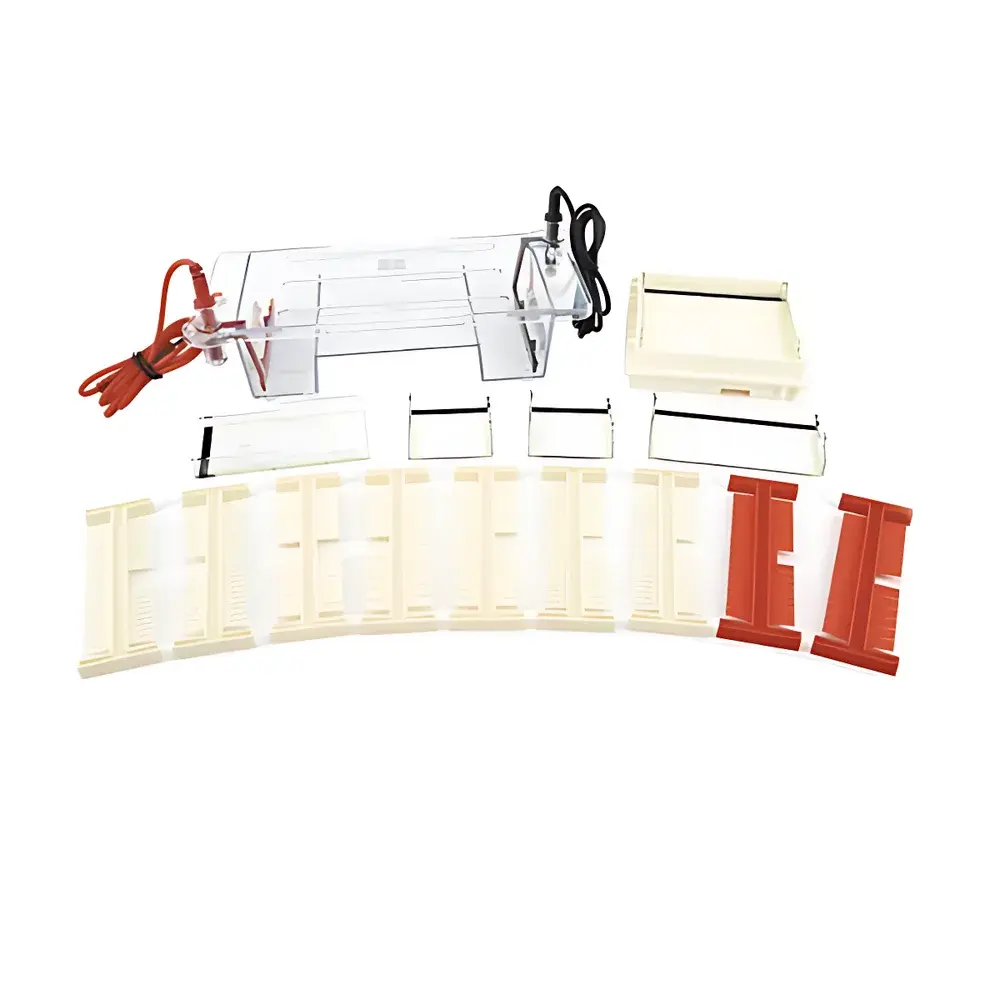
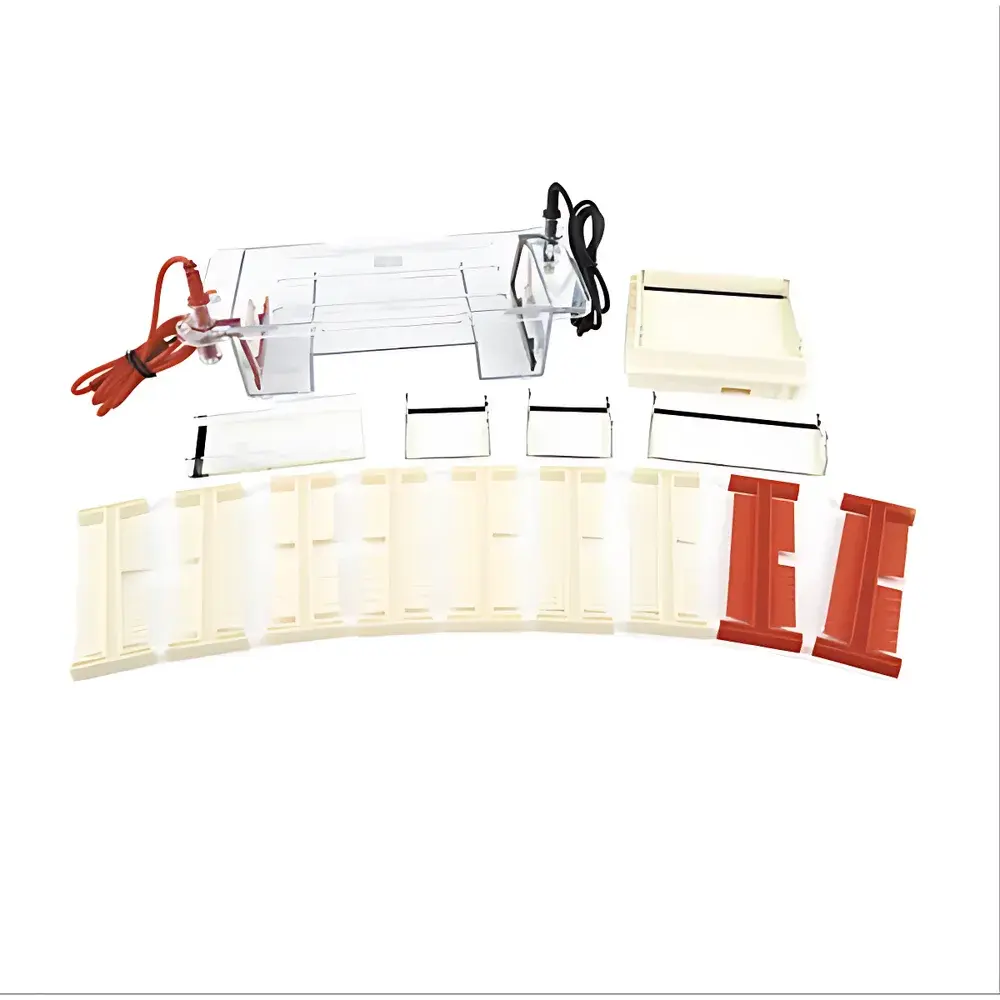
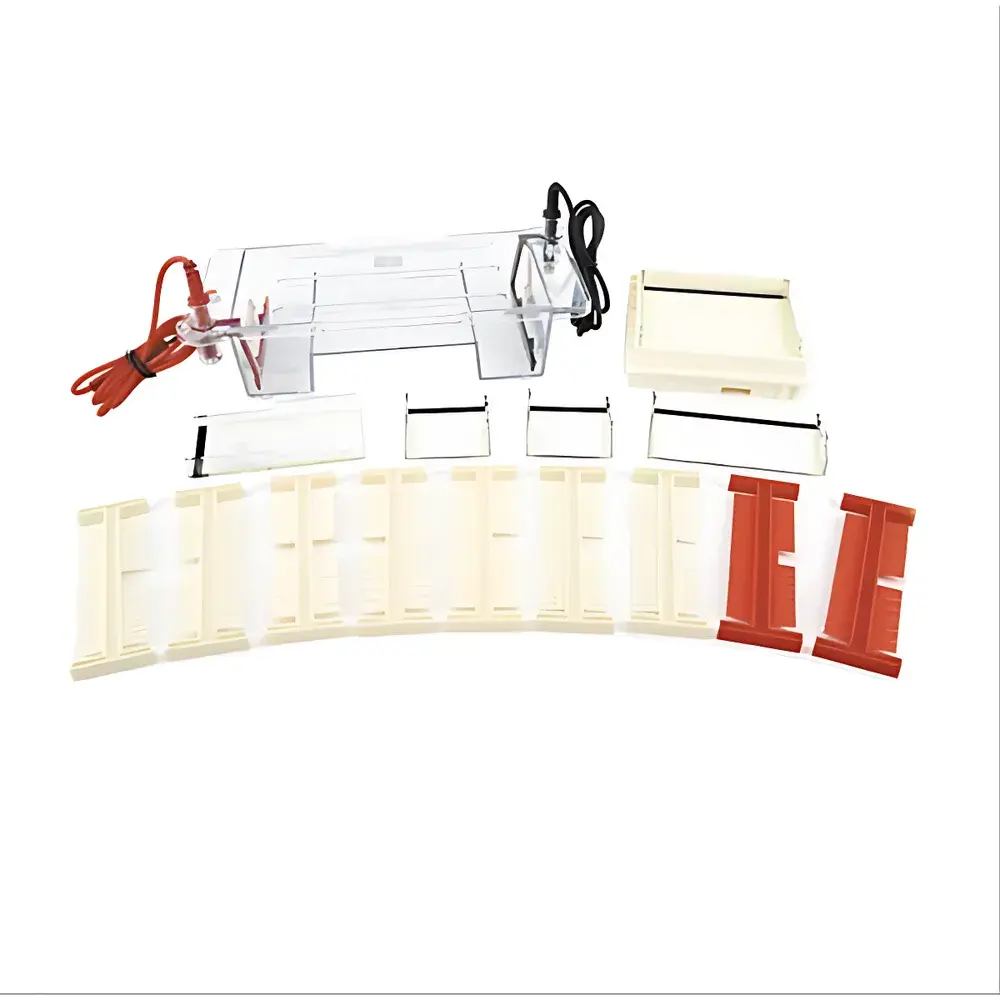
LY DYCP-31DN Agarose Horizontal Electrophoresis System
| Brand | LY (Beijing Liuyi) |
|---|---|
| Origin | Beijing, China |
| Model | DYCP-31DN |
| Instrument Type | Nucleic Acid Electrophoresis Apparatus |
| Gel Tray Dimensions (L×W) | 120×120 mm (large), 120×60 mm (wide), 60×120 mm (long), 60×60 mm (small) |
| Sample Combs | 2+3 teeth (2.0 mm thickness), 6+13 teeth, 8+18 teeth (1.0 mm & 1.5 mm thickness), 11+25 teeth (1.0 mm thickness) — compatible with multichannel pipettes |
| External Dimensions (L×W×H) | 310 × 150 × 120 mm |
| Buffer Capacity | 650 mL |
| Weight | 1 kg |
Overview
The LY DYCP-31DN Agarose Horizontal Electrophoresis System is a compact, benchtop nucleic acid electrophoresis apparatus engineered for routine DNA separation, molecular weight estimation, and analytical gel-based assays in academic laboratories, quality control environments, and diagnostic support units. It operates on the principle of horizontal electrophoresis—where DNA fragments migrate through an agarose gel matrix under a uniform DC electric field, with separation resolution governed by fragment size, gel concentration, buffer composition, and applied voltage. Designed for reproducible, low-background visualization under UV transillumination, the system supports standard ethidium bromide or SYBR Safe staining protocols and integrates seamlessly with downstream imaging systems. Its modular architecture enables rapid setup and reconfiguration for variable experimental throughput without compromising gel integrity or electrical safety.
Key Features
- Four interchangeable gel tray formats (60×60 mm, 60×120 mm, 120×60 mm, and 120×120 mm) accommodate diverse experimental scales—from small validation runs to larger comparative analyses.
- Optically transparent polycarbonate lid with integrated ventilation apertures ensures passive thermal dissipation during extended runs while permitting real-time visual monitoring of migration progress.
- Gel trays incorporate embedded fluorescent calibration rulers (1 cm increments), enabling direct estimation of DNA fragment mobility and approximate molecular weight without external reference markers.
- Bridge-style electrode assembly minimizes buffer volume requirements (650 mL total capacity), reducing reagent consumption and waste generation—particularly advantageous for high-frequency usage in teaching labs or QC workflows.
- High-flexibility silicone-insulated leads with automatic circuit interruption upon lid opening comply with IEC 61010-1 safety standards for laboratory electrical equipment.
- Removable platinum-coated stainless steel electrode holders and replaceable electrode tips facilitate thorough cleaning, decontamination, and long-term maintenance—critical for minimizing cross-contamination between samples.
- Integrated positioning stops and precision-molded comb guides ensure consistent well geometry and accurate sample loading alignment across repeated runs.
Sample Compatibility & Compliance
The DYCP-31DN is validated for use with standard TAE (Tris-Acetate-EDTA) and TBE (Tris-Borate-EDTA) electrophoresis buffers at concentrations ranging from 0.5× to 1×. It supports agarose gels from 0.7% to 3.0% (w/v), suitable for resolving DNA fragments from ~100 bp to >20 kbp. The system accommodates all common nucleic acid stains—including ethidium bromide, GelRed®, SYBR® Gold, and SYBR® Safe—without interference from housing materials. All structural components are manufactured from medical-grade polycarbonate via precision injection molding, ensuring chemical resistance to common electrophoresis reagents and autoclavability (up to 121°C, 15 min) for sterility assurance. The unit meets CE marking requirements per Directive 2014/30/EU (EMC) and 2014/35/EU (LVD), and conforms to ISO 9001-certified production practices.
Software & Data Management
As a standalone electrophoresis platform, the DYCP-31DN does not incorporate embedded firmware or proprietary software. It functions as a hardware-only module designed for integration into established laboratory data management ecosystems. Users may document run parameters—including voltage (typically 50–150 V DC), duration (15–90 min), and buffer temperature—within electronic lab notebooks (ELNs) compliant with 21 CFR Part 11 requirements. When paired with third-party gel documentation systems (e.g., Bio-Rad GelDoc™, Azure Sapphire™, or UVP ChemStudio™), raw image files (TIFF, PNG) retain full metadata traceability when captured under standardized illumination conditions. Calibration ruler visibility supports semi-quantitative analysis within ImageJ/Fiji or commercial densitometry tools.
Applications
- Routine verification of PCR amplification products and restriction digestion profiles.
- Molecular weight estimation of plasmid preparations, genomic digests, and cDNA libraries.
- Quality assessment of nucleic acid extraction efficiency and purity (e.g., A260/A280 ratio validation via band intensity comparison).
- Teaching laboratory instruction in molecular biology techniques, including gel loading, electrophoretic mobility principles, and stain optimization.
- Preliminary screening in food authenticity testing (e.g., GMO detection), forensic STR profiling, and plant cultivar identification.
FAQ
What buffer volumes are recommended for each gel tray size?
For optimal current distribution and heat dissipation, use 350–400 mL for 120×120 mm gels, 250–300 mL for 120×60 mm or 60×120 mm gels, and 150–200 mL for 60×60 mm gels.
Can this system be used with polyacrylamide gels?
No—the DYCP-31DN is specifically engineered for agarose-based matrices; its electrode spacing, buffer chamber depth, and tray geometry are not optimized for the thinner, higher-resolution polyacrylamide gels used in SDS-PAGE or native PAGE.
Is the unit compatible with power supplies delivering constant current mode?
Yes—while most users operate in constant voltage mode (standard for agarose), the system accepts regulated DC output from any certified electrophoresis power supply supporting 0–300 V and 0–500 mA ranges.
How often should electrodes be cleaned or replaced?
Electrode surfaces should be rinsed with deionized water after each run and wiped with ethanol weekly; replacement is recommended every 12–18 months under continuous usage or following visible pitting or discoloration.
Does the system include certification documentation for GLP/GMP compliance?
The DYCP-31DN ships with a Certificate of Conformance (CoC) verifying adherence to stated dimensional and material specifications. Full GLP/GMP validation packages—including IQ/OQ documentation templates—are available upon request for regulated environments.



