
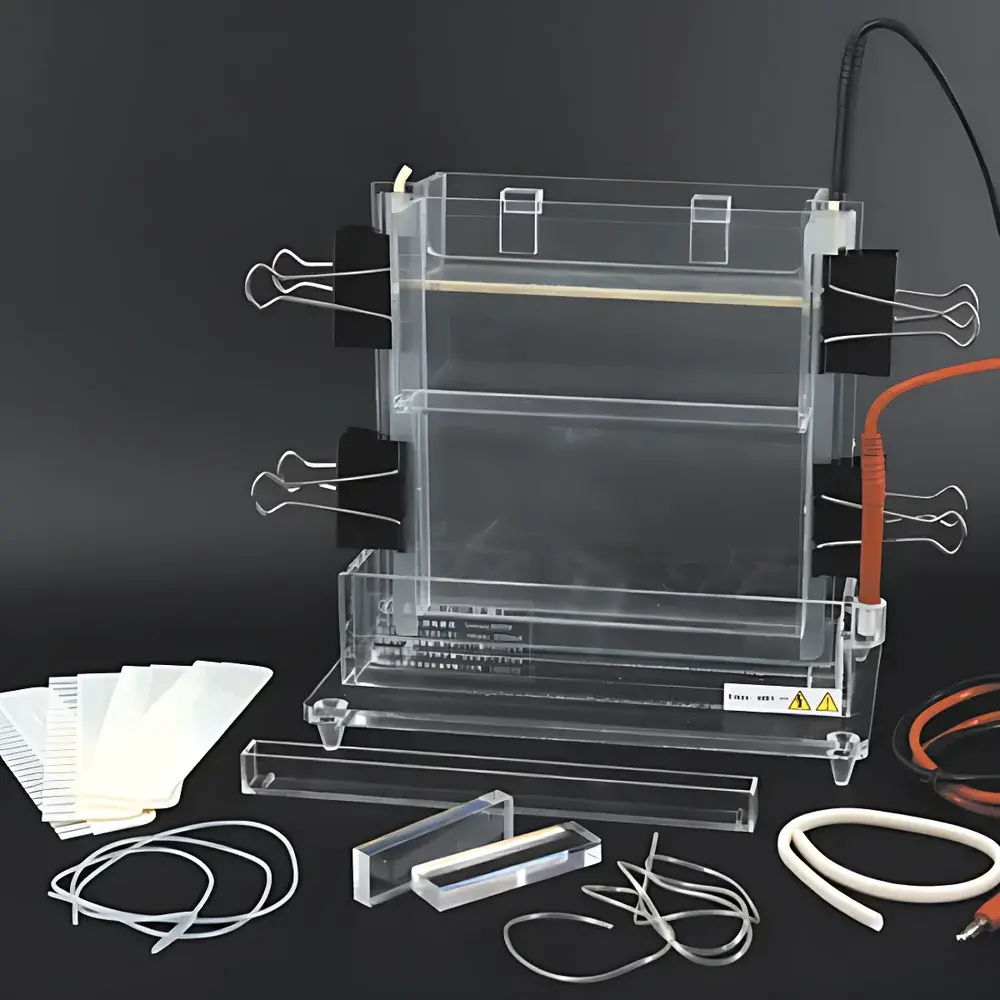
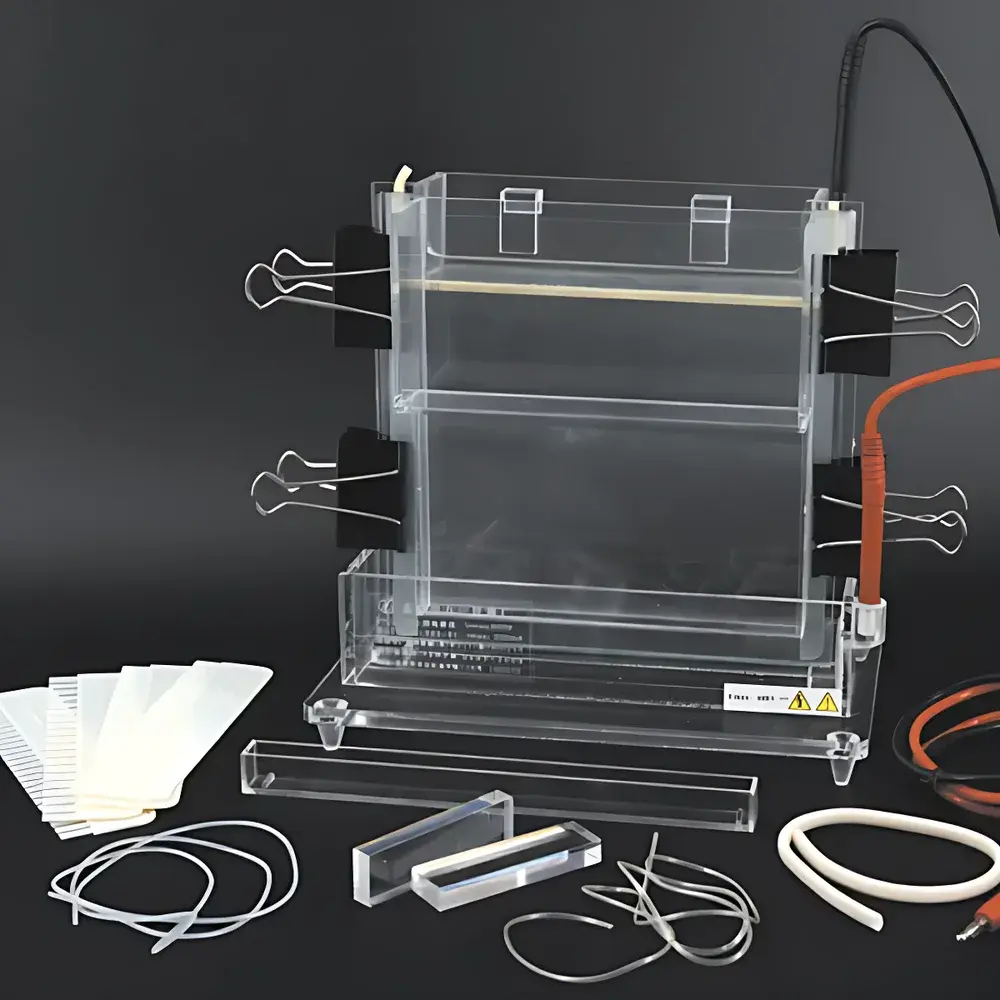
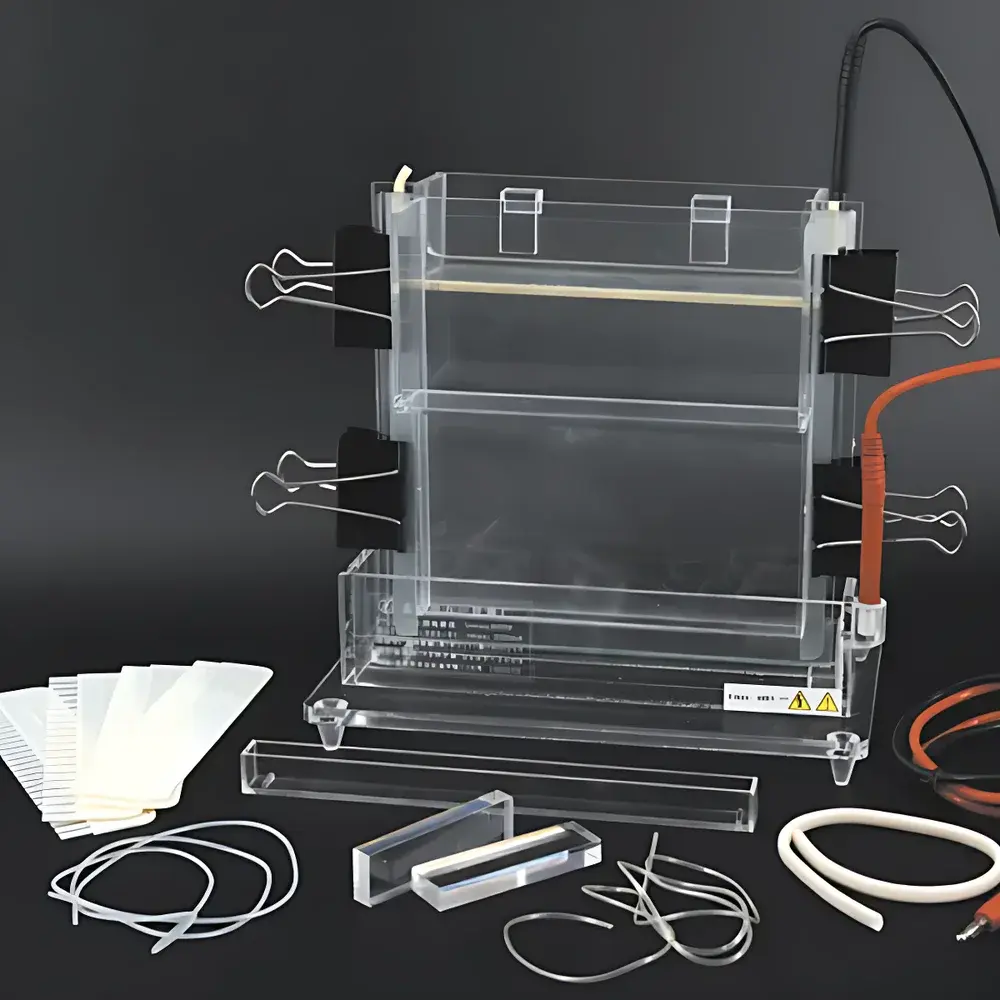
LY DYCZ-22A Single Vertical Electrophoresis Apparatus (Model 121-2210)
| Brand | LY |
|---|---|
| Origin | Beijing, China |
| Manufacturer Type | Authorized Distributor |
| Instrument Category | Domestic |
| Model | 121-2210 |
| Instrument Type | Protein Electrophoresis Apparatus |
| Configuration | Complete Electrophoresis System with Casting Accessories |
| Gel Plate Dimensions (L × W) | 170 × 170 mm |
| External Dimensions (L × W × H) | 240 × 150 × 240 mm |
| Buffer Capacity | 600 mL |
| Weight | 6 kg |
| Sample Combs | 20- and 26-well, available in 1.0 mm and 1.5 mm thicknesses |
Overview
The LY DYCZ-22A Single Vertical Electrophoresis Apparatus (Model 121-2210) is a compact, benchtop vertical electrophoresis system engineered for high-resolution separation of proteins and nucleic acids under denaturing or native conditions. Based on the principle of electrophoretic mobility in polyacrylamide or SDS-PAGE gels, this apparatus applies a uniform electric field across vertically oriented gel matrices to resolve biomolecules by molecular weight and charge-to-mass ratio. Its vertical configuration enables efficient heat dissipation, reduced buffer consumption, and compatibility with standard slab-gel protocols widely adopted in proteomics, molecular biology, and quality control laboratories. Designed for reproducibility and operational consistency, the DYCZ-22A supports routine analytical workflows including Western blotting sample preparation, protein purity assessment, and comparative expression profiling.
Key Features
- Vertical slab-gel architecture optimized for SDS-PAGE and native PAGE applications, supporting standard 170 × 170 mm gel plates
- Integrated upper and lower buffer chambers that minimize electrolyte volume (total capacity: 600 mL), reducing reagent costs and waste generation
- Modular comb system with four interchangeable sample combs: 20- and 26-well configurations, each available in 1.0 mm and 1.5 mm thicknesses for flexible loading capacity and resolution tuning
- Dual-glass plate assembly with precision-machined spacers and sealing components—including agarose seal trough, ice-casting tray, and silicone gasket kits—to ensure leak-free gel polymerization and consistent gel thickness
- Ergonomic design with corrosion-resistant acrylic housing and low-profile footprint (240 × 150 × 240 mm), suitable for space-constrained laboratory environments
- Universal electrode terminals compatible with standard DC power supplies (not included), supporting voltage ranges typical for vertical electrophoresis (up to 300 V)
Sample Compatibility & Compliance
The DYCZ-22A accommodates a broad range of biological samples, including purified recombinant proteins, cell lysates, serum fractions, PCR-amplified DNA fragments, and RNA preparations. Its gel casting accessories enable reliable preparation of gradient, discontinuous, or homogeneous polyacrylamide gels from 8% to 20% T, as well as agarose–polyacrylamide hybrid matrices. The system conforms to common laboratory practice standards for electrophoretic instrumentation, including ISO/IEC 17025 requirements for method validation and equipment traceability. While not certified for GMP-regulated production environments, it supports GLP-aligned documentation practices when used with calibrated power supplies and validated staining/detection protocols (e.g., Coomassie Blue R-250, silver nitrate, or SYPRO Ruby).
Software & Data Management
As a hardware-only electrophoresis platform, the DYCZ-22A does not incorporate embedded firmware or proprietary software. It operates independently of digital control interfaces, ensuring full compatibility with third-party imaging systems (e.g., ChemiDoc MP, Azure c600) and analysis suites such as ImageLab, Quantity One, or open-source tools like Fiji/ImageJ. Users retain complete control over experimental parameters—including voltage ramping profiles, run duration, and cooling management—via external programmable power supplies. Audit trails, instrument logs, and electronic records are maintained externally in accordance with FDA 21 CFR Part 11 guidelines when integrated into regulated workflows using compliant LIMS or ELN platforms.
Applications
- SDS-PAGE analysis of protein subunit composition, molecular weight estimation, and post-translational modification screening
- Two-dimensional electrophoresis (2-DE) first-dimension IEF gel casting support
- Preparative electrophoresis for downstream extraction of protein bands via electroelution or passive diffusion
- Quality assurance testing of therapeutic proteins, vaccines, and biologics per USP and EP 2.2.47 recommendations
- Teaching laboratory implementation of core electrophoresis principles in undergraduate biochemistry and molecular genetics curricula
- Validation of CRISPR-Cas9 editing efficiency through fragment size analysis of genomic PCR products
FAQ
Is the DYCZ-22A compatible with precast gels?
Yes—standard 170 × 170 mm precast polyacrylamide gels can be loaded directly into the assembled glass plate cassette, provided they match the specified thickness (1.0 or 1.5 mm) and include compatible buffer chamber alignment features.
What power supply specifications are recommended for optimal performance?
A constant-voltage DC power supply rated for 0–300 V and 0–500 mA output is recommended; typical operating conditions for SDS-PAGE are 120–200 V at constant voltage mode.
Can the system be used for native PAGE without SDS?
Yes—the absence of denaturants does not affect mechanical or electrical functionality; however, users must adjust running buffer composition (e.g., Tris-Glycine without SDS) and optimize voltage to prevent band distortion due to differential mobility.
Are replacement parts and consumables readily available internationally?
Original LY-branded combs, glass plates, sealing gaskets, and casting accessories are distributed globally through authorized partners and carry standardized part numbers (e.g., 141-2101, 142-2105) for seamless procurement and inventory management.
Does the apparatus include safety certifications for CE or UL compliance?
The DYCZ-22A is supplied without CE marking or UL listing; end-users are responsible for verifying local electrical safety and lab equipment conformity requirements prior to installation and operation.



