
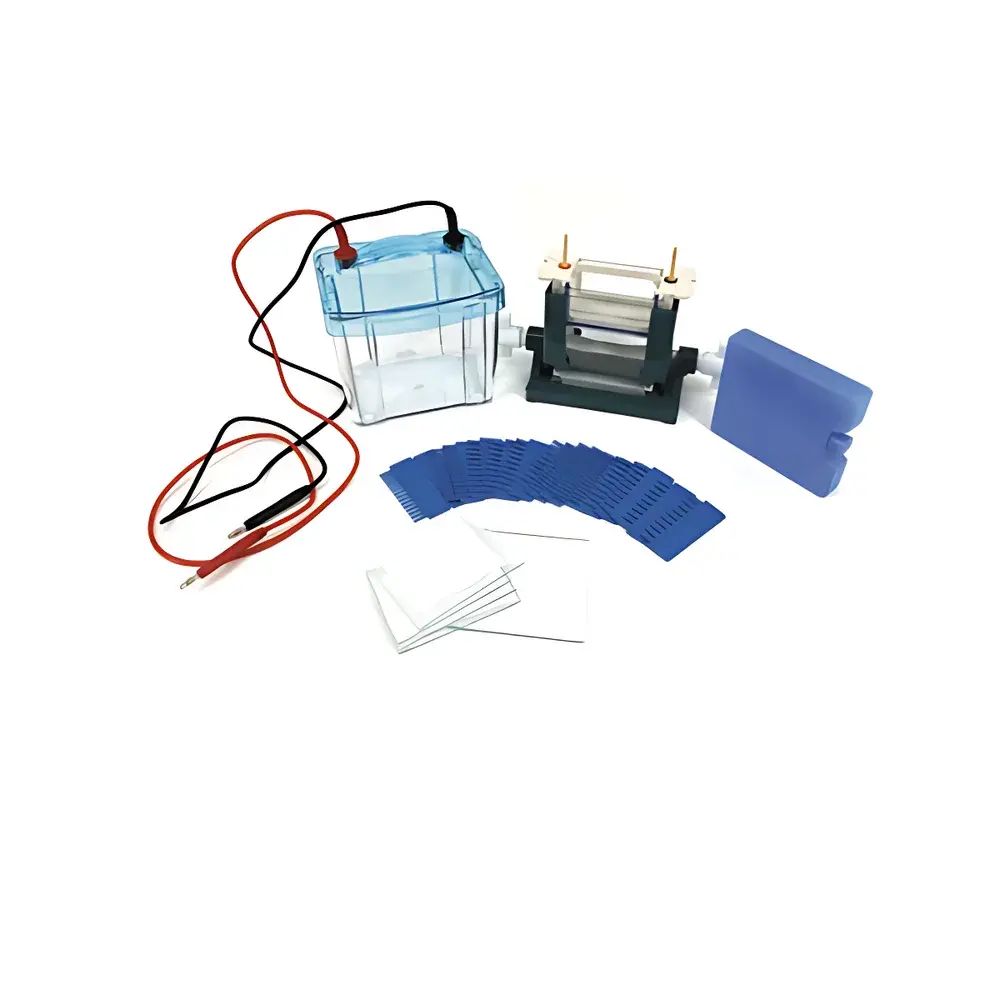
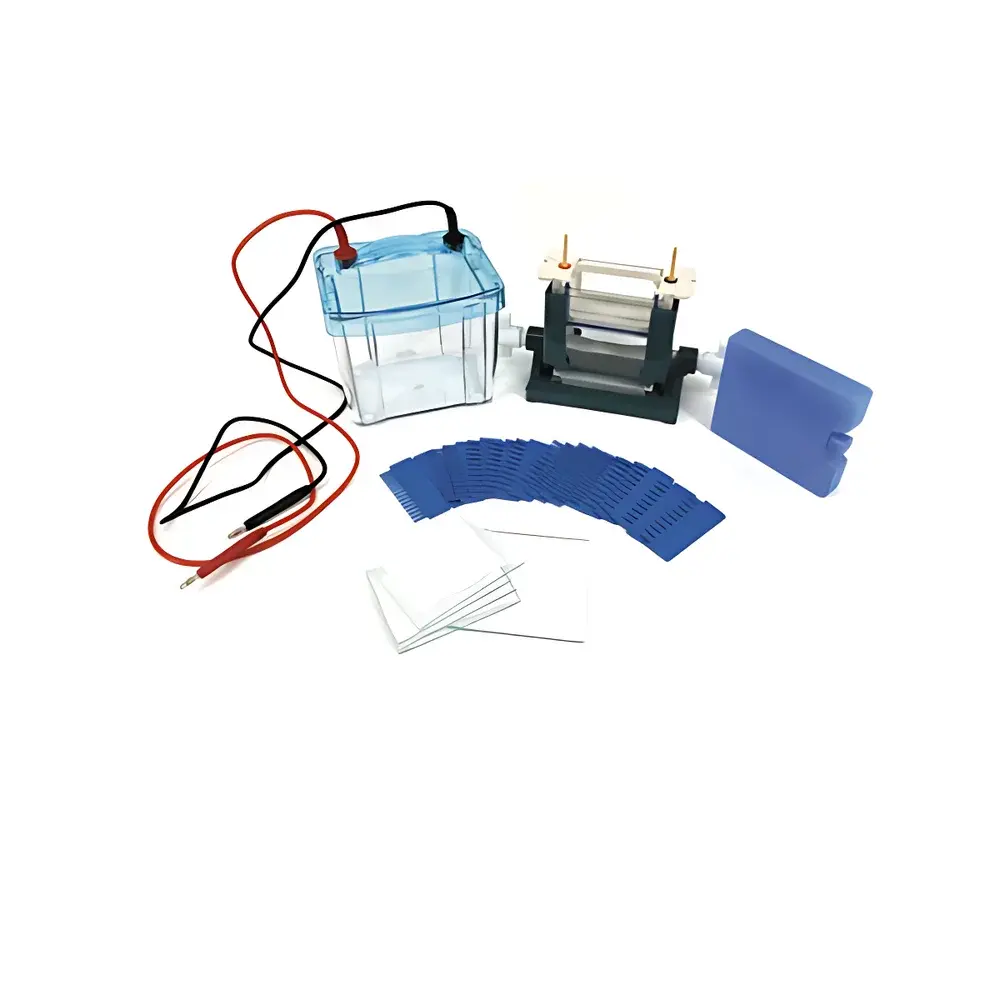
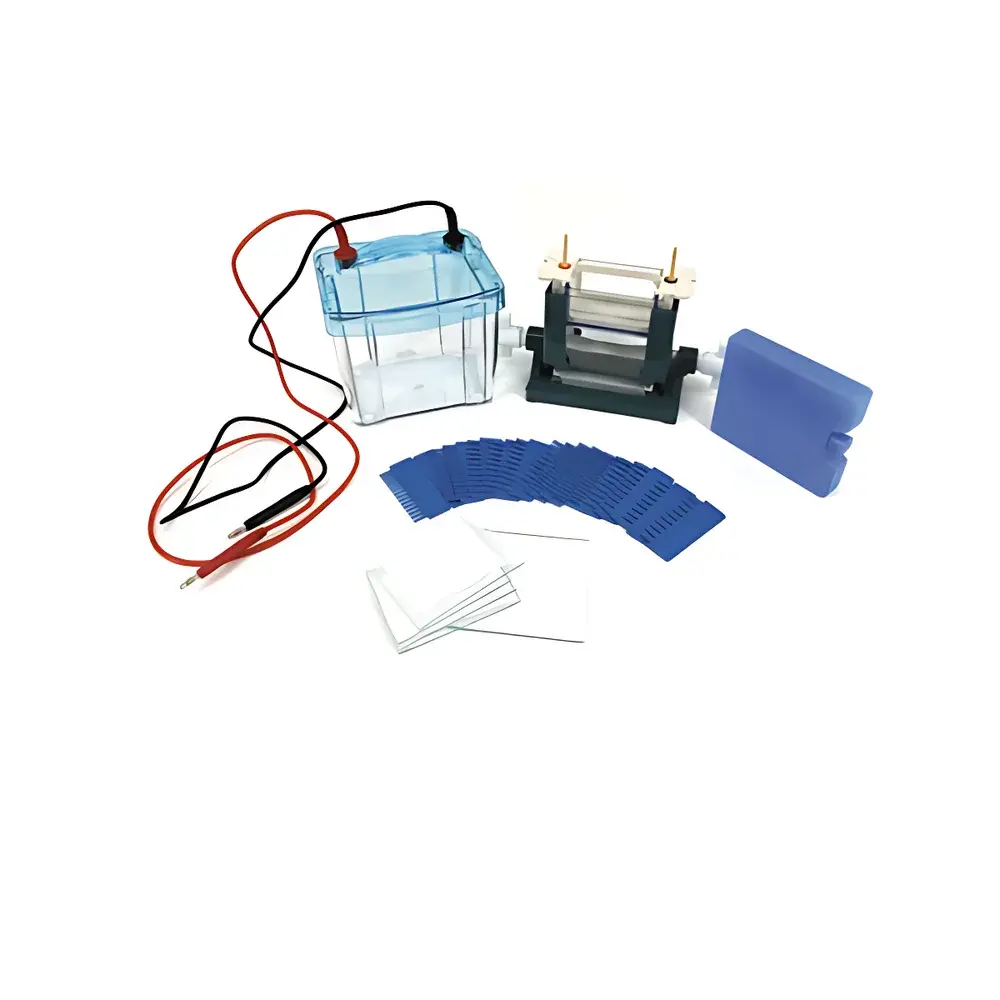
LY DYCZ-25D Dual Vertical Electrophoresis Apparatus (Model 121-2540)
| Brand | LY |
|---|---|
| Origin | Beijing, China |
| Manufacturer Type | Authorized Distributor |
| Product Category | Domestic |
| Model No. | 121-2540 |
| Instrument Type | Transfer Electrophoresis System |
| Main Unit | Electrophoresis Apparatus with Integrated Tank |
| Gel Plate Dimensions | 83 × 73 mm and 83 × 95 mm |
| Max. Operating Voltage | 200 V |
| Overall Dimensions (L×W×H) | 175 × 163 × 165 mm |
| Total Buffer Capacity | 730 mL |
| Weight | 1.0 kg |
Overview
The LY DYCZ-25D Dual Vertical Electrophoresis Apparatus (Model 121-2540) is an engineered solution for high-fidelity SDS-PAGE and native PAGE applications in molecular biology, proteomics, and quality control laboratories. Designed as an enhanced iteration of the DYCZ-24DN mini vertical electrophoresis system, it implements a dual-gel vertical configuration optimized for simultaneous or independent electrophoretic separation of protein samples under controlled thermal and electrical conditions. The apparatus operates on standard constant-voltage electrophoresis principles, utilizing platinum wire electrodes immersed in Tris-Glycine or similar buffer systems to drive charged polypeptides through polyacrylamide gels. Its modular architecture supports both mini-format (83 × 73 mm) and extended-format (83 × 95 mm) gel assemblies, enabling resolution of low-abundance or high-MW proteins that exceed the resolving range of conventional mini-gel systems.
Key Features
- In-situ gel casting system: Integrated gel chamber mounting directly onto the main body eliminates gel transfer steps, reducing contamination risk and improving alignment reproducibility between casting and electrophoresis stages.
- Dual-gel compatibility: Accommodates two independently loaded gels of differing dimensions (83 × 73 mm and 83 × 95 mm) within a single unit—ideal for comparative analysis, replicate runs, or parallel optimization experiments.
- Thermal management architecture: Four synergistic cooling mechanisms: (1) high-volume buffer reservoir (730 mL) acting as passive heat sink; (2) V-shaped anode guard bar with lateral bubble-release vents ensuring uniform Pt-electrode–buffer contact; (3) 10-mm air gap beneath lower tank enabling magnetic stirrer integration for convective buffer homogenization; (4) raised ventilation apertures on upper lid facilitating vapor and heat dissipation during prolonged runs.
- Robust mechanical construction: Main body injection-molded from high-impact polycarbonate (PC); transparent lower tank enables real-time visual monitoring of buffer level, electrode activity, and dye front migration without disassembly.
- Modular comb and glass plate system: Includes standardized short/long flat and concave glass plates (1.0 mm and 1.5 mm thickness options), reusable sealing gaskets, and precision-machined sample combs (10- and 15-well variants) supporting consistent well geometry and minimal sample leakage.
Sample Compatibility & Compliance
The DYCZ-25D is validated for use with standard acrylamide/bis-acrylamide formulations (e.g., 8–20% resolving gels), Laemmli and Tricine buffer systems, and common protein stains including Coomassie Brilliant Blue R-250, silver nitrate, and SYPRO Ruby. It complies with general laboratory safety requirements per IEC 61010-1:2010 for electrical equipment used in laboratory environments. While not certified to GLP or GMP Annex 11 standards out-of-the-box, its design supports audit-ready operation when integrated into SOP-controlled workflows—including documentation of voltage settings, run duration, and buffer batch traceability. All supplied consumables (glass plates, combs, gaskets) are compatible with autoclaving (121°C, 20 min) and routine ethanol/isopropanol decontamination protocols.
Software & Data Management
This is a hardware-only electrophoresis apparatus requiring external power supply (not included). No embedded firmware or proprietary software is provided. Data acquisition and analysis are performed using third-party imaging systems (e.g., ChemiDoc MP, Azure c600) following post-electrophoresis staining and documentation. The unit’s dimensional consistency, electrode geometry, and buffer volume stability ensure high inter-run reproducibility—critical for densitometric quantification and comparative proteomic profiling. For regulated environments, users may implement electronic lab notebook (ELN) integration to log operational parameters (voltage, time, ambient temperature) alongside gel images and analysis reports in accordance with 21 CFR Part 11-compliant platforms.
Applications
- SDS-PAGE for molecular weight estimation and purity assessment of recombinant proteins and monoclonal antibodies
- Native PAGE for oligomeric state analysis and enzyme activity profiling
- Two-dimensional electrophoresis (2-DE) first-dimension compatibility via tube gel adaptation kits
- Western blotting transfer preparation with consistent current density across dual-gel formats
- QC testing of electrophoresis reagents, including acrylamide monomer purity and TEMED activity verification
- Academic teaching labs requiring robust, serviceable instrumentation with low consumable overhead
FAQ
Is the DYCZ-25D compatible with standard mini-gel accessories from other manufacturers?
Yes—its 83 × 73 mm gel format aligns with widely adopted mini-gel standards (e.g., Bio-Rad Mini-PROTEAN, Thermo Fisher Owl E1 series), permitting interchangeability of combs and spacers where thickness tolerances match.
What power supply specifications are required for optimal performance?
A programmable DC power supply capable of delivering up to 200 V at 500 mA (minimum) is recommended. Constant-voltage mode is preferred for routine SDS-PAGE; constant-current mode may be applied for native gels requiring precise field strength control.
Can this system be used for electroblotting directly?
No—the DYCZ-25D is designed exclusively for electrophoretic separation. Transfer to membranes requires a separate semi-dry or wet transfer apparatus (e.g., Trans-Blot Turbo or TE70 system).
How often should the platinum electrodes be cleaned or replaced?
Platinum wires should be rinsed with deionized water after each run and inspected monthly for oxidation or pitting. Light polishing with 0.5 µm alumina slurry restores surface integrity; replacement is typically required only after >500 cumulative run-hours under aggressive buffer conditions.
Does the unit include a built-in timer or voltage regulation circuit?
No—voltage and timing are managed externally via the connected power supply. This design enhances flexibility, avoids firmware obsolescence, and simplifies maintenance in multi-user core facilities.
Related Products




